Kirjailija
Jean-Luc Nancy
Kirjat ja teokset yhdessä paikassa: 125 kirjaa, julkaisuja vuosilta 1988–2025, suosituimpiin kuuluu Nous? L'aspiration à la communauté et les arts: postscriptum de Jean-Luc Nancy. Vertaile teosten hintoja ja tarkista saatavuus suomalaisista kirjakaupoista.
Nimi esiintyy myös muodoissa: Jean–luc Nancy
125 kirjaa
Kirjojen julkaisuvuodet: 1988–2025.
First published in 1979 but never available in English until now, Ego Sum challenges, through a careful and unprecedented reading of Descartes's writings, the picture of Descartes as the father of modern philosophy: the thinker who founded the edifice of knowledge on the absolute self-certainty of a Subject fully transparent to itself. While other theoretical discourses, such as psychoanalysis, have also attempted to subvert this Subject, Nancy shows how they always inadvertently reconstituted the Subject they were trying to leave behind. Nancy's wager is that, at the moment of modern subjectivity's founding, a foundation that always already included all the possibilities of its own exhaustion, another thought of "the subject" is possible. By paying attention to the mode of presentation of Descartes's subject, to the masks, portraits, feints, and fables that populate his writings, Jean-Luc Nancy shows how Descartes's ego is not the Subject of metaphysics but a mouth that spaces itself out and distinguishes itself.

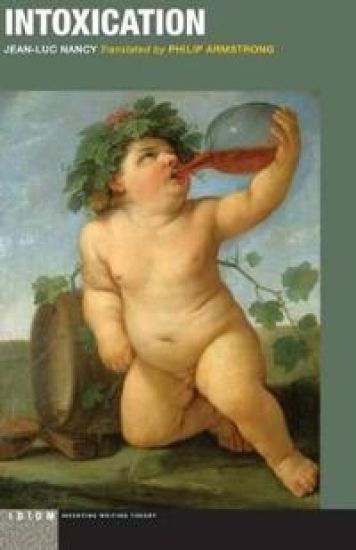
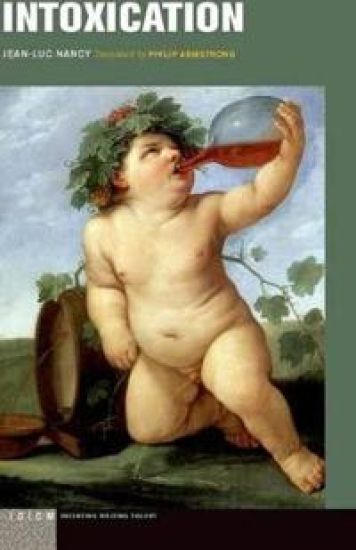
From Plato's Symposium to Hegel's truth as a "Bacchanalian revel," from the Bacchae of Euripedes to Nietzsche, philosophy holds a deeply ambivalent relation to the pleasures of intoxication. At the same time, from Baudelaire to Lowry, from Proust to Dostoyevsky, literature and poetry are also haunted by scenes of intoxication, as if philosophy and literature share a theme that announces and navigates their proximities and differences. For Nancy, intoxication constitutes an excess that both fascinates and questions philosophy's sober ambitions for appropriate forms of philosophical behavior and conceptual lucidity. At the same time, intoxication displaces a number of established dualities—reason and passion, mind and body, rationality and desire, rigor and excess, clarity and confusion, logic and eros. Taking its point of departure from Baudelaire's categorical imperative to understand modernity—"be drunk always"—Nancy's little book is composed in fragments, quotations, drunken asides, and inebriated repetitions. His contemporary "banquet" addresses a range of related themes, including the role of alcohol and intoxication in rituals, myths, divine sacrifice, and religious symbolism, all those toasts to the sacred "spirits" involving libations and different forms of speech and enunciation—to the gods, to modernity, to the Absolute. Affecting both mind and body, Nancy's subject becomes intoxicated: Ego sum, ego existo ebrius—I am, I exist—drunk.
Nous? L'aspiration à la communauté et les arts: postscriptum de Jean-Luc Nancy
Jean-Luc Nancy; Remi Astruc
Touchladybirdlucky Studios
2015
Nidottu
Identity: Fragments, Frankness is a rich and powerful essay on the notion of identity and on how it operates in our contemporary world. In contrast to the various attempts to cling to established identities or to associate identity with dubious agendas, Nancy shows that an identity is always open to alterity and its transformations. Against cynical initiatives that seek to instrumentalize the question of identity in an attempt to manipulate sentiment against immigration, Nancy problematizes anew the notions of identity, nation, and national identity. He seeks to show that there is never a given identity but always an open process of identification that retains an exposure to difference. Thus identity can never operate as a self-identical subject, such as "the French." Ultimately, for Nancy, one does not have an identity but has to become one. One can never return to a self-same identity but can only seek to locate oneself within difference and singularity. Nancy shows the impasse of a certain conception of identity that he calls the "identity of the identifiable," which refers to some permanent, given, substantial identity. In opposition to such identity, Nancy offers the identity of whatever or whoever invents itself in an open process of exposure to others and internal difference. Hence, an identity is never given but "makes itself by seeking and inventing itself." One does not have an identity, but is an identity. Identity is an act, not a state. This important book will provide much-needed philosophical clarification of a complex and strategic notion at the center of many current events and discussions.
What's These Worlds Coming to?
Jean-Luc Nancy; Aurélien Barrau; David Pettigrew
Fordham University Press
2014
sidottu
Our contemporary challenge, according to Jean-Luc Nancy and Aurelien Barrau, is that a new world has stolen up on us. We no longer live in a world, but in worlds. We do not live in a universe anymore, but rather in a multiverse. We no longer create; we appropriate and montage. And we no longer build sovereign, hierarchical political institutions; we form local assemblies and networks of cross-national assemblages— and we do this at the same time as we form multinational corporations that no longer pay taxes to the state. In such a time, one of the world's most eminent philosophers and an emerging astrophysicist return to the ancient art of cosmology. Nancy and Barrau's work is a study of life, plural worlds, and what the authors call the struction or rebuilding of these worlds. Nancy and Barrau invite us on an uncharted walk into barely known worlds when an everyday French idiom, "What's this world coming to?," is used to question our conventional thinking about the world. We soon find ourselves living among heaps of odd bits and pieces that are amassing without any unifying force or center, living not only in a time of ruin and fragmentation but in one of rebuilding. Astrophysicist Aurelien Barrau articulates a major shift in the paradigm of contemporary physics from a universe to a multiverse. Meanwhile, Jean-Luc Nancy's essay "Of Struction" is a contemporary comment on the project of deconstruction and French poststructuralist thought. Together Barrau and Nancy argue that contemporary thought has shifted from deconstruction to what they carefully call the struction of dis-order.
What's These Worlds Coming to?
Jean-Luc Nancy; Aurélien Barrau; David Pettigrew
Fordham University Press
2014
pokkari
Our contemporary challenge, according to Jean-Luc Nancy and Aurelien Barrau, is that a new world has stolen up on us. We no longer live in a world, but in worlds. We do not live in a universe anymore, but rather in a multiverse. We no longer create; we appropriate and montage. And we no longer build sovereign, hierarchical political institutions; we form local assemblies and networks of cross-national assemblages— and we do this at the same time as we form multinational corporations that no longer pay taxes to the state. In such a time, one of the world's most eminent philosophers and an emerging astrophysicist return to the ancient art of cosmology. Nancy and Barrau's work is a study of life, plural worlds, and what the authors call the struction or rebuilding of these worlds. Nancy and Barrau invite us on an uncharted walk into barely known worlds when an everyday French idiom, "What's this world coming to?," is used to question our conventional thinking about the world. We soon find ourselves living among heaps of odd bits and pieces that are amassing without any unifying force or center, living not only in a time of ruin and fragmentation but in one of rebuilding. Astrophysicist Aurelien Barrau articulates a major shift in the paradigm of contemporary physics from a universe to a multiverse. Meanwhile, Jean-Luc Nancy's essay "Of Struction" is a contemporary comment on the project of deconstruction and French poststructuralist thought. Together Barrau and Nancy argue that contemporary thought has shifted from deconstruction to what they carefully call the struction of dis-order.
In this book, the philosopher Jean-Luc Nancy examines the nature of catastrophes in the era of globalization and technology. Can a catastrophe be an isolated occurrence? Is there such a thing as a "natural" catastrophe when all of our technologies—nuclear energy, power supply, water supply—are necessarily implicated, drawing together the biological, social, economic, and political? Nancy examines these questions and more. Exclusive to this English edition are two interviews with Nancy conducted by Danielle Cohen-Levinas and Yuji Nishiyama and Yotetsu Tonaki.
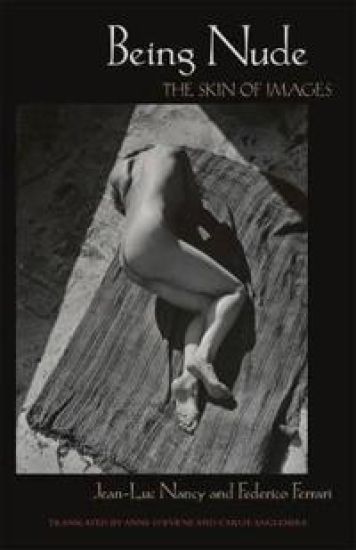
What does it mean to be nude? What does the nude do? In a series of constantly surprising reflections, Jean-Luc Nancy and Federico Ferrari encounter the nude as an opportunity for thinking in a way that is stripped bare of all received meanings and preconceived forms. In the course of engagements with twenty-six separate images, the authors show how the nudes produced by painters and photographers expose this bareness of thought and leave us naked on the verge of a sense that is always nascent, always fleeting, on the surface of the skin, on the surface of the image. While the nude is a symbol of truth in philosophy and art alike, what the nude definitively and uniquely reveals is unclear. In Being Nude: The Skin of Images, the authors argue that the nude is always presented as both vulnerable in its exposure and shy of conceptualization, giving a sense of the ultimate ineffability of the meaning of being. Although the nude represents the revealed nature of truth, nude figures hold a part of themselves back, keeping in reserve the reality of their history, parts of their present selves, and also their future possibilities for change, development, and demise. Skin is itself a type of clothing, and stripping away exterior layers of fabric does not necessarily lead to grasping the truth. In this way, the difference between being clothed and being nude is diminished. The images that inspire the authors to contemplate the nudity of being show many ways in which one can and cannot be nude, and many ways of being in relation to oneself and to others, clothed and unclothed.
I Demokratins sanning skriver Jean-Luc Nancy om hur vi ska förstå demokratin och dess svårigheter i samtiden. Nancy menar att det gäller att förstå och lära sig hantera demokratin som en ”metafysik”, istället för att betrakta den som en politisk form bland andra och åter grunda den i en politisk teologi. Den delade existensens avsaknad av slutgiltig mening är det svårhanterliga faktum som demokratin existerar genom – det är demokratins fara, men också dess chans. Denna volym samlar tre texter som sammantaget erbjuder en god introduktion till Nancys filosofi. Boken avslutas med en intervju i vilken Nancy återvänder till några centrala grundteman i hans tänkande kring demokratin. Jean-Luc Nancy är professor i filosofi vid European Graduate School och Strasbourgs universitet. Under inflytande av bland andra Jacques Derrida, Georges Bataille och Friedrich Nietzsche har han i sina mångtaliga böcker angripit flera av filosofins stora frågor, samtidigt som han har gjort sig ett namn inom konst-, film- och litteraturteori.
In this outstanding new collection, philosopher Jean-Luc Nancy takes up his perennial themes—community, embodiment, being-with, literature, politics, sense, and meaning—as part of a deep and mature appreciation of the fact that we are richly, joyfully, and thoroughly sexual beings. In a concise but extremely important essay, "The 'There Is' of the Sexual Relation," Nancy responds to Lacan's dictum that "there is no sexual relation" and makes a radical argument for the central place of the sexual relation as our originary mode of being with one another. "The Birth of Breasts" is a beautiful reflection on human anatomy and the image and reality of the breast that draws on literature and poetry from Sappho to Beckett. In "Strange Foreign Bodies," Nancy revisits the philosophical territory of the relation between mind or spirit and body but reminds us that bodies are at once familiar to us and also irredeemably strange. "The Body of Pleasure" explores the body as the site of essentially finite pleasure, "finite because it reaches the end, the limit where the body tends to lose all form, becomes matter, an impenetrable mass. But this end also forms the touch of the outside and with it the joy of the world." Finally, "The Sexual Relation—and Then" builds on the insight into the central place of the sexual relation by considering specifically the generative possibilities of sex and the fact that we all came to be as the product of sexual relations. Nancy's Corpus, published in English in 2008, was the philosopher's most sustained consideration of embodiment to date. Now, in Corpus II, he carries that work in new directions which constantly remind us that human bodies are sexed and sexual bodies.
The Pleasure in Drawing
Jean-Luc Nancy
Fordham University Press
2013
pokkari
Halvin toimitettuna 32,30 €
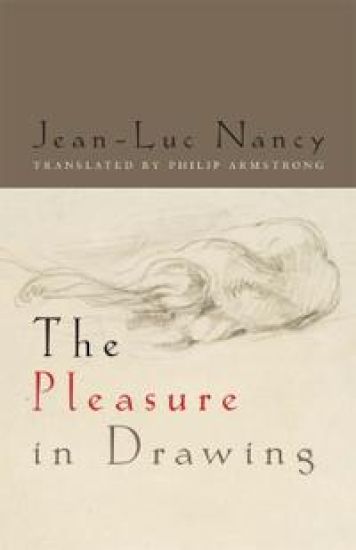
Originally written for an exhibition Jean-Luc Nancy curated at the Museum of Fine Arts in Lyon in 2007, this book addresses the medium of drawing in light of the question of form—of form in its formation, as a formative force, as a birth to form. In this sense, drawing opens less toward its achievement, intention, and accomplishment than toward a finality without end and the infinite renewal of ends, toward lines of sense marked by tracings, suspensions, and permanent interruptions. Recalling that drawing and design were once used interchangeably, Nancy notes that drawing designates a design that remains without project, plan, or intention. His argument offers a way of rethinking a number of historical terms (sketch, draft, outline, plan, mark, notation), which includes rethinking drawing in its graphic,filmic, choreographic, poetic, melodic, and rhythmic senses. If drawing is not reducible to any form of closure, it never resolves a tension specific to itself. Rather, drawing allows the pleasure in and of drawing, the gesture of a desire that remains in excess of all knowledge, to come to appearance. Situating drawing in these terms, Nancy engages a number of texts in which Freud addresses the force of desire in the rapport between aesthetic and sexual pleasure, texts that also turn around questions concerning form in its formation, form as a formative force. Between the sections of the text, Nancy has placed a series of "sketchbooks" on drawing, composed of a broad range of quotations on art from different writers, artists, or philosophers.
This second volume in Nancy's The Deconstruction of Christianity explores the stance or bearing that would be appropriate for us now, in the wake of the dis-enclosure of religion and the retreat of God: that of adoration. Adoration is stretched out toward things, but without phenomenological intention. In our present historical time, we have come to see relation itself as the divine. The address and exclamation--the salut!--that constitutes adoration celebrates this relation: both the relation among all beings that the world is and what is beyond relation, the outside of the world that opens us in the midst of the world. A major contribution to the contemporary philosophy of religion, Adoration clarifies and builds upon not only Dis-Enclosure, the first volume in this project, but also Nancy's other previous writings on sense, the world, and the singular plurality of being.