Kirjailija
Jean-Luc Nancy
Kirjat ja teokset yhdessä paikassa: 125 kirjaa, julkaisuja vuosilta 1988–2025, suosituimpiin kuuluu Nous? L'aspiration à la communauté et les arts: postscriptum de Jean-Luc Nancy. Vertaile teosten hintoja ja tarkista saatavuus suomalaisista kirjakaupoista.
Nimi esiintyy myös muodoissa: Jean–luc Nancy
125 kirjaa
Kirjojen julkaisuvuodet: 1988–2025.
In this intimate meditation on listening, Peter Szendy examines what the role of the listener is, and has been, through the centuries. The role of the composer is clear, as is the role of the musician, but where exactly does the listener stand in relation to the music s/he listens to? What is the responsibility of the listener? Does a listener have any rights, as the author and composer have copyright? Szendy explains his love of musical arrangement (since arrangements allow him to listen to someone listening to music), and wonders whether it is possible in other ways to convey to others how we ourselves listen to music. How can we share our actual hearing with others? Along the way, he examines the evolution of copyright laws as applied to musical works and takes us into the courtroom to examine different debates on what we are and aren't allowed to listen to, and to witness the fine line between musical borrowing and outright plagiarism. Finally, he examines the recent phenomenon of DJs and digital compilations, and wonders how technology has affected our habits of listening and has changed listening from a passive exercise to an active one, whereby one can jump from track to track or play only selected pieces.
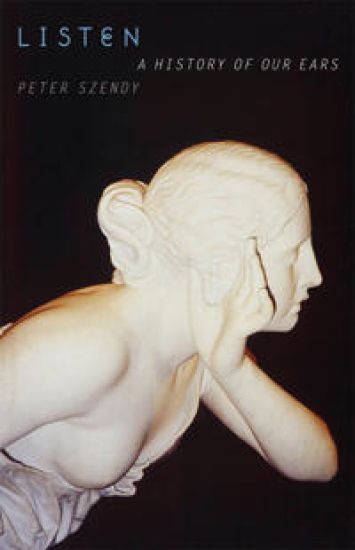
In this intimate meditation on listening, Peter Szendy examines what the role of the listener is, and has been, through the centuries. The role of the composer is clear, as is the role of the musician, but where exactly does the listener stand in relation to the music s/he listens to? What is the responsibility of the listener? Does a listener have any rights, as the author and composer have copyright? Szendy explains his love of musical arrangement (since arrangements allow him to listen to someone listening to music), and wonders whether it is possible in other ways to convey to others how we ourselves listen to music. How can we share our actual hearing with others? Along the way, he examines the evolution of copyright laws as applied to musical works and takes us into the courtroom to examine different debates on what we are and aren’t allowed to listen to, and to witness the fine line between musical borrowing and outright plagiarism. Finally, he examines the recent phenomenon of DJs and digital compilations, and wonders how technology has affected our habits of listening and has changed listening from a passive exercise to an active one, whereby one can jump from track to track or play only selected pieces.
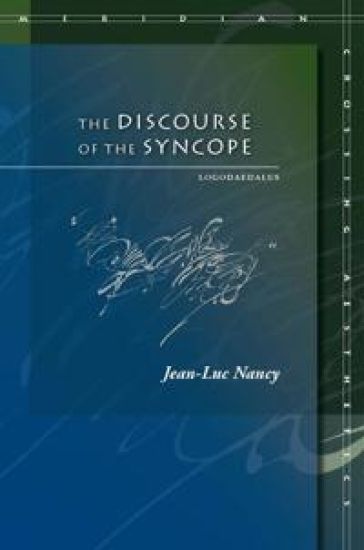
Why is it that the modern conception of literature begins with one of the worst writers of the philosophical tradition? Such is the paradoxical question that lies at the heart of Jean-Luc Nancy's highly original and now-classic study of the role of language in the critical philosophy of Kant. While Kant did not turn his attention very often to the philosophy of language, Nancy demonstrates to what extent he was anything but oblivious to it. He shows, in fact, that the question of philosophical style, of how to write critical philosophy, goes to the core of Kant's attempt to articulate the limits, once and for all, that would establish human reason in its autonomy and freedom. He also shows how this properly philosophical program, the very pinnacle of the Enlightenment, leads Kant to posit literature as its other by way of what is here called the syncope, and how this other of philosophy, entirely its product, cannot be said to exist outside of metaphysics in its accomplishment. This subtle, unprecedented reading of Kant demonstrates the continued importance of reflection on the relation between philosophy and literature, indeed, why any commitment to Enlightenment must consider and confront this partition anew.
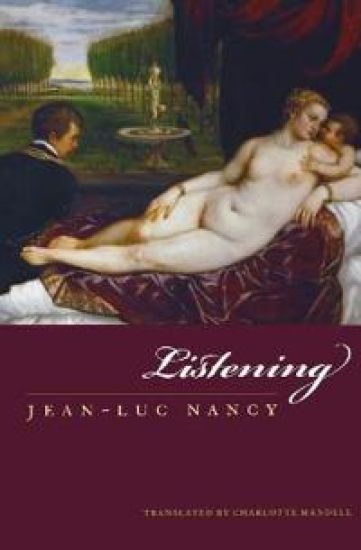
In this lyrical meditation on listening, Jean-Luc Nancy examines sound in relation to the human body. How is listening different from hearing? What does listening entail? How does what is heard differ from what is seen? Can philosophy even address listening, écouter, as opposed to entendre, which means both hearing and understanding? Unlike the visual arts, sound produces effects that persist long after it has stopped. The body, Nancy says, is itself like an echo chamber, responding to music by inner vibrations as well as outer attentiveness. Since "the ear has no eyelid" (Quignard), sound cannot be blocked out or ignored: our whole being is involved in listening, just as it is involved in interpreting what it hears. The mystery of music and of its effects on the listener is subtly examined. Nancy's skill as a philosopher is to bring the reader companionably along with him as he examines these fresh and vital questions; by the end of the book the reader feels as if listening very carefully to a person talking quietly, close to the ear.
The Creation of the World or Globalization
Jean-Luc Nancy
State University of New York Press
2007
pokkari
Philosophical reflections on the phenomenon of globalization. Appearing in English for the first time, Jean-Luc Nancy's 2002 book reflects on globalization and its impact on our being-in-the-world. Developing a contrast in the French language between two terms that are usually synonymous, or that are used interchangeably, namely globalisation (globalization) and mondialisation (world-forming), Nancy undertakes a rethinking of what "world-forming" might mean. At stake in this distinction is for him nothing less than two possible destinies of our humanity, and of our time. On the one hand, with globalization, there is the uniformity produced by a global economical and technological logic leading to the contrary of an inhabitable world, "the un-world" (l'im-monde)-as Nancy refers to it-an un-world that entails social disintegration, misery, and injustice. And, on the other hand, there is the possibility of an authentic world-forming, that is, of a making of the world and of a making sense that Nancy calls a "creation" of the world. Nancy understands such world-forming in terms of an inexhaustible struggle for justice. This book is an important contribution by Nancy to a philosophical reflection on the phenomenon of globalization and a further development on his earlier works on our being-in-common, justice, and a-theological existence.
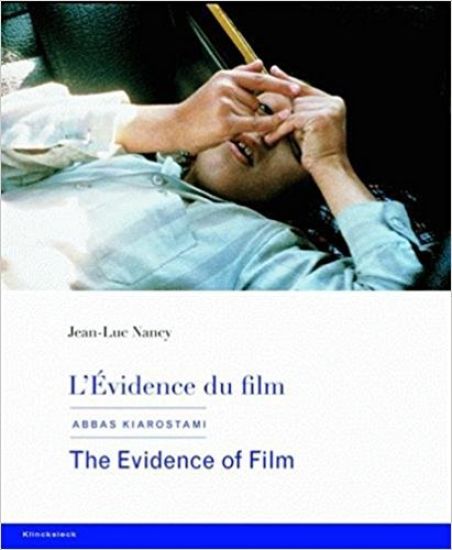
Pour les cent ans du cinema, en 1994, les Cahiers du cinema avaient voulu faire un livre dans lequel cent auteurs ecriraient sur cent films afin de composer une imaginaire histoire du cinema. Jean-Luc Nancy presente ainsi des les premieres pages les peripeties qui ont mene a la naissance de L'evidence du film. Abbas Kiarostami, que l'on peut voir comme une longue conversation avec le realisateur iranien sur le rapport entre l'image, la photographie et le cinema. Il y aborde la problematique de l'image et du regard, analysant ensuite la matiere grace a l'interview de Kiarostami, " realisateur qui fait du cinema et en meme temps qui est en dehors du cinema ".
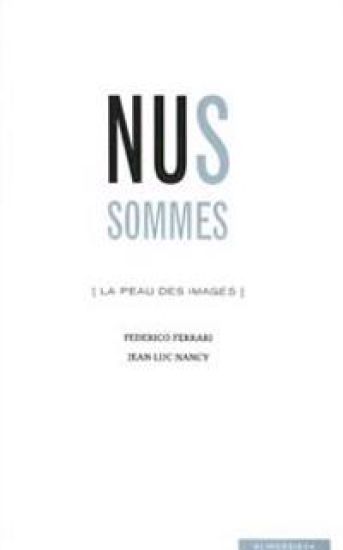
Painting, drawing or photographing a nude poses the same challenge every time: to portray the unportrayable instant of being stripped bare, the instantaneous modesty that robs the viewer of any revelation, and the indecency which reveals that theft.
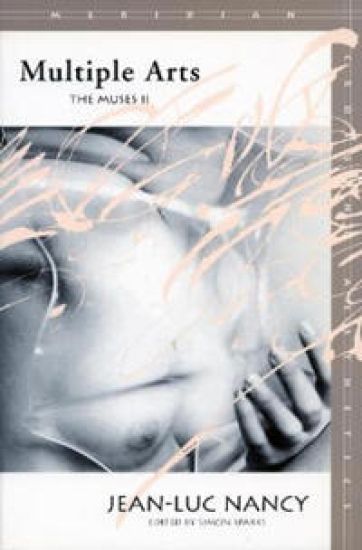
This collection of writings by Jean-Luc Nancy, the renowned French critic and poet, delves into the history of philosophy to locate a fundamentally poetic modus operandi there. The book represents a daring mixture of Nancy's philosophical essays, writings about artworks, and artwork of his own. With theoretical rigor, Nancy elaborates on the intrinsic multiplicity of art as a concept of "making," and outlines the tensions inherent in the faire, the "making" that characterizes the very process of production and thereby the structure of poetry in all its forms. Nancy shows that this multiplication that belongs to the notion of art makes every single work communicate with every other, all material in the artwork appeal to some other material, and art the singular plural of a praxis of the finite imparting of an infinity which is actually there in every utterance. In the collection, Nancy engages with the work of, among others, François Martin, Maurice Blanchot, and On Kawara.
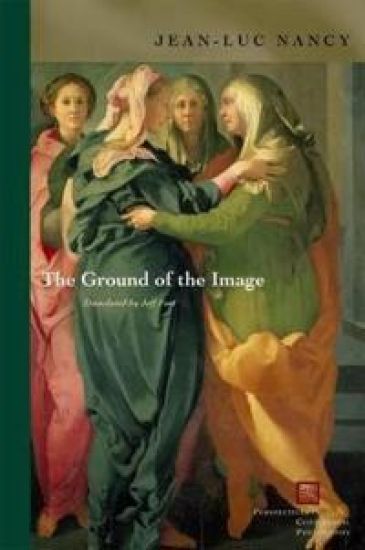
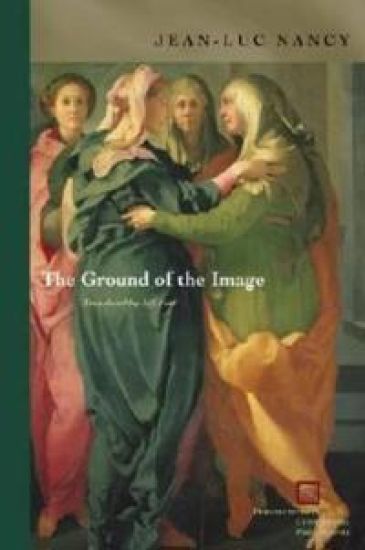
If anything marks the image, it is a deep ambivalence. Denounced as superficial, illusory, and groundless, images are at the same time attributed with exorbitant power and assigned a privileged relation to truth. Mistrusted by philosophy, forbidden and embraced by religions, manipulated as "spectacle" and proliferated in the media, images never cease to present their multiple aspects, their paradoxes, their flat but receding spaces. What is this power that lies in the depths and recesses of an image—which is always only an impenetrable surface? What secrets are concealed in the ground or in the figures of an image—which never does anything but show just exactly what it is and nothing else? How does the immanence of images open onto their unimaginable others, their imageless origin? In this collection of writings on images and visual art, Jean-Luc Nancy explores such questions through an extraordinary range of references. From Renaissance painting and landscape to photography and video, from the image of Roman death masks to the language of silent film, from Cleopatra to Kant and Heidegger, Nancy pursues a reflection on visuality that goes far beyond the many disciplines with which it intersects. He offers insights into the religious, cultural, political, art historical, and philosophical aspects of the visual relation, treating such vexed problems as the connection between image and violence, the sacred status of images, and, in a profound and important essay, the forbidden representation of the Shoah. In the background of all these investigations lies a preoccupation with finitude, the unsettling forces envisaged by the images that confront us, the limits that bind us to them, the death that stares back at us from their frozen traits and distant intimacies. In these vibrant and complex essays, a central figure in European philosophy continues to work through some of the most important questions of our time.
This book is a rich collection of philosophical essays radically interrogating key notions and preoccupations of the phenomenological tradition. While using Heidegger's Being and Time as its permanent point of reference and dispute, this collection also confronts other important philosophers, such as Kant, Nietzsche, and Derrida. The projects of these pivotal thinkers of finitude are relentlessly pushed to their extreme, with respect both to their unexpected horizons and to their as yet unexplored analytical potential. A Finite Thinking shows that, paradoxically, where the thought of finitude comes into its own it frees itself, not only to reaffirm a certain transformed and transformative presence, but also for a non-religious reconsideration and reaffirmation of certain theologemes, as well as of the body, heart, and love. This book shows the literary dimension of philosophical discourse, providing important enabling ideas for scholars of literature, cultural theory, and philosophy.
This book, by one of the most innovative and challenging contemporary thinkers, consists of an extensive essay from which the book takes its title and five shorter essays that are internally related to "Being Singular Plural." One of the strongest strands in Nancy's philosophy is his attempt to rethink community and the very idea of the social in a way that does not ground these ideas in some individual subject or subjectivity. The fundamental argument of the book is that being is always "being with," that "I" is not prior to "we," that existence is essentially co-existence. Nancy thinks of this "being-with" not as a comfortable enclosure in a pre-existing group, but as a mutual abandonment and exposure to each other, one that would preserve the "I" and its freedom in a mode of imagining community as neither a "society of spectacle" nor via some form of authenticity. The five shorter essays impressively translate the philosophical insight of "Being Singular Plural" into sophisticated discussions of national sovereignty, war and technology, identity politics, the Gulf War, and the tragic plight of Sarajevo. The essay "Eulogy for the Mêlée," in particular, is a brilliant discussion of identity and hybridism that resonates with many contemporary social concerns. As Nancy moves through the exposition of his central concern, being-with, he engages a number of other important issues, including current notions of the "other" and "self" that are relevant to psychoanalytic, political, and multicultural concepts. He also offers astonishingly original reinterpretations of major philosophical positions, such as Nietzsche's doctrine of "eternal recurrence," Descartes's "cogito," and the nature of language and meaning.
The work of the distinguished philosopher Sarah Kofman has, since her tragic death in 1994, become a focus for many scholars interested in contemporary French philosophy. The first critical collection on her thought to appear in English, Enigmas evaluates Kofman's most important contributions to philosophy, psychoanalytic theory, feminism, and literary theory. These insightful essays range from analyses of Kofman's first book, L'Enfance de l'art (1970), to her last, L'Imposture de la beauté (1995). This unique volume represents the major themes in Kofman's scholarship: literature and aesthetics; philosophy and metaphor; women, feminism, and psychoanalysis; and Jews and German nationalism. Selected essays explore and diagnose Kofman's personal struggles as they are reflected in her writing.
This collection of essays presents, for the first time in English, some of the key essays on the political by Philippe Lacoue-Labarthe and Jean-Luc Nancy. Including several unpublished essays, Retreating the Political offers some highly original perspectives on the relationship between philosophy and the political. Through contemporary readings of the political in Freud, Heidegger and Marx, the authors ask if we can talk of an a priori link between the philosophical and the political; they investigate the significance of the 'figure' - the human being as political subject - in the history of metaphysics; and they inquire how we can 're-treat' the political today in the face of those who argue that philosophy is at an 'end'.