Kirjojen hintavertailu – 12 878 105 kirjaa ja 26 kauppaa

Kirjailija

Jeremy Black

Kirjat ja teokset yhdessä paikassa: 255 kirjaa, julkaisuja vuosilta 1992–2027, suosituimpiin kuuluu Geopolitikens återkomst : striden om framtidens historia. Vertaile teosten hintoja ja tarkista saatavuus suomalaisista kirjakaupoista.

255 kirjaa

Kirjojen julkaisuvuodet: 1992–2027.

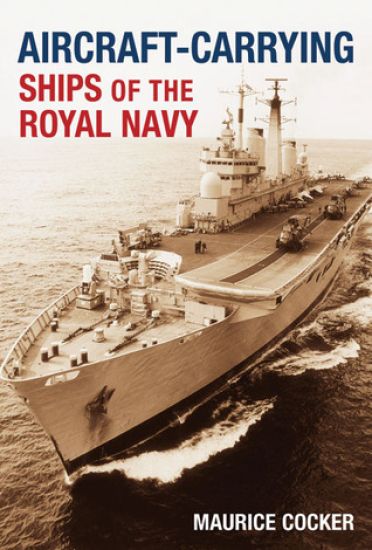
Aircraft-Carrying Ships of the Royal Navy

Aircraft-Carrying Ships of the Royal Navy

Maurice Cocker; Jeremy Black

The History Press Ltd
2008
nidottu
Within ten years of man's first flight, the armies and navies of the world had seen the potential of the flying machine. This book looks at the ships of the Royal Navy which have carried and used aircraft since the first aircraft-carrier was built in 1912. It includes small lighters, battleships with runways on their turrets, and submarines.
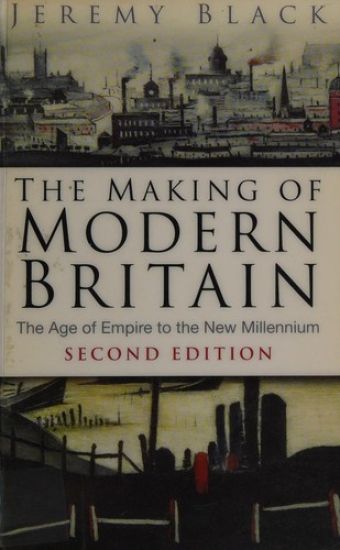
The Making of Modern Britain

The Making of Modern Britain

Jeremy Black

The History Press Ltd
2008
nidottu
The Making of Modern Britain balances economic, social and cultural developments to place Britain in its world context, and examines how developments within Britain affected its individual communities. Attention is also drawn to the period post-1975, which has been neglected in many other accounts of this era. At present it appears that all we have to look forward to is further integration with Europe, and this, Black argues, would represent a foolish surrender of everything that is significant in our history. The Making of Modern Britain reveals the huge changes that have affected the history and growth of the nation and its people. It is a challenging and refreshing discussion of modern society, and is essential reading not just for historians, but for anyone who has an interest in the troubled national identity of Britain. The book has been updated to include the last six turbulent years of Britain’s history.
Great Powers and the Quest for Hegemony

Great Powers and the Quest for Hegemony

Jeremy Black

Routledge
2007
nidottu

Halvin toimitettuna 60,40 €

This timely book provides a general overview of Great Power politics and world order from 1500 to the present. Jeremy Black provides several historical case-studies, each of which throws light on both the power in question and the international system of the period, and how it had developed from the preceding period. The point of departure for this book is Paul Kennedy’s 1988 masterpiece, The Rise and Fall of the Great Powers. That iconic book, with its enviable mastery of the sources and its skilful integration of political, military and economic history, was a great success when it appeared and has justifiably remained important since. Written during the Cold War, however, Kennedy’s study was very much of its time in its consideration of the great powers in ‘Western’ terms, and its emphasis on economics. This book brings together strategic studies, international relations, military history and geopolitics to answer some of the contemporary questions left open by Professor Kennedy's great work, and also looks to the future of great power relations and of US hegemony. Great Powers and the Quest for Hegemony will be of great interest to students of international relations, strategic studies and international history.
Great Powers and the Quest for Hegemony
This timely book provides a general overview of Great Power politics and world order from 1500 to the present. Jeremy Black provides several historical case-studies, each of which throws light on both the power in question and the international system of the period, and how it had developed from the preceding period. The point of departure for this book is Paul Kennedy’s 1988 masterpiece, The Rise and Fall of the Great Powers. That iconic book, with its enviable mastery of the sources and its skilful integration of political, military and economic history, was a great success when it appeared and has justifiably remained important since. Written during the Cold War, however, Kennedy’s study was very much of its time in its consideration of the great powers in ‘Western’ terms, and its emphasis on economics. This book brings together strategic studies, international relations, military history and geopolitics to answer some of the contemporary questions left open by Professor Kennedy's great work, and also looks to the future of great power relations and of US hegemony. Great Powers and the Quest for Hegemony will be of great interest to students of international relations, strategic studies and international history.
War for America

War for America

Jeremy Black

Sutton Publishing Ltd
2007
pokkari
The bitter and often bloody fight which accompanied the emergence of the United States of America as an independent force on the world stage has always been a subject of immense interest as well as of much debate and controversy. By reference to a wide range of source material, this text seeks to convey the immediacy of events such as the battles of Bunker Hill and Saratoga and the sieges of Charleston and Yorktown, as well as less famous incidents, while also offering a thorough assessment of the campaign in its American, colonial and European contexts. Combining a chronological survey of the war with a thematic examination of the major issues, this is a comprehensive account of a remarkable campaign.
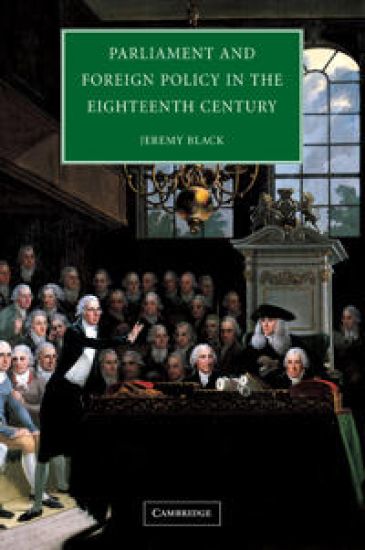
Parliament and Foreign Policy in the Eighteenth Century

Parliament and Foreign Policy in the Eighteenth Century

Jeremy Black

Cambridge University Press
2007
pokkari
Drawing on a wide range of British and foreign archival sources, this book tackles the role of Parliament in the conduct of eighteenth-century foreign policy, the impact of this policy on parliamentary politics, and the quality of parliamentary debates. It is also an important study for our assessment of eighteenth-century Britain, and also, more generally, for an understanding of the role of contingency in the assessment of political systems. Reflecting over a quarter-century of work on parliamentary sources, the book highlights the influence of Parliament, positive and negative, direct and indirect, on foreign policy and politics. It also has great contemporary relevance as we consider the effectiveness of democratic states when confronting authoritarian rivals, and the rights of representative bodies to be consulted before wars are launched.
Trade, Empire and British Foreign Policy, 1689-1815
This new volume examines the influence of trade and empire from 1689 to 1815, a crucial period for British foreign policy and state-building. Jeremy Black, a leading expert on British foreign policy, draws on the wide range of archival material, as well as other sources, in order to ask how far, and through what processes and to what ends, foreign policy served commercial and imperial goals during this period. The book is particularly interested in the conceptualization of these goals in terms of international competition, and how the contours and contents of this conceptualization altered during this period. Trade, Empire and British Foreign Policy, 1689-1815 also analyzes how the relationships between trade, empire and foreign policy were perceived abroad and how this contributed to an analysis of Britain as a distinctive state, and with what consequences. This book will be of much interest to students of British imperial history, diplomatic history and international history in general.
European Warfare in a Global Context, 1660-1815
This original book presents a global approach to eighteenth century warfare. Emphasis is placed on the importance of conflict in the period and the capacity for decisiveness in impact and development in method. Through this Jeremy Black extends the view beyond land to naval conflict. European Warfare in a Global Context offers a comparative approach, in the sense of considering Western developments alongside those elsewhere, furthermore it puts emphasis on conflict between Western and non-western powers. This approach necessarily reconsiders developments within the West, but also offers a shift in emphasis from standard narrative of the latter. This book is the ideal study of warfare for all students.
European Warfare in a Global Context, 1660-1815

European Warfare in a Global Context, 1660-1815

Jeremy Black

Routledge
2006
nidottu

Halvin toimitettuna 66,30 €

This original book presents a global approach to eighteenth century warfare. Emphasis is placed on the importance of conflict in the period and the capacity for decisiveness in impact and development in method. Through this Jeremy Black extends the view beyond land to naval conflict. European Warfare in a Global Context offers a comparative approach, in the sense of considering Western developments alongside those elsewhere, furthermore it puts emphasis on conflict between Western and non-western powers. This approach necessarily reconsiders developments within the West, but also offers a shift in emphasis from standard narrative of the latter. This book is the ideal study of warfare for all students.
Culture in Eighteenth-Century England

Culture in Eighteenth-Century England

Jeremy Black

Hambledon Continuum
2006
nidottu
In the eighteenth century, England became the richest and most powerful country in the world. This is a rounded portrait of English culture in the eighteenth century. Not only a matter of leading writers, from Swift and Pope to Dr. Johnson and Sheridan, and of artists from Hogarth to Reynolds, there was also room for popular ballads, political doggerel, pornographic verse and vigorous satirical cartoons. Taste in architecture ranged from great houses with gardens landscaped by Capability Brown to the changed use of domestic space in towns. Jeremy Black looks at both the wealth of cultural activity in the period and at the patronage of and market for books, art, architecture, high-quality music and consumer goods. He also shows the different currents at work, belying any simple picture of England and the English as confident and self-assured.
War in European History, 1494-1660

War in European History, 1494-1660

Jeremy Black

Potomac Books Inc
2006
nidottu
The books in the Essential Bibliographies series include an essay by a noted scholar on the important historiographical issues and a pertinent bibliography for a particular period or theme in military history. They serve as research tools for librarians, researchers, and readers with a professional interest and as a starting point for pursuing further studies. This first volume traces Europe's military revolution, beginning with the onset of "modern warfare" in the Italian Wars and ending with the restoration of the House of Stuart to the English throne.
The Continental Commitment

The Continental Commitment

Jeremy Black

Routledge
2005
sidottu
Recent debates about British political and military strategies, derived in particular from dissension about Britain’s relationship with Europe and from disagreement over the Iraq war, has led to a greater awareness of the problematic nature of the concept of ‘national interests’. This major new work delivers a long view of this issue, its twin strands are captured by an assessment both of the Continental commitment and British interventionism in the 18th Century. The extent to which Britain’s rise to superpower status in America and Asia was related to the Continental connection, and her Hanoverian interests, is a central theme of this study, as is the relationship between the domestic position of the Crown and its interests as Electors of Hanover. The issue of Continental interventionism opens up the question of how alliances generate their own pressures, at the same time that they are supposed to help overcome challenges; while also indicating how the domestic support for alliances shifts, creating its own dynamics that in turn affect the international dimension. This book will be of great interest to students and scholars of international relations, British foreign policy, British history and war and conflict studies.
The Politics of James Bond

The Politics of James Bond

Jeremy Black

Bison Books
2005
pokkari
The adventures and antics of James Bond have provided the world with many of the most gripping story lines of the last half-century. Fleming's novels were bestsellers in their day, and the Bond films have been even more popular, becoming the most enduring and successful film franchise in history. By some estimates, half of the world's population has seen a James Bond movie. A fascinating and accessible account of this global phenomenon, The Politics of James Bond uses the plots and characterizations in the novels and the blockbuster films to place Bond in a historical, cultural, and political context. Jeremy Black charts and explores how the settings and the dynamics of the Bond adventures have changed over time in response to shifts in the real-world environment in which the fictional Bond operates. Sex, race, class, and violence are each important factors, as Agent 007 evolves from Cold War warrior to foe of SPECTRE and eventually to world defender pitted against megalomaniacal foes. The development of Bond, his leading ladies, and the major plots all shed light on world political attitudes and reflect elements of the real espionage history of the period. This analysis of Bond's world and his lasting legacy offers an insightful look at both cultural history and popular entertainment.
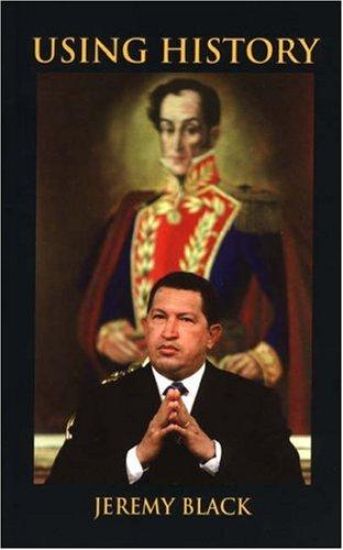
Using History

Using History

Jeremy Black

Hodder Arnold
2005
nidottu
To travel round the world is to be reminded of the very public presence of history, of the past as issue and identity. Yet this is widely underrated. The main reason for the discrepancy is the contrast between the ethos and methods that are central to the modern notion of scholarship that focus on questions, and history as it is appropriated and used by the state, the media, and the national collective memory in which the emphasis is on simplistic answers. Rather than seeing academics as the drivers of historical assessments, the central claim of this study is that developments in the public usage of history are crucial to the understanding of the past, and that these developments stem largely from political pressures. Using History is the first book to tackle public, non-academic history for the student and general reader. Furthermore, it does so from a truly global perspective as opposed to focusing on the traditional Western-dominated model.
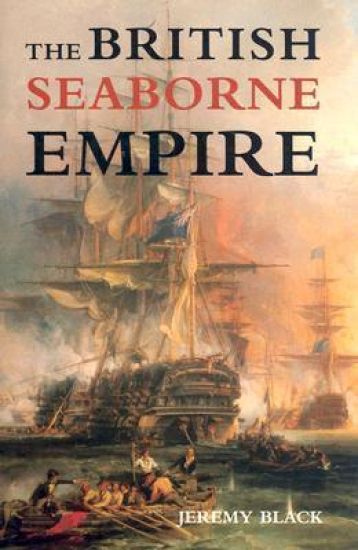
The British Seaborne Empire

The British Seaborne Empire

Jeremy Black

Yale University Press
2004
sidottu
Sea-power made the British Empire what it was: without sea-power there would have been no empire, or at least no empire in the form it actually took. In this masterful analysis of the role of the sea in the history of the British Empire, Jeremy Black follows in the tradition of classic works by C. R. Boxer on the Dutch and Portuguese seaborne empires and by J. H. Parry on the Spanish seaborne empire. Black considers how the ocean affected British exploration, defense, trade, commerce, and the navy, as well as the attitudes and perceptions of the British people themselves. The book covers the process of imperial expansion, the decline of the Empire, and the role of the navy in the postimperial age. Attractively illustrated and wide in scope, the book demonstrates the profound influence that proximity to the sea has exerted on virtually every aspect of British history and culture.
Rethinking Military History

Rethinking Military History

Jeremy Black

Routledge
2004
sidottu
Rethinking Military History is a bold new 'thought book' that reconsiders military history at the beginning of the twenty-first century. The chapters provide a valuable and concise survey of the main themes in the study of military history from 1500 to the present day as Jeremy Black reveals the main trends in the practice and approach to military history and proposes a new manifesto for the subject to move forward. This must-read study demonstrates the limitations of current approaches, including common generalizations, omissions, and over-simplications. Engaging theoretical discussions, with reference to specific conflicts, suggest how these limitations can be remedied and adapted, whilst incorporating contributions from other disciplines. Rethinking Military History is essential reading for all those with an interest in military history, and all who wish to take part in moving the discipline forward.
Rethinking Military History

Rethinking Military History

Jeremy Black

Routledge
2004
nidottu
Rethinking Military History is a bold new 'thought book' that reconsiders military history at the beginning of the twenty-first century. The chapters provide a valuable and concise survey of the main themes in the study of military history from 1500 to the present day as Jeremy Black reveals the main trends in the practice and approach to military history and proposes a new manifesto for the subject to move forward. This must-read study demonstrates the limitations of current approaches, including common generalizations, omissions, and over-simplications. Engaging theoretical discussions, with reference to specific conflicts, suggest how these limitations can be remedied and adapted, whilst incorporating contributions from other disciplines. Rethinking Military History is essential reading for all those with an interest in military history, and all who wish to take part in moving the discipline forward.
War and the New Disorder in the 21st Century

War and the New Disorder in the 21st Century

Jeremy Black

Continuum International Publishing Group Ltd.
2004
sidottu
The second edition of Jeremy Black's War has been completely revised in the light of recent events in Iraq and Afghanistan. Jeremy Black's book prophetically explores the realities of war in a globalized world where growing prosperity can increase the likeliehood of conflict and American power is likely to be increasingly challenged. In his five new chapters Black conducts his argument in terms of New World Disorder, specifically the failure of Western models of globalisation to engage support. There is extensive discussion of military structures in the West, as they are 'reconfigured' to take account of new political realities. Black considers that the USA is an 'eccentric' military power and developments in the USA should not be treeated as a paradigm for those elsewhere. Instead, growing lawlessness accross much of the world will be the main factor for consideration, specifically in the failure to maintain order/control in Sub Aaharan Africa, South Asia and Latin America.
Parliament and Foreign Policy in the Eighteenth Century

Parliament and Foreign Policy in the Eighteenth Century

Jeremy Black

Cambridge University Press
2004
sidottu
Drawing on a wide range of British and foreign archival sources, this book tackles the role of Parliament in the conduct of eighteenth-century foreign policy, the impact of this policy on parliamentary politics, and the quality of parliamentary debates. It is also an important study for our assessment of eighteenth-century Britain, and also, more generally, for an understanding of the role of contingency in the assessment of political systems. Reflecting over a quarter-century of work on parliamentary sources, the book highlights the influence of Parliament, positive and negative, direct and indirect, on foreign policy and politics. It also has great contemporary relevance as we consider the effectiveness of democratic states when confronting authoritarian rivals, and the rights of representative bodies to be consulted before wars are launched.
Britain Since the Seventies

Britain Since the Seventies

Jeremy Black

Reaktion Books
2004
nidottu
In Britain since the Seventies, well-known historian Jeremy Black examines the most recent developments in British political, social, cultural and economic history. Taking the triumph of consumerism as an organizing theme, he charts the rise and fall of the Conservative Party, developments in British society, culture and politics, environmental issues, questions of identity, and changes in economic circumstance and direction. Iconic issues such as BSE, transport, asylum seekers and the NHS are viewed from both national and international perspectives. Black's account of contemporary Britain challenges as well as entertains, seeking to engage the reader in the process of interpretation. Through the lens of the last three decades, the author unveils his image of a country in which uncertainty, contingency and change are the defining features. In charting the impact of increasing individualism, longevity and secularization, Black is drawn repeatedly to examine a fundamental paradox of modern Britain: ‘At the start of both century and millennium, the British were more prosperous than ever before, but . . . happiness has not risen with prosperity.’Britain since the Seventies is a wide-ranging and cogent evaluation of recent British history, and as such will appeal to all those interested in the condition of modern Britain, and how it came to be so, as well as being an ideal introduction for students of the subject.