Kirjailija
Jeremy Black
Kirjat ja teokset yhdessä paikassa: 255 kirjaa, julkaisuja vuosilta 1992–2027, suosituimpiin kuuluu Geopolitikens återkomst : striden om framtidens historia. Vertaile teosten hintoja ja tarkista saatavuus suomalaisista kirjakaupoista.
255 kirjaa
Kirjojen julkaisuvuodet: 1992–2027.
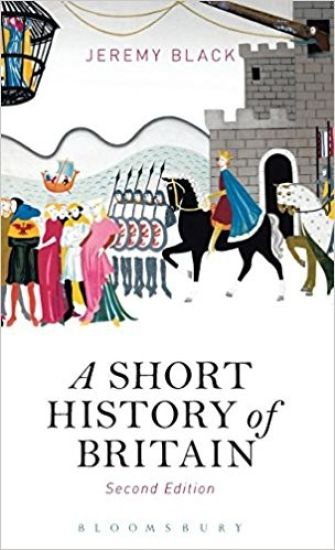
Covering over 2,000 years in under 200 pages, Jeremy Black takes the reader on a breathless tour of British history, providing invaluable context for students of any period. A truly British overview, this book covers all four constituent parts of the UK, as well as migration to and from Britain, and introduces questions of national identity and collective memory. The author begins by considering how the geography of Britain has influenced its development and goes on to examine the formation of its society and political culture. Resisting the Whiggish tradition of triumphalist national histories, Jeremy Black provides a balanced and sensitive account in his trademark pithy style. This new edition has been considerably revised and expanded, bringing the coverage right up to the present day, including what the Scottish referendum on independence says about the nature of modern 'Britishness'.

History is both the past and our accounts of the past. In Rethinking World War Two, Jeremy Black explores the contesting accounts and interpretations of the war, critically examining the leading controversies surrounding the conflict, its aftermath and its ongoing significance in the modern world. The first half of the book considers controversies surrounding the course of the war, with chapters looking at the importance of military history, the causes of the war, politics and grand strategy and domestic politics. The second half goes on to consider the memory of the war and its echoes in political and military spheres, with chapters devoted to the memory of the war in Europe and in Asia. A detailed further reading section provides guidance on how to take study of various topics further. Rethinking World War Two is unique in offering a survey of both the events of the conflict and the various debates surrounding its memory. It will be an invaluable resource for any student of World War Two, particularly those seeking a better understanding of its continuing legacy in the postwar world.
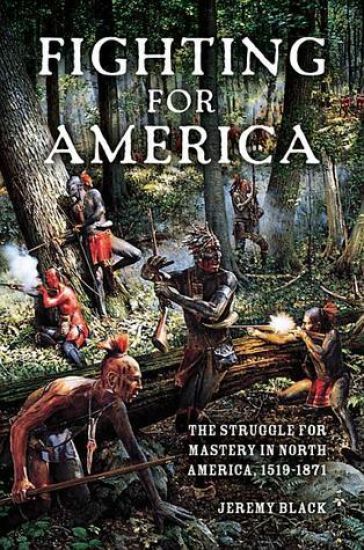
Prize winning author Jeremy Black traces the competition for control of North America from the landing of Spanish troops under Hernán Cortés in modern Mexico in 1519 to 1871 when, with the Treaty of Washington and the withdrawal of most British garrisons, Britain accepted American mastery in North America. In this wide-ranging narrative, Black makes clear that the process by which America gained supremacy was far from inevitable. The story Black tells is one of conflict, diplomacy, geopolitics, and politics. The eventual result was the creation of a United States of America that stretched from Atlantic to Pacific and dominated North America. The gradual withdrawal of France and Spain, the British accommodation to the expanding U. S. reality, the impact of the American Civil War, and the subjugation of Native peoples, are all carefully drawn out. Black emphasizes contingency not Manifest Destiny, and reconceptualizes American exceptionalism to take note of the pressures and impact of international competition.
In War in the Modern World, 1990-2014, Jeremy Black looks at the most modern of conflicts from the perspective that war is a central feature of the modern world. Arguing that understanding non-Western developments is crucial if the potential of Western war-making is to be assessed accurately, the book also asserts that knowing the history of conflict can only help future generations. Black argues for the need to emphasise the variety of military circumstances, as well as the extent to which the understanding of force and the definitions of victory and defeat are guided by cultural assumptions. War has a multi-faceted impact in the modern world, and this book shows its significance. As the latest volume in the Warfare and History series, this title takes a global and historical perspective on modern warfare, enabling the reader to approach familiar conflicts through a new analytical framework. This book is an invaluable resource for all students of the history of modern warfare.
Covering the period from the end of the Anglo-French alliance in 1731 to the declaration of war between the two powers in 1744, this book charts a turbulent period in British politics that witnessed the last decade of the Walpole ministry, the attempt to replace it by a Patriot government, and the return of the Old Corps Whigs to a process of dominance. In particular it reveals how ministerial change and political fortunes were closely linked to foreign policy, with foreign policy both affecting, and being affected by, political developments. The book draws upon a great range of foreign and domestic sources, but makes particular use of foreign diplomatic records. These are important as many negotiations were handled, at least in part, through envoys in London. Moreover, these diplomats regularly spoke with George II and his ministers, and some were personal friends of envoys and could be used for secret negotiations outside normal channels. The range of sources consulted ensures that the book offers more than any previous book to cover the period as a whole, whilst not simply becoming a detailed study of a number of episodes. Instead it retains the strong structural aspects of the relationship between foreign policy and politics necessary to examine questions about political stability, motivation and effectiveness. Following on from Jeremy Black’s previous studies on eighteenth-century foreign policy, ’Politics and Foreign Policy under George I’ (covering the period 1714-27) this new book takes the story up to 1744 and continues to illuminate the complex and often opaque workings of the British state at a turbulent period of European history.
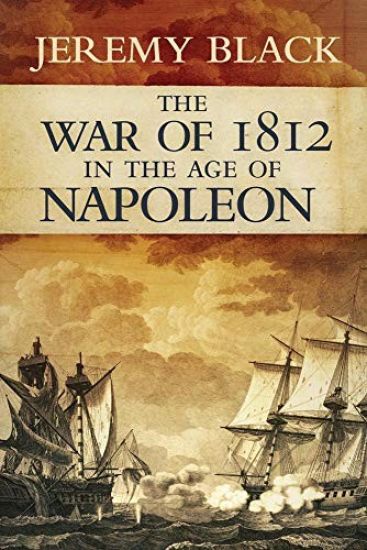
The War of 1812 is etched into American memory with the burning of the Capitol and the White House by British forces, The Star-Spangled Banner, and the decisive naval battle of New Orleans. Now a respected British military historian offers an international perspective on the conflict to better gauge its significance. In The War of 1812 in the Age of Napoleon, Jeremy Black provides a dramatic account of the war framed within a wider political and economic context than most American historians have previously considered. In his examination of events both diplomatic and military, Black especially focuses on the actions of the British, for whom the conflict was, he argues, a mere distraction from the Napoleonic War in Europe. Black describes parallels and contrasts to other military operations throughout the world. He stresses the domestic and international links between politics and military conflict; in particular, he describes how American political unease about a powerful executive and strong army undermined U. S. military efforts. He also offers new insights into the war in the West, amphibious operations, the effects of the British blockade, and how the conflict fit into British global strategy. For those who think the War of 1812 is a closed book, this volume brims with observations and insights that better situate this ""American"" war on the international stage.
This new volume examines the influence of trade and empire from 1689 to 1815, a crucial period for British foreign policy and state-building. Jeremy Black, a leading expert on British foreign policy, draws on the wide range of archival material, as well as other sources, in order to ask how far, and through what processes and to what ends, foreign policy served commercial and imperial goals during this period. The book is particularly interested in the conceptualization of these goals in terms of international competition, and how the contours and contents of this conceptualization altered during this period. Trade, Empire and British Foreign Policy, 1689-1815 also analyzes how the relationships between trade, empire and foreign policy were perceived abroad and how this contributed to an analysis of Britain as a distinctive state, and with what consequences. This book will be of much interest to students of British imperial history, diplomatic history and international history in general.
Politics and Foreign Policy in the Age of George I, 1714-1727
Jeremy Black
Ashgate Publishing Limited
2014
sidottu
Through its focus on the relationship between foreign and domestic politics, this book provides a new perspective on the often fractious and tangled events of George I’s reign (1714-27). This was a period of transition for Britain, as royal authority gave way to cabinet government, and as the country began to exercise increased influence upon the world stage. It was a reign that witnessed the trauma of the 1715 Jacobite Rebellion, saw Britain fighting Spain as part of the Quadruple Alliance, and in which Britain confronted the rise of Russia under Peter the Great. There has been relatively little new detailed work on this subject since Hatton’s biography of George I appeared in 1978, and that book, while impressive, devoted relatively little attention to the domestic political dimension of foreign policy. In contrast, Black links diplomacy to domestic politics to show that foreign policy was a key aspect of government as well as the leading battleground both for domestic politics and for ministerial rivalries. As a result he demonstrates how party identities in foreign policy were not marginal, to either policy or party, but, instead, central to both. The research is based upon a wealth of both British and foreign archive material, including State Papers Domestic, Scotland, Ireland and Regencies, as well as Foreign. Extensive use is also made of parliamentary and ministerial papers, as well as the private papers of numerous diplomats. Foreign archives consulted include papers from Hanover, Osnabrück, Darmstadt, Marburg, Munich, Paris, The Hague, Vienna and Turin. By drawing upon such a wide ranging array of sources, this book offers a rich and nuanced view of politics and foreign policy under George I.
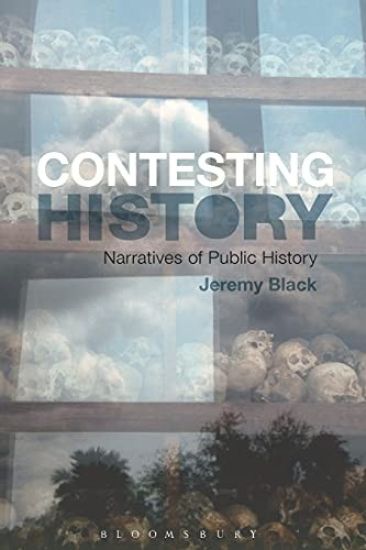
Contesting History is an authoritative guide to the positive and negative applications of the past in the public arena and what this signifies for the meaning of history more widely. Using a global, non-Western model, Jeremy Black examines the employment of history by the state, the media, the national collective memory and others and considers its fundamental significance in how we understand the past. Moving from public life pre-1400 to the struggle of ideologies in the 20th century and contemporary efforts to find meaning in historical narratives, Jeremy Black incorporates a great deal of original material on governmental, social and commercial influences on the public use of history. This includes a host of in-depth case studies from different periods of history around the world, and coverage of public history in a wider range of media, including TV and film. Readers are guided through this material by an expansive introduction, section headings, chapter conclusions and a selected further reading list. Written with eminent clarity and breadth of knowledge, Contesting History is a key text for all students of public history and anyone keen to know more about the nature of history as a discipline and concept.
Europe and the World, 1650-1830 is an important thematic study of the first age of globalisation. It surveys the interaction of Europe, Europe's growing colonies and other major global powers, such as the Ottoman Empire, China, India and Japan. Focusing on Europe's impact on the world, Jeremy Black analyses European attitudes, exploration, trade and acquisition of knowledge.
Placing eighteenth-century warfare in a truly global context, Jeremy Black challenges conventional accounts and offers a reappraisal of debates in Western and Asian history. This concise, up-to-date survey assumes little prior knowledge and provides cutting-edge historical insights into a crucial period of world history.
Recent debates about British political and military strategies, derived in particular from dissension about Britain’s relationship with Europe and from disagreement over the Iraq war, has led to a greater awareness of the problematic nature of the concept of ‘national interests’. This major new work delivers a long view of this issue, its twin strands are captured by an assessment both of the Continental commitment and British interventionism in the 18th Century. The extent to which Britain’s rise to superpower status in America and Asia was related to the Continental connection, and her Hanoverian interests, is a central theme of this study, as is the relationship between the domestic position of the Crown and its interests as Electors of Hanover. The issue of Continental interventionism opens up the question of how alliances generate their own pressures, at the same time that they are supposed to help overcome challenges; while also indicating how the domestic support for alliances shifts, creating its own dynamics that in turn affect the international dimension. This book will be of great interest to students and scholars of international relations, British foreign policy, British history and war and conflict studies.
In this stimulating new text, renowned military historian Jeremy Black unpacks the concept of culture as a descriptive and analytical approach to the history of warfare. Black takes the reader through the limits and prospects of culture as a tool for analyzing war, while also demonstrating the necessity of maintaining the context of alternative analytical matrices, such as technology. Black sets out his unique approach to culture and warfare without making his paradigm into a straightjacket. He goes on to demonstrate the flexibility of his argument through a series of case studies which include the contexts of rationale (Gloire), strategy (early modern Britaisn), organizations (the modern West), and ideologies (the Cold War). These case studies drive home the point at the core of the book: culture is not a bumper sticker; it is a survival mechanism. Culture is not immutable; it is adaptable. Wide-ranging, international and always provocative, War and the Cultural Turn will be required reading for all students of military history and security studies.
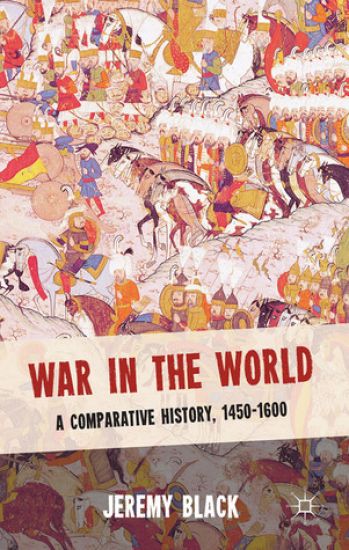
War was a central theme in the world history of the late fifteenth and sixteenth centuries, with military capability and activity central to its states, societies, economies and cultures. War in the World 1450–1600 provides an account of warfare in the period, placing it in global context. It offers a corrective to a narrative that has emphasised European developments and obscured the history of non-European military systems and cultures of war. Highlighting conflict between non-Western powers, which constituted most of the conflict around the world, as well as giving due attention to warfare between Western and non-Western powers, Black emphasises the breadth and variety of military trajectories and connections. This comparative context also provides a framework for considering the idea of a European-based Military Revolution. A wide-ranging account of world military history in a period of substantial development, the book will be essential reading for those interested in global history and conflict. War in the World 1450–1600 is designed as a companion volume to Jeremy Black's Beyond the Military Revolution: Warfare in the Seventeenth-Century World.
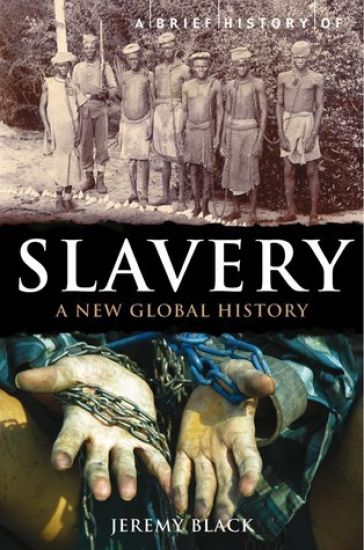
A thought-provoking and important book that raises essential issues crucial not only for understanding our past but also the present day. In this panoramic history, Jeremy Black tells how slavery was first developed in the ancient world, and reaches all the way to the present in the form of contemporary crimes such as trafficking and bonded labour. He shows how slavery has taken many forms throughout history and across the world - from the uprising of Spartacus, the plantations of the West Indies, and the murderous forced labour of the gulags and concentration camps. Slavery helped to consolidate transoceanic empires and helped mould new world societies such as America and Brazil. Black charts the long fight for abolition in the nineteenth century, looking at both the campaigners as well as the harrowing accounts of the enslaved themselves. Slavery is still with us today, and coerced labour can be found closer to home than one might expect.