Kirjojen hintavertailu – 12 877 731 kirjaa ja 26 kauppaa

Kirjailija

Jeremy Black

Kirjat ja teokset yhdessä paikassa: 255 kirjaa, julkaisuja vuosilta 1992–2027, suosituimpiin kuuluu Geopolitikens återkomst : striden om framtidens historia. Vertaile teosten hintoja ja tarkista saatavuus suomalaisista kirjakaupoista.

255 kirjaa

Kirjojen julkaisuvuodet: 1992–2027.

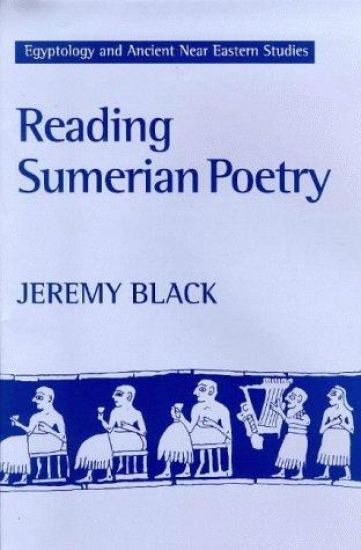
Reading Sumerian Poetry

Reading Sumerian Poetry

Jeremy Black

BLOOMSBURY PUBLISHING PLC
2000
sidottu
Sumer was the first literary culture in the history of the world, as early as 2500 BC. Dr Black explroes how we can "read" this oldest poetry today. His account is structured around the the narrative poem that treats the hero Lugalbanda and his enounter with a monstrous bird.
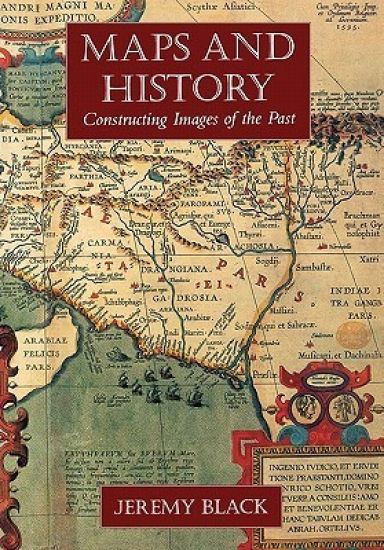
Maps and History

Maps and History

Jeremy Black

Yale University Press
2000
pokkari
Historical atlases offer an understanding of the past that is invaluable to historians, not only because they convey a previous age's sense of space and distance but also because they reveal what historians and educators of those periods thought important to include or omit. This book—the first comprehensive and wide-ranging account of the historical atlas—explores the role, development, and nature of this important reference and discusses its impact on the presentation of the past. Jeremy Black begins with a consideration of the "pre-history" of the historical atlas: individual maps depicting the Holy Land at the time of Christ and maps of the classical world. He then examines the first known historical atlas, the Parergon of Abraham Ortel, which was published in Antwerp in 1579 and was followed by other works that mapped the world of the Bible and the classics. In the eighteenth century, there was a growing interest in mapping the post-Classical world, and works appeared that included maps of medieval Europe. In the nineteenth century, historical maps came increasingly to embody a clear political emphasis, mapping blocs of territory separated by clear linear frontiers and reflecting an approach to the past focused on undivided sovereignty and the development of the nation-state. In the twentieth century, historical atlases have both contributed to and responded to other ideologies, portraying peoples, languages, and cultural differences in an immediate and often striking visual form. Since 1945 the range of atlases has broadened to include maps devoted to the global environment, health, population trends, and other sociological, cultural, and economic changes. And the "liberation" of the Third World and the ending of the Cold War have stimulated a full scale re-mapping of the globe and the way it is perceived.
Modern British History

Modern British History

Jeremy Black

Red Globe Press
2000
nidottu
Jeremy Black's compelling text provides a thematic account of British history centering on the twentieth century. To the traditional, chronological account of historic events, Black adds long-range thematic chapters reflecting the full range of topics. These include political structures, ideologies, wars and international relations, economic history, social history as well as consumerism, media and mass communication. The coverage is further enlivened with exhibits providing supplementary background information on key personalities and pivotal events, and numerous illustrations.
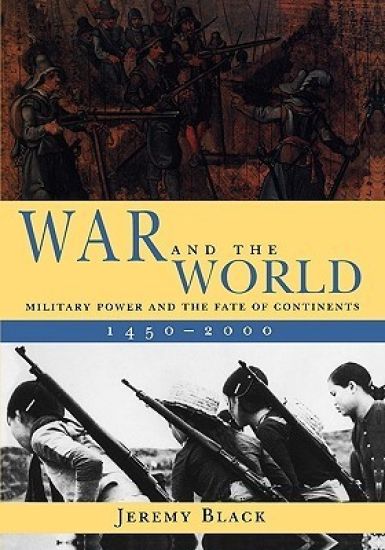
War and the World

War and the World

Jeremy Black

Yale University Press
2000
pokkari
In this brilliant history of warfare, Jeremy Black is the first to approach the entire modern era from a comprehensive global perspective. He provides a wide-ranging account of the nature, purpose, and experience of war over the past half-millennium and argues the importance of viewing the rise of European power within a wider international context. Investigating both land and sea warfare, Black examines weaponry, tactics, strategy, and resources as well as the political, social, and cultural impact of conflict. The book takes issue with established interpretations, not least those that emphasize technology, and challenges the view that European military and naval forces were dominant throughout the period. European mastery at sea did not always translate into equivalent success on land, says Black, and many non-European military systems—the Ottomans in their expansionist years, Babur and the Mughals in sixteenth-century India, and the Manchu in China in the following century, for example—were formidable in their own right. The author contends that in the nineteenth century, the focal period of Europe’s military revolution, the international military balance shifted decisively. Black shows how military developments, combined with political, economic, and ideological shifts, influenced the nature and success of European imperialism. Linking debates on early modern history with those of more recent centuries, he offers a fundamental reexamination of the role of war in the progress of nations.

Eighteenth Century Europe, 1700-1789

Eighteenth Century Europe, 1700-1789

Jeremy Black

Red Globe Press
1999
nidottu
This new edition of this highly successful and influential work includes two entirely new chapters - on Europe and the wider world and on the Revolutionary crisis - and is extensively revised throughout. It offers a wide-ranging thematic account of the century, that explores social, cultural and economic topics, as well as giving a clear analysis of the political events. Filled with fascinating detail and unusual examples, this absorbing history of eighteenth-century Europe will bring the period alive to students and teachers alike.
From Louis XIV to Napoleon

From Louis XIV to Napoleon

Professor Jeremy Black; Jeremy Black

Routledge
1999
nidottu
Much of the period 1661-1815 appeared to be the age of France. France was the greatest power in Western Europe in the late seventeenth and eighteenth centuries and Louis XIV and Napoleon seemed to dominate their periods. yet when Louis XIV died in 1715, and again after Napoleon's attempt to resume power was defeated at Waterloo a century later, France appeared as a waning power. This failure in Europe was matched on the world scale. France was overtaken by Britain in the struggle for maritime predominance, and ended the period with her empire in ruins. From Louis XIV to Napoleon is a scholarly yet accessible account which considers why France was not more successful and throws light on French history, international relations, warfare and the rise and fall of French power.
European Warfare 1453-1815

European Warfare 1453-1815

Jeremy Black

Red Globe Press
1999
nidottu
War played a fundamental role in European history during the early modern period. This up-to-date collection covers this crucial period in military history and analyses the nature and impact of warfare on the political and social development of Europe.
Britain As A Military Power, 1688-1815

Britain As A Military Power, 1688-1815

Professor Jeremy Black; Jeremy Black

Routledge
1998
sidottu
In 1688, Britain was successfully invaded, its army and navy unable to prevent the overthrow of the government. 1815, Britain was the strongest power in the world with the most succesful navy and the largest empire. Britain had not only played a prominent role in the defeat of Napoleonic France, but had also established itself as a significant power in South Asia and was unsurpassed in her global reach. Her military strength was related to, and based on, one of the best systems of public finance in the world and held a strong trade position. This illustrated text assesses the military aspects of this shift, concentrating on the multi-faceted nature of the British military effort.; Topics covered include: the rise of Britain; an analysis of military infrastructure; warfare in the British Isles; conventional warfare in Europe; trans- oceanic warfare with European powers; the challenge of America; and the challenge of Revolutionary and Napoleonic France.
Reading Sumerian Poetry

Reading Sumerian Poetry

Jeremy Black

Cornell University Press
1998
sidottu
An international authority on Sumerian culture, Jeremy Black here provides an introduction to the world's oldest poetry. Sumer, in southern Iraq, was the first literate culture in civilization, dating as far back as 2500 b.c. Its literature, which is made up almost entirely of poetry, was lost for nearly two millennia; rediscovery and decipherment of the ancient texts began in the nineteenth century. Black is fully aware of the difficulties of applying modern literary methods to the study of ancient literature, emphasizing theoretical problems that arise from contemporary expectations of a unitary text. Acknowledging the fragmentary nature of Sumerian poetry, he turns what might be considered a serious obstacle to the enjoyment of the literature into an asset. The book features Black's complete English translations of Lugalbanda, a narrative poem about the eponymous hero and his encounter with a monstrous bird, and its sequel, Lugalbanda in the Mountain Cave. Looking closely at the imagery in the Lugalbanda poems, Black perceives in them a rich and sophisticated poetic imagination and technique, which, far from being in any sense "primitive," are so complex as to resist modern literary analysis.
Cuneiform Texts from Nimrud 4

Cuneiform Texts from Nimrud 4

D. J. Wiseman; Jeremy Black

The British School of Archaeology in Iraq
1996
sidottu
The library of Nimrud, probably established in 798 BC, was a prestigious royal foundation whose scribes had contacts all over the East, particularly with Nineveh. The 259 cuneiform tablets and fragments which constituted the library mainly described magical and medical rituals, prayers and instructions for training scribes. All the epigraphic finds from Sir Max Mallowan's excavations of 1955-7 are described in this volume, with additional material from the Iraq Archaeological Service's excavations of 1985.
European Warfare, 1660-1815

European Warfare, 1660-1815

Jeremy Black

Routledge
1994
sidottu
This is a history of warfare, wars and the armed forces of Europe from the military revolution of the mid-17th century to the Napoleonic wars.; This book is intended for broad-based undergrad courses on 18th century Europe/Britain and the Ancien Regime. 2nd and 3rd year thematic courses on warfare in the modern period, and students of war studies.
European Warfare, 1660-1815

European Warfare, 1660-1815

Professor Jeremy Black; Jeremy Black

Routledge
1994
nidottu
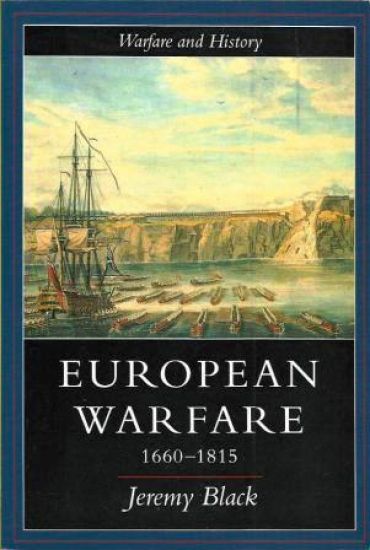
This is a history of warfare, wars and the armed forces of Europe from the military revolution of the mid-17th century to the Napoleonic wars.; This book is intended for broad-based undergrad courses on 18th century Europe/Britain and the Ancien Regime. 2nd and 3rd year thematic courses on warfare in the modern period, and students of war studies.
British Foreign Policy in an Age of Revolutions, 1783–1793
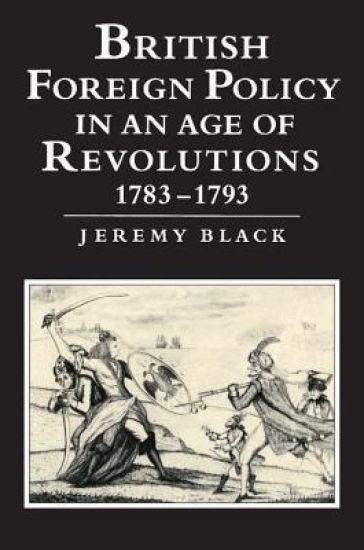
This is a study of British foreign policy in a crucial period of international political development. It provides a comprehensive account of the subject, and acts as a guide to the nature of the British state and to the international relations of the period. In 1783 Britain had lost America and was unstable domestically. By 1793 she had regained her position as the leading global maritime, colonial and commercial power. During the intervening years Britain went several times to the brink of war, in 1787 with France over control of the Dutch and their Empire, in 1790 with Spain over the British claim to settle on the Pacific coast of modern Canada, and in 1791 with Russia over the fate of the Turkish Empire. In 1793 Britain and revolutionary France went beyond the brink, a struggle which was crucial for both countries. Each of these crises is examined in an effort to throw light on the British state in an ‘age of revolutions’.
Convergence or Divergence?

Convergence or Divergence?

Jeremy Black

Red Globe Press
1994
nidottu
Relations with Continental Europe have been a central issue in British history. Several crucial questions can be identified: first, how similar or dissimilar was Britain, to other European countries in respect of its economy and political culture?; secondly, how far can similarity and difference be understood in terms of convergence and divergence, or of roughly parallel tracks reflecting and sustaining longstanding differences?; thirdly, did British people feel themselves to be Europeans?; fourthly did the British people take an informed and sympathetic interest in what was happening on the Continent, or did their ignorance of Europe lead to insularity and xenophobia?; and fifthly, to what extent was the British stage, and Britain as a whole involved in the affairs of Europe, diplomatically, militarily, economically, culturally? This wide-ranging, thoughtful and provocative study tackles these questions from the late Iron Age to the current debate about European integration. It is at once an important contribution to British history and a crucial work for those seeking to understand Britain's past and present position in Europe.
Pitt the Elder

Pitt the Elder

Jeremy Black

Cambridge University Press
1992
pokkari
This book offers a readable yet scholarly account of the life of one of the greatest statesmen of empire, William Pitt the Elder, First Earl of Chatham (1708-78). Chatham is seen as a political outsider who rose to direct British policy in the Seven Years War, the crucial struggle that gave Canada to Britain. A critic of domestic corruption, he was subsequently a champion of American liberties. Chatham's achievement was all the more remarkable for a politician who was dogged for much of his life by poor physical health and considerable mental stress. His position as an outsider was crucial: it helped make his reputation, and to make him an unsettling figure. It also caused problems when he gained office, but it ensured Chatham was and seemed, 'different'. He was a man with whom the national interest could be associated, not simply because he made the claim himself, but also because he seemed apart from the world of court and connection.