Kirjojen hintavertailu – 12 903 725 kirjaa ja 27 kauppaa
Kirjailija
Jesse Harasta
Kirjat ja teokset yhdessä paikassa: 82 kirjaa, julkaisuja vuosilta 2013–2019, suosituimpiin kuuluu A História da Separação entre Sunitas e Xiitas: Compreender as Divisões no seio do Islão.. Vertaile teosten hintoja ja tarkista saatavuus suomalaisista kirjakaupoista.
*Includes pictures *Explains how the syllabary works and its influences *Includes footnotes and a bibliography for further reading Tragically, the Cherokee is one of America's best known tribes due to the trials and tribulations they suffered by being forcibly moved west along the "Trail of Tears", but that overlooks the contributions they made to American society well before the 19th century. The Cherokee began the process of assimilation into European America very early, even before the establishment of the Unites States, and by the early 19th century they were one of the "Five Civilized Tribes." Despite all of the hostilities and the Trail of Tears, the Cherokee ultimately became the first people of non-European descent to become U. S. citizens en masse, and today the Cherokee Nation is the largest federally recognized tribe in the United States, boasting over 300,000 members. The Cherokee might be the most famous tribe in the country, and if so, the person most responsible for it is Sequoyah, whose invention of the Cherokee syllabary also played a prominent role in facilitating the assimilation between the Cherokee and Americans. Sequoyah began work on devising the writing and reading system around 1809, and it was instantly popular among the Cherokee, to the extent that it was being used in written publications among the tribe by the 1820s. The syllabary has been in use ever since, both within the tribe and among outsiders. Thanks to his accomplishments, Sequoyah was celebrated in his own lifetime, but due to his obscure roots, accounts of his early years still vary dramatically. Sequoyah: The Life and Legacy of the Most Famous Cherokee looks at the life and work of the man who put the Cherokee language down in print and made it possible for outsiders to both read and write it. This includes analyzing the nature of his invention, the social context in which he lived, and the ongoing legacy he has left for the modern Cherokee. Along with pictures of important people, places, and events, you will learn about Sequoyah like never before, in no time at all.
*Includes pictures of important people and places. *Explains the origins, history, and social structure of the Pawnee. *Includes a Bibliography for further reading. "All things in the world are two. In our minds we are two, good and evil. With our eyes we see two things, things that are fair and things that are ugly. We have the right hand that strikes and makes for evil, and we have the left hand full of kindness, near the heart. One foot may lead us to an evil way, the other foot may lead us to a good. So are all things two, all two." - Letakos-Lesa (Eagle Chief), a member of the Pawnee From the Trail of Tears to Wounded Knee and Little Bighorn, the narrative of American history is incomplete without the inclusion of the Native Americans that lived on the continent before European settlers arrived in the 16th and 17th centuries. Since the first contact between natives and settlers, tribes like the Sioux, Cherokee, and Navajo have both fascinated and perplexed outsiders with their history, language, and culture. In Charles River Editors' Native American Tribes series, readers can get caught up to speed on the history and culture of North America's most famous native tribes in the time it takes to finish a commute, while learning interesting facts long forgotten or never known. One of the most famous Native American tribes on the Great Plains is the Pawnee, and they were also once one of the strongest groups in the region. At the turn of the 19th century, there were about 10,000 members spread across much of modern day Nebraska, Kansas, South Dakota and even into Missouri and Iowa. The Pawnee were able to thrive despite having strong neighbors to their west, most notably the Arapaho and the Lakota Sioux, and though the different Pawnee bands were autonomous, they also recognized the need to cooperate with each other to face various threats. For several centuries, the Pawnee lived in relatively sedentary communities, relying on agriculture in what is today known as America's "breadbasket", and anthropologists have found Pawnee settlements that date all the way back to the 13th century. Inevitably, however, European contact began to drastically affect the Pawnee's lifestyle, especially when horses were introduced to their societies. Like other groups on the Plains, the Pawnee eventually became more reliant on buffalo and thus more nomadic. Like other Native American groups in the region, the westward push by American settlers led to conflicts that nearly wiped out all of the Pawnee by the latter half of the 19th century. Nonetheless, the Pawnee were resilient enough to have their numbers bounce back, even as their lands were taken and they moved onto reservations. Today, the Pawnee live on reservations that are only a fraction of the size of the vast expanses they once controlled. Native American Tribes: The History and Culture of the Pawnee comprehensively covers the culture and history of the famous group, profiling their origins, their history, and their lasting legacy. Along with pictures of important people, places, and events, you will learn about one of the most influential tribes of the Great Plains like you never have before, in no time at all.
*Includes pictures *Includes Spanish accounts of the Aztec's human sacrifices *Includes footnotes and a bibliography for further reading "They strike open the wretched Indian's chest with flint knives and hastily tear out the palpitating heart which, with the blood, they present to the idols... They cut off the arms, thighs and head, eating the arms and thighs at ceremonial banquets. The head they hang up on a beam, and the body is...given to the beasts of prey." - Bernal Diaz, a Spaniard who described the Aztec's human sacrifice From the moment Spanish conquistador Hernan Cort s first found and confronted them, the Aztecs have fascinated the world, and they continue to hold a unique place both culturally and in pop culture. Nearly 500 years after the Spanish conquered their mighty empire, the Aztecs are often remembered today for their major capital, Tenochtitlan, as well as being fierce conquerors of the Valley of Mexico who often engaged in human sacrifice rituals. Ironically, and unlike the Mayans, the Aztecs are not widely viewed or remembered with nuance, in part because their own leader burned extant Aztec writings and rewrote a mythologized history explaining his empire's dominance less than a century before the Spanish arrived. While the Mayans are remembered for their astronomy, numeral system, and calendar, the Aztecs have primarily been remembered in a far narrower way, despite continuing to be a source of pride to Mexicans through the centuries. As a result, even though the Aztecs continue to interest people across the world centuries after their demise, it has fallen on archaeologists and historians to try to determine the actual history, culture, and lives of the Aztecs from the beginning to the end, relying on excavations, primary accounts, and more. That said, more is known about Aztec religious practices than any other aspect of their culture, mostly because the major element in the public ceremonies was focused on human sacrifice. The rituals were apparently so gruesome that they horrified even the Spanish, who were not exactly known for their gentility when it came to war and religious fervor. A Spaniard named Bernal Diaz described what happened at one religious ceremony: "They have a most horrid and abominable custom which truly ought to be punished and which until now we have seen in no other part, and this is that, whenever they wish to ask something of the idols, in order that their plea may find more acceptance, they take many girls and boys and even adults, and in the presence of these idols they open their chests while they are still alive and take out their hearts and entrails and burn them before the idols, offering the smoke as sacrifice. Some of us have seen this, and they say it is the most terrible and frightful thing they have ever witnessed." Naturally, Cort s and other Spaniards depicted the Aztecs as savages greatly in need of conversion to Catholicism. The Spanish used the Aztec's religious practices as a justification for Cort s' conquest, but even though the Spanish attempted to burn as much as they could, plenty of information about Aztec mythology also survived. The Mythology and Religion of the Aztec examines the history and legacy of the religion practiced by the famous Mesoamerican empire. Along with pictures and a bibliography, you will learn about Aztec religion and mythology like you never have before, in no time at all.
*Includes pictures. *Includes ancient accounts describing the Celts and their religious practices. *Includes footnotes and a bibliography. "Throughout all of Gaul there are two classes of people who are treated with dignity and honor. This does not include the common people, who are little better than slaves and never have a voice in councils. Many of these align themselves with a patron voluntarily, whether because of debt or heavy tribute or out of fear of retribution by some other powerful person. Once they do this, they have given up all rights and are scarcely better than servants. The two powerful classes mentioned above are the Druids and the warriors. Druids are concerned with religious matters, public and private sacrifices, and divination." - Julius Caesar The Celts are one of the most well-known groups in Europe and one of the least understood. Depending on which classifications are used, the Celts are also one of the oldest civilizations in Europe. In the centuries before Christ, the Celts were spread out across much of continental Europe, and though they are mostly identified with Gaul, evidence suggests they also spread as far as Portugal. Though they were spread out across Europe before the height of the Roman Empire, most people associate the Celts with the British Isles today, particularly Ireland and Scotland. After they had been relegated to those smaller regions as a result of the Romans and other migrations, the culture of the Celts as it is currently understood began to congeal during the Early Middle Ages, and Celtic culture, folklore, and legend have all become inextricably intertwined with Irish history and British history as a whole. Historically, Celtic cultures differ from their English and French neighbors in a number of ways, including social organization, language, values and economic systems, but one of the most captivating of these has always been their myths. Celtic Myths, which can be read in translation without needing special training in grammar, are more accessible than the Celtic languages, and unlike the other distinctive features that have faded over the centuries, myths still have their immediacy and power when read today. While much has undoubtedly been lost from the ancient Celts over time, medieval manuscripts help scholars understand how Celtic myths have reached the form they have today. Like many ancient belief systems, Celtic mythology shares Indo-European roots, meaning Celtic beliefs have cousins in related societies like the Norse, Greeks, Romans and Slavs, with a foundation of shared mythmaking that goes back several millennia. Descriptions of Celtic mythology by their contemporaries, including the Ancient Romans and Greeks, provide a hazy picture, while the tales recorded by Christian monks and undoubtedly bear the stamp of their own religious affiliations. Celtic Mythology: The Religion of the Ancient Celts examines the history and legacy of the religion practiced by the Ancient Celts. Along with pictures and a bibliography, you will learn about Celtic mythology like you never have before, in no time at all.
*Includes pictures. *Includes footnotes and a bibliography for further reading. When the Spanish came into contact with different tribes in the Southwest, they were so intrigued by the structure of the communities that they gave the natives the name Pueblo, a term they used to measure certain sizes for their own settlements.. Thus, while most Americans have heard of the Pueblo and Navajo, many remain unfamiliar with distinctions within the tribes. The Spaniards' interest was understandable, because the Pueblo fascinated those who came across their settlements, especially those located in desert regions and the sides of cliffs that involved the use of adobe mud, stone, carving homes out of cliffs. One such settlement, Oraibi, was created around 1100 A. D. and remains one of the oldest continuously inhabited settlements in North America, but the most famous of the cliff dwellings can be found at Mesa Verde, which was turned into a national park in the early 20th century, about 1500 years after the Ancient Pueblo established the settlement. Today's Puebloan tribes are descended from tribes known as the "Ancestral Puebloan People", one of which was the Anasazi, but anthropologists believe that the Anasazi were a common ancestor of every Pueblo group, so the Ancient Pueblo are often referred to simply as the Anasazi. The name Anasazi came from their enemies; it is a Navajo word that means "enemy ancestor". While that name understandably continues to offend the descendants of the Anasazi, it also underscores that there is still a lot of uncertainty regarding the history of the Anasazi. In fact, it is still unclear what the Anasazi called themselves, and though they resided near the "Four Corners" area of Utah, Arizona, Colorado and New Mexico for more than 700 years, they mysteriously abandoned their settlements shortly after they truly began to flourish around 1050-1150 A. D. Despite the mystery surrounding the Anasazi, it's widely agreed that they occupied Mesa Verde and its unique structures for a period of nearly 700 years, beginning as early as the 7th century. Thanks to its occupants taking advantage of the surrounding geologic formations, Mesa Verde is an amazing collection of cliff dwellings, as well as houses that utilize caves and rock overhangs, and structures consisting of adobe and sandstone. Unfortunately, the natural conditions that make Mesa Verde so special also likely played a role in its abandonment, with overpopulation and drought forcing inhabitants out near the end of the 13th century. Mesa Verde: The History of the Ancient Pueblo Settlement covers the establishment of Mesa Verde from its origins until its establishment as a national park. Along with pictures, footnotes, and a bibliography, you will learn about Mesa Verde like never before.
*Includes pictures.*Includes historic accounts about the myth of El Dorado.*Includes a bibliography and footnotes for further reading. Alongside the famous Lost City of Atlantis, perhaps no mythological city has captured the imaginations of people or been the source for exploration quite like El Dorado, the fabled city of gold that the Spanish believed was located somewhere in South America. The origins of the Spaniards' belief in the existence of the mythical city was based on their rumors surrounding the tribal chief of the Muisca in present-day Colombia; the Spanish heard that his initiation included covering himself with gold dust and diving into Lake Guatavita. Of course, if the chief could cover himself in gold, he must have access to a lot of it, and around this figure, the myth of El Dorado sprang up as the location of it. Naturally, the belief in the existence of El Dorado propelled it from being merely a city to an entire empire itself, and this spurred several journeys in the 16th century, including one by Francisco Pizarro's half-brother, Gonzalo, and another by Sir Walter Raleigh. Although none of these journeys actually discovered such a place, they resulted in plenty of lives lost and a lot of exploration of the heart of South America. Moreover, despite the fact none of the explorers actually found El Dorado, the rumors and journeys only cemented the belief that such a place existed, and El Dorado was actually located on maps made by several European nations for centuries. As folklorist Jim Griffith once put it, "El Dorado shifted geographical locations until finally it simply meant a source of untold riches somewhere in the Americas." In fact, it would not be until about the early 19th century that explorer Alexander von Humboldt disproved El Dorado's existence, at least in the spot it was assumed to be located for over 200 years. Although no El Dorado was ever found, the myth still fascinates people today, and it remains a pop culture fixture around the globe. El Dorado is also still used as a metaphor not only for places where people seek to get rich quick but even as a mentality and mindset, much like the notion of the American Dream. El Dorado: The Search for the Fabled City of Gold chronicles the origins behind the myth and the history of the actual journeys that sought to discover the city. Along with pictures of important people, places, and events, you will learn about El Dorado like never before, in no time at all.
*Includes pictures. *Includes footnotes and a bibliography for further reading. Many ancient civilizations have influenced and inspired people in the 21st century. The Greeks and Romans continue to fascinate the West today. But of all the world's civilizations, none have intrigued people more than the Mayans, whose culture, astronomy, language, and mysterious disappearance all continue to captivate people. In 2012 especially, there was a renewed focus on the Mayans, whose advanced calendar has led many to speculate the world would end on the same date the Mayan calendar ends, but if anything, the focus on the "doomsday" scenario overshadowed the Mayans' true contribution to astronomy, language, sports, and art. The Maya maintained power in the Yucatan for over a thousand years, and at the height of its "Classical era" (3rd-9th centuries A. D.), the city of Tikal was one of the power centers of the empire. Archaeologists believe Tikal had been built as early as the 5th or 4th century BC, and eventually it became a political, economic and military capital that was an important part of a far-flung network across Mesoamerica, despite the fact it was seemingly conquered by Teotihuacan in the 4th century AD. It seems the foreign rulers came to assimilate Mayan culture, thus ensuring Tikal would continue to be a power base, and as a result, the city would not be abandoned until about the 10th century AD. As one of the Ancient Maya's most important sites, construction at Tikal was impressive, and even though it was apparently conquered, the city's records were unusually well preserved. This includes a list of the city's dynastic rulers, as well as the tombs and monuments dedicated to them. Thanks to this preservation, Tikal offers researchers their best look at the Ancient Maya and has gone a long way toward helping scholars understand Mayan history. Tikal: The History of the Ancient Maya's Famous Capital covers the history of the city, as well as the speculation and debate surrounding it. Along with pictures and a bibliography, you will learn about Tikal like you never have before, in no time at all.
*Includes pictures. *Includes footnotes and a bibliography for further reading. Many ancient civilizations have influenced and inspired people in the 21st century, like the Greeks and the Romans, but of all the world's civilizations, none have intrigued people more than the Mayans, whose culture, astronomy, language, and mysterious disappearance all continue to captivate people. At the heart of the fascination is the most visited and the most spectacular of Late Classic Maya cities: Chich n Itz . Chich n Itz was inhabited for hundreds of years and was a very influential center in the later years of Maya civilization. At its height, Chich n Itz may have had over 30,000 inhabitants, and with a spectacular pyramid, enormous ball court, observatory and several temples, the builders of this city exceeded even those at Uxmal in developing the use of columns and exterior relief decoration. Of particular interest at Chich n Itz is the sacred cenote, a sinkhole was a focus for Maya rituals around water. Because adequate supplies of water, which rarely collected on the surface of the limestone based Yucatan, were essential for adequate agricultural production, the Maya here considered it of primary importance. Underwater archaeology carried out in the cenote at Chich n Itz revealed that offerings to the Maya rain deity Chaac (which may have included people) were tossed into the sinkhole. Although Chich n Itz was around for hundreds of years, it had a relatively short period of dominance in the region, lasting from about 800-950 A. D. Today, tourists are taken by guides to a building called the Nunnery for no good reason other than the small rooms reminded the Spaniards of a nunnery back home. Similarly the great pyramid at Chich n Itz is designated El Castillo ("The Castle"), which it almost certainly was not, while the observatory is called El Caracol ("The Snail") for its spiral staircase. Of course, the actual names for these places were lost as the great Maya cities began to lose their populations, one by one. Chich n Itz was partially abandoned in 948, and the culture of the Maya survived in a disorganized way until it was revived at Mayap n. Mayap n emerged first as a minor settlement in the orbit of Chich n, but it slowly came to replace it after the larger city's trade connections with the Toltecs of Tula crumbled and it suffered a staggering defeat by Mayap n's armies. The building styles and art in their city show both admiring references to the great Chich n Itz as well as an attempt to position Mayap n as a more orthodox heir of Maya tradition. At the same time, they emulated many features and could not escape the tremendous influences - especially in religion - of Chich n. This is seen in the fact that many of the most important buildings in the new city appear to be small-scale reproductions of ones in Chich n. Due in part to the fact that it has long been overshadowed by Chich n Itz , a lot excavation and scholarly research on the site has only come about in recent decades, and even though there is still plenty of work to do, a lot of information about life in Mayap n has been unearthed. At its height, Mayap n may have boasted a population of over 15,000, and archaeologists have had their hands full trying to discover and restore the several thousand buildings both inside Mayap n's walls and outside them. Chich n Itz & Mayap n: The Most Famous Mayan Capitals of the Postclassic Period comprehensively covers the history of the city, as well as the speculation surrounding the purpose of Chich n Itz and the debate over the buildings. Along with pictures and a bibliography, you will learn about the Maya's most famous cities like you never have before, in no time at all.
*Includes pictures. *Includes footnotes for further reading. Many ancient civilizations have influenced and inspired people in the 21st century, like the Greeks and the Romans, but of all the world's civilizations, none have intrigued people more than the Mayans, whose culture, astronomy, language, and mysterious disappearance all continue to captivate people. At the heart of the fascination is Chich n Itz , the most visited Mayan site, but Chich n Itz 's prominence lasted for less than 200 years and was eventually succeeded by Mayap n, which lasted as the capital of the Maya for nearly 225 years until the middle of the 15th century. The Mayans are still remembered and celebrated for their culture and their contributions to astronomy, language, and sports, and many of their advancements came with Mayap n as their capital. Early Mayap n was closely connected to the overshadowing power of the region at the time: the mighty trading city of Chich n Itz . Mayap n emerged first as a minor settlement in the orbit of Chich n, but it slowly came to replace it after the larger city's trade connections with the Toltecs of Tula crumbled and it suffered a staggering defeat by Mayap n's armies. The building styles and art in their city show both admiring references to the great Chich n Itz as well as an attempt to position Mayap n as a more orthodox heir of Maya tradition. At the same time, they emulated many features and could not escape the tremendous influences - especially in religion - of Chich n. This is seen in the fact that many of the most important buildings in the new city appear to be small-scale reproductions of ones in Chich n. Due in part to the fact that it has long been overshadowed by Chich n Itz , a lot excavation and scholarly research on the site has only come about in recent decades, and even though there is still plenty of work to do, a lot of information about life in Mayap n has been unearthed. At its height, Mayap n may have boasted a population of over 15,000, and archaeologists have had their hands full trying to discover and restore the several thousand buildings both inside Mayap n's walls and outside them as well. Mayap n: The History of the Mayan Capital covers the history of the city, as well as the speculation and debate over the city's buildings. Along with pictures and a bibliography, you will learn about the Mayan capital like you never have before, in no time at all.
*Includes pictures. *Explains the Taj Mahal's construction history and cultural influences. *Includes footnotes and a bibliography for further reading. "Should guilty seek asylum here, Like one pardoned, he becomes free from sin. Should a sinner make his way to this mansion, All his past sins are to be washed away. The sight of this mansion creates sorrowing sighs; And the sun and the moon shed tears from their eyes. In this world this edifice has been made; To display thereby the creator's glory." - Emperor Shah Jahan's description of the Taj Mahal "The Taj Mahal rises above the banks of the river like a solitary tear suspended on the cheek of time." - Rabindranath Tagore, Bengali Nobel Laureate Poet "Rahul had wondered how someone could love their beloved so much that their dedication to them became one of the wonders of the world." - Faraaz Kazi, modern novelist Taj Mahal is Arabic for "crown of palaces", and the name could not be more fitting for one of the most instantly recognizable buildings in the world. Constructed over a span of about 20 years in the mid-17th century as a mausoleum for the wife of Emperor Shah Jahan, the Taj Mahal is aptly described by UNESCO, which designated it a World Heritage site, as "the jewel of Muslim art in India and one of the universally admired masterpieces of the world's heritage". Indeed, the Taj Mahal is truly a global icon because it masterfully fused the artistic and architectural elements of several cultures, including Indian, Ottoman, Persian, and Islamic cultures across the region. While the marble dome is the first feature that pops out about the Taj Mahal, the careful layout of the entire structure is also incredibly impressive, and it took thousands of laborers several years to work on the other features, from the gardens to the calligraphy inscribed on the exterior. The Taj Mahal also includes other buildings, including a mosque and other tombs and mausoleums for people close to the emperor. Not surprisingly, given the scope and quality of the work, the Taj Mahal has fascinated people around the world for centuries, and naturally, all sorts of myths about it have sprung up. For the most part, however, people are simply drawn to it today as one of the premiere tourist sites in the world, and millions of people come from around the world to visit it every year. The Taj Mahal: The History of India's Most Famous Monument chronicles the origins, construction, and history of the Taj Mahal over the last 350 years. Along with pictures of important people, places, and events, you will learn about one of the world's most famous memorials like you never have before.
*Includes pictures. *Includes ancient accounts of the Druids written by Caesar, Cicero, Pliny, and more. *Explains the modern revival of Druids. *Includes footnotes and a bibliography for further reading. "Throughout all of Gaul there are two classes of people who are treated with dignity and honor. This does not include the common people, who are little better than slaves and never have a voice in councils. Many of these align themselves with a patron voluntarily, whether because of debt or heavy tribute or out of fear of retribution by some other powerful person. Once they do this, they have given up all rights and are scarcely better than servants. The two powerful classes mentioned above are the Druids and the warriors. Druids are concerned with religious matters, public and private sacrifices, and divination." - Julius Caesar The Celts are one of the most well-known groups in Europe and one of the least understood. Depending on which classifications are used, the Celts are also one of the oldest civilizations in Europe. In the centuries before Christ, the Celts were spread out across much of continental Europe, and though they are mostly identified with Gaul, evidence suggests they also spread as far as Portugal. However, even though they were spread out across Europe before the height of the Roman Empire, most people associate the Celts with the British Isles today, particularly Ireland and Scotland. After they had been relegated to those smaller regions as a result of the Romans and other migrations, the culture of the Celts as it is currently understood began to congeal during the Early Middle Ages, and Celtic culture, folklore, and legend have all become inextricably intertwined with Irish history and British history as a whole. The Celts have fascinated people for centuries, and the biggest fascination of all has been over the Druids, a religious class at the heart of Celtic society that wielded great power. Naturally, people have been interested in Druids for centuries mostly because they don't understand much about the Druids or their practices. The earliest meaning of the word comes from the Ancient Romans, who labeled them "Druidae" in reference to the white robed order of Celtic priests living in Gaul, Britain and Ireland. They were a well-organized, secretive group who kept no written records and performed their rituals - allegedly including human sacrifice - in oaken groves, all of which interested and horrified the Romans. The order was eventually crushed under the weight of first Roman conquest and then the imposition of Christianity, and from the remains, centuries of myths, imaginings and dreams were superimposed over the little that was known about the Druids. Not surprisingly, people have come to associate the Druids with what have been imposed. Even today, there is a revived Druidic religious movement that fuses this skeleton of knowledge about the ancient Druids with ideas such as rituals at standing stones (like Stonehenge), nature and sun worship, the carrying of ornate staves, and Arthuriana. Wider popular culture has seen "Druids" - usually some form of secretive nature-priests - in games like Dungeons and Dragons and World of Warcraft, and films like Wicker Man (1973 and 2006) and Druids (2001). The Druids: The History and Mystery of the Ancient Celtic Priests explores the known and unknown about the Druids, from the historical evidence of their existence and practices to the evolution of Druidic concepts over time. This book also looks at the growth of Druidism since the 1700s, along with the practitioners who embrace new ideas and beliefs. Along with pictures and a bibliography, you will learn about the Druids like you never have before, in no time at all.
*Includes pictures of the sites and depictions of important people and events. *Explains the history of the sites and the theories about their purpose. *Describes the layout of the ancient cities, their important structures, and the theories about the buildings' uses. *Includes footnotes and bibliographies for further reading. Chichen Itza was inhabited for hundreds of years and was a very influential center in the later years of Maya civilization. At its height, Chichen Itza may have had over 30,000 inhabitants, and with a spectacular pyramid, enormous ball court, observatory and several temples, the builders of this city exceeded even those at Uxmal in developing the use of columns and exterior relief decoration. Of particular interest at Chichen Itza is the sacred cenote, a sinkhole was a focus for Maya rituals around water. Because adequate supplies of water, which rarely collected on the surface of the limestone based Yucatan, were essential for adequate agricultural production, the Maya here considered it of primary importance. Underwater archaeology carried out in the cenote at Chichen Itza revealed that offerings to the Maya rain deity Chaac (which may have included people) were tossed into the sinkhole. Why Maya cities were abandoned and left to be overgrown by the jungle is a puzzle that intrigues people around the world today, especially those who have a penchant for speculating on lost civilizations. In 1911, American historian Hiram Bingham publicized the finding of what at the time was considered a "lost city" of the Inca. Though local inhabitants had known about it for century, Bingham documented and photographed the ruins of a 15th century settlement nestled along a mountain ridge above the Urubamba Valley in Peru, placed so perfectly from a defensive standpoint that it's believed the Spanish never conquered it and may have never known about it. Today, of course, Machu Picchu is one of South America's best tourist spots, and the ruins have even been voted one of the Seven New Wonders of the World. But even though Machu Picchu is now the best known of all Incan ruins, its function in Incan civilization is still not clear. Some have speculated that it was an outpost or a frontier citadel, while others believe it to be a sanctuary or a work center for women. Still others suggest that it was a ceremonial center or perhaps even the last refuge of the Incas after the Spanish conquest. One of the most theories to take hold is that Machu Picchu was the summer dwelling of the Inca's royal court, the Inca's version of Versailles. As was the case with the renaming of Mayan and Aztec ruins, the names given to various structures by archaeologists are purely imaginary and thus not very helpful; for example, the mausoleum, palace or watchtower at Machu Picchu may have been nothing of the sort. Mexico City is now easily the largest city in the Western Hemisphere, trailing only Tokyo internationally, but unlike the other great cities of the Americas, Mexico City is not a new place. Mexico City instead has much in common with cities like London, Delhi or Cairo in the East in that it is an ancient city dating back centuries before the arrival of Columbus in Hispaniola. For, while much (including the name) has changed, Mexico City is the mighty Tenochtitlan, capital of the Aztec Empire and the great American metropolis of the Spanish Empire. There has been no break in occupation, and despite much devastation in the Conquest, the city was never fully destroyed. What the conquistadores encountered in Tenochtitlan was entirely unexpected: one of the world's greatest cities, teeming with over 200,000 people, built on an island on a lake and connected to the shore by a number of long, broad stone causeways. On the water itself were remarkable floating gardens, on surrounding shorelines were sprawling suburbs, and behind them was a dramatic wall of mountain peaks.
*Includes pictures. *Explains the history of Tenochtitlan from its founding to its destruction by Cortes and the Spanish. *Includes descriptions of Tenochtitlan by Spanish conquistadors, including Cortes' 1520 letter to Holy Roman Emperor Charles V. *Describes the layout of Tenochtitlan and its important structures. *Includes footnotes and a bibliography for further reading. "When we saw so many cities and villages built in the water and other great towns on dry land... we were amazed and said that it was like the enchantments they tell of in the legend of Amadis, on account of the great towers and buildings rising from the water and all built of masonry. And some of our soldiers even asked whether the things that we saw were not a dream... I do not know how to describe it, seeing things as we did that had never been heard of or seen before, not even dreamed about." - Bernal D az del Castillo Mexico City is now easily the largest city in the Western Hemisphere, trailing only Tokyo internationally, but unlike the other great cities of the Americas, Mexico City is not a new place. Mexico City instead has much in common with cities like London, Delhi or Cairo in the East in that it is an ancient city dating back centuries before the arrival of Colombus in Hispa ola. For, while much (including the name) has changed, Mexico City is the mighty Tenochtitlan, capital of the Aztec Empire and the great American metropolis of the Spanish Empire. There has been no break in occupation, and despite much devastation in the Conquest, the city was never fully destroyed. Indeed, from the moment Spanish conquistador Hernan Cort s first found and confronted them, the Aztecs have fascinated the world, and they continue to hold a unique place both culturally and in pop culture. Nearly 500 years after the Spanish conquered their mighty empire, the Aztecs are often remembered today for their major capital, Tenochtitlan, as well as being fierce conquerors of the Valley of Mexico who often engaged in human sacrifice rituals. But thanks to the Spanish conquest, even though the Aztecs continue to interest people across the world centuries after their demise, it has fallen on archaeologists and historians to try to determine the actual history, culture, and lives of the Aztecs from the beginning to the end, relying on excavations, primary accounts, and more. Much of what is known today does come from the Conquistadores, and what those men encountered was entirely unexpected: one of the world's greatest cities, teeming with over 200,000 people, built on an island on a lake and connected to the shore by a number of long, broad stone causeways. On the water itself were remarkable floating gardens, on surrounding shorelines were sprawling suburbs, and behind them was a dramatic wall of mountain peaks. Tenochtitlan: The History of the Aztec's Most Famous City comprehensively covers the history of the city, examining what life was like in the great city, who ruled the city, and what the day-to-day existence of all sorts of Tenocha (people of the city) was like. Along with pictures and a bibliography, you will learn about Tenochtitlan like you never have before, in no time at all.
*Includes pictures of Chichen Itza's ruins and art. *Explains the history of the site and the theories about its purpose and abandonment. *Describes the layout of Chichen Itza, its important structures, and the theories about the buildings' uses. *Includes a bibliography for further reading. Many ancient civilizations have influenced and inspired people in the 21st century, like the Greeks and the Romans, but of all the world's civilizations, none have intrigued people more than the Mayans, whose culture, astronomy, language, and mysterious disappearance all continue to captivate people. At the heart of the fascination is the most visited and the most spectacular of Late Classic Maya cities: Chichen Itza. Chichen Itza was inhabited for hundreds of years and was a very influential center in the later years of Maya civilization. At its height, Chichen Itza may have had over 30,000 inhabitants, and with a spectacular pyramid, enormous ball court, observatory and several temples, the builders of this city exceeded even those at Uxmal in developing the use of columns and exterior relief decoration. Of particular interest at Chichen Itza is the sacred cenote, a sinkhole was a focus for Maya rituals around water. Because adequate supplies of water, which rarely collected on the surface of the limestone based Yucatan, were essential for adequate agricultural production, the Maya here considered it of primary importance. Underwater archaeology carried out in the cenote at Chichen Itza revealed that offerings to the Maya rain deity Chaac (which may have included people) were tossed into the sinkhole. Although Chichen Itza was around for hundreds of years, it had a relatively short period of dominance in the region, lasting from about 800-950 A. D. Today, tourists are taken by guides to a building called the Nunnery for no good reason other than the small rooms reminded the Spaniards of a nunnery back home. Similarly the great pyramid at Chichen Itza is designated El Castillo ("The Castle"), which it almost certainly was not, while the observatory is called El Caracol ("The Snail") for its spiral staircase. Of course, the actual names for these places were lost as the great Maya cities began to lose their populations, one by one. Chichen Itza was partially abandoned in 948, and the culture of the Maya survived in a disorganized way until it was revived at Mayap n around 1200. Why Maya cities were abandoned and left to be overgrown by the jungle is a puzzle that intrigues people around the world today, especially those who have a penchant for speculating on lost civilizations. Chichen Itza: The History and Mystery of the Maya's Most Famous City comprehensively covers the history of the city, as well as the speculation surrounding the purpose of Chichen Itza and the debate over the buildings. Along with pictures and a bibliography, you will learn about the Maya's most famous city like you never have before, in no time at all.
*Includes pictures of historic art depicting Hades and other Greek gods. *Explains the historical origins of the god and the mythological tales about him. "The gloomy Hades enriches himself with our sighs and our tears " - Sophocles The Greek god Hades is something of an enigma. On the one hand, people can view him through the lens that was a byproduct of the Christian tradition, as a terrifying lord of death seated upon his ebony throne, an unseen force of power moving through the world. Certainly, many of the Ancient Greeks themselves saw the god in this light, whispering his name and making sacrifices of black sheep on dark nights and allowing the blood to trickle down into the earth to reach the underworld. On the other hand, there is a parallel Greek tradition that depicts Hades as a regal god and more of a dark parallel to his brother Zeus, who bears the same icons of sovereignty and may have some deep link to him in a primordial sense. The name "Hades" literally means "Unseen", but the Greeks had a superstitious fear of calling Hades by his proper name and thus created numerous ways of referring to the god. For instance, "Euboleus" means "Giver of Good Counsel," and "Polydectes" meant "he who receives many," "Stygeros" means "hateful one," and "Polydegmon" meant either "grey man" or "hospitable one." The most popular name was "Plouton" which means "wealth-giver" and referred to Hades' role in guarding the treasures of the earth. That name was eventually adopted and altered by the Romans to become their god "Pluto." Other names used for the god included Aidoneus, Ais, Clymenus and Pylartes. Given his importance as the lord of the underworld, Hades was a constant presence in Greek life, and descriptions of him, the river Styx, and his three-headed dog Cerberus are all instantly familiar to anyone who has read Greek mythology. At the same time, how did the Greeks attempt to appease Hades? Of particular importance was the division between Olympian gods, gods of the sky and of life, and Chthonic gods, gods of the earth and of death. While Hades was perhaps the best known of the Chthonic gods, the tradition of chthonic deities was much older and broader than him, so it's also useful to compare him to similar deities in other cultures' pantheons. This book explores the figure of Hades, including his origins, the stories told about him, the way he was worshiped and how he is remembered today. Along with pictures and a bibliography, you will learn about the Greek god like you never have before, in no time at all.
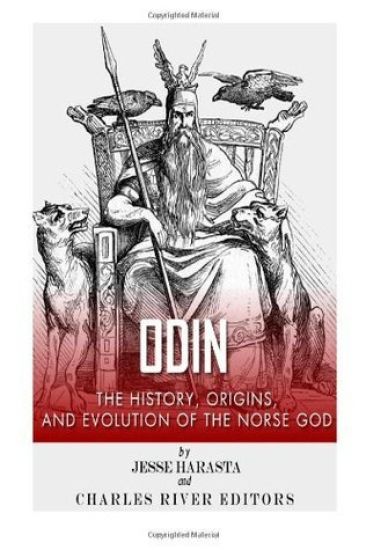
*Includes pictures of important places and historic illustrations and art depicting Odin and other important Norse figures. *Explains the historical origins of the god, the mythological tales about him, and the religious evolution of Odin. *Includes a Bibliography for further reading. A one-eyed old man, with a gray cloak and a wide-brimmed hat leaning on a staff. A wanderer who appears when least expected, bringing triumph or doom. The god of prophecy, poetry and fate. A shapechanger. A sorcerer. The god Odin cuts a dramatic figure in Norse mythology and is still a part of the popular imagination. He is the inspiration for figures like J. R. R. Tolkien's Gandalf the Grey, and he still appears in modern literature as varied as Marvel Comics and Neil Gaiman's novel American Gods (2001). Alongside his son Thor, Odin is one of the best known Norse gods, and it's often easy to forget that he was once at the heart of a pantheon devoutly worshiped by millions of Europeans in the Middle Ages. Odin has numerous names and titles (over 200 by one account), but his best known title is "The All-Father," the co-creator of Earth ("Midgard"), humanity and all of the creatures that inhabitant this world. He is also, importantly, the god of prophecy, ecstasy, and poetry, all roles that were closely connected in the Norse world. Odin was a god of life and death as well, and was famous for taking the souls of warriors who died in combat back to his realm of Valhalla. This role was tied to his position as a god of war, a position that does not perhaps seem obvious to a modern reader for a god of knowledge and wisdom. However, Odin was the king of the gods and the master of Asgard; therefore, in the Norse understanding, one of his crucial tasks was the defense of that realm through military might if necessary. His living followers would call upon him in battle, and he was said to have taken champions and even led human armies to triumph. It is useful to compare Odin to two other prominent deities: Thor and Zeus. Thor, Odin's son, was a fellow Norse war god, and Zeus was a fellow king god. Yet in both cases, Odin differs greatly from these gods. He was more enigmatic, and his power is more indirect and subtle. Odin was a god of mysteries, of discovering hidden knowledge, and while he was mighty in battle, the stories where he shines are those where takes unassuming forms and gets others to divulge information that might not otherwise give. This differs from the other two gods' temperamental natures and their pride. Odin was always a god that plotted many steps ahead, was willing to make extreme short-term sacrifices to further his plans, and continuously worked to bend the nature of his fate. This book explores the figure of Odin, including his origins, the stories told about him, the way he was worshiped and what fragments and memories of him have survived into the modern era. Along with pictures and a bibliography, you will learn about Odin like you never have before, in no time at all.
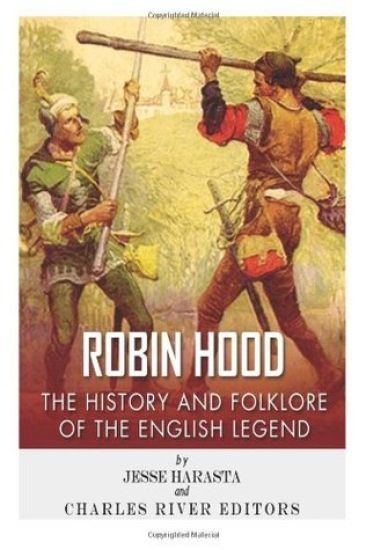
*Includes pictures of important places and historic illustrations and art depicting the figures of the Robin Hood tales. *Profiles the historic figures who scholars speculate may be the person Robin Hood was based on. *Explains the origins and evolution of Robin Hood. "Robin Hood, Robin Hood, riding through the glen Robin Hood, Robin Hood, with his band of men Feared by the bad, loved by the good Robin Hood, Robin Hood, Robin Hood." - Theme Song from The Adventures of Robin Hood There are few characters in the English language more iconic than Robin Hood. Emerging out of the ballads of the High Middle Ages and surviving through numerous permutations to the present day, the green-clad archer has become an icon. Today he represents a playful, irreverent and cunning resistance to corruption and injustice, associated primarily with stealing from the rich and giving to the poor. Robin Hood's selfless acts of helping the masses at the expense of himself (by not keeping his treasure) have led to contemporary figures like Bill Gates being called "Modern Day Robin Hoods", and when a British man robbed a bank in 2013 and handed out the money to homeless people before he was arrested and imprisoned, the name Robin Hood was naturally in the news once more. Robin Hood is a celebrated folk hero and a kind of good thief, but the earliest stories about Robin Hood depict a far different character. The first Robin Hood was often a brutal and selfish yet also honorable figure, an anti-hero loved (perhaps paradoxically) by many social classes and loathed by authorities. When the notorious Gunpowder Plot was discovered at the beginning of the 17th century, the Earl of Salisbury condemned Guy Fawkes and the conspirators for being "Robin Hoods". The transformation of Robin Hood over the centuries has left many scholars attempting to find the origins behind the original story. Like King Arthur, some have even sought a historical figure that might serve as the basis for Robin Hood, while others have sought out mythological origins to see if Robin Hood's character evolved out of a mythological figure. When looking for the historical and mythical figure, scholars try to understand how the Robin Hood of these tales and came to be. What are the origins of Robin Hood and what can they tell people about the past? What is the historical basis for Robin Hood, if any? Robin Hood: The History and Folklore of the English Legend comprehensively examines the history and stories behind the Robin Hood legend, tracing the history of the elusive figure and examining the changes that developed over time. Along with pictures of important people, places, and events, you will learn about Robin hood like you never have before, in no time at all.