Kirjojen hintavertailu – 12 903 725 kirjaa ja 27 kauppaa

Kirjailija

Johann Gottlieb Fichte

Kirjat ja teokset yhdessä paikassa: 283 kirjaa, julkaisuja vuosilta 1801–2025, suosituimpiin kuuluu Die Bestimmung des Menschen. Vertaile teosten hintoja ja tarkista saatavuus suomalaisista kirjakaupoista.

283 kirjaa

Kirjojen julkaisuvuodet: 1801–2025.

Reden an die deutsche Nation

Reden an die deutsche Nation

Johann Gottlieb Fichte

Meiner Felix Verlag GmbH
2008
nidottu
In den berühmten "Reden an die deutsche Nation" (1808) entwickelt Fichte das Ideal eines auf philosophische Prinzipien gegründeten Staates, dessen höchstes Ziel die allgemeine Erziehung seiner Mitglieder zur Sittlichkeit im gemeinschaftlichen Handeln darstellt. Fichte begründet die Notwendigkeit der Erhebung der Deutschen gegen Napoleon nicht aus der Einheit der nationalen Herkunft, sondern unter Hinweis auf einen fortschrittlicheren Begriff des Staates.
Johann Gottlieb Fichte, Briefe 1810-1812: Gesamtausgabe Der Bayerischen Akademie Der Wissenschaften
In addition to the letters hitherto known from W. Schulz's edition of Fichte's Correspondence (letters to the writer Ernst Wagner, to Fichte's father and other relatives after the death of the latter, to Fouque, and to earlier students), the principal focus of this volume are the letters exchanged with the authorities while Fichte was the dean and rector of the University of Berlin. Especially interesting are the discussions among the professors concerning student discipline. Bringing the gravity of his office and personality to bear in his intervention on behalf of a Jewish student that had been unfairly treated, Fichte was forced to resign after the vast majority of his colleagues refused to budge from their position. Neben den bisher aus der Briefeausgabe von W. Schulz bekannten Briefen (Korrespondenz mit den Dichtern Ernst Wagner und Fouque, mit fruheren Schulern und Verwandten) bilden die Briefe, die Fichte als Dekan und als Rektor der Berliner Universitat mit den Behorden wechselte, den Schwerpunkt dieses Bandes. Unter diesen sind die Auseinandersetzungen innerhalb der Professorenschaft uber die studentische Disziplin von besonderem Interesse. Fichte setzte sich mit dem Gewicht seines Amtes und seiner Personlichkeit fur einen unfair behandelten judischen Studenten ein und trat von seinem Amt zuruck, als die uberwiegende Mehrzahl seiner Kollegen auf ihrem Standpunkt beharrte.
Johann Gottlieb Fichte, Nachgelassene Schriften 1812-1813: Gesamtausgabe Der Bayerischen Akademie Der Wissenschaften
Die im Sommersemester 1812 gehaltene Vorlesung Vom Verhaltniss der Logik zur wirklichen Philosophie wird erstmals veroffentlicht. Sie analysiert das empirische Begreifen, zeigt den Vorrang der transzendentalen Logik gegenuber der formallogischen Konzeption des Denkens. Diesen Gedankengang fuhrt die schon bekannte transzendentale Logik Vom Unterschiede zwischen der Logik und der Philosophie selbst (WS 1812/13) fort, begreift den Begriff und die Anschauung und deduziert den Raum. Dieses wissenschaftliche Hauptwerk aus der Spatzeit Fichtes wird hier in stark verbesserter Form vorgelegt. Die Einleitungsvorlesung Vom Studium der Philosophie uberhaupt (WS 1812/13) erlautert neben den Bedingungen fur das Verstehen der Wissenschaftslehre auch das Vorgehen Fichtes in den Transzendentalen Logiken. This volume presents the remaining texts of 1812. The lecture course Vom Verhaltniss der Logik zur wirklichen Philosophie delivered in the summer semester of 1812 is accessible to research for the first time. It analyzes empirical understanding and demonstrates the contradictory conception of thought in formal and transcendental logic, arguing that the formal-logical view of thought is untenable. This view of cognition is completed in the winter semester of 1812/13 in the earlier known work on transcendental logic, Vom Unterschiede zwischen der Logik und der Philosophie selbst. This text passes from an understanding of the concept and the intuition up to the deduction of space. This work counts as one of the major philosophical writings of Fichte's late period and is published here in a significantly improved form. The introductory lecture On the Study of Philosophy in General (WS 1812/13) not only sets out the conditions for understanding the Wissenschaftslehre but also Fichte's procedure in the various versions of his Transcendental Logic. The volume is supplemented by two smaller texts whose dating is uncertain, Zur Herstellung eines verlohren gegangenen Mskpts ... and 2. noch Auszug.
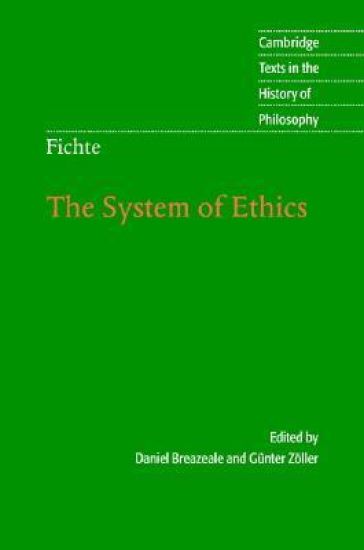
Fichte: The System of Ethics

Fichte: The System of Ethics

Johann Gottlieb Fichte

Cambridge University Press
2005
sidottu
Fichte's System of Ethics, published in 1798, is at once the most accessible presentation of its author's comprehensive philosophical project, The Science of Knowledge or Wissenschaftslehre, and the most important work in moral philosophy written between Kant and Hegel. Fichte's ethics integrates the discussion of our moral duties into the systematic framework of a transcendental theory of the human subject. Its major philosophical themes include the practical nature of self-consciousness, the relation between reason and volition, the essential role of the drives in human willing, the possibility of changing the natural world, the reality of one's own body, the reality of other human beings, and the practical necessity of social relations between human beings. This volume offers a translation of the work together with an introduction that sets it in its philosophical and historical contexts.
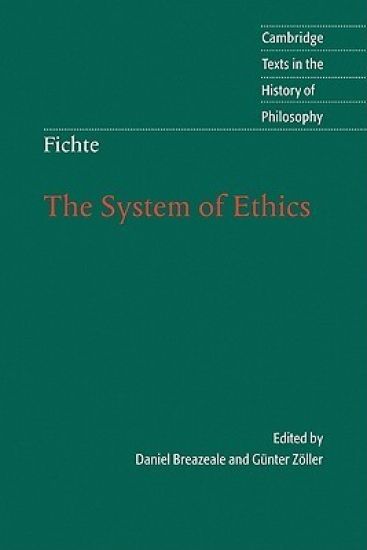
Fichte: The System of Ethics

Fichte: The System of Ethics

Johann Gottlieb Fichte

Cambridge University Press
2005
pokkari

Halvin toimitettuna 49,00 €

Fichte's System of Ethics, published in 1798, is at once the most accessible presentation of its author's comprehensive philosophical project, The Science of Knowledge or Wissenschaftslehre, and the most important work in moral philosophy written between Kant and Hegel. Fichte's ethics integrates the discussion of our moral duties into the systematic framework of a transcendental theory of the human subject. Its major philosophical themes include the practical nature of self-consciousness, the relation between reason and volition, the essential role of the drives in human willing, the possibility of changing the natural world, the reality of one's own body, the reality of other human beings, and the practical necessity of social relations between human beings. This volume offers a translation of the work together with an introduction that sets it in its philosophical and historical contexts.
Johann Gottlieb Fichte, Kollegnachschriften 1794-1799: Gesamtausgabe Der Bayerischen Akademie Der Wissenschaften
Fichte's general introductory lecture of October 1810, "On the Study of Philosophy," has been preserved only in a transcription by August Twesten (discovered in 1999). It addresses the question, How is the communication of knowledge (including empirical, historical, and a priori knowledge) possible? This is also the concern of Fichte's introductory lecture from the winter semester of 1811/12. The latter thematizes even more clearly the difference between the methods of the sciences. Three versions of this lecture are available (by Cauer, Schopenhauer, and an anonymous auditor), and all of three of these are included in this volume. Three different transcripts of the lectures on "The Facts of Consciousness" from the same semester (1811/12) are also available (by Cauer, Schopenhauer, and an anonymous auditor, the "Halle transcript"). Fichte's own manuscript of these lectures has not survived. This circumstance, combined with the fact that each of these three transcripts has its own distinctive advantages and supplements the other two, justifies the publication of all three. They provide an objective presentation of the totality of knowledge and serve as the didactic presupposition for understanding the complex argumentation of the 1812 Wissenschaftslehre (see Volume II,13). The primary text contained in this volume is the transcript of the 1812 Wissenschaftslehre. Of the seven surviving transcripts of this lecture series, manuscript Yg 21 (from the library of Halle University) is here published in full as the "guiding text," though it is supplemented by significant variations, as contained in the qualitatively next-best versions (Cauer, Itzig). Fichtes allgemeine Einleitungsvorlesung Vom Studium der Philosophie, 1810 - nur in der Nachschrift von August Twesten erhalten - widmet sich der Frage: Wie ist die Mitteilung von Wissen moglich? Das gleiche Thema hat die Einleitungsvorlesung von 1811, deren drei Fassungen (die von Cauer, von Schopenhauer und einem Anonymus) abgedruckt werden, ebenso die Nachschriften (Cauer, Schopenhauer und Hallesche) der Vorlesung der Thatsachen des Bewusstseyns aus demselben Jahr. Diese Nachschriften erganzen einander und bieten eine objektive Darstellung der Gesamtheit des Wissens; zugleich fuhren sie ein in die Wissenschaftslehre 1812, die den Haupttext dieses Bandes bildet.

Johann Gottlieb Fichte, Nachgelassene Schriften 1812: Gesamtausgabe Der Bayerischen Akademie Der Wissenschaften
Die Wissenschaftslehre von 1812 - die letzte, die Fichte vollstandig vorgetragen hat - wird der Forschung erstmals in zuverlassiger Form vorgelegt. In ihr deduziert Fichte vom hochsten bestimmten 'Blick' aus, dem des sittlichen Wollens als einem der hoheren 'Schemata' der Erscheinung des Absoluten, die weiteren Momente des Wissens. Die Rechtslehre von 1812 wird ausschliesslich nach der Handschrift wiedergegeben. Drei nicht exakt zu datierende Texte zeigen Fichtes Reaktion auf die Zeitereignisse (u.a. Napoleons Kontributionsforderungen an den preussischen Staat). Ausserdem stellt der Philosoph grundsatzliche Uberlegungen auch auf volkswirtschaftlichem Gebiet an (Bewertung landwirtschaftlicher Guter, Geldwerttheorie). The Wissenschaftslehre of 1812. This is the last complete version of Fichte's lectures on the Wissenschaftslehre, and it is here published for the first time in a reliable edition. This version begins with the most determinate "point of view," that of ethical willing, understood as one of the higher "schemata" of the absolute's appearance, from which Fichte deduces the additional moments of knowing. The texts of the 1812 Doctrine of Right Rechtslehre] and the 1812 Doctrine of Ethics Sittenlehre] published here are based entirely on the lecture manuscripts and incorporate nothing from previously published texts based upon other sources. -- Three additional texts, none of which can be precisely dated, illustrate Fichte's reaction to events of the day, such as Napoleon's demand for reparations from Prussia. Here the philosopher engages in fundamental reflections concerning the economic realm (the valuation of agricultural wealth, monetary theory). The introductory lecture of the Summer Semester of 1812 documents Fichte's efforts, at the start of the semester, to attract and to introduce as many interested students as possible to the study of philosophy.
Johann Gottlieb Fichte, Kollegnachschriften 1794-1799: Gesamtausgabe Der Bayerischen Akademie Der Wissenschaften
Dieser Band enthalt Lavaters Nachschrift der Zuricher Vorlesungen uber den Begriff der Wissenschaftslehre (Fruhjahr 1794), den Anfang der Naturrechtsvorlesung (WS 1795/96) aus dem Nachlass von Johann Smidt sowie Friedrich August Eschens (1776-1800) Nachschriften der Platner-Vorlesung uber Logik und Metaphysik und der Wissenschaftslehre nova methodo (WS 1796/97). Benjamin Karl Henrik Hoiers (1767-1812) schwedische Nachschrift der Platner-Vorlesung (August und September 1798) wird erstmals vollstandig und in deutscher Ubersetzung abgedruckt. Haupttext dieses Bandes ist die Wissenschaftslehre nova methodo, nachgeschrieben von K. C. F. Krause (1780-1829). Since the appearance of Volume IV,2, six new lecture transcripts have been discovered, a fact that justifies a chronological break in series IV. Accordingly, this volume includes a transcript by Kasper Lavater of Fichte's first five lectures Concerning the Concept of the Wissenschaftslehre, which were delivered in Lavater's living room in the spring of 1794. Fichte's first lectures on Natural Law Naturrecht] are documented in a fragmentary transcript from the literary remains of Fichte's student Johann Smidt, who later became a politician in Bremen. Also included in this volume is a rough and unrevised transcript of Fichte's Platner lectures on Logic and Metaphysics from 1796/97, from the papers of Friedrich August Eschen (1776-1800) discovered in Eutin, as well as a fragmentary transcript, from the same source, of the 1796/97 Wissenschaftslehre nova methodo. The literary remains of the Swedish philosopher Benjamin Karl Henrik Hoijer (1767-1812) contains a Swedish transcript of Fichte's Platner lectures from August and September 1798. This transcript is here published for the first time in its entirety, along with a German translation of the same. The primary text included in this volume, however, is the transcript of the 1798/99 Wissenschaftslehre nova methodo, by Karl Friedrich Krauses (1780-1829), which was discovered in Dresden in 1980. This is a text that dramatically improves our understanding of the second phase of Fichte's pedagogic activity in Jena.
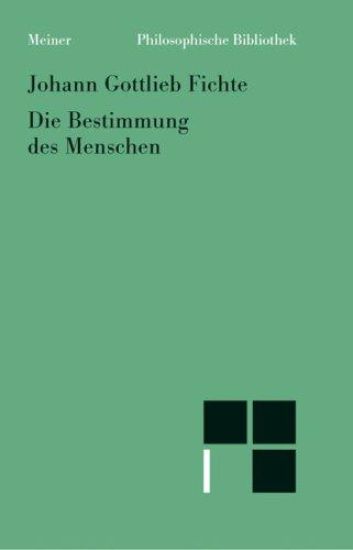
Die Bestimmung des Menschen

Die Bestimmung des Menschen

Johann Gottlieb Fichte

Meiner Felix Verlag GmbH
2000
nidottu
Unter den Versuchen Fichtes, sein Denken allgemeinverständlich darzustellen, zählt diese 1800 erschienene Schrift zu den inhaltlich abgerundetsten und aufschlußreichsten; bei den Zeitgenossen stieß sie jedoch auf vehemente Kritik, Hegel sah in ihr gar einen besonders illustrativen Text für den Aufweis der Haltlosigkeit der von Fichte in der Wissenschaftslehre vertretenen Position einer auf das Ich als Tathandlung gegründeten Philosophie. Darum vermag allein schon die Lektüre von Fichtes Bestimmung des Menschen und ihrer kritischen Rezeption in Hegels Glauben und Wissen einen Einblick in die Gründe zu vermitteln, warum bis ins 20. Jahrhundert die Philosophie Fichtes weitgehend als ein merkwürdiger Mosaikstein auf dem Wege "Von Kant bis Hegel" oder, im Hinblick auf den "Endpunkt" dieses Wegs wohl genauer, in der "Entwicklung des Spinozismus" betrachtet wurde. Deutlich wird einer neuen Lektüre aber auch, wieviel noch zu tun bleibt, um die wichtigen Erkenntnisse, die im Deutschen Idealismus auf so getrennten Bahnen gewonnen wurden, im Blick auf die gemeinsamen Grundprobleme einer "Ersten Philosophie" ohne Rückfall in die traditionellen Feindbilder wahrzunehmen und kritisch in die pluralistische Diskussion heutigen Philosophierens einzubringen.
Johann Gottlieb Fichte, Nachgelassene Schriften 1810-1812: Gesamtausgabe Der Bayerischen Akademie Der Wissenschaften
Einleitungsvorlesungen an der neu gegrundeten Universitat Berlin und Vorlesungen uber die Tatsachen des Bewusstseins aus dem Wintersemester 1810/11 fuhren vom Standpunkt des gewohnlichen Bewusstseins auf die Ebene der Wissenschaft. Die hier erstmal gedruckte Wissenschaftslehre von 1811 geht vom Gedanken des Seins als dem Absoluten aus und destruiert am Beispiel Spinoza/Schelling" /> den Versuch einer ontologischen Philosophie. Ein letztes Mal halt im Sommersemester 1811 Fichte populare Vorlesungen: uber die Bestimmung des Gelehrten. Den Band beschliesst ein Gutachten Fichtes zu einem ihm vom Turnvater Jahn vorgelegten Satzungsentwurf fur die deutschen Burschenschaften. This volume begins with Fichte's Introductory Lectures to his first official course at the newly established University of Berlin, beginning in the Fall of 1810. These are followed by lectures from the Winter Semester of 1810/11 on The Facts of Consciousness, which, in Fichte's later period, served the function of leading one from the standpoint of ordinary consciousness to the level of science, thereby replacing the earlier (Platner) lectures on Logic and Metaphysics. The Wissenschaftslehre of 1811 is here published for the first time. This version of the Wissenschaftslehre begins with the thought of the highest possible form of being, i.e. the absolute, and, using Spinoza and Schelling" /> as examples, demonstrates the impossibility of establishing any ontological philosophy. A final example of Fichte's popular lectures is furnished by the manuscript of his lectures from the Summer Semester of 1811 Concerning the Vocation of the Scholar. This volume also includes an Address delivered in conjunction with the promotion of new professors (February 1811) and Fichte's Reflections on the rectoral election of 1811. Fichte's social activities during the years 1811/12 are documented by some doggerel verses he delivered when he became speaker of the Christian-German Social Club (Tischgesellschaft) and a record of a meeting of the same. This volume concludes with Fichte's recommendation of a proposal put forward by Turnvater Jahn concerning the establishment of the German student fraternities.
Johann Gottlieb Fichte, Nachgelassene Schriften 1807-1810

Johann Gottlieb Fichte, Nachgelassene Schriften 1807-1810

Johann Gottlieb Fichte

Frommann-Holzboog
1998
sidottu
Auf der Ruckreise nach Berlin fixiert Fichte im Sommer 1807 in der Spekulation zu Kopenhagen als 'Aufgabe' die Punkte, in denen er seine Wissenschaftslehre noch weiter klaren und vertiefen will, und verfasst Entwurfe zur Beantwortung des Jacobischen Schreibens von 99. In Berlin schreibt Fichte im Regierungsauftrag den Plan einer zu Berlin zu errichtenden hohern Lehranstalt, in dem der preussischen Universitat eine Art von College-System zugedacht ist. Nach den im Nachlass nicht erhaltenen Reden an die deutsche Nation macht er sich in den Aufzeichnungen Seit d. 1. April 1808 an eine Art Generalrevision der Wissenschaftslehre. Die Vorlesungen an der Berliner Universitat beginnt Fichte mit einer Anleitung zur Kunst des Philosophierens. Ihr folgt der Vortrag der Wissenschaftslehre (1810). His departure from East Prussia signaled a new era in Fichte's scientific life. In his Spekulation zu Kopenhagen he located as a task those points on which he wished to clarify and deepen his Wissenschaftslehre even further. The draft of a Beantwortung des Jacobischen Schreibens von 99 served as the prospectus for establishing a philosophical journal, a project that soon had to be abandoned because of difficulties arranging for a publisher. Upon his return to Berlin, Fichte was commissioned by Minister Beyme to prepare for the Prussian government a Plan einer zu Berlin zu errichtenden hohern Lehranstalt. In this plan Fichte proposed that the Prussian University be modeled upon a college system. But Fichte's plan was rejected in favor of Wilhelm von Humboldt's ideas. Fichte's unpublished papers contain scarcely any references to his Reden an die Deutsche Nation (December 1807 - March 1809). Following these lectures, Fichte was engaged in a general revision of his Wissenschaftslehre. These drafts show which problems Fichte thought still needed to be addressed, and they also demonstrate that his reflections on the philosophy of history during the years from 1806 to 1809 were also highly relevant to his conception of the Wissenschaftslehre. Fichte began his lectures at the then still unofficial University of Berlin with an Anleitung zur Kunst des Philosophierens, followed, in February and March of 1810, with lectures on the Wissenschaftslehre.
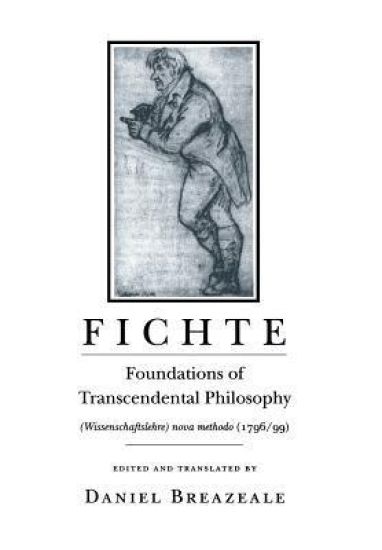
Fichte

Fichte

Johann Gottlieb Fichte

Cornell University Press
1998
pokkari
"This work is a model of what a philosophical text should be."—Reinhard Lauth "Breazeale's translation is fluent, precise, and perhaps most important of all . . . it is readable. . . . This is an excellent translation by the ranking Fichte scholar working in English at present, accompanied by a full, useful scholarly apparatus, likely to be of interest to Fichte scholars and all those concerned with the development of German idealism."—Review of Metaphysics "The publishing of this volume in English . . . provides us with a wealth of new material, not just about Fichte's development, but about the essentially Cartesian project that first gave rise to phenomenology in our own century."—International Philosophical Quarterly
Versuch einer Kritik aller Offenbarung (1792)

Versuch einer Kritik aller Offenbarung (1792)

Johann Gottlieb Fichte

Felix Meiner
1998
sidottu
Dieses Werk gehört zu den wenigen seiner Zeit, in denen konsequent transzendentalphilosophisch die Möglichkeit von Offenbarung untersucht wird. Zunächst (ohne Wissen des Verfassers) anonym erschienen und für die vierte kritische Schrift Kants gehalten, hat es Fichte den Weg zu frühem Ruhm geebnet.