
Kirjailija
John Dewey
Kirjat ja teokset yhdessä paikassa: 491 kirjaa, julkaisuja vuosilta 1931–2026, suosituimpiin kuuluu Demokratia ja kasvatus. Vertaile teosten hintoja ja tarkista saatavuus suomalaisista kirjakaupoista.
491 kirjaa
Kirjojen julkaisuvuodet: 1931–2026.
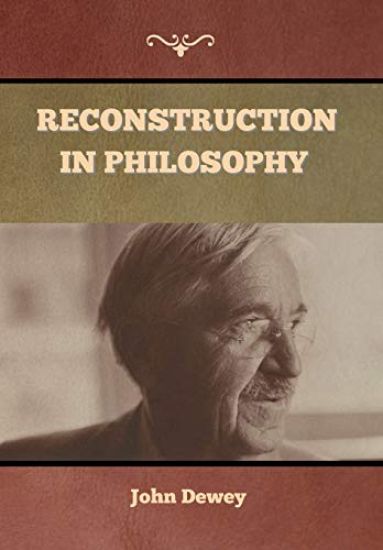
John Dewey (October 20, 1859 - June 1, 1952) was an American philosopher, psychologist, and educational reformer whose ideas have been influential in education and social reform. He is regarded as one of the most prominent American scholars in the first half of the twentieth century. The overriding theme of Dewey's works was his profound belief in democracy, be it in politics, education, or communication and journalism. As Dewey himself stated in 1888, while still at the University of Michigan, "Democracy and the one, ultimate, ethical ideal of humanity are to my mind synonymous." Known for his advocacy of democracy, Dewey considered two fundamental elements--schools and civil society--to be major topics needing attention and reconstruction to encourage experimental intelligence and plurality. Dewey asserted that complete democracy was to be obtained not just by extending voting rights but also by ensuring that there exists a fully formed public opinion, accomplished by communication among citizens, experts, and politicians, with the latter being accountable for the policies they adopt. Dewey was one of the primary figures associated with the philosophy of pragmatism and is considered one of the fathers of functional psychology. His paper "The Reflex Arc Concept in Psychology," published in 1896, is regarded as the first major work in the (Chicago) functionalist school. A Review of General Psychology survey, published in 2002, ranked Dewey as the 93rd most cited psychologist of the 20th century. Dewey was also a major educational reformer for the 20th century. A well-known public intellectual, he was a major voice of progressive education and liberalism. While a professor at the University of Chicago, he founded the University of Chicago Laboratory Schools, where he was able to apply and test his progressive ideas on pedagogical method. Although Dewey is known best for his publications about education, he also wrote about many other topics, including epistemology, metaphysics, aesthetics, art, logic, social theory, and ethics. (wikipedia.org)
The school and society; being three lectures, supplemented by a statement of the University Elementary School
John Dewey
Alpha Edition
2020
pokkari
This book has been considered by academicians and scholars of great significance and value to literature. This forms a part of the knowledge base for future generations. So that the book is never forgotten we have represented this book in a print format as the same form as it was originally first published. Hence any marks or annotations seen are left intentionally to preserve its true nature.
The School and Society: Lectures on Education; the Role of Play, the Life and Psychology of the Child, and the Aims of Teaching History
John Dewey
Pantianos Classics
2020
nidottu
Educational reformer John Dewey discusses the role of the school in the modern society, detailing how teaching deeply influences the lives of individual children, and the entire society thereby. Several lively and engaging chapters concern topics such as the components of the sound education. Throughout, the author seeks to dispel preconceptions and extinguish limitations of understanding that commonly underpin analyses about the educational system. While Dewey harks back to the distant past, in reviewing and acknowledging the contributions of German innovator Friedrich Froebel, he also notes what has worked in the education system from the vantage point of the 20th century. For the author, a society without a correctly organized, well-run and well-funded educational system is one defined by waste - in the sense of squandering the talents of its children, and in the sense of the society being impaired. The variety of schools present is important, that education pertinent to a wide variety of pursuits - scientific, practical or cerebral - be accomplished. The ideals of culture, personal conduct and acquisition of knowledge should reflect not merely set curricula, but the wider aims and accomplishments of society.

Essence of Progress and Poverty
Henry George; John Dewey
Dover Publications Inc.
2020
nidottu
Halvin toimitettuna 12,70 €
In this brief text, philosopher John Dewey compiled a selection of excerpts from Henry George's massive text, Progress and Poverty, to provide readers unfamiliar with that major work with the essence of George's thinking concerning economics. Includes 15 short chapters of highlights from the influential treatise.
L'expérience et la nature suivi de l'expérience et la méthode philosophique
John Dewey
Editions L'Harmattan
2020
nidottu
Originally published in 1899, The School and Society began as a series of lectures given to parents, professionals, and others at the University Elementary School. In this short volume, Dewey discusses the way in which education is fundamentally tied to a thriving democracy. The problem, according to the author, with the old education model was that elementary schools did not encourage exploration and curiosity in their students. In a country that requires the thoughtful pursuit of ideas by the populace in order to arrive at reasonable governance, this repressive form of education encouraged rote following and closed minds. Anyone interested in philosophy, education, and the general betterment of society will find Dewey's thoughts and early childhood learning progressive and intriguing.
First published in 1915, John Dewey's "Democracy and Education" is considered by many to be a landmark examination into the philosophy of education and its importance in a democratic society. In this influential treatise, Dewey argues for a progressive model of education because an effective educational system is the only way to build a productive and responsible democratic society. For all societies, from the most primitive to the most complex, the older generation possesses information, wisdom, and skills that must be passed down to the new, younger generations in order for the society to continue and for its customs to remain intact. If a society fails to educate its new members, the unique knowledge and character of the society will inevitably be lost. The new generations of a society must also be educated so that they can intelligently and capably participate in democratic institutions and traditions. A progressive educational system will also help each individual realize their dreams and full potential. "Democracy and Education" is an essential read for students of not only education, but of philosophy, and political science as well. This edition is printed on premium acid-free paper.

This book has been deemed as a classic and has stood the test of time. The book has been considered by academicians and scholars of great significance and value to literature. This forms a part of the knowledge base for future generations.
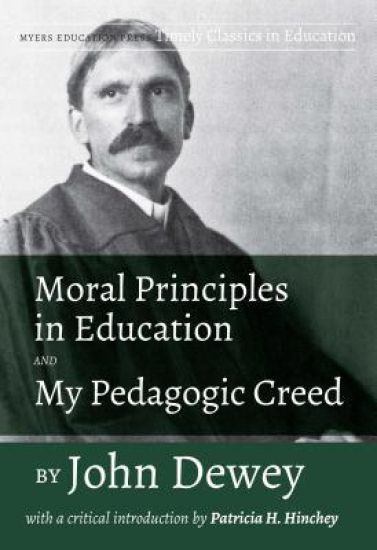
Contemporary political and socioeconomic conditions largely characterized by corruption and inequity have added new urgency to recurring calls for reorienting American public schools to their historic purpose: educating a citizenry both equipped and motivated to serve as the ultimate guardians of democracy. While the Founding Fathers, including Jefferson, as well as the founders of public schools, including Horace Mann, explicitly stated that rationale, perhaps no one has done more than John Dewey to detail the inextricable relationship between education and democratic society. In Moral Principles in Education and My Pedagogic Creed, Dewey reminds readers of public schools’ original purpose, and he identifies specific educational principles and practices that either promote or undermine their essential democratic goals. Sadly, readers will recognize that many of the counterproductive practices he describes remain pervasive. Dewey argues that if schools are to nurture ethical and effective citizens, then they must become genuine democratic communities where students acquire the habits of mind and behavior that will lead them as adults to steer the country in a more ethical and equitable direction. “There cannot be two sets of ethical principles,” he says, “one for life in the school, and the other for life outside of the school.” In these works and through such caveats, Dewey offers readers both the motivation to engage in the struggle for a new emphasis on educating for democratic citizenship and the guidance necessary to translate his theory into effective practice.
The Psychology of Number and its Applications to Methods of Teaching Arithmetic
James Alexander Mclellan; John Dewey
Hansebooks
2018
nidottu