Kirjailija
John Dewey
Kirjat ja teokset yhdessä paikassa: 491 kirjaa, julkaisuja vuosilta 1931–2026, suosituimpiin kuuluu Demokratia ja kasvatus. Vertaile teosten hintoja ja tarkista saatavuus suomalaisista kirjakaupoista.
491 kirjaa
Kirjojen julkaisuvuodet: 1931–2026.
Though he did not coin the phrase "Progressive Education", American philosopher and psychologist, John Dewey, has historically been associated with this modern educational method. In these two works, "The School and Society" and "The Child and Curriculum", Dewey lays out his philosophies of pragmatism, educational reform, and his advocacy of democracy. In a time when education focused primarily on rote memorization and passive acquisition of knowledge, Dewey advocated a "learning by doing" method. He believed students would become more well-rounded and productive members of society through their natural inquisitiveness, and experimentation through interaction with the world. Dewey's complex and naturalistic theories were primary influences in both education and social reform in the twentieth century. Furthermore, he has become known as one of the founders of the philosophy of pragmatism and functional psychology. Today, his work is still a valuable source of information and inspiration to those interested in the education and development of school-age children. This edition is printed on premium acid-free paper.

China, Japan and the U.S.A.; Present-Day Conditions in the Far East and Their Bearing on the Washington Conference
John Dewey
ALPHA EDITION
2021
pokkari

The Child and the Curriculum and; The School and the Society
John Dewey
Hassell Street Press
2021
sidottu
The Child and the Curriculum and; The School and the Society
John Dewey
Hassell Street Press
2021
nidottu

This book has been considered by academicians and scholars of great significance and value to literature. This forms a part of the knowledge base for future generations. So that the book is never forgotten we have represented this book in a print format as the same form as it was originally first published. Hence any marks or annotations seen are left intentionally to preserve its true nature.

- Education as a Necessity of Life - Education as a Social Function - Education as Direction - Education as Growth - Preparation, Unfolding, and Formal Discipline - Education as Conservative and Progressive - The Democratic Conception in Education - Aims in Education - Natural Development and Social Efficiency as Aims - Interest and Discipline - Experience and Thinking - Thinking in Education - The Nature of Method - The Nature of Subject Matter - Play and Work in the Curriculum - The Significance of Geography and History - Science in the Course of Study - Educational Values - Labor and Leisure - Intellectual and Practical Studies - Physical and Social Studies: Naturalism and Humanism - The Individual and the World - Vocational Aspects of Education - Philosophy of Education - Theories of Knowledge - Theories of Morals
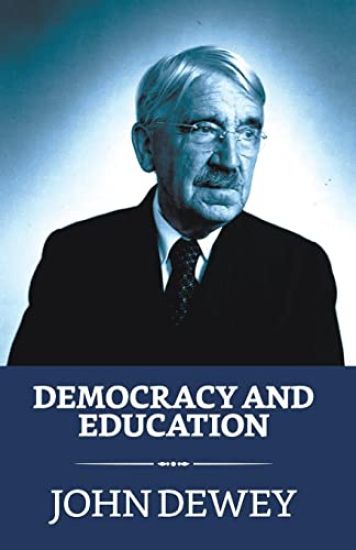
The American philosopher, educator, and long-time member of the American Federation of Teachers (AFT) John Dewey (1959-1952) wrote " Democracy and Education: A Philosophy of Education" a century ago. It has been interpreted, re-interpreted and, according to Dewey, misinterpreted many times. I will not fall into that trap, but rather, offer a few reflections based on some of the ideas contained in that important book. It is about democracy, but in a broad sense; about the ethics of democracy and about developing systems of education that prepare young people to live, reflect, analyse, discuss, learn and to continue learning.
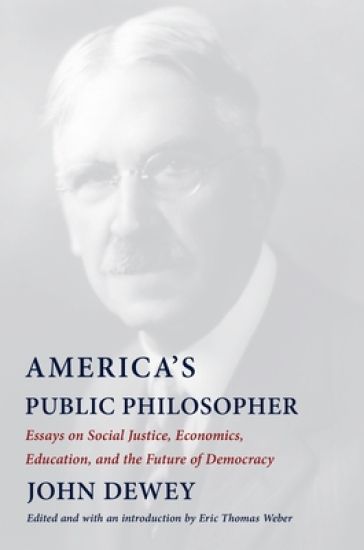
John Dewey was America’s greatest public philosopher. His work stands out for its remarkable breadth, and his deep commitment to democracy led him to courageous progressive stances on issues such as war, civil liberties, and racial, class, and gender inequalities. This book collects the clearest and most powerful of his public writings and shows how they continue to speak to the challenges we face today. An introductory essay and short introductions to each of the texts discuss the current relevance and significance of Dewey’s work and legacy. The book includes forty-six essays on topics such as democracy in the United States, political power, education, economic justice, science and society, and philosophy and culture. These essays inspire optimism for the possibility of a more humane public and political culture, in which citizens share in the pursuit of lifelong education through participation in democratic life. The essays in America’s Public Philosopher reveal John Dewey as a powerful example for anyone seeking to address a wider audience and a much-needed voice for all readers in search of intellectual and moral leadership.
John Dewey was America’s greatest public philosopher. His work stands out for its remarkable breadth, and his deep commitment to democracy led him to courageous progressive stances on issues such as war, civil liberties, and racial, class, and gender inequalities. This book collects the clearest and most powerful of his public writings and shows how they continue to speak to the challenges we face today. An introductory essay and short introductions to each of the texts discuss the current relevance and significance of Dewey’s work and legacy. The book includes forty-six essays on topics such as democracy in the United States, political power, education, economic justice, science and society, and philosophy and culture. These essays inspire optimism for the possibility of a more humane public and political culture, in which citizens share in the pursuit of lifelong education through participation in democratic life. The essays in America’s Public Philosopher reveal John Dewey as a powerful example for anyone seeking to address a wider audience and a much-needed voice for all readers in search of intellectual and moral leadership.

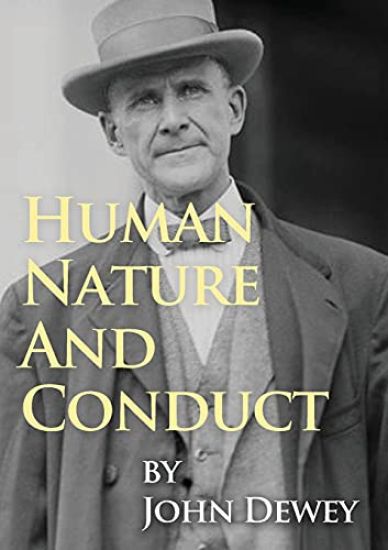
Human Nature And ConductJohn Dewey "Give a dog a bad name and hang him." Human nature has been the dog of professional moralists, and consequences accord with the proverb. Man's nature has been regarded with suspicion, with fear, with sour looks, sometimes with enthusiasm for its possibilities but only when these were placed in contrast with its actualities. It has appeared to be so evilly disposed that the business of morality was to prune and curb it it would be thought better of if it could be replaced by something else. It has been supposed that morality would be quite superfluous were it not for the inherent weakness, bordering on depravity, of human nature. Some writers with a more genial conception have attributed the current blackening to theologians who have thought to honor the divine by disparaging the human. Theologians have doubtless taken a gloomier view of man than have pagans and secularists. But this explanation doesn't take us far. For after all these theologians are themselves human, and they would have been without influence if the human audience had not somehow responded to them. Morality is largely concerned with controlling human nature. When we are attempting to control anything we are acutely aware of what resists us. So moralists were led, perhaps, to think of human nature as evil because of its reluctance to yield to control, its rebelliousness under the yoke. But this explanation only raises another question. Why did morality set up rules so foreign to human nature? The ends it insisted upon, the regulations it imposed, were after all outgrowths of human nature. Why then was human nature so averse to them? Moreover rules can be obeyed and ideals realized only as they appeal to something in human nature and awaken in it an active response. Moral principles that exalt themselves by degrading human nature are in effect committing suicide. Or else they involve human nature in unending civil war, and treat it as a hopeless mess of contradictory forces. We are forced therefore to consider the nature and origin of that control of human nature with which morals has been occupied. And the fact which is forced upon us when we raise this question is the existence of classes. Control has been vested in an oligarchy. Indifference to regulation has grown in the gap which separates the ruled from the rulers. Parents, priests, chiefs, social censors have supplied aims, aims which were foreign to those upon whom they were imposed, to the young, laymen, ordinary folk a few have given and administered rule, and the mass have in a passable fashion and with reluctance obeyed. Everybody knows that good children are those who make as little trouble as possible for their elders, and since most of them cause a good deal of annoyance they must be naughty by nature. Generally speaking, good people have been those who did what they were told to do, and lack of eager compliance is a sign of something wrong in their nature.

Letters From China And Japan By John DeweyWell, if you want to see one mammoth, muddy masquerade just see Tokyo to-day. I am so amused all the time that if I were to do just as I feel, I should sit down or stand up and call out, as it were, from the housetops to every one in the world to come and see the show. If it were not for the cut of them I should think that all the cast-off clothing had been misdirected and had gone to Japan instead of Belgium. But they are mostly as queer in cut as they are in material. Imagine rummaging your attic for the colors and patterns of past days and then gathering up kimonos of all the different colors and patterns and sizes and with it all a lot of men's hats that are like nothing you ever saw, and very muddy streets, and there you have it. The 'ricksha men have their legs fitted with tight trousers and puttees to end them, and they are graceful. They run all day, through the mud and snow and wet in these things made of cotton cloth that are neither stockings nor shoes but both, and they stand about or sit on steps and wait, and yet they get through the day alive. I am distracted between the desire to ride in the baby cart and the fear of the language, mixed with the greater fear of the pain of being drawn by a fellow-being. They are a lithe set of little men and look as if they had steel springs to make them go when you look at their course. Still I have been only in autos, of which there are not many here. I get tired with the excitement of the constant amusement. This morning a man came out of a curio shop. Bow. "Exguse me, madame, is this not Mrs. Daway? I knew you because I saw your picture in the paper. Will you not come in and look at our many curios? I shall have the pleasure of bringing them to your hotel. What is the number of your room, madame?" Bow. "No, please do not bring them to my room, for I am always out. I will come in and see them sometime." "Thank you, madame, please do so, madame, we have many fine curios." Bow. "Goodmorning, madame." The looks of the streets are like the clothes, just left over from the past ages. Of course Tokyo is the modern city of Japan, and we shall watch out for the ancient ones when it comes their turn. I wish I could give you an idea of the looks of the poor. The children up to the age of about thirteen appear never to wipe their noses. Combine this effect (more effect than in Italy) with several kimonos, one on top of the other, made of cotton and wool of bright colors and flowered, with a queer brown checked one on top this wadded and much too big, therefore hitched up round the waist. Swung in this outside one a baby is carried on the back, the little baby head with black bangs or still fuzzy scalp sticking out, nose never yet touched by a handkerchief, wearer of the baby with a nose in the same condition if at a tender age-I scream inside of me as I go about, and it is more exciting than any play ever. We are as much curiosities to them as they are to us, though we live where the most foreigners go. Now on top of it all we can no more make a car driver understand where we want to go than if we were monkeys.
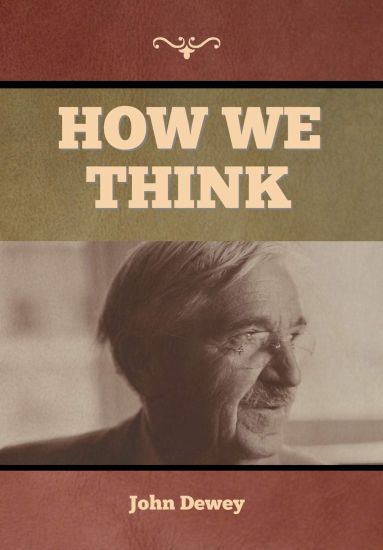
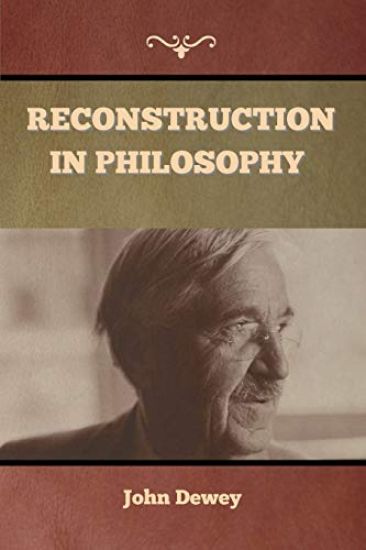
John Dewey (October 20, 1859 - June 1, 1952) was an American philosopher, psychologist, and educational reformer whose ideas have been influential in education and social reform. He is regarded as one of the most prominent American scholars in the first half of the twentieth century. The overriding theme of Dewey's works was his profound belief in democracy, be it in politics, education, or communication and journalism. As Dewey himself stated in 1888, while still at the University of Michigan, "Democracy and the one, ultimate, ethical ideal of humanity are to my mind synonymous." Known for his advocacy of democracy, Dewey considered two fundamental elements--schools and civil society--to be major topics needing attention and reconstruction to encourage experimental intelligence and plurality. Dewey asserted that complete democracy was to be obtained not just by extending voting rights but also by ensuring that there exists a fully formed public opinion, accomplished by communication among citizens, experts, and politicians, with the latter being accountable for the policies they adopt. Dewey was one of the primary figures associated with the philosophy of pragmatism and is considered one of the fathers of functional psychology. His paper "The Reflex Arc Concept in Psychology," published in 1896, is regarded as the first major work in the (Chicago) functionalist school. A Review of General Psychology survey, published in 2002, ranked Dewey as the 93rd most cited psychologist of the 20th century. Dewey was also a major educational reformer for the 20th century. A well-known public intellectual, he was a major voice of progressive education and liberalism. While a professor at the University of Chicago, he founded the University of Chicago Laboratory Schools, where he was able to apply and test his progressive ideas on pedagogical method. Although Dewey is known best for his publications about education, he also wrote about many other topics, including epistemology, metaphysics, aesthetics, art, logic, social theory, and ethics. (wikipedia.org)