Kirjojen hintavertailu – 12 859 829 kirjaa ja 27 kauppaa

Kirjailija

John Dewey

Kirjat ja teokset yhdessä paikassa: 491 kirjaa, julkaisuja vuosilta 1931–2026, suosituimpiin kuuluu Demokratia ja kasvatus. Vertaile teosten hintoja ja tarkista saatavuus suomalaisista kirjakaupoista.

491 kirjaa

Kirjojen julkaisuvuodet: 1931–2026.

The Collected Works of John Dewey v. 14; 1922, Human Nature and Conduct
Volume 14of The Middle Works of John Dewey, 1899-1924, series provides an authoritative edition of Dewey's Human Nature and Conduct. A Modern Language Association Committee on Scholarly Editions textual edition. Human Nature and Conduct evolved from the West Memorial Foundation lectures at Stanford University. The lectures were ex tensively rewritten and expanded into one of Dewey's best-known works. As Murray G. Murphey says in his Introduction, "It was a work in which Dewey sought to make ex plicit the social character of his psychology and philosophy--something which had long been evident but never so clearly spelled out." Subtitled "An Introduction to Social Psy chology," Human Nature and Conduct sets forth Dewey's view that habits are social functions, and that social phenomena, such as habit and custom and scientific methods of inquiry are moral and natural. Dewey con cludes, "Within the flickering inconsequen tial acts of separate selves dwells a sense of the whole which claims and dignifies them. In its presence we put off mortality and live in the universal."
The Collected Works of John Dewey v. 12; 1920, Essays, Miscellany, and Reconstruction in Philosophy Published During 1920
A collection of all of Dewey's writingsfor 1920with the excep tion of Letters from China and Japan. A Modern Language Association Committee on Scholarly Editions textual edition. The nineteen items collected here, including his major work, Reconstruction in Philosophy, evolved in the main from Dewey's travel, touring, lecturing, and teaching in Japan and China. Ralph Ross notes in his Introduction to this volume that Recon struction in Philosophy is"a radical book . . . a pugnacious book by a gentle man." It is in this book that Dewey summarizes his version of pragmatism, then called Instrumentalism. For Dew ey, the pragmatist, it was people acting on the strength of in telligence modeled on science who could find true ideas, ones "we can assimilate, validate, corroborate, and verify." Optimism pervades Reconstruction of Philosophy;in keeping with Dewey's world of open possibilities, the book recognizes that the obser vation and thought of human striving can make the difference between despair and affirmation of life. The seven essays on Chinese politics and social tradition that Dewey sent back from the Orient exhibit both the liveliness and the sensitive power of an insightful mind. Set against a backdrop of Japanese hegemony in China, the last days of Manchu imperi alism, Europe's carving of China into concessions, and China's subsequent refusal to accept the terms of the Treaty of Ver sailles, the essays were startlingly relevant in this time of Eastern turbulence and change. At the National University of Peking, Dewey delivered a se ries of lectures on "Three Contemporary Philosophers: William James, Henri Bergson, and Bertrand Russell." The James and Bergson lectures are published for the first time in this volume. Dewey chose these philosophers, according to Ralph Ross, be cause he was trying to show "his oriental audience what he believed and hoped about man and society and was talking about those fellow philosophers who shared the same beliefs and hopes."
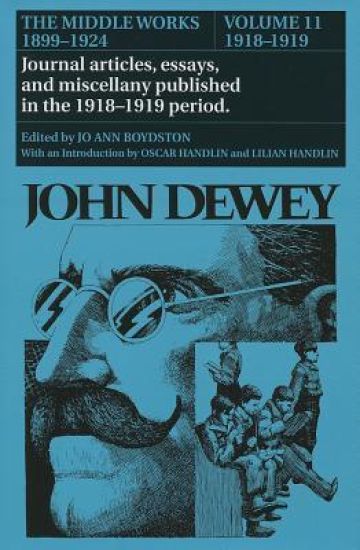
The Collected Works of John Dewey v. 11; 1918-1919, Journal Articles, Essays, and Miscellany Published in the 1918-1919 Period
Volume 11 brings together all of Dewey's writings for 1918and 1919. A Modern Language Association Committee on Scholarly Editions textual edition. Dewey's dominant theme in these pages is war and its after math. In the Introduction, Oscar and Lilian Handlin discuss his philosophy within the historical context: " The First World War slowly ground to its costly conclusion; and the immensely more difficult task of making peace got painfully under way. The armi stice that some expected would permit a return to normalcy opened instead upon a period of turbulence that agitated fur ther a society already unsettled by preparations for battle and by debilitating conflict overseas." After spending the first half of 1918- 19on sabbatical from Columbia at the University of California, Dewey traveled to Japan and China, where he lectured, toured, and assessed in his essaysthe relationship between the two nations. From Peking he reported the student revolt known as the May Fourth Move ment. The forty items in this volume also include an analysis of Thomas Hobbe's philosophy; an affectionate commemorative tribute to Theodore Roosevelt, " our Teddy"; the syllabus for Dewey's lectures at the Imperial University in Tokyo, which were later revised and published as Reconstruction in Philosophy;an exchange with former disciple Randolph Bourne about F. Mat thias Alexander's Man' sSupreme Inheritance;and, central to Dew ey's creed, " Philosophy and Democracy." His involvement in a study of the Polish-American community in Philadelphia-- resulting in an article, two memoranda, and a lengthy report-- is discussed in detail in the Introduction and in the Note on the " Confidential Report of Conditions among the Poles in the United States."
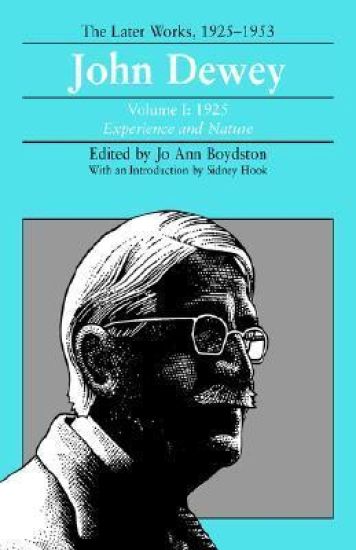
The Later Works of John Dewey, Volume 1, 1925 - 1953

The Later Works of John Dewey, Volume 1, 1925 - 1953

John Dewey

Southern Illinois University Press
1981
sidottu
John Dewey’s Experience and Nature has been considered the fullest expression of his mature philosophy since its eagerly awaited publication in 1925. Irwin Edman wrote at that time that “with monumental care, detail and completeness, Professor Dewey has in this volume revealed the metaphysical heart that beats its unvarying alert tempo through all his writings, whatever their explicit themes.” In his introduction to this volume, Sidney Hook points out that “Dewey’s Experience and Nature is both the most suggestive and most difficult of his writings.” The meticulously edited text published here as the first vol­ume in the series The Later Works of John Dewey, 1925–1953 spans that entire period in Dewey’s thought by including two important and previously unpublished documents from the book’s history: Dewey’s unfinished new introduction written between 1947 and 1949, edited by the late Joseph Ratner, and Dewey’s unedited final draft of that introduction written the year before his death. In the intervening years Dewey realized the impossibility of making his use of the word “experience” understood. He wrote in his 1951 draft for a new introduction: “Were I to write (or rewrite) Experience and Nature today I would entitle the book Culture and Nature and the treatment of specific subject-matters would be correspondingly modified. I would abandon the term ‘experience’ because of my growing realiza­tion that the historical obstacles which prevented understand­ing of my use of ‘experience’ are, for all practical purposes, insurmountable. I would substitute the term ‘culture’ because with its meanings as now firmly established it can fully and freely carry my philosophy of experience.”
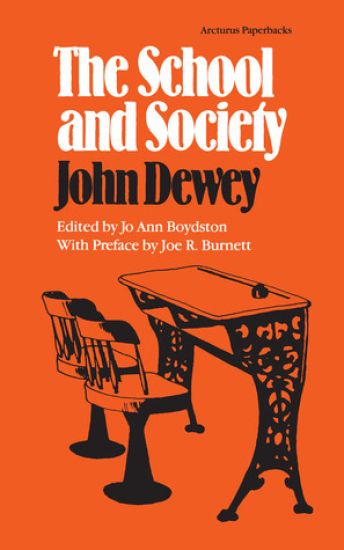
The School and Society

The School and Society

John Dewey

Southern Illinois University Press
1980
nidottu
First published in 1899, The School and Society describes John Dewey's experiences with his own famous Laboratory School, started in 1896. Dewey's experiments at the Labora tory School reflected his original social and educational philosophy based on American experience and concepts of democracy, not on European education models then in vogue. This forerunner of the major works shows Dewey's per vasive concern with the need for a rich, dynamic, and viable society. In his introduction to this volume, Joe R. Burnett states Dewey's theme. Industrialization, urbanization, science, and technology have created a revolution the schools cannot ignore. Dewey carries this theme through eight chapters: The School and Social Progress; The School and the Life of the Child; Waste in Education; Three Years of the University Elementary School; The Psychology of Elementary Education; Froebel's Educa tional Principles; The Psychology of Occupations; and the Development of Attention.
Dewey on Education

Dewey on Education

John Dewey

Teachers' College Press
1959
nidottu
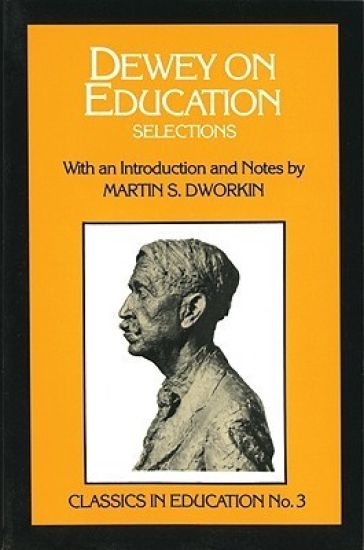
Dworkin has gathered some of Dewey's clearest and most characteristic statements on education and set them in the stream of American social and intellectual history. In addition, he has indicated some of the rich literature available to those who would probe more deeply into Dewey's ideas and the context in which they matured.