
Kirjailija
John Dewey
Kirjat ja teokset yhdessä paikassa: 491 kirjaa, julkaisuja vuosilta 1931–2026, suosituimpiin kuuluu Demokratia ja kasvatus. Vertaile teosten hintoja ja tarkista saatavuus suomalaisista kirjakaupoista.
491 kirjaa
Kirjojen julkaisuvuodet: 1931–2026.

The Authoritarian Attempt to Capture Education: Papers from the Second Conference on the Scientific Spirit and Democratic Faith
John Dewey
Literary Licensing, LLC
2013
nidottu
The Philosophy of Henry George
George Raymond Geiger; John Dewey
Literary Licensing, LLC
2013
nidottu
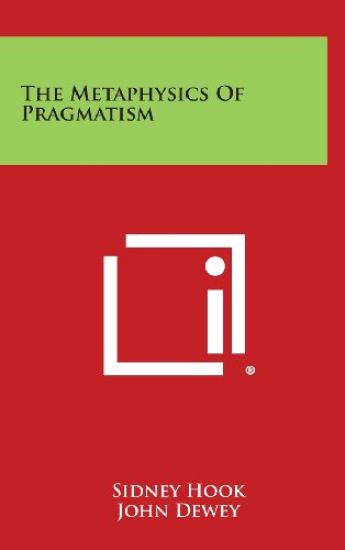
The Metaphysics of Pragmatism is a philosophical book written by Sidney Hook. The book explores the relationship between pragmatism and metaphysics. Pragmatism is a philosophical approach that emphasizes practical consequences as the basis for determining the truth or effectiveness of a theory or belief. Metaphysics, on the other hand, is concerned with the nature of reality and the universe. In the book, Hook argues that pragmatism and metaphysics are not mutually exclusive, but rather can be integrated to provide a more complete understanding of reality. He examines the contributions of several prominent pragmatist philosophers, including William James and John Dewey, and explores their views on metaphysical issues such as causation, free will, and the nature of reality. Hook also discusses the limitations of traditional metaphysical approaches and argues that a pragmatic approach can provide a more useful and practical framework for understanding the world. He explores the implications of this approach for various fields, including science, ethics, and politics. Overall, The Metaphysics of Pragmatism is a thought-provoking and insightful exploration of the relationship between two important philosophical approaches. It is a must-read for anyone interested in philosophy, metaphysics, or pragmatism. This is a new release of the original 1927 edition. This scarce antiquarian book is a facsimile reprint of the old original and may contain some imperfections such as library marks and notations. Because we believe this work is culturally important, we have made it available as part of our commitment for protecting, preserving, and promoting the world's literature in affordable, high quality, modern editions, that are true to their original work.


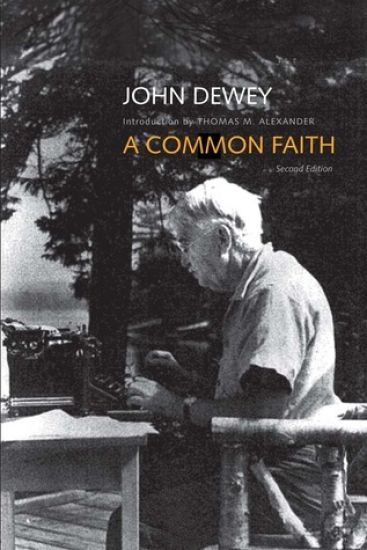
In A Common Faith, eminent American philosopher John Dewey calls for the “emancipation of the true religious quality” from the heritage of dogmatism and supernaturalism that he believes characterizes historical religions. He describes how the depth of religious experience and the creative role of faith in the resources of experience to generate meaning and value can be cultivated without making cognitive claims that compete with or contend with scientific ones. In a new introduction, Dewey scholar Thomas M. Alexander contextualizes the text for students and scholars by providing an overview of Dewey and his philosophy, key concepts in A Common Faith, and reactions to the text.

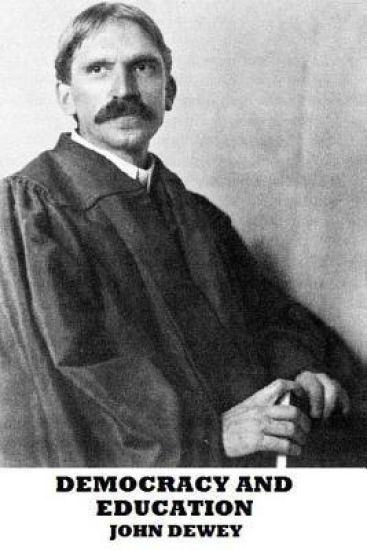
Democracy and Education: An Introduction to the Philosophy of Education
John Dewey
Createspace Independent Publishing Platform
2013
nidottu


Time and Its Mysteries, Series 2
Daniel Webster Hering; William Francis Gray Swann; John Dewey
Literary Licensing, LLC
2013
nidottu

Tragedy of a People: Racialism in Czechoslovakia
John Dewey; Roger N. Baldwin; Christopher Emmet
Literary Licensing, LLC
2013
nidottu

The Way Beyond Art: The Work of Herbert Bayer
Alexander Dorner; John Dewey
Literary Licensing, LLC
2012
sidottu
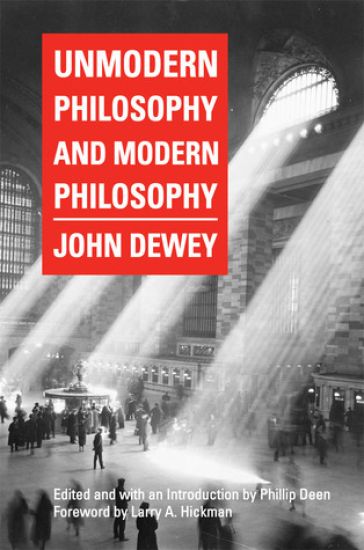
Unmodern Philosophy and Modern Philosophy
John Dewey; Larry A Hickman
Southern Illinois University Press
2012
sidottu
800x600Normal0falsefalsefalseEN-USX-NONEX-NONEMicrosoftInternetExplorer4In 1947 America's premier philosopher, educator, and public intellectual John Dewey purportedly lost his last manuscript on modern philosophy in the back of a taxicab. Now, sixty-five years later, Dewey's fresh and unpretentious take on the history and theory of knowledge is finally available. Editor Phillip Deen has taken on the task of editing Dewey's unfinished work, carefully compiling the fragments and multiple drafts of each chapter that he discovered in the folders of the Dewey Papers at the Special Collections Research Center at Southern Illinois University Carbondale. He has used Dewey's last known outline for the manuscript, aiming to create a finished product that faithfully represents Dewey's original intent. An introduction and editor's notes by Deen and a foreword by Larry A. Hickman, director of the Center for Dewey Studies, frame this previously lost work. In Unmodern Philosophy and Modern Philosophy, Dewey argues that modern philosophy is anything but; instead, it retains the baggage of outdated and misguided philosophical traditions and dualisms carried forward from Greek and medieval traditions. Drawing on cultural anthropology, Dewey moves past the philosophical themes of the past, instead proposing a functional model of humanity as emotional, inquiring, purposive organisms embedded in a natural and cultural environment. Dewey begins by tracing the problematic history of philosophy, demonstrating how, from the time of the Greeks to the Empiricists and Rationalists, the subject has been mired in the search for immutable absolutes outside human experience and has relied on dualisms between mind and body, theory and practice, and the material and the ideal, ultimately dividing humanity from nature. The result, he posits, is the epistemological problem of how it is possible to have knowledge at all. In the second half of the volume, Dewey roots philosophy in the conflicting beliefs and cultural tensions of the human condition, maintaining that these issues are much more pertinent to philosophy and knowledge than the sharp dichotomies of the past and abstract questions of the body and mind. Ultimately, Dewey argues that the mind is not separate from the world, criticizes the denigration of practice in the name of theory, addresses the dualism between matter and ideals, and questions why the human and the natural were ever separated in philosophy. The result is a deeper understanding of the relationship among the scientific, the moral, and the aesthetic. More than just historically significant in its rediscovery, Unmodern Philosophy and Modern Philosophy provides an intriguing critique of the history of modern thought and a positive account of John Dewey's naturalized theory of knowing. This volume marks a significant contribution to the history of American thought and finally resolves one of the mysteries of pragmatic philosophy.


William Heard Kilpatrick: Trail Blazer in Education
Samuel Tenenbaum; John Dewey
Literary Licensing, LLC
2012
nidottu