Kirjojen hintavertailu – 12 859 829 kirjaa ja 27 kauppaa
Kirjailija
John Dewey
Kirjat ja teokset yhdessä paikassa: 491 kirjaa, julkaisuja vuosilta 1931–2026, suosituimpiin kuuluu Demokratia ja kasvatus. Vertaile teosten hintoja ja tarkista saatavuus suomalaisista kirjakaupoista.
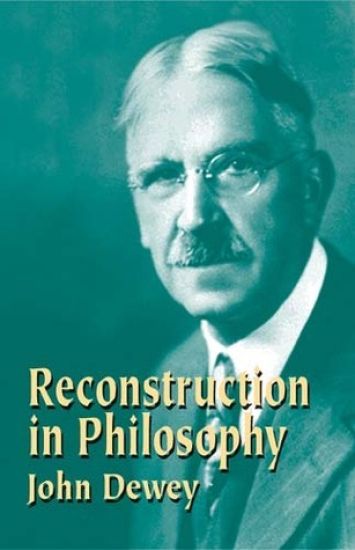
The esteemed psychologist and thinker John Dewey headed for previously unexplored philosophical territory with this influential work. Written shortly after World War I, it embodies Dewey's system of pragmatic humanism and maintains that individuals can attain "a more ordered and intelligent happiness" by reconsidering the ultimate effects of their deepest beliefs and feelings. With its promise of achieving an understanding of the past and attaining a brighter future, Reconstruction in Philosophy remains ever relevant. "A modern classic." - Philosophy and Phenomenological Research.
Fjärde utgåvan John Dewey (1859–1952) brukar anges som det främsta namnet inom amerikansk filosofi. Han arbetade också mycket med utbildningsfilosofiska frågor. Hans pedagogiska texter lade den teoretiska grunden för arbetet med att finna praktiska lösningar på 1900-talets pedagogiska problem. Dewey kallas ibland för den progressiva pedagogikens fader, men det vore kanske riktigare att kalla honom för den reflekterade pedagogikens viktigaste filosof. De flesta pedagogiska riktningar har de senaste hundra åren på något sätt knutit an till hans texter. Under senare år har intresset för hans filosofi ökat över hela världen och är i dag större än någonsin. Han hävdade konsekvent att allt praktiskt pedagogiskt arbete hade sin teori och all pedagogisk teori borde prövas i praktisk pedagogik. John Deweys namn finns med i alla filosofiska och pedagogiska handböcker, men det är kanske inte så många som har kommit i direktkontakt med hans egna texter. I denna antologi har de mest betydelsefulla och åberopade korta texterna förts samman till en bok. För urvalet och kommentarerna svarar professor Sven Hartman och professor Ulf P. Lundgren. I denna fjärde utgåva har kommentarerna uppdaterats och boken har kompletterats med en ytterligare uppsats av John Dewey (50 sidor). Antologin är avsedd för lärarutbildningen och kurser i pedagogik. Översättning Ros Mari Hartman, Sven Hartman, Alf Ahlberg John Dewey (1859–1952), amerikansk filosof och pedagog, föddes i Vermont i USA. 1894 blev Dewey professor i filosofi vid University of Chicago. Två år senare startade han tillsammans med sin hustru Alice Chipman Dewey en försöksskola vid universitetet. Den kom att bli en av de mest omtalade försöksskolorna under denna tid. Det var som programformulerare för denna skola som Dewey skrev några av sina mest kända pedagogiska arbeten. År 1905 tillträdde Dewey en filosofiprofessur vid Columbia University, New York. Dewey blev lärofader för den så kallade progressiva pedagogiken och fick därigenom ett stort inflytande på skolfrågor.
One of America''s most prominent pedagogues discusses training students to think well. This educational classic covers inductive and deductive logic, concrete and abstract thinking, and many other aspects of thought training. Essential reading for teachers.
Here is an enlarged, revised edition of the Paul Carus lectures which Dewey delivered in 1925. It covers Dewey's basic formulation of the problems of knowledge, with both a full discussion of theories and resolutions propounded by other systems, and a detailing of Dewey's own concepts upon the relationship of the external world, the mind, and knowledge.
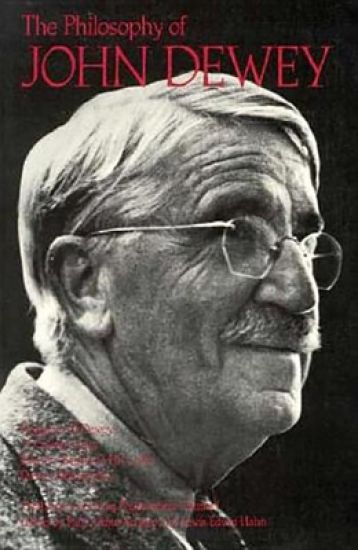
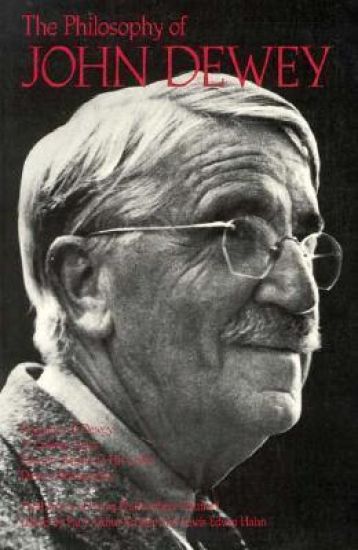
In this volume the writings of John Dewey are subjected to careful scrutiny by seventeen great thinkers. Some have eulogized, some have reinterpreted -- but all have respected the work of that great and germinal mind. For thirty years John Dewey has been the most dynamic, arresting figure in American thought. Whereas the "traditional" philosopher too often concerned himself with matters seemingly remote and formalistic, Dewey was ever aware of the ferment of this developing democracy. The problems of every-day life, the "commonplace" in our culture, the direction of the educative process in the schools, the processes of politics, art, literature, science, religion--on all these John Dewey has left the impress of his thought. It was inevitable that Dewey's writings should raise questions and doubts, that readers should find points of difference and emphasis. Now for the first time Dewey himself is able to read and answer in one place the analysis and criticism of a group of eminent men. The result of this unique situation is the setting for a new type of intellectual experience--an opportunity to sit in a seminar with Dewey and some of the greatest of his critics.
America's most renowned social philosopher John Dewey shines his powerful intellect on the serious public and cultural issues surrounding the place of the individual in a technologically advanced society. In this penetrating study, he addresses the fear that personal creative potential will be trampled by assembly-line monotony, political bureaucracy, and an industrialised culture of uniformity. Armed with his pragmatic approach and his belief in the power of critical intelligence, Dewey argues that individualism has in fact been offered a uniquely higher plane of technological development upon which to grow, mature, and redefine itself.
In this volume the writings of John Dewey are subjected to careful scrutiny by seventeen great thinkers. Some have eulogized, some have reinterpreted--but all have respected the work of that great and germinal mind. For thirty years John Dewey has been the most dynamic, arresting figure in American thought. Whereas the "traditional" philosopher too often concerned himself with matters seemingly remote and formalistic, Dewey was ever aware of the ferment of this developing democracy. The problems of every-day life, the "commonplace" in our culture, the direction of the educative process in the schools, the processes of politics, art, literature, science, religion--on all these John Dewey has left the impress of his thought. It was inevitable that Dewey's writings should raise questions and doubts, that readers should find points of difference and emphasis. Now for the first time Dewey himself is able to read and answer in one place the analysis and criticism of a group of eminent men. The result of this unique situation is the setting for a new type of intellectual experience--an opportunity to sit in a seminar with Dewey and some of the greatest of his critics.
In this series of lectures, Dewey presents the metaphysics underlying his influential views on science, ethics, education, and social reform. His starting point is that existence is a mingling of the stable and predictable with the shifting and hazardous. The notion of causality has a practical basis, and science is concerned with bringing about preconceived ends. On this basis, Dewey develops his conception of the mind as a manifestation of social interactions, and expounds his distinctive views on the mind-body problem, esthetics, and values in general.
I Demokrati och utbildning undersöker John Dewey (1859-1952) utbildningens villkor i det moderna och alltmer liberala industrisamhälle som växte fram under det sena 1800- och det tidiga 1900-talet. Härmed kom han att utöva ett starkt inflytande på alla reformsträvanden inom utbildningsområdet under vårt sekel. Dewey betonar utbildningens demokratiska uppgift, som han menar består i att arbeta med en helhetssyn på människan. Genom att hon får möjlighet att delta i aktiviteter som mångsidigt speglar samhällets olika aspekter och motsättningar kan en ökad mognad och insikt växa fram organiskt, och därmed också en förmåga att delta och ta ansvar. Deweys idéer och grundtankar förmår fortfarande utmana vårt utbildningssystem. Han är en viktig inspirationskälla för såväl den pedagogiska teorin som det praktiska pedagogiska arbetet.
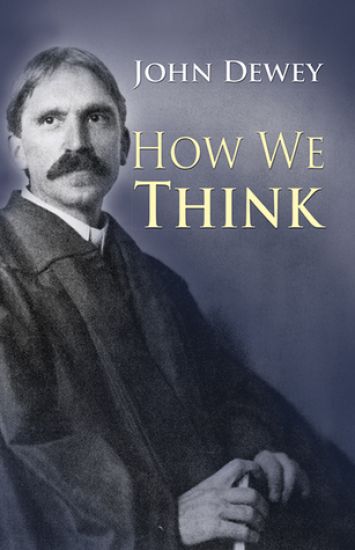
In How We Think, Dewey shares his views on the educator's role in training students to think well. Basing his assertions on the belief that knowledge is strictly relative to human interaction with the world, he considers the need for thought training, its use of natural resources, and its place in school conditions; inductive and deductive reasoning, interpreting facts, and concrete and abstract thinking; the functions of activity, language, and observation in thought training; and many other subjects. John Dewey's influence on American education and philosophy is incalculable. This volume, as fresh and inspirational today as it was upon its initial publication a century ago, is essential for anyone active in the field of teaching or about to embark on a career in education.