Kirjojen hintavertailu – 12 903 725 kirjaa ja 27 kauppaa
Kirjailija
John Maynard Keynes
Kirjat ja teokset yhdessä paikassa: 193 kirjaa, julkaisuja vuosilta 1919–2026, suosituimpiin kuuluu Les conséquences économiques de la paix. Vertaile teosten hintoja ja tarkista saatavuus suomalaisista kirjakaupoista.
John Maynard Keynes (1883-1946) is perhaps the foremost economic thinker of the twentieth century. On economic theory, he ranks with Adam Smith and Karl Marx; and his impact on how economics was practiced, from the Great Depression to the 1970s, was unmatched. The General Theory of Employment, Interest and Money was first published in 1936. But its ideas had been forming for decades ? as a student at Cambridge, Keynes had written to a friend of his love for 'Free Trade and free thought'. Keynes's limpid style, concise prose, and vivid descriptions have helped to keep his ideas alive - as have the novelty and clarity, at times even the ambiguity, of his macroeconomic vision. He was troubled, above all, by high unemployment rates and large disparities in wealth and income. Only by curbing both, he thought, could individualism, ‘the most powerful instrument to better the future', be safeguarded. The twenty-first century may yet prove him right. In The Economic Consequences of the Peace (1919), Keynes elegantly and acutely exposes the folly of imposing austerity on a defeated and struggling nation.
Die Allgemeine Theorie der Beschaftigung, des Zinses und des Geldes gilt als das Hauptwerk des britischen Okonomen John Maynard Keynes. Das Werk erschien 1936 und stellte die bis dahin dominierende klassische okonomische Theorie in Frage. Keynes wehrte sich insbesondere gegen die Annahme, ein freier Markt fuhre unweigerlich zu einem gesamtwirtschaftlichen Gleichgewicht, bei dem auch Vollbeschaftigung erreicht wird, und kritisierte die bis dato vorherrschende Laissez-faire-Politik. Stattdessen forderte er eine aktive staatliche Konjunkturpolitik. Das Werk lautete in der Wirtschaftswissenschaft die Keynesianische Revolution ein. Das Opus magnum des grossen Okonomen liegt nun in einer vollstandigen Neuubersetzung vor. Keynes' zum Teil revolutionare und angesichts der wirtschaftlichen Turbulenzen und Krisen des neuen Jahrtausends hochst aktuell erscheinenden Uberlegungen und Schlussfolgerungen endlich auch einem breiten Publikum zuganglich zu machen, das ist die Hoffnung, die sich mit der Neuubersetzung dieses Buchs verbindet.
A new edition of the seminal text by the father of modern economics. First published in 1919, John Maynard Keynes’s The Economic Consequences of the Peace created immediate controversy. Keynes was a firsthand witness to the negotiations of the Paris Peace Conference, as an official representative of the British Treasury, and he simultaneously sat as deputy for the chancellor of the Exchequer on the Supreme Economic Council. In these roles, he was able to perceive with great clarity the tenor and perspective that would come to shape Europe after the First World War. What he saw disturbed him greatly, and eventually he resigned from both these roles, convinced that there was no longer any way to avoid an unjust peace treaty. After his resignation, Keynes began work on The Economic Consequences of the Peace, which argues that the peace made at the end of World War I was an unfair, dehumanizing one for Germany and the other vanquished countries. Keynes’s warning proved prophetic when Hitler and the Nazi Party rose to power fourteen years later as a direct result of the disastrous economic condition in Germany. Keynes’s predictions helped cement his status as one of history’s leading economists. His works are essential reading today for anyone who wishes to understand modern governments and economies. This edition also includes an introduction from former Chairman of the Federal Reserve Paul Volcker, who elegantly contextualizes the continuing relevance of Keynes’s work to contemporary society.
The Economic Consequences of the Peace by John Maynard Keynes... The Economic Consequences of the Peace (1919) is a book written and published by John Maynard Keynes. The book was released in late 1919 and became an immediate bestseller on both sides of the Atlantic: it was released in the US in 1920. The scathing sketches of Wilson, Lloyd George and Clemenceau proved to be very popular and the work established Keynes' reputation with the public as a leading economist. In six months, the book had sold 100,000 copies with translations into 12 languages. It restored Keynes' reputation with the Bloomsbury Group, which had been tarnished by his work for the Treasury during the war. Keynes returned to Cambridge to work as an economist, where he was regarded as the leading student of Alfred Marshall. Keynes left Cambridge University to work at the Treasury in 1915. He worked daily on financing the war effort during World War I. That disturbed many of the pacifist members of the Bloomsbury Group of which he was a member. Lytton Strachey sent him a note in 1916 asking Keynes why he was still working at the Treasury. Keynes quickly established a reputation as one of the Treasury's most able men and travelled to the Versailles Conference as an advisor to the British Government. In preparation for the conference, he argued that there should preferably be no reparations or that German reparations should be limited to
One of Time's 100 Most Important People of the Twentieth Century, John Maynard Keynes revolutionized economic thinking with The General Theory of Employment, Interest, and Money. Published following the Great Depression, this classic challenged the established classical economics, particularly the proposition that a market economy tends naturally to restore itself to full employment on its own. More relevant than ever in the twenty-first century, the principles of the "Keynesian Revolution" continue to be debated in a world ravaged by inequitable economic circumstances. " Keynes's] radical idea that governments should spend money they don't have may have saved capitalism."--Time
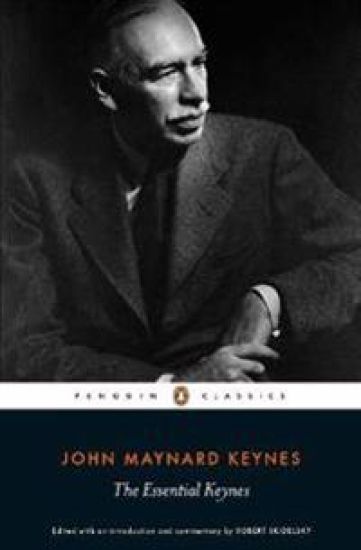
Edited with an introduction by ROBERT SKIDELSKY'Many of the greatest economic evils of our time are the fruits of risk, uncertainty, and ignorance'John Maynard Keynes was the most influential economist, and one of the most influential thinkers, of the twentieth century. He overturned the orthodoxy that markets were optimally self-regulating, and instead argued for state intervention to ensure full employment and economic stability. This new selection is the first comprehensive single-volume edition of Keynes's writings on economics, philosophy, social theory and policy, including several pieces never before published. Full of irony and wit, they offer a dazzling introduction to a figure whose ideas still have urgent relevance today.