Kirjojen hintavertailu – 12 903 735 kirjaa ja 27 kauppaa

Kirjailija

John Morgan

Kirjat ja teokset yhdessä paikassa: 107 kirjaa, julkaisuja vuosilta 1983–2026, suosituimpiin kuuluu Diana Inquest: How & Why Did Diana Die?. Vertaile teosten hintoja ja tarkista saatavuus suomalaisista kirjakaupoista.

107 kirjaa

Kirjojen julkaisuvuodet: 1983–2026.

Death and Spirituality

Death and Spirituality

Kenneth Doka; John Morgan

Baywood Publishing Company Inc
1993
nidottu
An elderly Chinese immigrant, hospitalized with terminal disease, requests to burn incense. A 30-year-old Roman Catholic gay male, dying of AIDS, is consumed by deepening moral guilt, troubled by beliefs he thought he abandoned years ago. A mother whose teenage son died of an aneurism is angry at God over his death yet fearful of expressing that anger lest He 'punish her again.' A young widower seemingly has difficulty expressing grief believing it to be a sign of weak faith. All of these examples illustrate the kinds of issues that clinicians and counselors constantly encounter. For although North American society has long been characterized as secular, this does not deny the potency of spiritual concerns and religious values on the individual level. Polls affirm that vast majorities of North Americans both believe in God and consider religion important in their lives. This is clearly evident when one faces the crisis of dying or bereavement. For, one of the strengths of belief is that it provides support and succor at a time when secular explanations are largely silent. For these reasons, educators and clinicians have long recognized the significance that religious and spiritual themes have in counseling with the dying and bereaved. Yet, in cultures as religiously diverse as the U. S. and Canada, caregivers and educators may feel inadequate to the task. Death and Spirituality addresses this need. Specifically it seeks to reach two, perhaps overlapping, audiences. First, it considers the needs death-related counselors and educators, seeking to provide them with both a sense of the norm of religious tradition and the religious and spiritual issues that might arise in illness and bereavement, as well as suitable interventions, approaches, and resources that might be useful in assisting clients in examining and resolving such issues. The book also speaks to the complementary needs of clergy who also may wish to assist parishioners and others as they face the spiritual and psychological crisis of dying and grief.

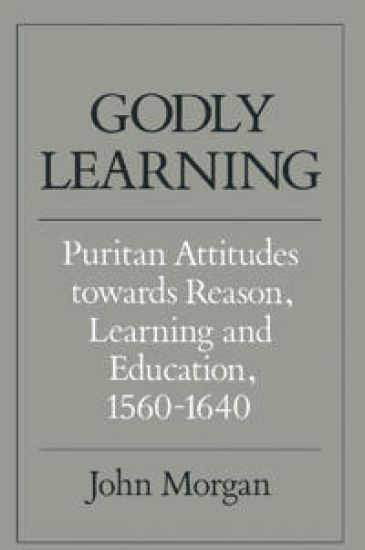
Godly Learning

Godly Learning

John Morgan

Cambridge University Press
1988
pokkari
Godly Learning attempts to establish the relationship which Puritans worked out between faith and reason in the eighty years before the Civil War. This was a period of rapid expansion of educational facilities, of a clash between humanist values of the Renaissance and the fideism of the Reformation, and of confrontations between traditionalist (primarily Aristotelian) approaches to knowledge and the new experimental path signalled by Bacon. Taking an existential approach to the question of meaning, Puritans sought their solution in the development of a covenant theology based on a life of active faith. They argued vehemently that natural reason was incapable of finding the path to salvation; as well, only faith could regenerate reason to its proper capabilities. At the same time, Puritans emphasised the value of learning for comprehension of Scripture and preparation of sermons. Starting with a fresh approach to the question of defining Puritans, Godly Learning proceeds to delineate the infrequently studied puritan mentalité which informed the better-known public political and ecclesiological positions. Not since the work of Perry Miller has there been such a thorough attempt to comprehend the Puritan view of reason, and the implications of that view.
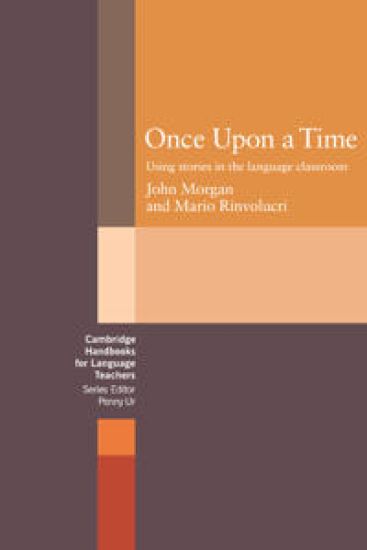
Once upon a Time

Once upon a Time

John Morgan; Mario Rinvolucri

Cambridge University Press
1983
pokkari
Stories can provide a highly motivating, engaging and realistic source of genuine language interaction in the classroom. They are ‘living language’ in which the teacher (or student storyteller) becomes the source of language, and the listeners are actively involved in understanding. The authors argue from experience that almost everyone can tell stories convincingly, especially given an outline to work from. A very wide range of these outlines, from many cultures and sources, are provided in the book. These can be used by the teacher as a resource for a variety of activities for students from beginner to advanced levels, including listening comprehension, grammar practice, oral production and fluency practice, but above all for exposure to real spoken language.