Kirjojen hintavertailu – 12 903 735 kirjaa ja 27 kauppaa
Kirjailija
John Swinton
Kirjat ja teokset yhdessä paikassa: 46 kirjaa, julkaisuja vuosilta 2001–2025, suosituimpiin kuuluu Spiritual Caregiving as Secular Sacrament. Vertaile teosten hintoja ja tarkista saatavuus suomalaisista kirjakaupoista.
Striking for Life - labor's side of the labor question: the right of the workingman to a fair living is an unchanged, high-quality reprint of the original edition of 1894. Hansebooks is editor of the literature on different topic areas such as research and science, travel and expeditions, cooking and nutrition, medicine, and other genres. As a publisher we focus on the preservation of historical literature. Many works of historical writers and scientists are available today as antiques only. Hansebooks newly publishes these books and contributes to the preservation of literature which has become rare and historical knowledge for the future.
This edited collection about good practice for mental health chaplains and other related professionals looks at how spirituality is viewed across mental health fields. It identifies what mental health chaplaincy is, how mental health chaplaincy interacts with other organisations like the NHS, and what good practice means with examples of positive and fulfilling experiences in mental health settings. The chapters consider some of the main issues of working with the mental health community, such as the place of volunteers, the recovery process, religious diversity and patient safety. They are followed by uplifting case studies, including service user perspectives, to provide a valuable overall insight into mental health chaplaincy and its context in wider mental health services.
2019 IVP Readers' Choice Award What does healing mean for people with disabilities? The Gospels are filled with accounts of Jesus offering physical healing. But even as churches today seek to follow the way of Jesus, people with disabilities all too often experience the very opposite of healing and life-giving community: exclusion, judgment, barriers. Misinterpretation and misapplication of biblical healing narratives can do great damage, yet those who take the Bible seriously mustn't avoid these passages either. Bethany McKinney Fox believes that Christian communities are better off when people with disabilities are an integral part of our common life. In Disability and the Way of Jesus, she considers how the stories of Jesus' healings can guide us toward mutual thriving. How did Jesus' original audience understand his works of healing, and how should we relate to these texts today? After examining the healing narratives in their biblical and cultural contexts, Fox considers perspectives from medical doctors, disability scholars, and pastors to more fully understand what Jesus does as he heals and how he points the way for relationships with people with disabilities. Personal reflections from Christians with disabilities are featured throughout the book, which concludes with suggestions for concrete practices adaptable to a variety of church settings. Bridging biblical studies, ethics, and disability studies with the work of practitioners, Fox provides a unique resource that is both theologically grounded and winsomely practical. Disability and the Way of Jesus provides new lenses on holistic healing for scholars, laypeople, and ministry leaders who care about welcoming all people as Jesus would.
Drawing on her own experience of befriending a person suffering from a long-term mental health challenge, Priscilla Oh reflects on the meaning of care and friendship theologically. Using autoethnography, she goes beyond the personal experience and examines various issues surrounding mental health. Hospitable Witnessing candidly takes readers into the everyday life of being with a mentally ill person. There are emotional challenges and contingencies in sustaining friendship and caring for a person with a long-term mental health problem. Oh points out that those who care for a loved one during a long-term illness inevitably experience "burnout" resulting from the constant care requirements. Under such an enormous disruption, we need to be compassionate toward another's suffering and be willing to be present and available for them. This book suggests our need of one another and identifies three important Christian practices: caring as we are being made in the image of God, compassion as being present with the sufferer, and lament as to revitalize our faith and hope.
Drawing on her own experience of befriending a person suffering from a long-term mental health challenge, Priscilla Oh reflects on the meaning of care and friendship theologically. Using autoethnography, she goes beyond the personal experience and examines various issues surrounding mental health. Hospitable Witnessing candidly takes readers into the everyday life of being with a mentally ill person. There are emotional challenges and contingencies in sustaining friendship and caring for a person with a long-term mental health problem. Oh points out that those who care for a loved one during a long-term illness inevitably experience ""burnout"" resulting from the constant care requirements. Under such an enormous disruption, we need to be compassionate toward another's suffering and be willing to be present and available for them. This book suggests our need of one another and identifies three important Christian practices: caring as we are being made in the image of God, compassion as being present with the sufferer, and lament as to revitalize our faith and hope. ""Hospitable Witnessing is an unusual and necessary book which investigates the author's experience of caring for her mentally ill friend. Readers will find themselves deeply engaged in the psychological pain and confusion of both the author and her friend. This honest and compassionate book will be of great value to families, church members, and professionals engaged in the care and treatment of mentally ill people."" --Mary Fawcett, Former Lecturer, School of Policy Studies, University of Bristol, United Kingdom ""This tender and compelling work offers a challenging theological reflection upon mental illness. It fully acknowledges the pain and ambiguity that accompanies mental anguish but through the use of deeply reflexive and profoundly spiritual tools it helps to bring this suffering within the reach of prayerful contemplation and ethical response."" --Heather Walton, Professor of Theology and Creative Practice, University of Glasgow ""Hospitable Witnessing is a delicate filigree of longing and loss held together with twisted threads of lived experiences. As a reader and relational psychotherapist, I am impacted by the gentle invitation of entering the enchanted world of another's faith and the realm of possibilities which open up in the spaces between presence and absence of illness when exploring the nature of the divine."" --Salma Siddique, Director of Counselling, Psychotherapy and Experiential Therapies, School of Education, University of Aberdeen, Scotland ""'Our real humanness, as God brings us into being, is not that of separateness and isolation, but that of belonging to God and being the partaker of God's unfailing love. . . For the Hebrew word, Shalom is the near term to health to express a person's well-being of life and fullness.' I see the work of Priscilla as one driven by and for shalom, especially in the story of her ministry with these two close friends. And I believe her work can direct others toward similar lives of service."" --Gary A. Parrett, Former Professor of Educational Ministry and Worship, Gordon Conwell Theological Seminary Priscilla Sun Kyung Oh is a practical theologian and author. After her formulative studies in Gordon Conwell Theological Seminary, Massachusetts, USA and her PhD at the University of Aberdeen, Scotland, UK, her research became focused on stories of people with mental health problems and how practical theology might help them. Recently, she began to explore the idea of identity formation practice for people with dementia and their families, and pose a meaningful question: What does dementia mean for the body of Christ as a whole?
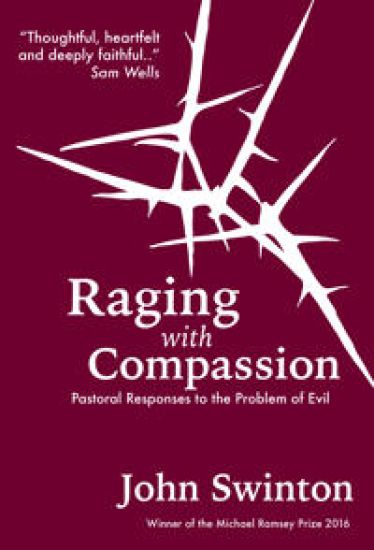
Enhanced by case studies from current events and by Swinton's own experience as a pastor and mental health nurse, "Raging with Compassion" seeks to inspire fresh Christian responses and modes of practice in our broken, fallen world.
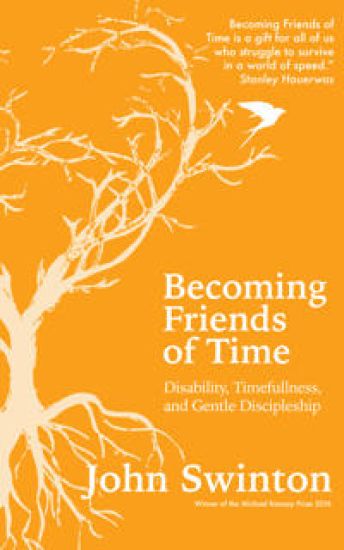
Time is central to all that humans do. Time structures days, provides goals, shapes dreams - and limits lives. Time appears to be tangible, real, and progressive, but, in the end, time proves illusory. Though mercurial, time can be deadly for those with disabilities. To participate fully in human society has come to mean yielding to the criterion of the clock. The absence of thinking rapidly, living punctually, and biographical narration leaves persons with disabilities vulnerable. A worldview driven by the demands the clock makes on the lives of those with dementia or profound neurological and intellectual disabilities seems pointless. And yet, Jesus comes to the world to transform time. Jesus calls us to slow down, take time, and learn to recognize the strangeness of living within God's time. He calls us to be gentle, patient, kind; to walk slowly and timefully with those whom society desires to leave behind. In Becoming Friends of Time, John Swinton crafts a theology of time that draws us toward a perspective wherein time is a gift and a calling. Time is not a commodity nor is time to be mastered. Time is a gift of God to humans, but is also a gift given back to God by humans. Swinton wrestles with critical questions that emerge from theological reflection on time and disability: rethinking doctrine for those who can never grasp Jesus with their intellects; reimagining discipleship and vocation for those who have forgotten who Jesus is; reconsidering salvation for those who, due to neurological damage, can be one person at one time and then be someone else in an instant. In the end, Swinton invites the reader to spend time with the experiences of people with profound neurological disability, people who can change our perceptions of time, enable us to grasp the fruitful rhythms of God's time, and help us learn to live in ways that are unimaginable within the boundaries of the time of the clock. Not for sales in the United Kingdom.
Time is central to all that humans do. Time structures days, provides goals, shapes dreams - and limits lives. Time appears to be tangible, real, and progressive, but, in the end, time proves illusory. Though mercurial, time can be deadly for those with disabilities. To participate fully in human society has come to mean yielding to the criterion of the clock. The absence of thinking rapidly, living punctually, and biographical narration leaves persons with disabilities vulnerable. A worldview driven by the demands the clock makes on the lives of those with dementia or profound neurological and intellectual disabilities seems pointless. And yet, Jesus comes to the world to transform time. Jesus calls us to slow down, take time, and learn to recognize the strangeness of living within God's time. He calls us to be gentle, patient, kind; to walk slowly and timefully with those whom society desires to leave behind. In Becoming Friends of Time, John Swinton crafts a theology of time that draws us toward a perspective wherein time is a gift and a calling. Time is not a commodity nor is time to be mastered. Time is a gift of God to humans, but is also a gift given back to God by humans. Swinton wrestles with critical questions that emerge from theological reflection on time and disability: rethinking doctrine for those who can never grasp Jesus with their intellects; reimagining discipleship and vocation for those who have forgotten who Jesus is; reconsidering salvation for those who, due to neurological damage, can be one person at one time and then be someone else in an instant. In the end, Swinton invites the reader to spend time with the experiences of people with profound neurological disability, people who can change our perceptions of time, enable us to grasp the fruitful rhythms of God's time, and help us learn to live in ways that are unimaginable within the boundaries of the time of the clock. Not for sale in the United Kingdom.
How do Christians in the twenty-first century understand psychological disorders? What does Scripture have to teach us about these conditions? Marcia Webb examines attitudes about psychological disorder in the church today, and compares them to the scriptural testimony. She offers theological and psychological insights to help contemporary Christians integrate biblical perspectives with current scientific knowledge about mental illness. ""Toward a Theology of Psychological Disorder weaves scriptural, theological, historical, psychological, and other insight together to provide rich grounding for theological and practical reflection. Concern about the role of Christian communities amid the suffering caused by mental illness motivates Webb's exploration, and the book invites consideration of faithful responses. Congregations, clergy, family members, and those who suffer will find the book a thoughtful resource as they attend to the distress caused by psychological disorders."" --Heather Hartung Vacek, Vice President for Academics, Dean of Faculty, Associate Professor of Church History, Pittsburgh Theological Seminary ""Webb's exploration of human fragility and limitation is set in a context of grace and goodness, within the story of God's redemptive love for human persons. Her integrative insights spring from cultural analysis, biblical story, individual narratives, theological and philosophical frameworks, and contemporary psychological science. She weaves all this together into much needed wisdom for all of us in churches, schools, and clinics. Throughout, her tender care for all who live with psychological disorders is evident."" --Claudia DeVries Beversluis, Clinical Psychologist, Professor of Psychology, Calvin College ""This is a head-on engagement with common cultural and religious beliefs about mental illness that harm and isolate rather than help and heal. By providing critiques to those perspectives on the basis of Scripture and theology, and by developing alternative biblical and theological foundations, Dr. Webb provides a guide that can be used time and again by clergy, counselors, people with psychological disorders, their families, and friends. Well done "" --Bill Gaventa, Director, Summer Institute on Theology and Disability Marcia Webb has a Master of Divinity degree and a PhD in clinical psychology. She is Associate Professor of Psychology at Seattle Pacific University.
A momentous question, the respective attitudes of labor and capital is an unchanged, high-quality reprint of the original edition of 1895. Hansebooks is editor of the literature on different topic areas such as research and science, travel and expeditions, cooking and nutrition, medicine, and other genres. As a publisher we focus on the preservation of historical literature. Many works of historical writers and scientists are available today as antiques only. Hansebooks newly publishes these books and contributes to the preservation of literature which has become rare and historical knowledge for the future.
In Becoming Friends of Time, John Swinton crafts a theology of time that draws us toward a perspective wherein time is a gift and a calling. Time is not a commodity nor is time to be mastered. Time is a gift of God to humans, but is also a gift given back to God by humans. Swinton wrestles with critical questions that emerge from theological reflection on time and disability: rethinking doctrine for those who can never grasp Jesus with their intellects; reimagining discipleship and vocation for those who have forgotten who Jesus is; reconsidering salvation for those who, due to neurological damage, can be one person at one time and then be someone else in an instant. In the end, Swinton invites the reader to spend time with the experiences of people with profound neurological disability, people who can change our perceptions of time, enable us to grasp the fruitful rhythms of God's time, and help us learn to live in ways that are unimaginable within the boundaries of the time of the clock.
Practical Theology is a growing discipline in its own right, and the latest thinking in practical theology; of how to use theological learning in practical situations, is fully explored in this new edition of an established textbook. The authors examine methodologies of the social sciences and questions how they can enable the task of theological reflection; examine the relationship between qualitative and quantitative methods and highlight the significance of both for the task of practical theology. They also take the reader through the actual process of developing and carrying out a research project using the author's own research as case study examples. Previous case studies include: the rise in spirituality; the decline in church attendance, evidence-based medicine compared to needs-led assessments, the growth in chaplaincy and how it is understood as separate from parish ministry. In this second edition, case studies and all bibliographies have been updated plus a new chapter has been added.
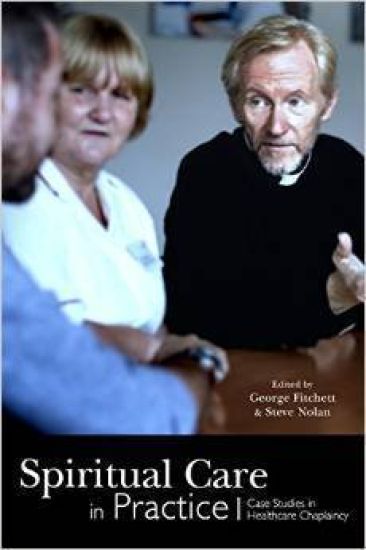
These diverse case studies make a compelling case for the importance of effective spiritual care in healthcare and provide unprecedented insight into the essential role of the chaplain within the healthcare team. Presented alongside critical reflections and responses from professionals within chaplaincy, psychology, psychiatry and nursing, they provide an honest and detailed look into how healthcare chaplains actually work with the people in their care and reveal the vital role of narrative and imagination in effective transformative practice. From a 16-year-old with a belief that God would enable a miraculous recovery from paralysis, to an African man with a history of psychosis and depression whose cultural belief in witches complicated his treatment, to a dying Jewish man, aggressive and isolated due to his traumatic life experiences, each case includes insight into the patient's needs and chaplain's perspectives, discussion of spiritual assessments and spiritual care interventions, and accounts of significant encounters and dialogues. The nine paediatric, psychiatric and palliative case studies and reflections in this ground-breaking book will enable chaplains to critically reflect on the spiritual care they provide and communicate their work more effectively, help healthcare professionals develop a clearer understanding of the care chaplains deliver, and provide an informed perspective for those who develop policy around spiritual care and need to make the case for chaplaincy services.