Kirjailija
Jose Rizal
Kirjat ja teokset yhdessä paikassa: 106 kirjaa, julkaisuja vuosilta 1968–2026, suosituimpiin kuuluu The Reign of Greed (El filibusterismo). Vertaile teosten hintoja ja tarkista saatavuus suomalaisista kirjakaupoista.
Nimi esiintyy myös muodoissa: José Rizal
106 kirjaa
Kirjojen julkaisuvuodet: 1968–2026.
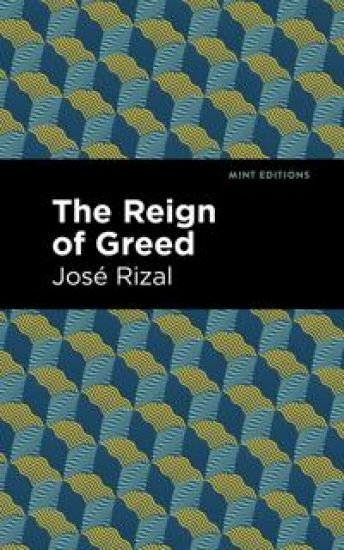
The Reign of Greed (1891) is a novel by José Rizal. Published in Belgium, the novel was a sequel to Touch Me Not (1887), both of which were written in Spanish. Blending aspects of his own life story with his critique of Spanish imperialism in the Philippines, Rizal continues the journey of Crisóstomo Ibarra from centrist reformer to revolutionary leader. Banned by Spanish authorities, the novel was smuggled into his home country, where it quickly galvanized Rizal’s fellow nationalists in opposition to the Spanish Empire. Despite his attempts to reform the local government of his native San Diego, Ibarra is placed in prison on false charges of rebellion. Forced to escape or face execution, he chooses the former. When a firefight with authorities leaves his comrade Elias dead, he manages to make his way out of the country. Thirteen years later, by now presumed dead by friends and foes alike, he returns to the Philippines as Simoun, a shadowy jeweler. Moving in secret, he begins spreading his anti-imperial message among the local people while gathering the weapons and supplies he will need to overthrow the government. Before he can carry out his plan, however, he must rescue his love Maria Clara from confinement. With a beautifully designed cover and professionally typeset manuscript, this edition of José Rizal’s The Reign of Greed is a classic work of Filipino literature reimagined for modern readers.
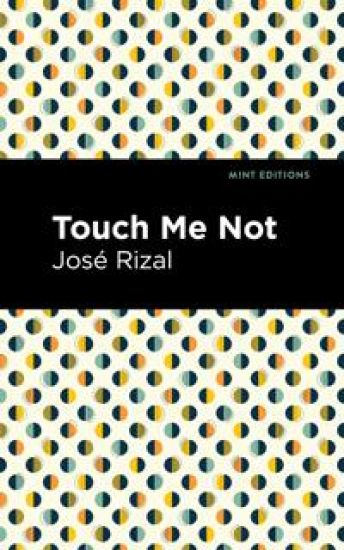
Touch Me Not (1887) is a novel by José Rizal. Published in Berlin, the novel was originally conceived as a collaborative project to be written by a group of Filipino nationalist writers living in Madrid. Disappointed in his comrades’ lack of engagement, however, Rizal wrote the novel alone, blending aspects of his own life story with his critique of Spanish imperialism in the Philippines. Banned by Spanish authorities, the novel was smuggled into his home country, where it quickly galvanized Rizal’s fellow nationalists in opposition to the Spanish Empire. Returning home to Laguna province after seven years in Europe, Crisóstomo Ibarra, a young mestizo man, attempts to pick up the pieces following the death of his father. Noticing some hostility from Padre Dámaso, a local curate who had long been a friend of his family, Crisóstomo soon learns that his father’s death may not have been an accident after all. Focusing on his goal of building a school for the local children, Crisóstomo longs to do justice to Don Rafael Ibarra’s legacy. When he goes to visit his grave, however, he is told by the groundskeeper that his father’s body was moved to a local Chinese burial ground following an order by Padre Dámaso. As the story unfolds, a vast web of conspiracy involving Spanish authorities and Filipino revolutionaries threatens Crisóstomo’s life while testing the limits of his loyalty to family and nation alike. With a beautifully designed cover and professionally typeset manuscript, this edition of José Rizal’s Touch Me Not is a classic work of Filipino literature reimagined for modern readers.
The book, An Eagle Flight, has been considered important throughout the human history, and so that this work is never forgotten we have made efforts in its preservation by republishing this book in a modern format for present and future generations. This whole book has been reformatted, retyped and designed. These books are not made of scanned copies of their original work and hence the text is clear and readable.
At the center of "Noli Me Tangere (Touch Me Not)" by Philippine national hero Jos Rizal is the conflict against Spanish colonialism. The Philippines, which is named after King Philip II of Spain, was ruled by the Spanish empire as a colony from 1565 until the Philippine Revolution ended this rule in 1898. For his part in the Philippine Revolution, Jos Rizal was tried and convicted for rebellion, sedition, and conspiracy. His sentence was to be death by firing squad. Juan Cris stomo Ibarra, the main character of "Noli Me Tangere (Touch Me Not)", returns to the Philippines after a seven year absence studying in Europe. He is betrothed to the Mar a Clara, the beautiful daughter of Captain Tiago. With this work Rizal set out to write a novel that would expose the ills of Philippine society and in so doing created a passionate love story set amidst the backdrop of the political conflict against a repressive regime. "Noli Me Tangere (Touch Me Not)" and its sequel "El Filibusterismo" are exceptional firsthand documents of the real struggles faced by the Philippine peoples at the end of the 19th century. This edition is printed on premium acid-free paper.

Noli Me Tángere: A Shortened Version in Modern English with an Introduction and Notes
Jose Rizal; Nicholas Tamblyn
Independently Published
2018
nidottu
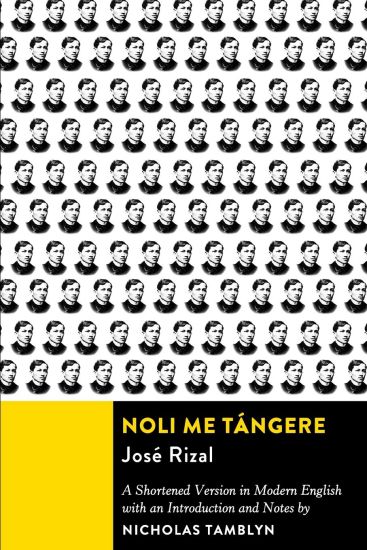
Noli Me T ngere, or the Noli, by Philippine National Hero Jos Rizal has moved readers and influenced the country since it was first published near the end of the 19th Century. In this edition, the epic story is shared-retaining all of the essential elements and characters from the text of the Spanish original-in a shortened version in modern English with an introduction and notes by Nicholas Tamblyn. It contains a full list and descriptions of the characters, the originals and translations of Rizal's quotation and dedication, as well as a lengthy introduction that explores Rizal's life and the book's place in the Philippines' history. Please note that, in addition to the regular paperback, a Large Print edition of this book is also available on Amazon. Born of a specific and turbulent time, the interweaving events that comprise the Noli's narrative are timeless. In short, it is a love story, and the depiction of a society steeped in corruption and, to a degree, a resignation or, worse, a hypocritical acceptance of this state of affairs. By showing the abuse of power by friars and Spanish officials, in Spain's only colony in Asia towards the end of the 19th Century (the novel was self-published in March 1887 in Berlin, financed by the author's friend Dr. Maximo Viola), as stated in his dedication Rizal intended to "raise a part of the veil that covers the evil," while also acknowledging that, as a child of his country, he saw that "I also suffer from your defects and weaknesses." The title, Latin for "touch me not"-in the Bible, at John 20:17, a resurrected Jesus tells the astounded Mary Magdalene: "Touch me not; for I am not yet ascended to my Father" (also translated as "don't touch me," in the original Koine Greek it is nearest to "cease holding on to me")-likely refers to and is a telling injunction to anyone, especially those thought holy or incorruptible, who through their deceit or brutality is a cause of suffering in others. A unique and unforgettable classic unlike any other Filipino book, and still at the height of its country's fiction (no other novel can claim its place in Filipino literature), this Noli Me T ngere English version captures the passion of its rare historical fiction and classical romance, and the vital artistic achievement of its author Jos Rizal, National Hero of the Philippines.
Noli Me Tángere: A Shortened Version in Modern English with an Introduction and Notes
Jose Rizal; Nicholas Tamblyn
Independently Published
2018
nidottu
This is the Large Print edition of Noli Me T ngere: A Shortened Version in Modern English with an Introduction and Notes by Nicholas Tamblyn. Regular paperback and eBook editions are also available on Amazon. Noli Me T ngere, or the Noli, by Philippine National Hero Jos Rizal has moved readers and influenced the country since it was first published near the end of the 19th Century. In this edition, the epic story is shared-retaining all of the essential elements and characters from the text of the Spanish original-in a shortened version in modern English with a full list and descriptions of the characters, the originals as well as translations of Rizal's quotation and dedication, and a lengthy introduction that explores Rizal's life and the book's place in Philippines' history. Born of a specific and turbulent time, the interweaving events that comprise the Noli's narrative are timeless. In short, it is a love story, and the depiction of a society steeped in corruption and, to a degree, a resignation or, worse, a hypocritical acceptance of this state of affairs. By showing the abuse of power by friars and Spanish officials, in Spain's only colony in Asia towards the end of the 19th Century (the novel was self-published in March 1887 in Berlin, financed by the author's friend Dr. Maximo Viola), as stated in his dedication Rizal intended to "raise a part of the veil that covers the evil," while also acknowledging that, as a child of his country, he saw that "I also suffer from your defects and weaknesses." The title, Latin for "touch me not"-in the Bible, at John 20:17, a resurrected Jesus tells the astounded Mary Magdalene: "Touch me not; for I am not yet ascended to my Father" (also translated as "don't touch me," in the original Koine Greek it is nearest to "cease holding on to me")-likely refers to and is a telling injunction to anyone, especially those thought holy or incorruptible, who through their deceit or brutality is a cause of suffering in others. A unique and unforgettable Philippines classic, and still at the height of its country's fiction (no other book can claim its place in Filipino literature), this Noli Me T ngere English version captures the passion of its rare historical fiction and classical romance, and the vital artistic achievement of its author, Jos Rizal National Hero of the Philippines.
Rare edition with unique illustrations and elegant classic cream paper. El Filibusterismo, also known by its English alternate title The Reign of Greed, is the second novel written by Philippine national hero Jose Rizal. It is the sequel to Noli me tangere and, like the first book, was written in Spanish. Thirteen years after leaving the Philippines, Crisostomo Ibarra returns as Simoun, a rich jeweler sporting a beard and blue-tinted glasses, and a confidant of the Captain-General. Abandoning his idealism, he becomes a cynical saboteur, seeking revenge against the Spanish Philippine system responsible for his misfortunes by plotting a revolution. Includes unique illustrations.
Rare edition with unique illustrations and elegant classic cream paper. The Social Cancer or Noli Me Tangere is a novel written by Jose Rizal, considered as one of the national heroes of the Philippines, during the colonization of the country by Spain to expose the inequities of the Spanish Catholic priests and the ruling government. Having completed his studies in Europe, young Juan Crisostomo Ibarra y Magsalin came back to the Philippines after a seven-year absence. Includes unique illustrations.
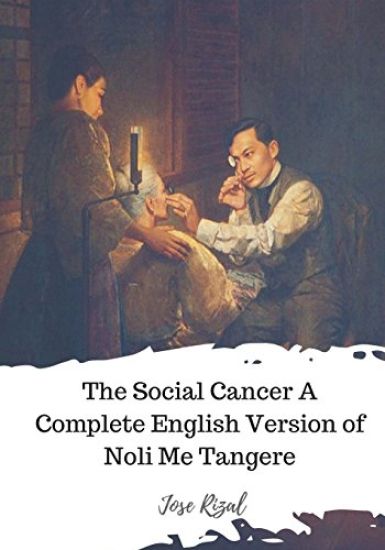
The Social Cancer A Complete English Version of Noli Me Tangere
Jose Rizal
Createspace Independent Publishing Platform
2018
nidottu
Filipino national hero Jose Rizal wrote The Social Cancer in Berlin in 1887. Upon his return to his country, he was summoned to the palace by the Governor General because of the subversive ideas his book had inspired in the nation. Rizal wrote of his consequent persecution by the church: "My book made a lot of noise; everywhere, I am asked about it. They wanted to anathematize me 'to excommunicate me'] because of it... I am considered a German spy, an agent of Bismarck, they say I am a Protestant, a freemason, a sorcerer, a damned soul and evil. It is whispered that I want to draw plans, that I have a foreign passport and that I wander through the streets by night..."

Friars and Filipinos An Abridged Translation of Dr. José Rizal's Tagalog Novel, "Noli Me Tangere.": Large Print Edition
Jose Rizal
Createspace Independent Publishing Platform
2018
nidottu
While serving on the staff of the first United States Commission to the Philippine Islands my attention was called to the life and writings of Dr. Jos Rizal. I found in his novel, "Noli Me Tangere," the best picture of the life of the people of those islands under Spanish rule, and the clearest exposition of the governmental problems which Spain failed to solve, and with which our own people must deal. It occurred to me that an English translation of Rizal's work would be of great value at the present time. My first intention was to reproduce the entire novel as it was written, but, after careful consideration, I thought best to abridge the story by the omission of some parts which did not seem essential to the main purpose of the work. The present volume is the result. Readers should not understand any of Rizal's references to priests and friars as reflections upon the Roman Catholic Church. He was throughout his life an ardent Catholic, and died a firm adherent of the Church. But he objected to the religious orders in the Philippine Islands, because he knew well that they were more zealous in furthering their own selfish ends than in seeking the advancement of Christianity. From experience, Dr. Rizal knew that the friars, under cloak of the gospel ministry, oppressed his fellow countrymen, and took advantage of their superstition and ignorance. These wrongs he was brave enough to expose in his writings. In the friars he saw an obstacle to the education and enlightenment of the Filipino people, and, using moderate means, he did his utmost to secure reform. His writings will explain to us the cause of the hatred shown by the Filipinos toward the religious corporations, and will make clearer the nature of one of the present problems in the Philippines. There are in the Philippines five religious orders: the Dominicans, Franciscans, Recoletos, Augustines and Jesuits. According to John Foreman, an eminent authority, the members of all of these, except the last named, come from the lower classes in Spain, and are on the whole comparatively ignorant and uncultured. Under the Spanish system of government certain provinces were assigned to each of the orders-except the Jesuits-and the friars were distributed among the different parishes. In the town assigned to him the friar had much authority. He was chief adviser in all civil affairs, and, by his influence over the superstitious natives, maintained absolute control in all matters pertaining to the local government as well as to the local church. So firm was his hold that he led the Spanish government to believe that the islands could not be ruled without his aid. Knowing that his power rested on the ignorance of the people he discouraged education among them. When native Filipinos advanced so far as to prove an obstacle to the religious orders, as did Rizal and many others, the friars sought to destroy them. Forgetting their holy mission, the religious orders became commercial corporations, amassed enormous wealth, and gained possession of the most valuable parts of the islands, though to much of this property the titles are not clear. From my own observation, and from information derived from the Spaniards themselves, I am convinced that the author has not overdrawn his pictures. In fact I have learned of instances where the oppression and practices of the friars were even worse than those described. Dr. Rizal has given us a portrayal of the Filipino character from the viewpoint of the most advanced Filipino. He brings out many facts that are pertinent to present-day questions, showing especially the Malayan ideas of vengeance, which will put great difficulties in the way of the pacifying of the islands by our forces. The reader will not fail to notice the striking similarity between the life of Ibarra, the hero, and that of Rizal, the author, a short sketch of whose career has been given in the following pages. (snipped) F. E. G.

Friars and Filipinos An Abridged Translation of Dr. José Rizal's Tagalog Novel, "Noli Me Tangere."
Jose Rizal
Createspace Independent Publishing Platform
2018
nidottu
While serving on the staff of the first United States Commission to the Philippine Islands my attention was called to the life and writings of Dr. Jos Rizal. I found in his novel, "Noli Me Tangere," the best picture of the life of the people of those islands under Spanish rule, and the clearest exposition of the governmental problems which Spain failed to solve, and with which our own people must deal. It occurred to me that an English translation of Rizal's work would be of great value at the present time. My first intention was to reproduce the entire novel as it was written, but, after careful consideration, I thought best to abridge the story by the omission of some parts which did not seem essential to the main purpose of the work. The present volume is the result. Readers should not understand any of Rizal's references to priests and friars as reflections upon the Roman Catholic Church. He was throughout his life an ardent Catholic, and died a firm adherent of the Church. But he objected to the religious orders in the Philippine Islands, because he knew well that they were more zealous in furthering their own selfish ends than in seeking the advancement of Christianity. From experience, Dr. Rizal knew that the friars, under cloak of the gospel ministry, oppressed his fellow countrymen, and took advantage of their superstition and ignorance. These wrongs he was brave enough to expose in his writings. In the friars he saw an obstacle to the education and enlightenment of the Filipino people, and, using moderate means, he did his utmost to secure reform. His writings will explain to us the cause of the hatred shown by the Filipinos toward the religious corporations, and will make clearer the nature of one of the present problems in the Philippines. There are in the Philippines five religious orders: the Dominicans, Franciscans, Recoletos, Augustines and Jesuits. According to John Foreman, an eminent authority, the members of all of these, except the last named, come from the lower classes in Spain, and are on the whole comparatively ignorant and uncultured. Under the Spanish system of government certain provinces were assigned to each of the orders-except the Jesuits-and the friars were distributed among the different parishes. In the town assigned to him the friar had much authority. He was chief adviser in all civil affairs, and, by his influence over the superstitious natives, maintained absolute control in all matters pertaining to the local government as well as to the local church. So firm was his hold that he led the Spanish government to believe that the islands could not be ruled without his aid. Knowing that his power rested on the ignorance of the people he discouraged education among them. When native Filipinos advanced so far as to prove an obstacle to the religious orders, as did Rizal and many others, the friars sought to destroy them. Forgetting their holy mission, the religious orders became commercial corporations, amassed enormous wealth, and gained possession of the most valuable parts of the islands, though to much of this property the titles are not clear. From my own observation, and from information derived from the Spaniards themselves, I am convinced that the author has not overdrawn his pictures. In fact I have learned of instances where the oppression and practices of the friars were even worse than those described. Dr. Rizal has given us a portrayal of the Filipino character from the viewpoint of the most advanced Filipino. He brings out many facts that are pertinent to present-day questions, showing especially the Malayan ideas of vengeance, which will put great difficulties in the way of the pacifying of the islands by our forces. The reader will not fail to notice the striking similarity between the life of Ibarra, the hero, and that of Rizal, the author, a short sketch of whose career has been given in the following pages. (snipped) F. E. G. Ithaca, N. Y., Dec. 1, 1900.
Au Pays des Moines (Noli me Tangere)
Jose Rizal
Createspace Independent Publishing Platform
2018
nidottu
Noli me tangere est le premier roman de Jos Rizal, publi en Europe en 1887, l' ge de 26 ans. Le titre est en langue latine, et signifie "ne me touchez pas". Rizal a pris ces mots de la Bible, sp cifiquement de Jean 20:17, dans lequel J sus, apr s sa r surrection, vite le contact de Marie-Madeleine. Noli me tangere est, en m me temps, un roman costumbrista sur les Philippines de l' poque avant son ind pendance de l'Espagne, un roman romantique et sentimental sur les amours contradictoires ou impossibles et un plaidoyer contre la d gradation morale de la soci t philippine par l'imposition d'une religiosit dans les limites de la superstition. A tout cela s'ajoute une r flexion politique sur les relations difficiles de la colonie avec sa m tropole.