Kirjojen hintavertailu – 12 859 819 kirjaa ja 27 kauppaa

Kirjailija

Joseph Conrad

Kirjat ja teokset yhdessä paikassa: 2 285 kirjaa, julkaisuja vuosilta 1895–2026, suosituimpiin kuuluu Lord Jim. Vertaile teosten hintoja ja tarkista saatavuus suomalaisista kirjakaupoista.

Nimi esiintyy myös muodoissa: Joseph. Conrad

2 285 kirjaa

Kirjojen julkaisuvuodet: 1895–2026.

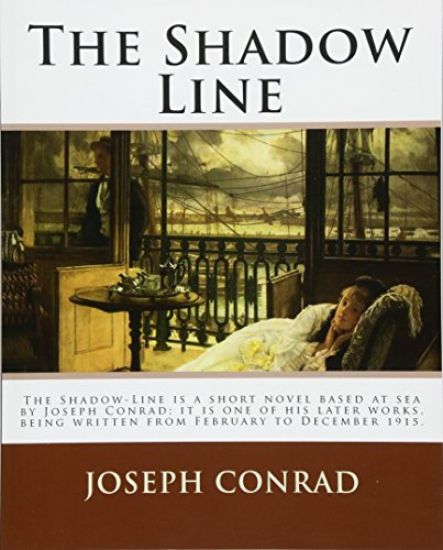
The Shadow Line. By: Joseph Conrad: The Shadow-Line is a short novel based at sea by Joseph Conrad; it is one of his later works, being wri
The Shadow-Line is a short novel based at sea by Joseph Conrad; it is one of his later works, being written from February to December 1915. It was first published in 1916 as a serial in New York's Metropolitan Magazine (September-October) in the English Review (September 1916-March 1917) and published in book form in 1917 in the UK (March) and America (April). The novella depicts the development of a young man upon taking a captaincy in the Orient, with the shadow line of the title representing the threshold of this development. The novella is notable for its dual narrative structure. The full, subtitled title of the novel is The Shadow-Line, A Confession, which immediately alerts the reader to the retrospective nature of the novella. The ironic constructions following from the conflict between the 'young' protagonist (who is never named) and the 'old' drive much of the underlying points of the novella, namely the nature of wisdom, experience and maturity. Conrad also extensively uses irony by comparison in the work, with characters such as Captain Giles and the ship's 'factotum' Ransome used to emphasise strengths and weaknesses of the protagonist. The novella has often been cited as a metaphor of the First World War, given its timing and references to a long struggle, the importance of camaraderie, etc. This viewpoint may also be reinforced by the knowledge that Conrad's elder son, Borys, was wounded in the First World War. Others however see the novel as having a strong supernatural influence, referring to various plot-lines in the novella such as the 'ghost' of the previous captain potentially cursing the ship, and the madness of first mate Mr Burns. Conrad himself, however, denied this link in his 'Author's Note' (1920), claiming that although critics had attempted to show this link, "The world of the living contains enough marvels and mysteries as it is." Andrzej Wajda has made a 1976 film adaptation of the novel under its Polish title - Smuga cienia.... Joseph Conrad (Polish pronunciation: born J zef Teodor Konrad Korzeniowski; 3 December 1857 - 3 August 1924) was a Polish-British writer regarded as one of the greatest novelists to write in the English language. He joined the British merchant marine in 1878, and was granted British nationality in 1886. Though he did not speak English fluently until his twenties, he was a master prose stylist who brought a non-English sensibility into English literature. He wrote stories and novels, many with a nautical setting, that depict trials of the human spirit in the midst of an impassive, inscrutable universe. Conrad is considered an early modernist, though his works still contain elements of 19th-century realism. His narrative style and anti-heroic characters have influenced many authors, including F. Scott Fitzgerald, William Faulkner, Ernest Hemingway, Andr Malraux, George Orwell, Graham Greene, Gabriel Garc a M rquez, John le Carr , V. S. Naipaul, Philip Roth, J. M. Coetzee, and Salman Rushdie. Many films have been adapted from, or inspired by, Conrad's works. Writing in the heyday of the British Empire, Conrad drew on, among other things, his native Poland's national experiences note 3] and his own experiences in the French and British merchant navies, to create short stories and novels that reflect aspects of a European-dominated world-including imperialism and colonialism-and that profoundly explore the human psyche.
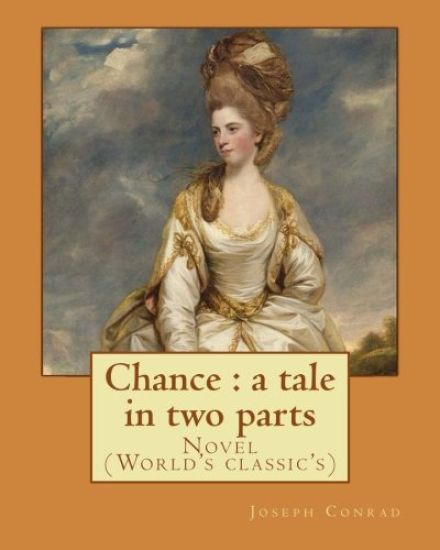
Chance: a tale in two parts. By: Joseph Conrad: Novel (World's classic's)

Chance: a tale in two parts. By: Joseph Conrad: Novel (World's classic's)

Joseph Conrad

Createspace Independent Publishing Platform
2017
nidottu
Chance is a novel by Joseph Conrad, published in 1913 following serial publication the previous year. Although the novel was not one upon which Conrad's later critical reputation was to depend, it was his greatest commercial success upon initial publication. Chance is narrated by Conrad's regular narrator, Charles Marlow, but is characterised by a complex, nested narrative in which different narrators take up the story at different points. The novel is also unusual among its author's works for its focus on a female character: the heroine, Flora de Barral. The narrators describe and attempt to interpret various episodes in the life of Miss de Barral, the daughter of a convicted swindler named Smith de Barral (though this character is famous in the world of the novel as a criminal, he may, at least at first, have been merely an incompetent banker). Miss de Barral leads a sheltered life while her father is prosperous, then must rely on the generosity of others, who resent her or have agendas for her, before she escapes by marrying one Captain Anthony. Much of the book involves the musing of the various narrators over what she and the Captain expected from this union, and what they actually got from it. When her father is released from prison, he joins them on ship, and the book heads towards its denouement. Chance opened a path to commercial success for Conrad after years of slow progress and obscurity. This success could be measured by the record sale of the book in 1914, which outsold all his previous publications and shot him to fame. Breaking away from the tradition, Chance dealt with social issues surrounding feminism and financial speculation enacted by Mrs. Fyne and Flora de Barral, as presented by the narrators. The storyline of the novel oscillates between human-will and activity juxtaposed with an apathetic force that can nullify the importance of human action. The complex style of Conrad's narrative in this novel invited widespread criticisms from peers and readers alike..... Joseph Conrad (Polish pronunciation: born J zef Teodor Konrad Korzeniowski; 3 December 1857 - 3 August 1924) was a Polish-British writer regarded as one of the greatest novelists to write in the English language. He joined the British merchant marine in 1878, and was granted British nationality in 1886. Though he did not speak English fluently until his twenties, he was a master prose stylist who brought a non-English sensibility into English literature. He wrote stories and novels, many with a nautical setting, that depict trials of the human spirit in the midst of an impassive, inscrutable universe. Conrad is considered an early modernist, though his works still contain elements of 19th-century realism. His narrative style and anti-heroic characters have influenced many authors, including F. Scott Fitzgerald, William Faulkner, Ernest Hemingway, Andr Malraux, George Orwell, Graham Greene, Gabriel Garc a M rquez, John le Carr , V. S. Naipaul, Philip Roth, J. M. Coetzee, and Salman Rushdie. Many films have been adapted from, or inspired by, Conrad's works. Writing in the heyday of the British Empire, Conrad drew on, among other things, his native Poland's national experiences note 3] and his own experiences in the French and British merchant navies, to create short stories and novels that reflect aspects of a European-dominated world-including imperialism and colonialism-and that profoundly explore the human psyche.
An Outcast of the Islands

An Outcast of the Islands

Joseph Conrad

Createspace Independent Publishing Platform
2017
nidottu

Halvin toimitettuna 20,80 €

The novel details the undoing of Peter Willems, a disreputable, immoral man who, on the run from a scandal in Makassar, finds refuge in a hidden native village, only to betray his benefactors over lust for the tribal chief's daughter. The story features Conrad's recurring character Tom Lingard, who also appears in Almayer's Folly (1895) and The Rescue (1920), in addition to sharing other characters with those novels. It is considered to be underrated as a work of literature for many. Conrad romanticizes the jungle environment and its inhabitants in a similar style to his "Heart of Darkness".
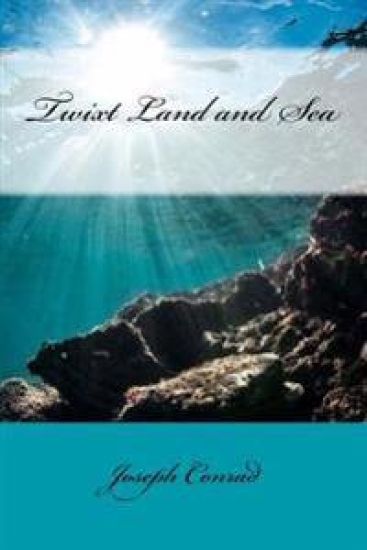
Twixt Land and Sea

Twixt Land and Sea

Joseph Conrad

Createspace Independent Publishing Platform
2017
nidottu
Joseph Conrad (J zef Teodor Konrad Korzeniowski; 3 December 1857 - 3 August 1924) was a Polish-British writer regarded as one of the greatest novelists to write in the English language. He joined the British merchant marine in 1878, and was granted British nationality in 1886. Though he did not speak English fluently until he was in his twenties, he was a master prose stylist who brought a non-English sensibility into English literature. He wrote stories and novels, many with a nautical setting, that depict trials of the human spirit in the midst of an impassive, inscrutable universe.
The Informer

The Informer

Joseph Conrad

Createspace Independent Publishing Platform
2017
nidottu
In The Informer there is betrayal within an anarchist group. One of the bloodiest anarchists is both a cultured and art-loving person, a character full of contradictions and strength. "X turned up in due course. My treasures are disposed in three large rooms without carpets and curtains. There is no other furniture than the etagres and the glass cases whose contents shall be worth a fortune to my heirs. I allow no fires to be lighted, for fear of accidents, and a fire-proof door separates them from the rest of the house".
Heart of Darkness

Heart of Darkness

Joseph Conrad

Createspace Independent Publishing Platform
2017
nidottu
The Heart of Darkness is the title of an extensive short story or short novel by Joseph Conrad published in 1899, and in book form in 1902. Set in Africa, The Heart of Darkness is to some extent inspired by The six months that Joseph Conrad spent in Congo colonized and devastated by King Leopold II of Belgium. Today is probably the best known work of Conrad. It was included in the series Great Books of the 20th Century, published by Penguin Books.
The Rescue

The Rescue

Joseph Conrad

Createspace Independent Publishing Platform
2017
nidottu
The Rescue is one of Joseph Conrad's works contained in The Lingard Trilogy, a group of novels based on Conrad's experience as mate on the steamer Vidar. Although it was the last of the three novels to be published, after Almayer's Folly (1895) and An Outcast of the Islands (1896), the events related in the novel precede those. The story follows Captain Tom Lingard, the recurring protagonist of The Lingard Trilogy, who was on his way to help a native friend regain his land when he falls in love with a married woman whose yacht he saves from foundering.
A set of six. By: Joseph Conrad: A Set of Six. (collection of story): Gaspar Ruiz, The Informer, The Brute, An Anarchist, The Duel, Il Conde .
A Set of Six. (collection of story): Gaspar Ruiz, The Informer, The Brute, An Anarchist, The Duel, Il Conde . Joseph Conrad (Polish pronunciation: born J zef Teodor Konrad Korzeniowski; 3 December 1857 - 3 August 1924) was a Polish-British writer regarded as one of the greatest novelists to write in the English language. He joined the British merchant marine in 1878, and was granted British nationality in 1886. Though he did not speak English fluently until his twenties, he was a master prose stylist who brought a non-English sensibility into English literature. He wrote stories and novels, many with a nautical setting, that depict trials of the human spirit in the midst of an impassive, inscrutable universe. Conrad is considered an early modernist, though his works still contain elements of 19th-century realism. His narrative style and anti-heroic characters have influenced many authors, including F. Scott Fitzgerald, William Faulkner, Ernest Hemingway, Andr Malraux, George Orwell, Graham Greene, Gabriel Garc a M rquez, John le Carr , V. S. Naipaul, Philip Roth, J. M. Coetzee, and Salman Rushdie. Many films have been adapted from, or inspired by, Conrad's works. Writing in the heyday of the British Empire, Conrad drew on, among other things, his native Poland's national experiences and his own experiences in the French and British merchant navies, to create short stories and novels that reflect aspects of a European-dominated world-including imperialism and colonialism-and that profoundly explore the human psyche. Joseph Conrad was born on 3 December 1857 in Berdychiv, in what is now Ukraine and at the time of his birth the Russian Empire, a region that was once part of the Kingdom of Poland. He was the only child of Apollo Korzeniowski and his wife Ewa Bobrowska. His father was a writer, translator, political activist, and would-be revolutionary. Conrad was christened J zef Teodor Konrad after his maternal grandfather Jozef, his paternal grandfather Teodor, and the heroes (both named "Konrad") of two poems by Adam Mickiewicz, Dziady and Konrad Wallenrod. He was subsequently known to his family as "Konrad", rather than "Jozef". Though the vast majority of the surrounding area's inhabitants were Ukrainians, and the great majority of Berdychiv's residents were Jewish, almost all the countryside was owned by the Polish szlachta (nobility), to which Conrad's family belonged as bearers of the coat-of-arms. Polish literature, particularly patriotic literature, was held in high esteem by the area's Polish population. The Korzeniowski family played a significant role in Polish attempts to regain independence. Conrad's paternal grandfather served under Prince Jozef Poniatowski during Napoleon's Russian campaign and formed his own cavalry squadron during the November 1830 Uprising.
The Rescue: A Romance of the Shallows (1920).NOVEL By: Joseph Conrad: Novel (Original Classics)
The Rescue, A Romance of the Shallows (1920) is one of Joseph Conrad's works contained in what is now sometimes called the 'Lingard Trilogy', a group of novels based on Conrad's experience as mate on the steamer Vidar. Although it was the last of the three novels to be published, after Almayer's Folly (1895) and An Outcast of the Islands (1896), the events related in the novel precede those. The story follows Captain Tom Lingard, the recurring protagonist of The Lingard Trilogy, who was on his way to help a native friend regain his land when he falls in love with a married woman whose yacht he saves from foundering. Plot: Part I. The Man and the Brig Young Tom Lingard is the owner and captain of a sailing ship, the Lightning which lies becalmed at night, somewhere in the Malayan archipelago. With his chief mate Shaw he discusses the problems that women can cause. Suddenly they are approached by a search party in a boat seeking help for a yacht which has become stranded on mudflats on a nearby island. Carter, the commander of the boat is interrogated in rather a hostile and suspicious manner which leaves him puzzled, but his boat is put in tow. When they reach the island Lingard handles his brig skillfully, but it transpires that he was heading for the island himself. He fires a warning shot into the interior, then joins the stricken yacht. Part II. The Shore of Refuge The story backtracks to explain how Lingard first came into contact with the Wajo leader Hassim, and their instant bond of friendship. Lingard goes to visit Hassim, but is warned off by Jaffir, who reports that Hassim is now a fugitive in a civil war. But Lingard takes a long boat on shore to rescue him, and the sortie is a success. Lingard begins trading in arms and saving money to help Hassim in the re-conquest of Wajo. He is followed around by Jorgenson, an old sea-captain whose life has been ruined. When Lingard explains his plans to Jorgenson, the older man warns him against taking action, and offers his own life as an example of failure. But in the end, with no future prospects, he agrees to join in the venture, along with his prematurely aged native wife. Lingard has previously visited local chief Belarab to ask for help, and offers him guns in exchange for manpower. Lingard feels that since he has saved Hassim's life, he is tied to him in some mysterious way. He buys the old schooner Emma and runs it aground close to Belarab to use as a weapons store, placing Jorgenson in charge. Part III. The Capture When Lingard arrives on the stricken yacht he is met with hostility from its owner Mr Travers, who thinks he is a vulgar adventurer, intent on profiting from salvaging the yacht. Lingard sees the yacht and its passengers as merely annoying obstacles who have come between him and his plans. The passenger d'Alcacer is in flight from Europe following the early death of his wife and is friendly with the owner's enigmatic wife Edith Travers. Whilst Lingard and Travers trade insults with each other, d'Alcacer takes an instant liking to Lingard and tries to mediate. But the dispute is interrupted by the sudden arrival of Hassim and his sister Immada. Mrs Travers is fascinated by Immada's attractiveness, but the girl and her brother reproach Lingard for recently neglecting them, and leave with him when the interview comes to a fruitless conclusion. On her own after dinner on the yacht, Mrs Travers reflects upon the failure of her romantic dreams. Suddenly, Lingard rows up alongside to talk to her, telling her he feels completely detached from his British roots and more at home with the Malaysians.... Joseph Conrad (Polish pronunciation: born J zef Teodor Konrad Korzeniowski; 3 December 1857 - 3 August 1924) was a Polish-British writer regarded as one of the greatest novelists to write in the English language.
An Outcast of the Islands (1896) NOVEL by: Joseph Conrad

An Outcast of the Islands (1896) NOVEL by: Joseph Conrad

Joseph Conrad

Createspace Independent Publishing Platform
2017
nidottu
An Outcast of the Islands is the second novel by Joseph Conrad, published in 1896, inspired by Conrad's experience as mate of a steamer, the Vidar. The novel details the undoing of Peter Willems, a disreputable, immoral man who, on the run from a scandal in Makassar, finds refuge in a hidden native village, only to betray his benefactors over lust for the tribal chief's daughter. The story features Conrad's recurring character Tom Lingard, who also appears in Almayer's Folly (1895) and The Rescue (1920), in addition to sharing other characters with those novels. It is considered to be underrated as a work of literature for many. Conrad romanticizes the jungle environment and its inhabitants in a similar style to his "Heart of Darkness". This novel was adapted into the film Outcast of the Islands in 1951 by director Carol Reed, featuring Trevor Howard as Willems, Ralph Richardson as Lingard, Robert Morley, and Wendy Hiller.
Heart of Darkness

Heart of Darkness

Joseph Conrad

Createspace Independent Publishing Platform
2017
nidottu
Heart of Darkness is a novella written by Polish-born writer Joseph Conrad (born J zef Teodor Konrad Korzeniowski). Before its 1902 publication, it appeared as a three-part series (1899) in Blackwood's Magazine. It is widely regarded as a significant work of English literature and part of the Western canon.
Heart of Darkness

Heart of Darkness

Joseph Conrad

Createspace Independent Publishing Platform
2017
nidottu
Heart of Darkness is a novella written by Polish-born writer Joseph Conrad (born J zef Teodor Konrad Korzeniowski). Before its 1902 publication, it appeared as a three-part series (1899) in Blackwood's Magazine. It is widely regarded as a significant work of English literature and part of the Western canon.
Almayer's folly: a story of an eastern river (1895). By: Joseph Conrad: Almayer's Folly, published in 1895, is Joseph Conrad's first novel.
Almayer's Folly, published in 1895, is Joseph Conrad's first novel. Set in the late 19th century, it centers on the life of the Dutch trader Kaspar Almayer in the Borneo jungle and his relationship to his mixed heritage daughter Nina. Plot: Almayer's Folly is about a poor businessman who dreams of finding a hidden gold mine and becoming very wealthy. He is a white European, married to a native Malayan; they have one daughter named Nina. He fails to find the goldmine, and comes home saddened. Previously, he had heard that the British were to conquer the Pantai River, and he had built a large, lavish house near where he resided at the time, in order to welcome the invading country to the native land. However, the conquest never took place, and the house remained unfinished. Some passing Dutch seamen had called the house "Almayer's Folly". Now, Almayer continually goes out for long trips, but eventually he stops doing so and stays home with his hopeless daydreams of riches and splendor. His native wife loathes him for this. One day, a Malayan prince, Dain Maroola, came to see Almayer about trading, and while there he falls in love with Nina. Mrs. Almayer kept arranging meetings for Nina and Dain. She wanted them to marry so her daughter could stay native, because she was highly distrustful of the white men and their ways. Dain left but vowed to return to help Almayer find the gold mine. When he does return, he goes straight to Lakamba, a Malayan rajah, and told him that he found the gold mine and that some Dutchmen had captured his ship. The rajah tells him to kill Almayer before the Dutch arrive because he is not needed to find the gold now. The following morning, an unidentifiable native corpse is found floating in the river, wearing an ankle bracelet very similar to Dain's. Almayer was distraught because Dain was his only chance at finding the secret mine. (The corpse was actually of his slave, who had died when a canoe overturned. Mrs. Almayer suggested that Dain put his anklet and ring on the body.) Mrs. Almayer planned to smuggle Dain away from the Dutch, so he would not be arrested. She snuck Nina away from her father, who was drinking with the Dutch. When he awoke from his drunken stupor, a native slave girl told him where Nina had run away to, and Almayer tracked her to Dain's hiding place. Nina refused to go back to avoid the slurs of all the white society. During all this arguing, the slave girl had informed the Dutch of Dain's whereabouts. Almayer said that he could never forgive Nina but would help them escape by taking them to the mouth of the river, where a canoe would rescue them from the Dutch. After they had escaped, Almayer erased the lover's footprints, and went back to his house. Mrs. Almayer ran away to the rajah for protection, taking all Dain's dowry with her. All alone, Almayer broke all his furniture in his home office, piled it in the center of the room, and burned it, along with his entire house, to the ground. He spent the rest of his days in " His] Folly", where he began smoking opium to forget his daughter. He eventually died there..... Joseph Conrad (Polish pronunciation: born J zef Teodor Konrad Korzeniowski; 3 December 1857 - 3 August 1924) was a Polish-British writer regarded as one of the greatest novelists to write in the English language.
The nigger of the "Narcissus": a tale of the sea. By: Joseph Conrad, and By: Edward Garnett (1868-1937): Novel
The Nigger of the 'Narcissus': A Tale of the Sea (1897) is a novella by Joseph Conrad. Because of its quality compared to earlier works, some have described it as marking the start of Conrad's major, or middle, period;others have placed it as the best work of his early, or first, period. Plot: The title character, James Wait, is a dying West Indian black sailor on board the merchant ship Narcissus sailing from Bombay to London. Wait, suffering from tuberculosis, becomes seriously ill during the voyage, and his plight arouses the humanitarian sympathies of many of the crew. However, the ship's master Captain Alistoun and an old sailor named Singleton remain concerned primarily with their duties and appear indifferent to Wait's condition. Off the Cape of Good Hope the ship capsizes onto her beam-ends with half her hull submerged, and the crew clings onto the deck for an entire night and day, waiting in silence for the ship to turn over the rest of the way and sink. Alistoun refuses to allow the masts to be severed, which might allow the hull to right itself. Five of the men, realizing that Wait is unaccounted for, climb down to his cabin and rescue him at their own peril. When the storm passes and a wind returns, Alistoun directs the weary men to catch the wind, which succeeds in righting the ship. Later in the voyage Alistoun prevents a near-mutiny led by a slippery Cockney named Donkin. Wait eventually succumbs and dies within sight of land, as Singleton had predicted he would.... Edward William Garnett (1868-1937) was an English writer, critic and literary editor, who was instrumental in getting D. H. Lawrence's Sons and Lovers published. His father Richard Garnett (1835-1906) was a writer and librarian at the British Museum. His wife was Constance Garnett, known for her translations of Russian literature, married on 31 August 1889; the writer David Garnett was their son, born 9 March 1892..... Joseph Conrad (Polish pronunciation: born J zef Teodor Konrad Korzeniowski; 3 December 1857 - 3 August 1924) was a Polish-British writer regarded as one of the greatest novelists to write in the English language. He joined the British merchant marine in 1878, and was granted British nationality in 1886. Though he did not speak English fluently until his twenties, he was a master prose stylist who brought a non-English sensibility into English literature. He wrote stories and novels, many with a nautical setting, that depict trials of the human spirit in the midst of an impassive, inscrutable universe. Conrad is considered an early modernist, though his works still contain elements of 19th-century realism. His narrative style and anti-heroic characters have influenced many authors, including F. Scott Fitzgerald, William Faulkner, Ernest Hemingway, Andr Malraux, 6] George Orwell: 254 Graham Greene, Gabriel Garc a M rquez, John le Carr , V. S. Naipaul, Philip Roth, J. M. Coetzee, and Salman Rushdie. Many films have been adapted from, or inspired by, Conrad's works. Writing in the heyday of the British Empire, Conrad drew on, among other things, his native Poland's national experiences, and his own experiences in the French and British merchant navies, to create short stories and novels that reflect aspects of a European-dominated world-including imperialism and colonialism-and that profoundly explore the human psyche.
Romance; a novel. By: Joseph Conrad and Ford Madox Hueffer: Romance is a novel written by Joseph Conrad and Ford Madox Ford(born Ford Hermann Hueffer)
Romance is a novel written by Joseph Conrad and Ford Madox Ford. It was the second of their three collaborations. Romance was eventually published by George Bell and Sons in London in 1903 and by McClure, Phillips in New York in March 1904. According to Max Saunders, Conrad, in his quest to obtain a literary collaborator, had been recommended by several literary figures. W. E. Henley pointed to Ford as a suitable choice for Conrad. Literary collaboration was not particularly uncommon when Conrad proposed it to Ford, but neither was it considered the proper way for serious novelists, as Ford was aware: "The critics of our favoured land do not believe in collaboration.". In his biography of Conrad, Joseph Conrad: A Personal Remembrance (1924), Ford alleges that some opponents and critics did not hold the same reverence for his "literary friendship" with Conrad as that which he maintained. But his bond with Conrad had been "for its lack of jealousy a very beautiful thing." Indeed, Ford took the position that he gave Conrad some benefit as a bonding partner, writing: "I was useful to Conrad as a writer and as a man in a great many subordinate ways during his early days of struggle and deep poverty..." In an unpublished section, he withheld a frank passage of confession about his team writer where he contradicts the argument that Conrad "chose to live on terms of intimacy with a parasitic person", stating that such an accusation was as damaging to himself as it was to Conrad. Ford continued in the same vein about the choices open to Conrad, defending himself from criticism and showing awareness of the psychology behind co-writing: ..."if he chose to consult the person as to the most private details of his personal life and - what is still more important - as to the form and the very wording of his books, - if he chose for this intimacy a person of a parasitic type, he was less upright a man than might reasonably be supposed... And less of a psychologist." A critic and friend of Ford, R. A. Scott-James, reveals in an introduction to one of Ford's works, rather unbelievably, that Ford had spiritedly claimed to have taught Conrad English. Ford made a number of claims about Conrad that may not have been completely true. The writers' wives were involved behind the scenes in the collaborations, often to the despair of Ford, who omitted any mention of Jessie Conrad in his biography. Conrad and Ford agreed upon a collaboration on Seraphina, a novel that Ford had already begun work on. Conrad wrote to Ford encouraging him to visit: "Come when you like ... You will always find me here. I would be very pleased to hear Seraphina read. I would afterwards read it myself. Consult your own convenience and (especially) your own whim. It's the only thing worth deferring to." Another instance where making objections to collaborating occurred when Conrad wrote to Galsworthy commenting: "I am drooping still. Working at Seraphina. Bosh Horrors " and again after a further bonding session Conrad wrote that Ford's visit had left him "half dead and he] crawled into bed for two days". Joseph Conrad (Polish pronunciation: born J zef Teodor Konrad Korzeniowski; 3 December 1857 - 3 August 1924) was a Polish-British writer regarded as one of the greatest novelists to write in the English language. He joined the British merchant marine in 1878, and was granted British nationality in 1886. Though he did not speak English fluently until his twenties, he was a master prose stylist who brought a non-English sensibility into English literature. He wrote stories and novels, many with a nautical setting, that depict trials of the human spirit in the midst of an impassive, inscrutable universe. Ford Madox Ford (born Ford Hermann Hueffer ( 17 December 1873 - 26 June 1939) was an English novelist, poet, critic and editor whose journals.
Under Western Eyes (1911). By: Joseph Conrad: Under Western Eyes (1911) is a novel by Joseph Conrad.
Under Western Eyes (1911) is a novel by Joseph Conrad. The novel takes place in St. Petersburg, Russia, and Geneva, Switzerland, and is viewed as Conrad's response to the themes explored in Crime and Punishment; Conrad was reputed to have detested Dostoevsky. It is also, some say, Conrad's response to his own early life; his father was a famous revolutionary imprisoned by the Russians, but, instead of following in his father's footsteps, at the age of sixteen Conrad left his native land forever. Indeed, while writing Under Western Eyes, Conrad suffered a weeks-long breakdown during which he conversed with the novel's characters in Polish. This novel is considered to be one of Conrad's major works and is close in subject matter to The Secret Agent. It is full of cynicism and conflict about the historical failures of revolutionary movements and ideals. Conrad remarks in this book, as well as others, on the irrationality of life, the opacity of character, 3] the unfairness with which suffering is inflicted upon the innocent and poor, and the careless disregard for the lives of those with whom we share existence. The book's first audience read it after the failed Russian Revolution of 1905. A second audience read it after the Russian Revolutions of 1917, which changed the reader's perception of the author's insight. Writing to Edward Garnett in 1911, Conrad said ...in this book I am concerned with nothing but ideas, to the exclusion of everything else . PART FIRST: The narrator, an English teacher of languages living in Geneva, is narrating the personal record of Kyrilo Sidorovitch Razumov. Razumov is a student in the University of St. Petersburg in the early 1910s. Razumov never knew his parents and has no family ties. He is trusted by his fellow students, many of whom hold revolutionary views, but Razumov takes no clear position on any of the great questions of his time because he considers all of Russia his family. (A better view, perhaps, would be to say that Razumov has no family to fall back on, feels isolated from his contemporaries, takes no interest in the "great issues" of the day, and merely seeks a middle-class secure position within the Czarist system - thus, very ironically, he sees "all Russia" as his "family.") Mr. de P-, the brutal Minister of State, is assassinated by a team of two, but the bombs used also claim the lives of his footman, the first assassin and a number of bystanders. Razumov enters his rooms to find Victor Haldin, a fellow student. Haldin tells Razumov that he was the one who murdered Mr. de P-, but that he and his accomplice did not make a proper escape plan. He requests Razumov's help because he trusts him, even though he realises that they do not quite belong in the same camp. Razumov agrees to help, if only to get Haldin out of his flat. Haldin tasks him with finding Ziemianitch, who was supposed to help Haldin escape..... Joseph Conrad (Polish pronunciation: born J zef Teodor Konrad Korzeniowski; 3 December 1857 - 3 August 1924) was a Polish-British writer regarded as one of the greatest novelists to write in the English language. He joined the British merchant marine in 1878, and was granted British nationality in 1886. Though he did not speak English fluently until his twenties, he was a master prose stylist who brought a non-English sensibility into English literature. He wrote stories and novels, many with a nautical setting, that depict trials of the human spirit in the midst of an impassive, inscrutable universe.