Kirjojen hintavertailu – 12 903 724 kirjaa ja 27 kauppaa
Kirjailija
Jurgen Moltmann
Kirjat ja teokset yhdessä paikassa: 89 kirjaa, julkaisuja vuosilta 1978–2025, suosituimpiin kuuluu Jürgen Moltmann. Vertaile teosten hintoja ja tarkista saatavuus suomalaisista kirjakaupoista.
Arguably the most powerful of Moltmann's books. The Crucified God is a seminal work on the crucifixion and its significance. It is one of the most influential theological books of the twentieth century.
Johann-Baptist Metz and Jurgen Moltmann have been among the most influential European theologians of the past thirty years. In complementary ways they have emphasized the eschatological character of Christianity in a way that does justice both to the transcendent and this-worldly implications of the gospel. Both have tried to affirm the credibility of the Christian message in light of the horrors of modernity-the holocaust, war, misery in the third world
Living in hope, Professor Moltmann points out, is an experiment. Hoping is a risky matter; it can bring disappointment and surprise developments. To live in hope is a mark of the Christian, and is so in every age, so that a theology of hope should not be regarded as a passing fashion. The essays collected in this book are experiments made by Professor Moltmann in conversation with a wider audience. They include the texts of lectures given in America, Asia, Africa and Australasia, as well as in Europe and are marked by the concern of a distinguished theologian that German theology shall learn from other cultures and other movements of thought. Almost all of them were written after 1970 and cover subjects in theology, ethics, philosophy of religion and politics. They also show how the themes of Professor Moltmann's two major books, Theology of Hope and The Crucified God may be applied in practice to the basic issues of our time.
Hope and fear are two of the most basic human experiences. It is also possible to see them as more than human experiences, in fact as pointers towards God, and that is the approach adopted by Jurgen Moltmann in his new book. As a further step, he goes on to consider the theology of mystical experience over the long history of the Christian church. These studies are prefaced by perhaps the most interesting account of all: 'Why I am a Christian.' Here one of the best-known theologians of our age describes his life and the development of his theological thinking, and offers a personal confession of faith.
Here is Moltmann discussing the questions that matter more than any others for our world: How is it possible to create a world society worth living in? What positive contribution can Christians make in the face of the nuclear threat? What can be done to mobilize concern for the future of the environment and its natural resources? Moltmann provides a new combination of insights from the Bible and from oriental religion as he has come to know it through his work in the Far East to produce some fresh and challenging perspectives on the primary global issues of our time.
For a time of peril, world-renowned theologian Jürgen Moltmann offers an ethical framework for the future. Moltmann has shown how hope in the future decisively reconfigures the present and shapes our understanding of central Christian convictions, from creation to New Creation. Now, in an era of unprecedented scientific advances alongside unparalleled global dangers, Moltmann has formulated his long-awaited Ethics of Hope. Building on the conviction, asserted in his Theology of Hope, that Christian existence and social matters are inextricably tied together in the political sphere, Moltmann unfolds his ethics in light of eschatology, clearly distinguishing it from prior and competing visions of Christian ethics. He then specifies his vision with an ethic of life (against the dominant ethic of death), an ethic of earth (against today’s utilitarian ethic) and an ethic of justice (against today’s social injustice and global conflicts). In the process, he applies this framework to concrete issues of medical ethics, ecological ethic, and just-war ethics.
For a time of peril, world-renowned theologian Jrgen Moltmann offers an ethical framework for the future. Long distinguished as the architect of political theology and father of the theology of hope, Moltmann has shown how hope in the future decisively reconfigures the present and shapes our understanding of central Christian convictions, from creation to New Creation. Now, in an era of unprecedented scientific advances alongside unparalleled global dangers, Moltmann has formulated his long-awaited Ethics of Hope. Building on his conviction that Christian existence and social matters are inextricably tied together in the political sphere, Moltmann unfolds his ethics in light of eschatology, clearly distinguishing it from prior and competing visions of Christian ethics. He then specifies his vision with an ethic of life (against the dominant ethic of death), an ethic of earth (against todays utilitarian ethic), and an ethic of justice (against todays social injustice and global conflicts). In the process, he applies this framework to concrete issues of medical ethics, ecological ethics, and just-war ethics. A creative and programmatic work, Ethics of Hope is a realistic assessment of the human prospect, as well as its imperatives, from one who stakes everything on Gods promise to rescue life from the jaws of death.
This new book takes forward Professor Moltmann's thought on the Trinity during the 1980s, following the publication of his classic study 'The Trinity and the Kingdom of God'. It begins with a survey of the doctrine of the Trinity today, which sees the main issues as being the social doctrine of the Trinity, gender and the Trinity, and the Trinity and the cross, and ends with a fascinating retrospect, 'my theological career'.
The astonishing theological creativity of Jurgen Moltmann continues in this new work, a vision of the Christian future, centered in God, God's reign, and God's justice or righteousness. Moltmann here brings together the biblical, historical, and theological elements of a new integrated Christian vision of the world, especially in light of our contemporary understandings of nature and the evolving universe. Anchored in the resurrection of Jesus, such a vision affirms that God is the God of resurrection promise, God is present in justice and righteousness, Jesus is the son of righteousness, and nature can be seen as the site of God's work toward the fulfillment of life. Here is a theological vision that can integrate our faith, inform our worldview, and fuel our life engagements.
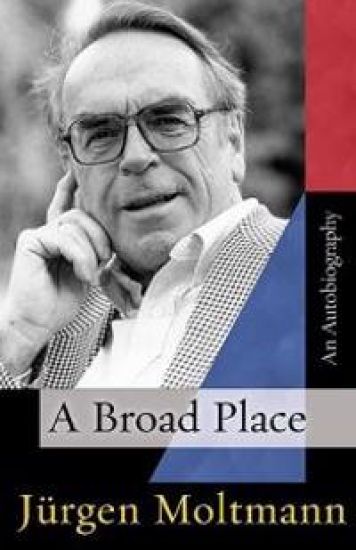
Jurgen Moltmann's life and work have marked the history of theology after the Second World War in Europe and North America like no other. He is the most widely read, quoted, and translated theologian of our time. Now, after celebrating his eightieth birthday, he looks back on a life engaged in and forging a Christian response to the tumult and opportunities of our age. In his autobiography Moltmann tells his engaging and searching life story, from his Hamburg youth in an unconventional parental home up to the "incompleteness" of the present moment. Yet his narrative also sheds light on the creative arc of Moltmann's work, on the journey of his own theological development from its beginnings after World War II through the beginnings of political theology and, most phenomenally, the advent of the theology of hope. A wide-ranging document alert to the deeper currents of his time and ours, Moltmann's work is also an engrossing reconsideration of a life full of intense experience and new beginnings.