Kirjailija
Jurgen Moltmann
Kirjat ja teokset yhdessä paikassa: 89 kirjaa, julkaisuja vuosilta 1978–2025, suosituimpiin kuuluu Jürgen Moltmann. Vertaile teosten hintoja ja tarkista saatavuus suomalaisista kirjakaupoista.
Nimi esiintyy myös muodoissa: Jürgen Moltmann
89 kirjaa
Kirjojen julkaisuvuodet: 1978–2025.
Causing a considerable stir when it was first published in Germany in 1965, this work represents a comprehensive statement of the importance for theology of eschatology - and of an eschatological theology which emphasizes the revolutionary effect of Christian hope upon the thought, institutions and conditions of life in the here and now. Moltmann understands Christian faith essentially as hope for the future of humankind and creation as this has been promised by the God of the exodus and the resurrection of the crucified Jesus. God's promise is the compulsory force of history, awakening hope which keeps human beings unreconciled to present experience, sets them in contradistinction to prevailing natural and social powers, and makes the church the source of continual new impulses towards, in Moltmann's own words, "the realization of righteousness, freedom and humanity in the light of the promised future that is to come".
Moltmann, the foremost Protestant theologian in the world (Church Times), brings his characteristic audacity to this traditional topic and cuts to the heart of the matter with a simple identification: What we experience every day as the spirit of life is the spirit of God. Such considerations give Moltmann's treatment of the different aspects of life in Spirit a verve and vitality that are concrete and existential. Veteran readers will find here a rich and subtle extension of Moltmann's trinitarian and christological works, even as he makes bold use of key insights from feminist and ecological theologies, from recent attention to embodiment, and from charismatic movements. Newcomers will find a fascinating entree into the heart of his work: the transformative potential of the future. Moltmann develops a theology of the Holy Spirit that links the Christian community's experience of the Spirit to the sanctification and liberation of life. He brilliantly displays the ecological and political significance of Christian belief in the Trinity.
Theology always has been (and is for Moltmann) not an abstract or otherworldly endeavor but one nourished by, and responsive to, experiences in and with life itself. In this volume, the final in his series of systematic contributions to theology, Moltmann looks ahead from the landmarks of his own theological journey. He searches out those intersections of his own life with contemporary events that have kindled and impelled his theological thinking (part 1). The perspective of hope, the central moment in Moltmann's thought, is freshly explained, while other basic theological themes and concepts are developed and interrelated (part 2). But more than that, Moltmann uses these theological tinders to spark the flames of the chief directions in liberating theological thought today -- black, Latin American, Minjung, and feminist theologies -- (part 3) and the central motif of Trinity (part 4). This volume not only introduces Moltmann's theology, it also utilizes the contemporary religious and political scene to incite ones own theological reflection.
Provides a methodological afterword (rather than a foreword) to Moltmann's systematic contributions to theology. Presents theology as an adventure of ideas, shaped by his personal career and the political context through which he has lived.
In this masterful analysis of the religious and political dilemmas at the end of the modern age, world-renowned theologian Jurgen Moltmann assays the vaulting dreams and colossal failures of our time. He asks how we came to this point, and he argues strenuously for Christian discipleship and public theology that take sides. In both critical and creative ways he advances the specific relevance of Christian messianic hope to today's thorniest political, economic, and ecological questions-including human rights, environmental rights, globalization, market capitalism, fundamentalisms, and Jewish-Christian relations-and the deeper values contested therein. In a world reeling between utopia and disaster, Moltmann here passionately and provacatively shows how Christian discipleship, through engagement and solidarity, can blaze a redemptive path.
This book has grown from lectures which Jurgen Moltmann has given in predominantly secular institutions. Its main sections cover theology and politics, theology and the changing values of the modern world, and theology and religion. Many important issues are discussed: political theology and liberation theology, ecology and human rights, globalism and individualism, the market and human dignity. There are also chapters on Jewish and Christian theology after Auschwitz, Protestantism, liberalism and fundamentalism, dialogue and mission, and theology in the church and the university. At a time when theology in many quarters has become narrow and introspective, here is a theologian who is not afraid to address his words, both positive and critical, to the widest possible audience. Until his retirement, Jurgen Moltmann was Professor of Systematic Theology in the Protestant Faculty of the University of Tubingen.
Directly, simply, and forcefully, Jurgen Moltmann here presents his reflections on the Spirit and the spiritual life that were the essence of his prior book The Spirit of Life. In this short, accessible work, he combines a deep personal faith with admirable learning and experience. Moltmann views the Holy Spirit as the power of new life, which enlivens body and soul, spirit and mind. In the Holy Spirit we experience the presence of God, community among people, as well as between humans and all created living things on earth. Beginning with his experiences as a prisoner of war, Moltmann anchors his reflections in a theology of life -- and the Spirit as renewer of life -- which ties biblical perspectives to contemporary manifestations, hope to holiness, creation to community, and spirituality to prayer. Moltmann at his best, this little theology stimulates the experience of the Holy Spirit in one's own life.
An accessible introduction to the life and thought of one of the most influential theologians of our time.
Completes the systematic theology which Moltmann began in 1980. Offers a rich discussion of belief in life after death, messianic eschatology and cosmic eschatology as advocated down history by its representatives.
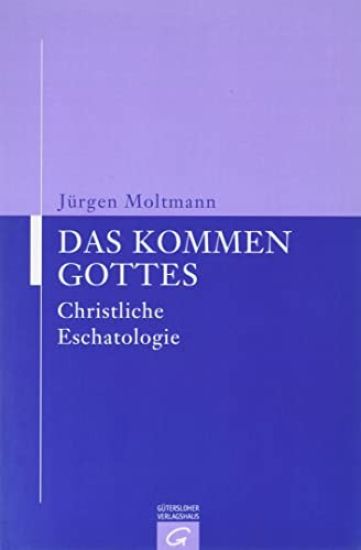
Moltmanns Eschatologie behandelt nicht die religiöse "Endzeitlösung" aller Fragen. Denn das Thema christlicher Eschatologie ist nicht "das Ende", sondern die Neuschöpfung aller Dinge. Christliche Eschatologie folgt in allen persönlichen, geschichtlichen und kosmischen Dimensionen diesem christologischen Muster: im Ende - der Anfang. Jürgen Moltmann geht es um die spezielle Hoffnungslehre, also um die Erwartungshorizonte für das persönliche Leben, für das politische und geschichtliche Leben und für das Leben des Kosmos: Was ist und wie wirkt die Hoffnung auf ewiges Leben, auf das Reich Gottes, auf den neuen Himmel und die neue Erde? Was ist und wie wirkt die Hoffnung auf die Herrlichkeit für Gott selbst. Mit diesem Band führt Jürgen Moltmann sein Werk "Systematische Beiträge zur Theologie" weiter.
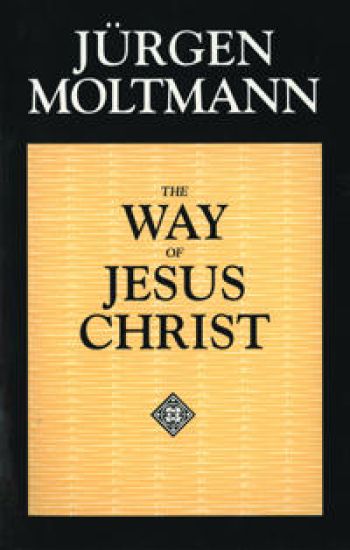
The Way of Jesus Christ discusses the following topics: 1. The symbol of the way embodies the aspect of process and brings out christology's alignment towards its goal. This symbol can comprehend Christ's way from his birth in the Spirit and his baptism in the Spirit to his self-surrender on Golgotha. It also makes it possible to understand the path of Christ as the way leading from his resurrection to his parousia-the way he takes in the Spirit to Israel, to the nations, and into the breadth and depth of the cosmos. 2. The symbol of the way makes us aware that every human christology is historically conditioned and limited. Every human christology is a 'christology of the way, ' not yet a 'christology of the home country, ' a christology of faith, not yet a christology of sight. So christology is no more than the beginning of eschatology; and eschatology, as the Christian faith understands it, is always the consummation of christology. 3. Finally, but not least important: every way is an invitation. A way is something to be followed. 'The way of Jesus Christ' is not merely a christological category. It is an ethical category too. Anyone who enters upon Christ's way will discover who Jesus really is; and anyone who really believes in Jesus and the Christ of God will follow him along the way he himself took. Christology and christopraxis find one another in the full and completed knowledge of Christ. This christology links dogmatics and ethics in closer detail than in the previous volumes.
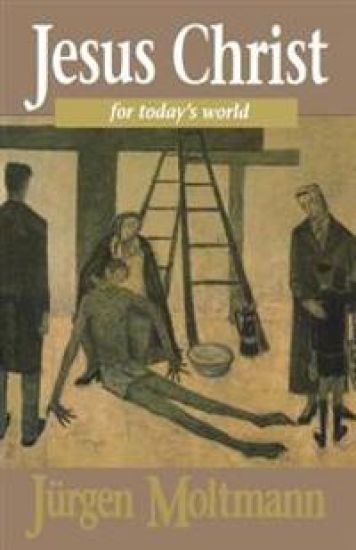
Jurgen Moltmann formulates necessary questions about the significance of Jesus the Christ for persons today. He offers a compelling portrait of the earthly Jesus as the divine brother in our distress and suffering and points to the risen Christ as the warrant for the "future in which God will restore everything . . . and gather everything into his kingdom." Urging that acknowledgment of Christ and discipleship are two sides of the same coin, Moltmann contends that the question of Jesus Christ for today is not just an intellectual one. Moltmann takes fresh approaches to a number of crucial topics: Jesus and the kingdom of God, the passion of Christ and the pain of God, Jesus as brother of the tortured, and the resurrection of Christ as hope for the world, the cosmic Christ, Jesus in Jewish- Christian dialogue, the future of God, and others.
This book based on public lectures provides an accessible introduction to the work of one of Europe's great theologians. Moltmann looks towards a future in which God will restore everything; this is the great hope which strengthens our little hopes.
"The following efforts bear the title Theology of Hope, not because they set out once again to present eschatology as a separate doctrine and to compete with the well known textbooks. Rather, their aim is to show how theology can set out from hope and begin to consider its theme in an eschatological light. For this reason they inquire into the ground of the hope of Christian faith and into the responsible exercise of this hope in thought and action in the world today. The various critical discussions should not be understood as rejections and condemnations. They are necessary conversations on a common subject which is so rich that it demands continual new approaches."
The Trinity and the Kingdom of God
Jurgen Moltmann
Augsburg Fortress
1993
nidottu
Halvin toimitettuna 39,20 €
"An excellent introduction to the prophets and the prophetic literature . . . The goal of the book is to understand the thought of the prophets in their historical contexts, and to communicate that understanding for our time. Its approach, while innovative, builds upon he best of contemporary analysis of the prophetic literature." --Gene M. Tucker Candler School of Theology Emory University "Koch's first volume on the prophets of ancient Israel displays his sound and creative scholarship and will fill a bibliographical gap. He displays the individuality of each prophet with perceptive insight, but he also compares and interrelates them in his various summaries. Furthermore, Koch relates his study of individual prophets to theological currents that have been flowing through the scholarly world in recent decades." --Bernhard W. Anderson Princeton Theological Seminary
The Church in the Power of the Spirit
Jurgen Moltmann
Augsburg Fortress
1993
nidottu
Halvin toimitettuna 39,20 €
"This book, which in my opinion is Moltmann's best, can be recommended on the basis that it contains challenging and creative insights that can be used by the discriminating reader in the service of church renewal... Moltmann represents the theology of liberation at its best, and those who wish to know more about this theology would do well to study this creative and searching theologian." --Donald G. Bloesch Christianity Today "Moltmann is perhaps unsurpassed among his contemporaries in keenness of insight and rhetorical power." --Daniel L. Migliore, Theology Today "Moltmann presents a stirring vision which every Christian community could well ponder... With a missionary emphasis, he seeks to help the reader face the question of the church's identity in the light of the contemporary political, economic, and social scene." --Religious Education
The last of a famous trilogy, including The Crucified God and Theology of Hope. Those whose churches have become over-conservative and self-centred will find its impact refreshing.