Kirjailija
Jurgen Moltmann
Kirjat ja teokset yhdessä paikassa: 89 kirjaa, julkaisuja vuosilta 1978–2025, suosituimpiin kuuluu Jürgen Moltmann. Vertaile teosten hintoja ja tarkista saatavuus suomalaisista kirjakaupoista.
Nimi esiintyy myös muodoissa: Jürgen Moltmann
89 kirjaa
Kirjojen julkaisuvuodet: 1978–2025.
ON HUMAN BEING "It is the suffering figure of the crucified Jesus that has brought the pull towards the lowly, unpretentious, but real being of [the human] into our hope in the Son of Man. Conversely hope in the Son of Man has brought God's hope to the really hopeless on this world. What are the results of this for Christian anthropology?" -Jurgen Moltmann "This series of sketches provides a basis for Moltmann's view of man and woman as socially and politically responsible beings. Moving quickly through biological, cultural, religious, and Christian anthropology, he locates the contemporary problems of humanism in a technological (and inhuman) society. . . . While the future remains central, its features are somewhat sobered in the emphasis on suffering love. -Anne Carr, University of Chicago "Moltmann has made a good contribution . . . with insight to the anxieties of [being human] and to the examination of some current images of [being human] in the ultimate light of Christian faith. . . . What is needed is a life of reconciliation in the actual world, a life of love and hope which becomes possible because of the crucified Son of Man who has experienced and overcome the terrors of actual existence." -John E. Smith, Yale University Jurgen Moltmann is one of the most widely read and influential theologians of our time. Professor of Systematic Theology Emeritus in the Protestant Faculty of the University of Tubingen, Germany, Moltmann's many important and award-winning works include The Crucified God (1974), The Trinity and the Kingdom (1981), and, more recently, Experiences in Theology (2000), Science and Wisdom (2003), In the End-The Beginning: The Life of Hope (2004), and his autobiography, A Broad Place (Fall 2007), all published by Fortress Press.
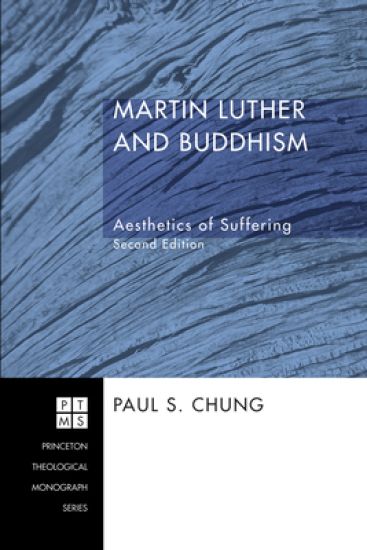
Description: Martin Luther and Buddhism: Aesthetics of Suffering carefully traces the historical and theological context of Luther's breakthrough in terms of articulating justification and justice in connection to the Word of God and divine suffering. Chung critically and constructively engages in dialogue with Luther and with later interpreters of Luther such as Barth and Moltmann, placing the Reformer in dialogue not only with Asian spirituality and religions but also with emerging global theology of religions. Endorsements: "After reading I put this book down with great surprise and decided to encourage students and anyone interested in theology in Europe, America and Asia to urgently and repeatedly read it." --Jurgen Moltmann, Professor Emeritus at the University of Tubingen. ""Dr. Chung is engaged in a deeply theological reflection about Buddhism and Protestantism. His work is original and profound."" --John B. Cobb, Jr., Ingraham Professor Emeritus at the Claremont School of Theology ""Of all the 'turns' in Luther studies, the turn to Asia, so eloquently and powerfully heralded by Paul Chung, might end up being the most significant one both ecumenically and theologically. As a scholar fully conversant with both the best of Western and Asian traditions, Dr. Chung is uniquely qualified for helping us read not only in Buddhist context but also in a wider contextual and global horizon. This is the direction of international systematic-hermeneutical theology for the third millennium "" --Veli-Matti K rkk inen, Professor of Systematic Theology, Fuller Theological Seminary, and Docent of Ecumenics, University of Helsinki. ""The primary goal of interreligious dialogue is mutual creative transformation. For this reason alone, Martin Luther and Buddhism deserves the attention of both Christians and Buddhists."" --Paul O. Ingram, Professor Emeritus, Pacific Lutheran University ""The book on Martin Luther and Buddhism by Paul Chung is a fascinating attempt to develop an emancipation theology of religions in the Asian context of poverty and suffering as well as of religious plurality."" --Ulrich Duchrow, Professor of Systematic Theology, University of Heidelberg ""Paul S. Chung's response to the challenge of religious pluralism is bold, timely, and provocative, as he engages Buddhism in Asia--with its notion of dukkha (suffering)--Luther's theology of the cross, and Karl Barth's accent on the universal reign of Jesus Christ."" --Winston D. Persaud, Professor of Systematic Theology, Wartburg Theological Seminary ""Bringing together Luther's theology with Buddhist understanding as embedded in Asian culture is a huge challenge. Dr. Chung takes on this challenge with a far-ranging breadth of knowledge and creative insight, especially for interfaith dialogue."" --Karen L. Bloomquist, Director for Theology and Studies at the Lutheran World Federation and Adjunct Professor of Theological Ethics, Wartburg Theological Seminary About the Contributor(s): Paul S. Chung is Assistant Professor of Lutheran Witness and World Christianity at Wartburg Theological Seminary in Dubuque, Iowa.
This collection of provocative essays by one of the twentienth century's most distinguished theologians deals with topics as diverse as the right to work, nuclear war, the Olympic Games, and Judaism and Christianity - all within the frameWork of human rights.
In these essays, written during the fertile years between Theology of Hope and The Church in the Power of the Spirit, world-renowned theologian J?rgen Moltmann demonstrates the remarkable depth and rhetorical power so characteristic of his major works. Here collected in one volume are brief, vital articulations of Moltmann's thought on such topics as eschatology, transcendence, hope, creation, the theology of the cross, the Trinity, development, the practice of liberation, justification, and biomedical progress.
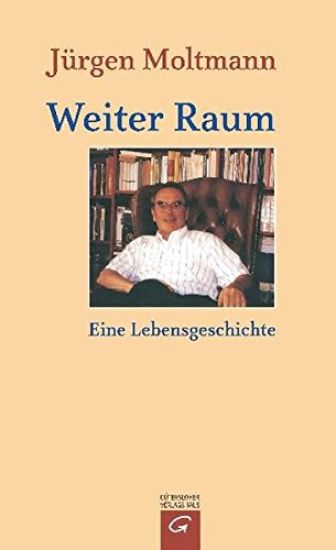
Er hat die Geschichte der Theologie nach dem Zweiten Weltkrieg in Deutschland geprägt wie kaum ein anderer. Das Werk keines lebenden deutschsprachigen Theologen ist international häufiger übersetzt als seines. Am 8. April feierte Jürgen Moltmann seinen 80. Geburtstag. Ein Anlass für ihn zurückzublicken. In dieser Autobiografie erzählt Jürgen Moltmann sein Leben von der Hamburger Jugend im ?alternativen? Elternhaus bis zu den unvollendeten Vollendungen der Gegenwart und begeht noch einmal den Weg seines theologischen Werdens und Schaffens. Ein spannendes Dokument wacher Zeitgenossenschaft und zugleich ein humorvoller Rückblick auf ein erfahrungsintensives, begegnungsreiches Leben.
Politics of Discipleship and Discipleship in Politics
Jurgen Moltmann
Wipf Stock Publishers
2006
pokkari
The Politics of Discipleship and Discipleship in Politics
Jürgen Moltmann
Cascade Books
2006
sidottu
"Wahrscheinlicher Grund des ungewöhnlichen Buch-Erfolges ist der revolutionäre Inhalt von 'Theologie der Hoffnung'. Moltmann propagiert darin ein umstürzlerisches, gesellschaftsänderndes - wie er sagt: ursprüngliches - Christentum und offeriert damit Christen und Kirchen eine Theologie, die zu aktiven, ja aggressiven Auseinandersetzungen mit der politischen Umwelt ermächtigt und anfeuert. Die Christen, so ruft Moltmann seine Glaubensbrüder auf, sollen der Wirklichkeit nicht mehr 'die Schleppe nachtragen, sondern die Fackel voran'." Der Spiegel
The Suffering of God According to Martin Luther's 'Theologia Crucis'
Dennis Ngien; Jurgen Moltmann
Regent College Publishing,US
2005
pokkari
"'In my end is my beginning', wrote T. S. Eliot at the close of his poem East Coker, and that line gave me the title for this book. With it I should like to express the power of the Christian hope, for Christian hope is the power of resurrection from life's failures and defeats. It is the power of the rebirth of life out of the shadows of death. It is the power for the new beginning at the place where guilt has made life impossible." From the Introduction by Jurgen Moltmann In this short doctrine of hope, Jurgen Moltmann examines the personal experiences in life, in which the future is awaited, times when we search for new beginnings and find them. In three parts that correspond to the three beginnings in life: birth, rebirth and resurrection, Moltmann extols the true value of Christian hope that powers new beginnings. Jurgen Moltmann is Emeritus Professor of Systematic Theology at the University of Tubingen, Germany. He is the author of a number of books published by SCM Press, including Theology of Hope, The Crucified God and The Church in the Power of the Spirit.
''In my end is my beginning, '' wrote T. S. Eliot, and Jurgen Moltmann's new book is a powerful testament to personal hope in chaotic, even catastrophic times. As Moltmann's award-winning volume The Coming of God laid out the systematic framework of eschatology (the doctrine of the ''last things''), so here he explores the personal meaning of that fundamental affirmation for Christians. Debunking the classic images of Christian apocalyptic scenarios, the final struggle between God and Satan, Christ and the Antichrist-Armageddon-Moltmann instead shows that Christian expectation of the future has nothing to do with these but everything to do with new beginnings and a horizon of hope. Three parts explore three particular beginnings: birth (childhood and youth), rebirth (failures and defeats), and resurrection (death, judgment, afterlife). This brief volume promises to be one of Moltmann's most personal and compelling books.
In this remarkable and timely work — in many ways the culmination of his systematic theology — world-renowned theologian Jurgen Moltmann stands Christian eschatology on its head. Moltmann rejects the traditional approach, which focuses on the End, an apocalyptic finale, as a kind of Christian search for the "final solution." He centers instead on hope and God's promise of new creation for all things. "Christian eschatology," he says, "is the remembered hope of the raising of the crucified Christ, so it talks about beginning afresh in the deadly end." Yet Moltmann's novel framework, deeply informed by Jewish and messianic thought, also fosters rich and creative insights into the perennially nettling questions of eschatology: Are there eternal life and personal identity after death? How is one to think of heaven, hell, and purgatory? What are the historical and cosmological dimensions of Christian hope? What are its social and political implications. In a heartbreakingly fragile and fragment world, Moltmann's comprehensive eschatology surveys the Christian vista, bravely envisioning our "horizons of expectation" for personal, social, even cosmic transformation in God.
Passion for God
Jürgen Moltmann; Elisabeth Moltmann-Wendel
Westminster/John Knox Press,U.S.
2004
nidottu
Comprised of four lectures and two sermons, Passion for God provides a unique look into the theological perspectives of renowned theologians Jurgen Moltmann and Elisabeth Moltmann-Wendel, each a preeminent figure in the proliferation of contemporary theology in the twentieth century.
Over the past three decades- as fads in theology have come and gone - the work of Jurgen Moltmann has assumed a position of enduring vitality. 'Theology of Hope', The Church in the Power of the Spirit, ' and 'The Crucified God' and rest of Moltmann's core corpus have formed a watershed which supplies one of the very few viable theologies still relevant to the practice of Christians in the world. The fourteen essays in this book have lasting value in that they portray the development of the author's thought in relation to our ever-changing historical and social situation. Theology, ethics, philosophy of religion, and politics coalesce as the author raises the basic issue of our time. To scan the table of contents and see such titles as ""The Crucified God and the Apathetic Man,"" ""Racism and the Right to Resist,"" ""Bringing Peace to a Divided World,"" and ""Introduction to the 'Theology of Hope'"" is to be placed in the midst of exciting and enduring Christian thought.
Readers: College, university, and seminary students; scholars of theology and science; clergy
In this volume, Jurgen Moltmann explores the existential questions and explicit theological concerns raised by modern science, at a time when theology is widely regarded as insignificant. The issues he discusses include: the theological dimension of science; the meaning of "creation"; traditional ideas about the end of the universe, alongside eschatological theology; the concept of time and eternity; God and space; bioethics; social Darwinism; and science and wisdom.
Jewish Monotheism and Christian Trinitarian Doctrine
Pinchas Lapide; Jürgen Moltmann
Wipf Stock Publishers
2002
nidottu
This enlightening and authentic conversation - on one of the oldest and most difficult complex of problems dividing Jews and Christians - is an exciting example of what genuine interreligious dialogue can produce: surprising insights into the meaning of reality of which neither partner had more than an inkling. This dialogue yields an understanding of Judaism and of Christianity and brings each profoundly closer to the other.
Ein Buch nicht nur für den an Fragen der Wissenschaft interessierten Theologen. Wer Hilfen zur Reflexion und Artikulation seines Glaubens sucht: Hier wird er sie in reichem Maße finden.
Causing a considerable stir when it was first published in Germany in 1965, this work represents a comprehensive statement of the importance for theology of eschatology - and of an eschatological theology which emphasizes the revolutionary effect of Christian hope upon the thought, institutions and conditions of life in the here and now. Moltmann understands Christian faith essentially as hope for the future of humankind and creation as this has been promised by the God of the exodus and the resurrection of the crucified Jesus. God's promise is the compulsory force of history, awakening hope which keeps human beings unreconciled to present experience, sets them in contradistinction to prevailing natural and social powers, and makes the church the source of continual new impulses towards, in Moltmann's own words, "the realization of righteousness, freedom and humanity in the light of the promised future that is to come".