Kirjailija
Karl Marx
Kirjat ja teokset yhdessä paikassa: 1 031 kirjaa, julkaisuja vuosilta 1848–2026, suosituimpiin kuuluu The Portable Karl Marx. Vertaile teosten hintoja ja tarkista saatavuus suomalaisista kirjakaupoista.
1 031 kirjaa
Kirjojen julkaisuvuodet: 1848–2026.

Manifest der Kommunistischen Partei
Karl Marx
Createspace Independent Publishing Platform
2015
nidottu
"Manifest der Kommunistischen Partei" from Karl Marx. Deutscher Philosoph, politischer Journalist und Kritiker der b rgerlichen konomie (1818-1883).
"Zur Judenfrage" from Karl Marx. Deutscher Philosoph, politischer Journalist und Kritiker der b rgerlichen konomie (1818-1883).
Il Manifesto del Partito Comunista
Karl Marx
Createspace Independent Publishing Platform
2015
nidottu

The Eighteenth Brumaire of Louis Bonaparte
Karl Marx
Createspace Independent Publishing Platform
2015
nidottu

Sur le procès des communistes de Cologne
Karl Marx
Createspace Independent Publishing Platform
2015
nidottu
"Sur le proc s des communistes de Cologne" de Karl Marx. Karl Marx, journaliste, philosophe, conomiste et crivain allemand (1818-1883).
"Salaires - Prix - Profits" de Karl Marx. Karl Marx, journaliste, philosophe, conomiste et crivain allemand (1818-1883).
Contribution à la critique de l'économie politique
Karl Marx
Createspace Independent Publishing Platform
2015
nidottu
"Contribution la critique de l' conomie politique" de Karl Marx. Karl Marx, journaliste, philosophe, conomiste et crivain allemand (1818-1883).
The Communist Manifesto
Karl Marx; Friedrich Engels
Penguin Classics
2015
nidottu
Halvin toimitettuna 9,90 €
'The proletarians have nothing to lose but their chains.'Marx and Engels's revolutionary summons to the working classes - one of the most important and influential political theories ever formulated. Introducing Little Black Classics: 80 books for Penguin's 80th birthday. Little Black Classics celebrate the huge range and diversity of Penguin Classics, with books from around the world and across many centuries. They take us from a balloon ride over Victorian London to a garden of blossom in Japan, from Tierra del Fuego to 16th-century California and the Russian steppe. Here are stories lyrical and savage; poems epic and intimate; essays satirical and inspirational; and ideas that have shaped the lives of millions. Karl Marx (1818-1883) and Friedrich Engels (1820-1895). Marx's works available in Penguin Classics are Capital, Dispatches for the New York Tribune, Early Writings, Grundrisse, The Portable Karl Marx and Revolution and War.
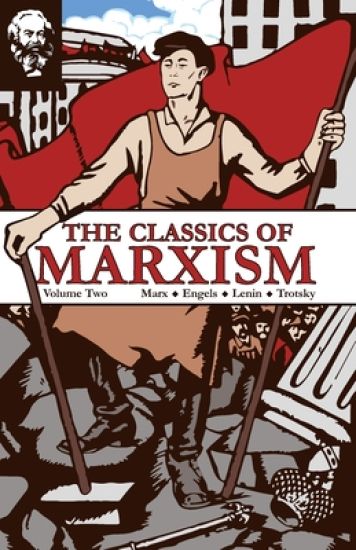
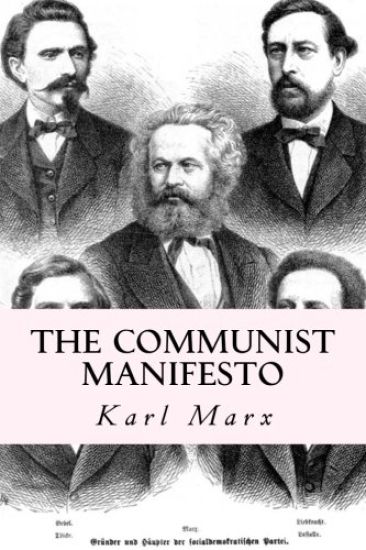
The Communist Manifesto
Frederick Engels; Karl Marx
Createspace Independent Publishing Platform
2015
nidottu
The Communist Manifesto (originally Manifesto of the Communist Party) is an 1848 political pamphlet by German philosophers Karl Marx and Friedrich Engels. Commissioned by the Communist League and originally published in London (in German as Manifest der Kommunistischen Partei) just as the revolutions of 1848 began to erupt, the Manifesto was later recognised as one of the world's most influential political documents. It presents an analytical approach to the class struggle (historical and then-present) and the problems of capitalism and the capitalist mode of production, rather than a prediction of communism's potential future forms. The Communist Manifesto summarises Marx and Engels' theories about the nature of society and politics, that in their own words, "The history of all hitherto existing society is the history of class struggles". It also briefly features their ideas for how the capitalist society of the time would eventually be replaced by socialism. In 2013, The Communist Manifesto was registered to UNESCO's Memory of the World Programme with the Capital, Volume I. The Communist Manifesto is divided into a preamble and four sections, the last of these a short conclusion. The introduction begins by proclaiming "A spectre is haunting Europe-the spectre of communism. All the powers of old Europe have entered into a holy alliance to exorcise this spectre". Pointing out that parties everywhere-including those in government and those in the opposition-have flung the "branding reproach of communism" at each other, the authors infer from this that the powers-that-be acknowledge communism to be a power in itself. Subsequently, the introduction exhorts Communists to openly publish their views and aims, to "meet this nursery tale of the spectre of communism with a manifesto of the party itself". The first section of the Manifesto, "Bourgeois and Proletarians", elucidates the materialist conception of history, that "the history of all hitherto existing society is the history of class struggles". Societies have always taken the form of an oppressed majority living under the thumb of an oppressive minority. In capitalism, the industrial working class, or proletariat, engage in class struggle against the owners of the means of production, the bourgeoisie. As before, this struggle will end in a revolution that restructures society, or the "common ruin of the contending classes". The bourgeoisie, through the "constant revolutionising of production and] uninterrupted disturbance of all social conditions" have emerged as the supreme class in society, displacing all the old powers of feudalism. The bourgeoisie constantly exploits the proletariat for its labour power, creating profit for themselves and accumulating capital. However, in doing so, the bourgeoisie serves as "its own grave-diggers"; the proletariat inevitably will become conscious of their own potential and rise to power through revolution, overthrowing the bourgeoisie. "Proletarians and Communists", the second section, starts by stating the relationship of conscious communists to the rest of the working class. The communists' party will not oppose other working-class parties, but unlike them, it will express the general will and defend the common interests of the world's proletariat as a whole, independent of all nationalities. The section goes on to defend communism from various objections, including claims that it advocates "free love" or disincentivises people from working. The section ends by outlining a set of short-term demands-among them a progressive income tax; abolition of inheritances and private property; abolition of child labour; free public education; nationalisation of the means of transport and communication; centralisation of credit via a national bank; expansion of publicly owned etc.-the implementation of which would result in the precursor to a stateless and classless society.
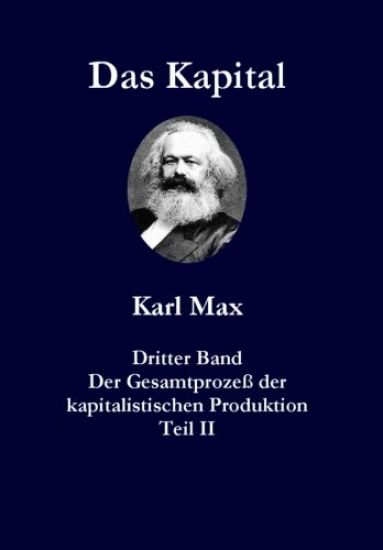
Das Kapital Karl Marx Dritter Band Teil II Persisch Farsi: Der Gesamtprozeß Der Kapitalistischen Produktion
Karl Marx
Createspace Independent Publishing Platform
2015
nidottu
Karl Marx (1818-1883), Philosoph und Revolution r, gilt nach einer Umfrage der BBC. London im Herbst 1999 als der bedeutendste Philosoph des ausgehenden zweiten Jahrtausends. Sein Hauptwerk "Das Kapital," bestehend aus drei B ndern, ist nicht nur eine konomische Theorie sondern zugleich ein gewaltiges Gedankengeb ude aus Geschichte, Wirtschaftswissenschaft und Soziologie in dem er immer wieder leidenschaftlich Partei ergreift f r eine humane Weltordnung. Auch wenn die Marxschen Gedanken, dort wo versucht wurde sie umzusetzen, vorerst gescheitert sind, sind sie f r das Verst ndnis des heutigen weltbeherrschenden Kapitalismus von aktueller Bedeutung. Die persische bersetzung des I., II. und Teil I des III. Bandes des "Kapital" wurden im Laufe der Jahre 1973 bis 1984 von Iraj Eskandari gemacht und von der Edition "Hezbe Tudehje Iran" herausgegeben. Erst viele Jahre sp ter wurde die bersetzung des II. Teiles des III. Bandes von Bahram Habibi ausgefertigt und wird hiermit den Interessenten zur Nutzung angeboten.
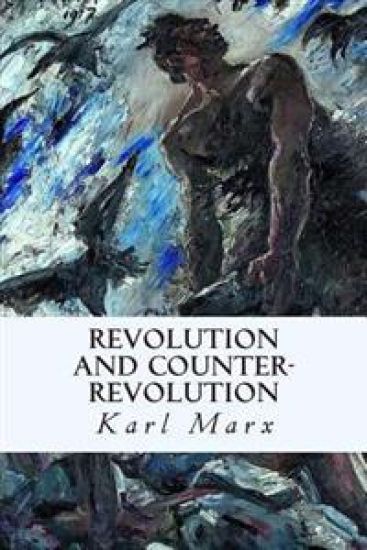
Revolution and Counter-Revolution
Karl Marx
Createspace Independent Publishing Platform
2015
nidottu
Revolution and Counter-Revolution is an account of what happened in Prussia, Austria and other German states during 1848, describing the impact on both middle-class and working-class aspirations and on the idea of German unification. Events in Austria and Prussia are discussed, along with the role of the Poles and Czechs and Panslavism, which Engels was against. Also discussed is the Cologne Communist Trial, in which the defendants were acquitted after some of the evidence was shown to have been crudely forged. Revolution and Counter-Revolution in Germany (German: Revolution und Konterrevolution in Deutschland) is a book by Friedrich Engels, with contributions by Karl Marx. Originally a series of articles in the New York Daily Tribune published from 1851 to 1852 under Marx's byline, the material was first published in book form under the editorship of Eleanor Marx Aveling in 1896. It was not until 1913 that Engel's authorship was publicly known although some new editions continued to appear incorrectly listing Marx as the author as late as 1971. Early in 1851 Charles Dana, then an editor of the New York Daily Tribune, suggested to Karl Marx that he should contribute topical and historical writings to the newspaper. Dana was alerted to the possible availability of Marx by the suggestion of Ferdinand Freiligrath, a former associate of Marx on the editorial staff of the Cologne (K ln) newspaper Neue Rheinische Zeitung. Marx was at the time engrossed in economic research and was unable to fulfill the commission, but on August 14, 1851 we wrote a letter asking his friend and co-thinker Frederick Engels to produce "a series of articles about Germany, from 1848 onwards." Engels agreed with this plan and over the next 13 months he went on to produce 19 articles on the 1848 German revolution for the New York press. Marx was closely consulted during the writing of this material and read over each manuscript before sending it for publication. Even though written by Engels, these articles were published under the byline of Karl Marx, under the series title "Germany: Revolution and Counter-Revolution." Articles were not additionally titled, but instead appeared under a Roman numeral; individual titles were created in 1896 by editor Eleanor Marx Aveling for the first edition of the material in book form. The articles ran from October 25, 1851 to October 23, 1852. After appearing in the Tribune the material was never published again in the lifetime of Marx and Engels, with the exception of the first two pieces, which were reprinted in German translation by the New-Yorker Abendzeitung late in October 1851. The "Revolution and Counter-Revolution" articles written by Engels were instrumental in establishing Marx with the Tribune and a journalistic relationship began which was to continue for more than a decade. Marx began to himself write for the paper in August 1852 when he contributed an article on the elections in England, writing first in German and making use of Engels and other friends to assist with the English translation. By January 1853 Marx was fluent enough in English to write for the Tribune without additional editorial assistance. Marx would receive a very modest flat rate of 1 pound per article for these lengthy contributions.
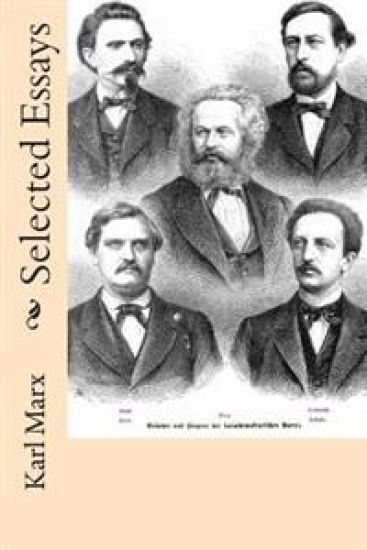
Selected Essays, by Karl Marx, is a classic political essay collection that consists of a translation of some of Karl Marx's principal writings during the six years 1844-1850. Karl Marx was a German philosopher, economist, historian, political theorist, sociologist, journalist and revolutionary socialist. Born in Trier to a middle-class family, Marx studied law and Hegelian philosophy. Due to his political publications, Marx became stateless and lived in exile in London, where he continued to develop his thought in collaboration with German thinker Friedrich Engels and publish his writings, researching in the British Museum. His best-known titles are the 1848 pamphlet, The Communist Manifesto, and the three-volume Das Kapital. His political and philosophical thought had enormous influence on subsequent intellectual, economic and political history and his name has been used as an adjective, a noun and a school of social theory. Marx's theories about society, economics and politics-collectively understood as Marxism-hold that human societies develop through class struggle. In capitalism, this manifests itself in the conflict between the ruling classes (known as the bourgeoisie) that control the means of production and the working classes (known as the proletariat) that enable these means by selling their labour power in return for wages. Employing a critical approach known as historical materialism, Marx predicted that, like previous socio-economic systems, capitalism produced internal tensions which would lead to its self-destruction and replacement by a new system: socialism. For Marx, class antagonisms under capitalism, owing in part to its instability and crisis-prone nature, would eventuate the working class' development of class consciousness, leading to their conquest of political power and eventually the establishment of a classless, communist society constituted by a free association of producers. Marx actively pressed for its implementation, arguing that the working class should carry out organised revolutionary action to topple capitalism and bring about socio-economic emancipation. Marx has been described as one of the most influential figures in human history, and his work has been both lauded and criticised. His work in economics laid the basis for much of the current understanding of labour and its relation to capital, and subsequent economic thought. Many intellectuals, labor unions, artists and political parties worldwide have been influenced by Marx's work, with many modifying or adapting his ideas. Marx is typically cited as one of the principal architects of modern social science.
"Kapitalistiselle tuotantotavalle on erityisen kuvaavaa se, että lisäarvon tuotanto tuotannon suorana päämääränä ja määräävänä vaikuttimena. Pääoma tuottaa olennaisesti pääomaa, ja se tekee näin ainoastaan sikäli kuin se tuottaa lisäarvoa', kirjoittaa Karl Marx Pääoman 3. osassa. Pääoman kasautuminen ja rahakeinottelu korostavat Marxin ajankohtaisuutta. Uutiset kertovat pörssiyhtiöiden jakavan ennätysosinkoja samaan aikaan kun työttömyys kasvaa. Nyt on saatavilla uusi, tarkistettu suomenkielinen laitos Karl Marxin Pääoman kolmannesta osasta.
The Communist Manifesto
Friedrich Engels; Karl Marx
Penguin Classics
2014
sidottu
Halvin toimitettuna 20,30 €
A rousing call to arms whose influence is still felt today, Karl Marx and Friedrich Engels' The Communist Manifesto is edited with an introduction by Gareth Stedman-Jones in Penguin Classics. Marx and Engels's revolutionary summons to the working classes, The Communist Manifesto is one of the most important political theories ever formulated. After four years of collaboration, they produced an incisive account of their idea of Communism, in which they envisage a society without classes, private property or a state, arguing that the exploitation of industrial workers will eventually lead to a revolution in which Capitalism is overthrown. This vision provided the theoretical basis of political systems in Russia, China, Cuba and Eastern Europe, affecting the lives of millions. The Communist Manifesto still remains a landmark text: a work that continues to influence and provoke debate on capitalism and class. Gareth Stedman Jones's extensive and scholarly introduction provides an unique assessment of the place of The Communist Manifesto in history, and its continuing relevance as a depiction of global capitalism. This edition reproduces Samuel Moore's translation of 1888 and contains a guide to further reading, notes and an index. Karl Marx (1818-1883) was born in Trier, Germany and studied law at Bonn and Berlin. He settled in London, where he studied economics and wrote the first volume of his major work, Das Kapital (1867, with two further volumes in 1884 and 1894). He is buried in Highgate Cemetery, London. Friedrich Engels (1820-1895), as well as his collaboration with Marx, was the author of The Condition of the Working Class in England (1845), based on personal observations and research. If you enjoyed The Communist Manifesto, you might like Marx's Capital, also available in Penguin Classics.'The words of the Communist Manifesto flare like the fiery writing on the wall above the crumbling bastions of capitalist society: socialism or barbarism!'Rosa Luxemburg
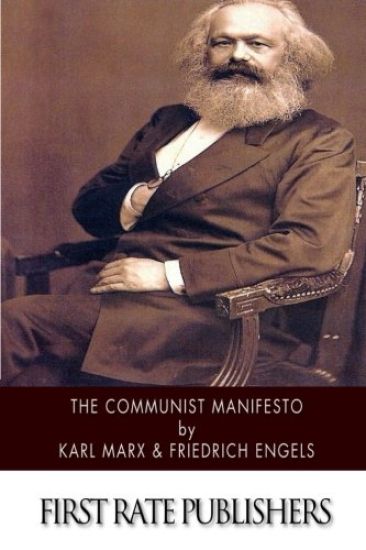
The Communist Manifesto
Friedrich Engels; Karl Marx
Createspace Independent Publishing Platform
2014
nidottu
The Communist Manifesto is in several respects a paradoxical document. A product of the Western European political struggles that culminated in the pan-European Revolutions of 1848, its greatest historical impact was nevertheless not felt until the following century, in countries far from Western Europe (Russia and China) that Marx and Engels would never have viewed as ripe for revolutionary activity. The Manifesto was written as a diagnosis of the ills of what is often called high industrial capitalism, yet in many ways the world it describes, in which "all that is solid melts into air," sounds more like a prediction of a globalized capitalist world of political flux, virtual life, and accelerated time than a description of Marx's era, in which monarchies and established churches still wielded immense power across Europe. Moreover, although the best-known attempts to put Marx's and Engels's program into practice failed and are now in almost universal disrepute, the fundamental contradictions and deadlocks of capitalist society they present so vividly are still awaiting adequate remedies. While Marx laid out the ideological groundwork, many put it into action, leading to the formation of socialist powers in the Soviet Union and China during the first half of the 20th century. Marx's writings and philosophy had an impact on the social sciences and economic theories, but one of his biographers could comfortably and accurately assert that the political history of the 20th century was "Marx's legacy". Whether fairly or not, in the West Marx has become inextricably linked with some of the totalitarian excesses of the regimes that claimed to espouse his ideology, and for that reason Marx is often associated with some of the negative connotations that come with the Soviets. Nevertheless, few would deny the very decisive impact Marxism had on the global landscape, and the ramifications continue to have a political influence today.