Kirjailija
Leo Tolstoy
Kirjat ja teokset yhdessä paikassa: 1 277 kirjaa, julkaisuja vuosilta 1859–2026, suosituimpiin kuuluu Classic Short Story Collection: Charles Dickens, Leo Tolstoy, Fyodor Dostoyevsky, Franz Kafka, Jack London, and Oscar Wilde. Vertaile teosten hintoja ja tarkista saatavuus suomalaisista kirjakaupoista.
1 277 kirjaa
Kirjojen julkaisuvuodet: 1859–2026.
This collection forms part of a three-volume edition of Tolstoy's shorter fiction, selected and with a preface by Sharon Cameron, and translated by his friends Louise and Aylmer Maude.
NEW PRINT WITH PROFESSIONAL TYPE-SET IN CONTRAST TO SCANNED PRINTS OFFERED BY OTHERS Bethink Yourselves: Concerning The Russo-Japanese War Translated By Aylmer Maude This book is a result of an effort made by us towards making a contribution to the preservation and repair of original classic literature. In an attempt to preserve, improve and recreate the original content, we have worked towards: 1. Type-setting & Reformatting: The complete work has been re-designed via professional layout, formatting and type-setting tools to re-create the same edition with rich typography, graphics, high quality images, and table elements, giving our readers the feel of holding a 'fresh and newly' reprinted and/or revised edition, as opposed to other scanned & printed (Optical Character Recognition - OCR) reproductions. 2. Correction of imperfections: As the work was re-created from the scratch, therefore, it was vetted to rectify certain conventional norms with regard to typographical mistakes, hyphenations, punctuations, blurred images, missing content/pages, and/or other related subject matters, upon our consideration. Every attempt was made to rectify the imperfections related to omitted constructs in the original edition via other references. However, a few of such imperfections which could not be rectified due to intentional\unintentional omission of content in the original edition, were inherited and preserved from the original work to maintain the authenticity and construct, relevant to the work. We believe that this work holds historical, cultural and/or intellectual importance in the literary works community, therefore despite the oddities, we accounted the work for print as a part of our continuing effort towards preservation of literary work and our contribution towards the development of the society as a whole, driven by our beliefs. We are grateful to our readers for putting their faith in us and accepting our imperfections with regard to preservation of the historical content. HAPPY READING
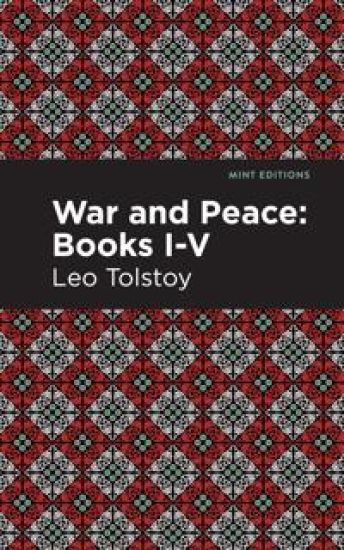
War and Peace (1869) is a novel by Russian writer Leo Tolstoy. Serialized between 1865 and 1867, it was published in book form in 1869 and has since been recognized as a masterpiece of world literature. Notable for its epic scale, War and Peace encompasses hundreds of characters, diligently following its five central families across fifteen years while featuring detailed imaginings of such historical figures as Napoleon Bonaparte. In Books I-V, he introduces the novels main characters while setting the stage for war between France and Russia. When conflict finally breaks out, friends and family members are torn apart, political alliances are shattered, and peace gives way to violence and despair. The novel begins with a soirée at the Saint Petersburg home of Anna Pavlovna Scherer. This scene not only introduces the central characters of the story, it gives a sense of the extensive French influence on Russian aristocratic society in 1805. Here, Pierre Bezukhov—the illegitimate son of a wealthy nobleman—and his friend Prince Andrei Nikolayevich Bolkonsky discuss their mutual dissatisfaction with life in Saint Petersburg. While Andrei goes to war in order to escape an unhappy marriage, Pierre becomes trapped in the bitter dispute surrounding his inheritance. As the years go by, those who remain in Moscow and Saint Petersburg must adjust to the realities of war, while those such as Andrei and Count Nikolai Ilyich Rostov experience firsthand the horrors of conflict. With its depiction of the Battle of Austerlitz, a stunning defeat for Russia and its Austrian allies, Tolstoy’s story brings history to life while reminding us that the past is always closer than we care to think. As ambitious as it is triumphant, Leo Tolstoy’s masterpiece is an epic novel of history and family, a story of faith and the will to persevere in the face of unspeakable catastrophe. War and Peace is a work that transcends both history and description, not just for the scale of its narrative and setting, but for the scope of its philosophical interests. Since its publication, it has been praised as an essential work of literature by Ivan Turgenev, Gustave Flaubert, Thomas Mann, and Ernest Hemingway, and has been adapted for film, theater, and television countless times. With a beautifully designed cover and professionally typeset manuscript, this edition of Leo Tolstoy’s War and Peace is a classic of Russian literature reimagined for modern readers.
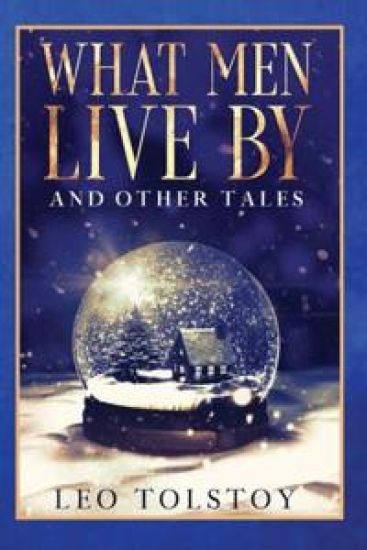
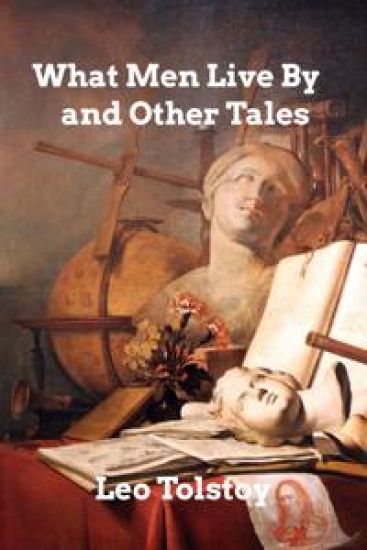
A Unique Translation of the Collection of Inimitable Stories by Leo Tolstoy, One of the World's Most Renowned Authors." What Men Live By and Other Tales" compiles tales that handle intricate philosophical issues in a simple and engaging way to incite the mind. In "What Men Live By" you'll encounter a kind and humble shoemaker, Simon, who, one day, goes out to buy sheep-skins to sew a winter coat for his wife and himself to share. Unable to collect the full amount, he only receives twenty Kopeks to buy the skins. Simon is disheartened and spends the twenty Kopeks on Vodka before heading back home... This story, along with other subtle, beautiful, and timeless tales, will immerse you in the world of Russia's most regarded mind. The book comes with three other tales telling of wisdom, acceptance, kindness, and forgiveness." Three Questions" follows the story about a king who wants to know the answer to the three most important questions in life to seek enlightenment." The Coffee-House of Surat" tells about a coffee shop in the Indian town of Surat that has many travelers and foreigners meet from all over the globe to chat. An educated Persian theologian pays a visit to the coffee shop one day." How Much Land Does a Man Need?" recounts the tale of Pahom, a peasant, who claims that he would not fear the Devil if he had enough land. When the Devil overhears this, he decides to put him to the test. Immerse in to examine the human condition described by one of the world's greatest pens.
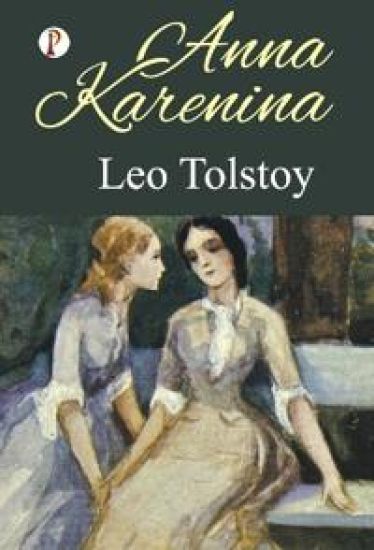
"All happy families are alike; each unhappy family is unhappy in its own way." ― Leo Tolstoy, Anna Karenina Anna Karenina (1878) by Leo Tolstoy deals with subjects of family, betrayal, faith, marriage, desire, Imperial Russian society, and rural vs. city life. Anna, the protagonist, is married to a distinguished official in St. Petersburg and moves in the highest circles of Russian Society with the reputation of a charming woman. Anna's life, however, takes an interesting turn when she encounters a dashing cavalry officer Count Alexei Kirillovich Vronsky at a party and an extramarital affair begins between the two. The affair scandalizes the social circles of St. Petersburg and forces the young lovers to flee for Italy in a search for happiness. Their lives further unravel as they return to Russia and the complexities in their lives and the lives of people around them increases.
The Light Shines in the Darkness is an unfinished play by Leo Tolstoy, written in 1890. Arguably his most autobiographical piece, the play is said to "mirror Leo Tolstoy's highly personal dilemma as if seen through the crucible of the family.
Resurrection' (1899) is the last of Tolstoy's significant novels. It elucidates the story of a nobleman's endeavor to recover the pain his youthful philandering caused for a peasant girl who winds up as a detainee in Siberia. Tolstoy's vision of redemption accomplished through forgiveness and his judgment of violence is portrayed in the book. A personal, mental story of responsibility, outrage, and absolution, Resurrection is simultaneously an all-encompassing depiction of public activity in Russia toward the finish of the nineteenth 100 years, mirroring its author's disdain at the social treacheries of the world where he resided. This version, which refreshes an exemplary interpretation, has logical notes, and a significant presence in light of the latest grant in the field.
Dated the 14th of December 1908, A Letter to a Hindu was a letter written by Leo Tolstoy to Tarak Nath Das, a Bengali revolutionary and scholar, in response to a request for support for India's separation from British rule, which argued that the Indian people should seek to free themselves from British rule through non-violent protests and strikes, and other forms of peaceful resistance. The letter soon gained international attention after it was published in the Free Hindustan, and it came to the attention of the young Mahatma Gandhi. Drawing on a variety of sources, cultures and teachings, Tolstoy's letter was instrumental in forming Gandhi's views on non-violent resistance - as Gandhi himself acknowledges in his introduction: 'To me, as a humble follower of that great teacher whom I have long looked upon as one of my guides, it is a matter of honour to be connected with the publication of his letter'.'One of the clearest thinkers in the western world, one of the greatest writers.' - Mahatma Gandhi'He is never dull, never stupid, never tired, never pedantic, never theatrical ' - James Joyce'The greatest of all novelists.' - Virginia Woolf'What he does serves to justify all the hopes and aspirations invested in literature.' - Anton Chekhov'What an artist and what a psychologist ' - Gustave Flaubert
War and Peace is a literary work mixed with chapters on history and philosophy by the Russian author Leo Tolstoy. It is regarded as one of Tolstoy's finest literary achievements and remains an internationally praised classic of world literature. War and Peace broadly focuses on Napoleon's invasion of Russia in 1812 and follows three of the most well-known characters in literature: Pierre Bezukhov, the illegitimate son of a count who is fighting for his inheritance and yearning for spiritual fulfillment; Prince Andrei Bolkonsky, who leaves his family behind to fight in the war against Napoleon; and Natasha Rostov, the beautiful young daughter of a nobleman who intrigues both men. An explosive tale of epic proportions, War and Peace, one of the best known Russian historical novels, is as much a story of love and adultery as it is of war and death. with a deep insight into the war-stricken Russia, it underlines the irrational motives of human behavior in both war and peace.
"There are as many kinds of love, as there are hearts." Anna Karenina is a novel by the Russian author Leo Tolstoy, first published in book form in 1878. Many writers consider it to be one of the greatest works of Russian literature ever written and Tolstoy himself called it his first true novel. Anna Karenina tells of the doomed love affair between the sensuous and rebellious Anna and the dashing officer, Count Vronsky. Tragedy unfolds as Anna rejects her passionless marriage and thereby exposes herself to the hypocrisies of society. Anna Karenina is spread over more than 800 pages. It deals with themes of betrayal, faith, family, marriage, Imperial Russian society, desire, and rural vs. city life. The novel has been adapted into various media including theatre, opera, film, television, ballet, figure skating, and radio drama.
One of the world's most famous writers, Leo Tolstoy, is probably best known for his epic romantic works "Anna Karenina" and "War and Peace". In addition to being the author of some of the greatest novels ever written, Tolstoy was also a prolific short-story writer. One of the finest examples of Tolstoy's shorter narratives is "The Death of Ivan Ilyich", which Tolstoy wrote later in his life. "The Death of Ivan Ilyich" is a tale revolving around a man in his 40s who has spent his entire life climbing the social ladder in Russia. Barely tolerant of his wife and generally indifferent to the other people around him, Ivan has a minor accident hanging curtains in a new apartment that proves to be a terminal injury. As his life slowly and painfully spirals inexorably toward death, Ivan struggles immensely against what he perceives to be an unfair fate. Only in the end does he see how he might have lived differently and authentically. This edition is printed on premium acid-free paper and follows the translation of Nathan Haskell Dole.
In this trilogy of autobiographical novels Leo Tolstoy's first published works are gathered together. An instant success, one which would launch Tolstoy's distinguished career, "Childhood, Boyhood, and Youth", was first published from 1852 to 1856. In these works the early life of Nikolai, the son of wealthy landowner in Russia, is fully explored, slowly revealing this young boy's inner mind, relationships, and social standing. As he describes his tutor, angelic mother, aloof father, worldly brother, and later his moralistic friend, Nikolai displays a mind given to dreaming and a personality as complex as it is conflicted. As he grows and moves from his country home to his grandmother's mansion in Moscow, Nikolai also struggles at intervals to find a sort of moral balance, which affects his love, his education, and the type of man he might become. Tolstoy demonstrates, even in this first literary attempt, his ability to utilize a host of minor characters to fully develop the internal life of his main character. "Childhood, Boyhood, and Youth" shows in its three parts not only the deliberate building of a protagonist but also a universal story about coming of age. These works have proven themselves to be amongst the seminal works of an extraordinary novelist. This edition is printed on premium acid-free paper and follows the translations of C. J. Hogarth.
Fables for Children, Stories for Children, Natural Science Stories, Popular Education, Decembrists, Moral Tales
Leo Tolstoy
ALPHA EDITION
2021
pokkari
The book "" Fables for Children, Stories for Children, Natural Science Stories, Popular Education, Decembrists, Moral Tales, has been considered important throughout the human history, and so that this work is never forgotten we have made efforts in its preservation by republishing this book in a modern format for present and future generations. This whole book has been reformatted, retyped and designed. These books are not made of scanned copies and hence the text is clear and readable.
Leo Tolstoy, known to the world for his famous novels, also created throughout his sixty-year career as a writer a significant body of works of shorter ficiton. These fictions, like his novels, tend toward a uniqueness in form, even as they explore a set of themes common in the longer works. ""The Kreutzer Sonata"" (1891) is a penetrating study of jealousy as well as a splenetic complaint about the way in which society educates young men and women in matters of sex. In ""The Death of Ivan Ilych"" (1886), a symbolic Everyman discovers the inner light of faith and love only when confronted by death. ""How Much Land Does a Man Need?"" (1886) is a simple, didactic story of peasant life, written by Tolstoy in the wake of a spiritual crisis. All three tales offer readers a splendid introduction to Tolstoy's work as well as the focused delights of the short story form brought to a pinnacle in the hands of a master.
Following the Call
Eberhard Arnold; Dietrich Bonhoeffer; Martin Luther King; C. S. Lewis; Wendell Berry; Dorothy Day; Leo Tolstoy; N. T. Wright; Richard Rohr; Madeleine L'Engle; Thomas Merton
Plough Publishing House
2021
pokkari
Halvin toimitettuna 25,30 €
Fifty-two readings to spark weekly group discussion on putting Jesus’ most central teachings into practice. Jesus’ most famous teaching, the Sermon on the Mount, possesses an irresistible quality. Who hasn’t felt stirred and unsettled after reading these words, which get to the root of the human condition? This follow-up to the acclaimed collection Called to Community: The Life Jesus Wants for His People taps an even broader array of sources, bringing together prophetic voices from every era and a range of traditions to consider the repercussions of these essential words. More than a commentary or devotional, this book is designed to be read together with others, to inspire communities of faith to discuss what it might look like to put Jesus’ teachings into practice today.