Kirjailija
Leo Tolstoy
Kirjat ja teokset yhdessä paikassa: 1 277 kirjaa, julkaisuja vuosilta 1859–2026, suosituimpiin kuuluu Classic Short Story Collection: Charles Dickens, Leo Tolstoy, Fyodor Dostoyevsky, Franz Kafka, Jack London, and Oscar Wilde. Vertaile teosten hintoja ja tarkista saatavuus suomalaisista kirjakaupoista.
1 277 kirjaa
Kirjojen julkaisuvuodet: 1859–2026.
Leo Tolstoy (9th September 1828-20th November 1910), the author, was a novelist, short story writer, playwright, essayist. His renowned works are - 'War and Peace', 'Anna Karenina', 'The Death of Ivan Ilyich' and so on. He was a Russian writer and regarded as one of the greatest authors of all time. 'War and Peace' is a literary work includes historical and philosophical incidences and matter. It is one of the best appreciable works, all over the world. It includes French invasion of Russian and the Napoleon era as well as Tsarist society. The story revolves in the beginning, around Anna pavlona, the maid of honour and confidante to the dowager Empress Maria Feodorovna. One more character pierre Bezukhov is the wealthy fellow but he is the illegitimate son of a wealthy count. People respect him due to his wealthy guardian. It explains about his education and career. Then story part is related to the Rostav family in Moscow. Love angles of 2-3 characters are narrated in this part of story, which seems interesting The Russian-French war is elaborated nicely. The battle of Austerlitz is the important event in the book. The author portrays Austerlitz as an early test for Russia. Actually it fought for irrelevant things like glory or renown. Prince Andrei Bolkonsky leaves behind his family to fight a war against Napoleon. The author has best provided about a broad panorma of the Russian Socity. Focus on how Storitulity works and family happiness. Also it consists of lots of Romance.
It happened in the 'seventies in winter, on the day after St. Nicholas's Day. There was a fete in the parish and the innkeeper, Vasili Andreevich Brekhunov, a Second Guild merchant, being a church elder had to go to church, and had also to entertain his relatives and friends at home. But when the last of them had gone he at once began to prepare to drive over to see a neighbouring proprietor about a grove which he had been bargaining over for a long time. He was now in a hurry to start, lest buyers from the town might forestall him in making a profitable purchase.
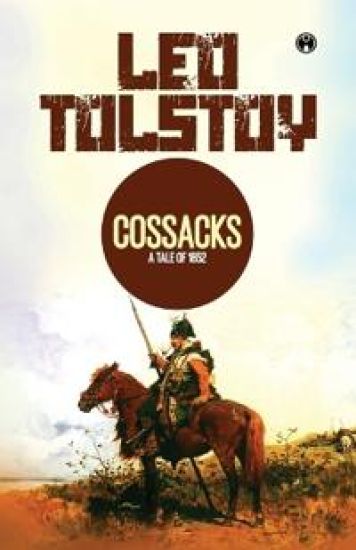
To read Tolstoy's early sketch, The Raid, and his first novel, The Cossacks, is to enter the workshop of a great writer and thinker. In The Raid Tolstoy explores the nature of courage itself, a theme central to War and Peace. In The Cossacks he sets forth all the motifs of his whole future life and his work. The hero is a young man-about-town who has squandered half his fortune - and his life - and retires to the desultory existence of a regiment stationed in mountainous Cossack country, where he takes part in the daily life of a Cossack village. But his love for the beautiful Maryanka precipitates a conflict between the belief that "Happiness lies in living for others" and a passion that sweeps self-abnegation aside. As Romain Roland says, "The full force of Tolstoy's descriptive powers is already expressed in this splendid novel] and Tolstoy's realism shows itself with equal force in depicting human nature."

Six Short Masterpieces by Tolstoy
Leo Tolstoy; Margaret Translator Wettlin; F. D. Introduction Reeve
Hassell Street Press
2021
nidottu
This work has been selected by scholars as being culturally important and is part of the knowledge base of civilization as we know it. This work is in the public domain in the United States of America, and possibly other nations. Within the United States, you may freely copy and distribute this work, as no entity (individual or corporate) has a copyright on the body of the work. Scholars believe, and we concur, that this work is important enough to be preserved, reproduced, and made generally available to the public. To ensure a quality reading experience, this work has been proofread and republished using a format that seamlessly blends the original graphical elements with text in an easy-to-read typeface. We appreciate your support of the preservation process, and thank you for being an important part of keeping this knowledge alive and relevant.

Six Short Masterpieces by Tolstoy
Leo Tolstoy; Margaret Translator Wettlin; F. D. Introduction Reeve
Hassell Street Press
2021
sidottu
This work has been selected by scholars as being culturally important and is part of the knowledge base of civilization as we know it. This work is in the public domain in the United States of America, and possibly other nations. Within the United States, you may freely copy and distribute this work, as no entity (individual or corporate) has a copyright on the body of the work. Scholars believe, and we concur, that this work is important enough to be preserved, reproduced, and made generally available to the public. To ensure a quality reading experience, this work has been proofread and republished using a format that seamlessly blends the original graphical elements with text in an easy-to-read typeface. We appreciate your support of the preservation process, and thank you for being an important part of keeping this knowledge alive and relevant.
War and Peace (1869) is a novel by Russian writer Leo Tolstoy. Serialized between 1865 and 1867, it was published in book form in 1869 and has since been recognized as a masterpiece of world literature. Notable for its epic scale, War and Peace encompasses hundreds of characters, diligently following its five central families across fifteen years while featuring detailed imaginings of such historical figures as Napoleon Bonaparte. In The Epilogues, Tolstoy draws his epic story to a heartwarming close while offering his theory on the philosophy of history. After so much death and destruction, Tolstoy finds solace in the sanctity of marriage and the effort of traumatized people to rebuild and reclaim their lives. As a new generation is born, hope is rekindled, but faint rumblings of unrest and conspiracy suggest that peace, once more, will be difficult to maintain. In the epilogue’s second part, Tolstoy breaks from his narrative to offer his theory on the philosophy of history, condemning the popular Great Man Theory’s elevation of the individual and proposing that small, singular events form the basis of historical change. With its depiction of the brutalities of war on individuals and society alike, Tolstoy’s story brings history to life while reminding us that the past is always closer than we care to think. As ambitious as it is triumphant, Leo Tolstoy’s masterpiece is an epic novel of history and family, a story of faith and the will to persevere in the face of unspeakable catastrophe. War and Peace is a work that transcends both history and description, not just for the scale of its narrative and setting, but for the scope of its philosophical interests. Since its publication, it has been praised as an essential work of literature by Ivan Turgenev, Gustave Flaubert, Thomas Mann, and Ernest Hemingway, and has been adapted for film, theater, and television countless times. With a beautifully designed cover and professionally typeset manuscript, this edition of Leo Tolstoy’s War and Peace is a classic of Russian literature reimagined for modern readers.
The Power of Darkness (1886) is a play by Leo Tolstoy. Forbidden for decades in Tolstoy’s native Russia, the five-act play was first staged in Paris, where it earned praise from some of France’s leading critics. Noted for its brutal depiction of violence and desperation, the play is concerned with the universal religious and philosophical themes that inspired such masterpieces as War and Peace (1869) and Anna Karenina (1877). Peasant life is often portrayed in art as peaceful and romantic, in touch with the rhythms of the natural world and coursing with spirituality. In The Power of Darkness, Tolstoy refuses such empty symbolism, choosing instead to tell a story of greed, murder, and betrayal that has everything to do with the political reality faced by its impoverished characters. Fearful of what will happen to their farm when her aging husband Peter dies, Anisya seduces her farmhand Nikita, whose lack of education and opportunity—as well as a moral emptiness—make him a willing accomplice. Betraying Marinka, a young orphan girl he manipulates for pleasure, Nikita joins Anisya in dispossessing her stubborn husband. Tragic and disturbing, The Power of Darkness is a story of man at war with nature, and therefore at war with himself. With a beautifully designed cover and professionally typeset manuscript, this edition of Leo Tolstoy’s The Power of Darkness is a classic work of Russian literature reimagined for modern readers.
War and Peace (1869) is a novel by Russian writer Leo Tolstoy. Serialized between 1865 and 1867, it was published in book form in 1869 and has since been recognized as a masterpiece of world literature. Notable for its epic scale, War and Peace encompasses hundreds of characters, diligently following its five central families across fifteen years while featuring detailed imaginings of such historical figures as Napoleon Bonaparte. In Books XI-XV, Tolstoy depicts the loss of Moscow, the final struggle against French forces, and the beginning of a new era for Russia, Europe, and the world. French forces under Napoleon Bonaparte leave the Russian military and people with no choice. Not only must they abandon Moscow, they must burn it to the ground in order to slow the Grande Armée’s advance. The Rostov family leaves in a hurry, bringing with them the mortally wounded Prince Andrei, who is nursed by his beloved Natasha. Meanwhile, Pierre hatches a plan to assassinate Napoleon, but is soon captured and threatened with execution. As he awaits his fate in prison, guerrilla fighters manage to repel the French, forcing Napoleon’s disastrous retreat. With its depiction of the brutalities of war on individuals and society alike, Tolstoy’s story brings history to life while reminding us that the past is always closer than we care to think. As ambitious as it is triumphant, Leo Tolstoy’s masterpiece is an epic novel of history and family, a story of faith and the will to persevere in the face of unspeakable catastrophe. War and Peace is a work that transcends both history and description, not just for the scale of its narrative and setting, but for the scope of its philosophical interests. Since its publication, it has been praised as an essential work of literature by Ivan Turgenev, Gustave Flaubert, Thomas Mann, and Ernest Hemingway, and has been adapted for film, theater, and television countless times. With a beautifully designed cover and professionally typeset manuscript, this edition of Leo Tolstoy’s War and Peace is a classic of Russian literature reimagined for modern readers.
War and Peace (1869) is a novel by Russian writer Leo Tolstoy. Serialized between 1865 and 1867, it was published in book form in 1869 and has since been recognized as a masterpiece of world literature. Notable for its epic scale, War and Peace encompasses hundreds of characters, diligently following its five central families across fifteen years while featuring detailed imaginings of such historical figures as Napoleon Bonaparte. In Books VI-X, he explores the emotions of his wide cast of characters who, during a period of tenuous peace, attempt to return to a sense of normalcy. Following Napoleon’s defeat of Russian and Austrian forces at the Battle of Austerlitz, the Rostov, Bezukhov, and Bolkonsky families struggle to adapt to a changing world. While Prince Andrei attempts to balance his political obligations with his growing affection for Natasha Rostov, his friend Pierre finds himself at a crossroads. Disillusioned with Freemasonry, obsessed with discovering a way to live ethically, he grows increasingly volatile and despondent. When Natasha is attacked by the vicious Anatole Kuragin, Pierre finds himself in the position of comforting her, and they soon form a strong attachment. After several years, however, Napoleon’s army begins advancing on Russia once more, bringing uncertainty and chaos to its traumatized people. With its juxtaposition of political peace with the private and public turmoil of his characters, Tolstoy’s story brings history to life while reminding us that the past is always closer than we care to think. As ambitious as it is triumphant, Leo Tolstoy’s masterpiece is an epic novel of history and family, a story of faith and the will to persevere in the face of unspeakable catastrophe. War and Peace is a work that transcends both history and description, not just for the scale of its narrative and setting, but for the scope of its philosophical interests. Since its publication, it has been praised as an essential work of literature by Ivan Turgenev, Gustave Flaubert, Thomas Mann, and Ernest Hemingway, and has been adapted for film, theater, and television countless times. With a beautifully designed cover and professionally typeset manuscript, this edition of Leo Tolstoy’s War and Peace is a classic of Russian literature reimagined for modern readers.
Childhood (1852) is a novel by Leo Tolstoy. Published at the beginning of his career as a leading Russian author of his generation, Childhood is the first in a trilogy of semi-autobiographical novels tracing Nikolenka’s journey from innocence to experience. As a record of the past, a nostalgic reminder of a lost world, Childhood is one of Tolstoy’s most personal works, and yet his prose shows signs of the universal religious and philosophical themes that would inspire such masterpieces as War and Peace (1869) and Anna Karenina (1877). A story of life and death, love and grief, Childhood is an invaluable treasure of Russian literature. “How beautiful Mamma’s face was when she smiled! It made her so infinitely more charming, and everything around her seemed to grow brighter! If in the more painful moments of my life I could have seen that smile before my eyes, I should never have known what grief is.” Devoted to his mother, Nikolenka is a young Russian boy born into prosperity. As his story unfolds, we see him experience love, grief, and anger for the first time in his life, returning us for a brief moment to our own childhoods, the bittersweet memories of good and bad things that can never return. Praised for its expressionistic style and meditative prose, Childhood won Tolstoy the attention of Russia’s literary elite, launching his career as one of the nineteenth century’s most influential artists. With a beautifully designed cover and professionally typeset manuscript, this edition of Leo Tolstoy’s Childhood is a classic work of Russian literature reimagined for modern readers.
Youth (1857) is a novel by Leo Tolstoy. Published at the beginning of his career as a leading Russian author of his generation, Youth is the third in a trilogy of semi-autobiographical novels tracing Nikolenka’s journey from innocence to experience. As a record of the past, a nostalgic reminder of a lost world, Youth is one of Tolstoy’s most personal works, and yet his prose shows signs of the universal religious and philosophical themes that would inspire such masterpieces as War and Peace (1869) and Anna Karenina (1877). A story of life and death, love and grief, Youth is an invaluable treasure of Russian literature. “Nevertheless there came a moment when those thoughts swept into my head with a sudden freshness and force of moral revelation which left me aghast at the amount of time which I had been wasting, and made me feel as though I must at once—that very second—apply those thoughts to life, with the firm intention of never again changing them. It is from that moment that I date the beginning of my youth.” Centered on his friendship with Dmitri and the trials he faces on his way to attending university, the final installment of Tolstoy’s trilogy finds Nikolenko on the cusp of adulthood, filled with passions and ideas that form his sense of individuality. As his story unfolds, we see him experience love, grief, and anger for the first time in his life, returning us for a brief moment to our own childhoods, the bittersweet memories of good and bad things that can never return. Praised for its expressionistic style and meditative prose, Youth won Tolstoy the attention of Russia’s literary elite, launching his career as one of the nineteenth century’s most influential artists. With a beautifully designed cover and professionally typeset manuscript, this edition of Leo Tolstoy’s Youth is a classic work of Russian literature reimagined for modern readers.
Boyhood (1854) is a novel by Leo Tolstoy. Published at the beginning of his career as a leading Russian author of his generation, Boyhood is the second in a trilogy of semi-autobiographical novels tracing Nikolenka’s journey from innocence to experience. As a record of the past, a nostalgic reminder of a lost world, Boyhood is one of Tolstoy’s most personal works, and yet his prose shows signs of the universal religious and philosophical themes that would inspire such masterpieces as War and Peace (1869) and Anna Karenina (1877). A story of life and death, love and grief, Boyhood is an invaluable treasure of Russian literature. “No longer were my eyes confronted with the closed door of Mamma’s room (which I had never been able to pass without a pang), nor with the covered piano (which nobody opened now, and at which I could never look without trembling), nor with mourning dresses (we had each of us on our ordinary travelling clothes), nor with all those other objects which recalled to me so vividly our irreparable loss, and forced me to abstain from any manifestation of merriment lest I should unwittingly offend against her memory.” Following the death of his beloved mother, Nikolenka is forced to adjust to a world grown unbearably cold. As though the grief were not enough, he must also overcome his own feelings of loneliness and uncertainty, as well as his hatred of his new French tutor. As his story unfolds, we see him experience love, grief, and anger for the first time in his life, returning us for a brief moment to our own childhoods, the bittersweet memories of good and bad things that can never return. Praised for its expressionistic style and meditative prose, Boyhood won Tolstoy the attention of Russia’s literary elite, launching his career as one of the nineteenth century’s most influential artists. With a beautifully designed cover and professionally typeset manuscript, this edition of Leo Tolstoy’s Boyhood is a classic work of Russian literature reimagined for modern readers.
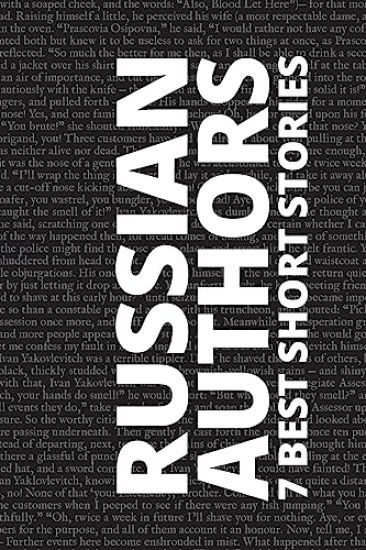
7 best short stories - Russian Authors
Leo Tolstoy; Leonid Andreyev; Maxim Gorky
Tacet Books
2021
pokkari
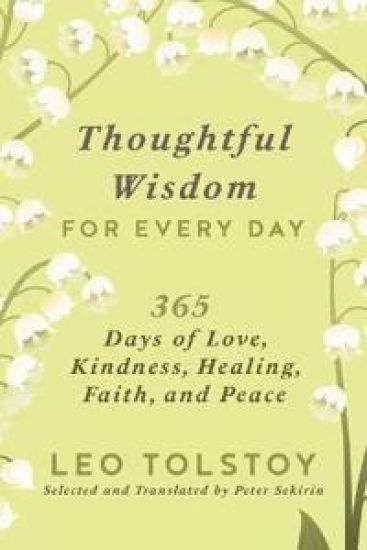
Inspirational Wisdom for Every Day in a Classic Daybook—"An excellent gift . . . A fine inspirational" (Midwest Book Review) During the last years of his life, Leo Tolstoy kept one book invariably on his desk, read and reread it to his family, and recommended it to all his friends: a compendium of wise thoughts gathered over the course of a decade from his wide-ranging readings in philosophy and religion, and from his own spiritual meditations. Thoughtful Wisdom for Every Day comprises Tolstoy’s own most essential ideas about spirituality and what it is to live a good life. Designed to be a cycle of daily readings, this book offers thoughts and aphorisms for every day, following a succession of themes repeated each month—such as God, the soul, desire, faith, our passions, humility, inequality, evil, truth, happiness, and the blessings of love. Comforting, challenging, and inspiring, this is a spiritual treasure trove and a book of great warmth.
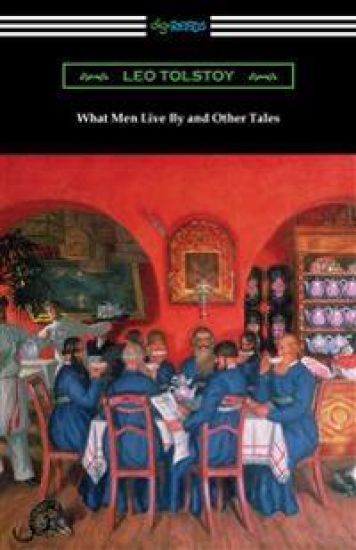
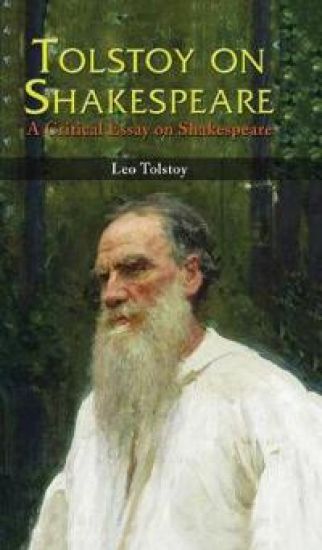

ईर्ष्या के एक मर्मज्ञ अध्ययन के साथ-साथ जिस तरह से समाज सेक्स के मामलों में युवा पुरुषों और महिलाओं को शिक्षित करता है, उसके बारे में एक भयावह शिकायत है। ईर्ष्या के एक मर्मज्ञ अध्ययन के साथ-साथ जिस तरह से समाज सेक्स के मामलों में युवा पुरुषों और महिलाओं को शिक्षित करता है, उसके बारे में एक भयावह शिकायत है। ईर्ष्या के एक मर्मज्ञ अध्ययन के साथ-साथ जिस तरह से समाज सेक्स के मामलों में युवा पुरुषों और महिलाओं को शिक्षित करता है, उसके बारे में एक भयावह शिकायत है। ईर्ष्या के एक मर्मज्ञ अध्ययन के साथ-साथ जिस तरह से समाज सेक्स के मामलों में युवा पुरुषों और महिलाओं को शिक्षित करता है, उसके बारे में एक भयावह शिकायत है।