
Kirjailija
Leo Tolstoy
Kirjat ja teokset yhdessä paikassa: 1 277 kirjaa, julkaisuja vuosilta 1859–2026, suosituimpiin kuuluu Classic Short Story Collection: Charles Dickens, Leo Tolstoy, Fyodor Dostoyevsky, Franz Kafka, Jack London, and Oscar Wilde. Vertaile teosten hintoja ja tarkista saatavuus suomalaisista kirjakaupoista.
1 277 kirjaa
Kirjojen julkaisuvuodet: 1859–2026.
Childhood the first published novelby Leo Tolstoy, released under the initials L. N. in the November 1852 issue of the popular Russian literary journal The Contemporary. It is the first in a series of three novels and is followed by Boyhood and Youth. Published when Tolstoy was just twenty-three years old, the book was an immediate success, earning notice from other Russian novelists including Ivan Turgenev, who heralded the young Tolstoy as a major up-and-coming figure in Russian literature. Childhood is an exploration of the inner life of a young boy, Nikolenka, and one of the books in Russian writing to explore an expressionistic style, mixing fact, fiction and emotions to render the moods and reactions of the narrator.

Tolstoy's most controversial novel, Resurrection (1899) is a scathing indictment of injustice, corruption and hypocrisy at all levels of society. Creating a vast panorama of Russian life, from peasants to aristocrats, bureaucrats to convicts, it reveals Tolstoy's magnificent storytelling powers. Serving on the jury at a murder trial, Prince Dmitri Nekhlyudov is devastated when he sees the prisoner - Katyusha, a young maid he seduced and abandoned years before. As Dmitri faces the consequences of his actions, he decides to give up his life of wealth and luxury to devote himself to rescuing Katyusha, even if it means following her into exile in Siberia. But can a man truly find redemption by saving another person?

Rare edition with unique illustrations and elegant classic cream paper. Epic historical novel by Leo Tolstoy, originally published as Voyna i mir in 1865-69. This panoramic study of early 19th-century Russian society, noted for its mastery of realistic detail and variety of psychological analysis, is generally regarded as one of the world's greatest novels. War and Peace is primarily concerned with the histories of five aristocratic families--particularly the Bezukhovs, the Bolkonskys, and the Rostovs--the members of which are portrayed against a vivid background of Russian social life during the war against Napoleon (1805-14). The theme of war, however, is subordinate to the story of family existence, which involves Tolstoy's optimistic belief in the life-asserting pattern of human existence. The novel also sets forth a theory of history, concluding that there is a minimum of free choice; all is ruled by an inexorable historical determinism. Includes unique illustrations.

Rare edition with unique illustrations and elegant classic cream paper. Epic historical novel by Leo Tolstoy, originally published as Voyna i mir in 1865-69. This panoramic study of early 19th-century Russian society, noted for its mastery of realistic detail and variety of psychological analysis, is generally regarded as one of the world's greatest novels. War and Peace is primarily concerned with the histories of five aristocratic families--particularly the Bezukhovs, the Bolkonskys, and the Rostovs--the members of which are portrayed against a vivid background of Russian social life during the war against Napoleon (1805-14). The theme of war, however, is subordinate to the story of family existence, which involves Tolstoy's optimistic belief in the life-asserting pattern of human existence. The novel also sets forth a theory of history, concluding that there is a minimum of free choice; all is ruled by an inexorable historical determinism. Includes unique illustrations.

Rare edition with unique illustrations and elegant classic cream paper. Epic historical novel by Leo Tolstoy, originally published as Voyna i mir in 1865-69. This panoramic study of early 19th-century Russian society, noted for its mastery of realistic detail and variety of psychological analysis, is generally regarded as one of the world's greatest novels. War and Peace is primarily concerned with the histories of five aristocratic families--particularly the Bezukhovs, the Bolkonskys, and the Rostovs--the members of which are portrayed against a vivid background of Russian social life during the war against Napoleon (1805-14). The theme of war, however, is subordinate to the story of family existence, which involves Tolstoy's optimistic belief in the life-asserting pattern of human existence. The novel also sets forth a theory of history, concluding that there is a minimum of free choice; all is ruled by an inexorable historical determinism. Includes unique illustrations.
Rare edition with unique illustrations and elegant classic cream paper. A magnificent drama of vengeance, infidelity, and retribution, Anna Karenina ortrays the moving story of people whose emotions conflict with the dominant social mores of their time. Sensual, rebellious Anna falls deeply and passionately in love with the handsome Count Vronsky. When she refuses to conduct the discreet affair that her cold, ambitious husband?and Russian high society?would condone, she is doomed. Set against the tragic love of Anna and Vronsky, the plight of the melancholy nobleman Konstantine Levin unfolds. In doubt about the meaning of life, haunted by thoughts of suicide, Levin's struggles echo Tolstoy's own spiritual crisis. But Anna's inner turmoil mirrors the emotional imprisonment and mental disintegration of a woman who dares to transgress the strictures of a patriarchal world. Includes unique illustrations.
Rare edition with unique illustrations and elegant classic cream paper. A magnificent drama of vengeance, infidelity, and retribution, Anna Karenina ortrays the moving story of people whose emotions conflict with the dominant social mores of their time. Sensual, rebellious Anna falls deeply and passionately in love with the handsome Count Vronsky. When she refuses to conduct the discreet affair that her cold, ambitious husband?and Russian high society?would condone, she is doomed. Set against the tragic love of Anna and Vronsky, the plight of the melancholy nobleman Konstantine Levin unfolds. In doubt about the meaning of life, haunted by thoughts of suicide, Levin's struggles echo Tolstoy's own spiritual crisis. But Anna's inner turmoil mirrors the emotional imprisonment and mental disintegration of a woman who dares to transgress the strictures of a patriarchal world. Includes unique illustrations.
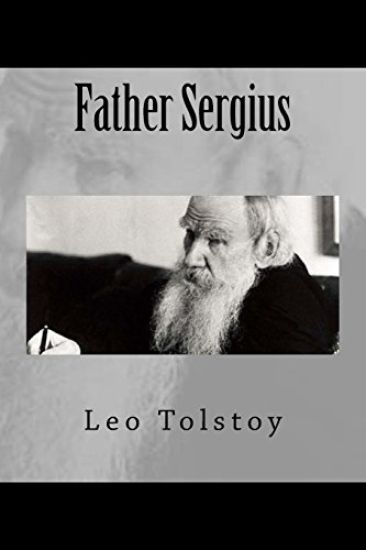
The story begins with the childhood and exceptional and accomplished youth of Prince Stepan Kasatsky. The young man is destined for great things. He discovers on the eve of his wedding that his fianc e Countess Mary Korotkova has had an affair with his beloved Tsar Nicholas I. The blow to his pride is massive, and he retreats to the arms of Russian Orthodoxy and becomes a monk. Many years of humility and doubt follow. He is ordered to become a hermit. Despite his being removed from the world, he is still remembered for having so remarkably transformed his life. One winter night, a group of merry-makers decide to visit him, and one of them, a divorced woman named Makovkina, spends the night in his cell, with the intention to seduce him. Father Sergius discovers he is still weak and in order to protect himself, cuts off his own finger. Makovkina is stunned by this act, and leaves the next morning, having vowed to change her life. A year later she has joined a convent. Father Sergius' reputation for holiness grows. He becomes known as a healer, and pilgrims come from far and wide. Yet Father Sergius is profoundly aware of his inability to attain a true faith. He is still tortured by boredom, pride, and lust. He fails a new test, when the young daughter of a merchant successfully beds him. The morning after, he leaves the monastery and seeks out his cousin Pashenka (Praskovya Mikhaylovna), whom he, with a group of other boys, had tormented many years ago. He finds her, now in all the conventional senses a failure in life, yet imbued with a sense of service towards her family. His path is now clearer. He begins to wander, until eight months later he is arrested in the company of a blind beggar who makes him feel closer to God. He is sent to Siberia, where he now works as the hired man of a well-to-do peasant, teaching the gentleman's young children and working in the gardens.

Voskresenie - shedevr pozdnego tvorchestva L'va Tolstogo. Istorija ustavshego ot svetskoj zhizni i razvlechenij aristokrata, perezhivajushhego vnezapnoe duhovnoe prozrenie pri tragicheskoj vstreche s cinichnoj zhricej ljubvi, kotoruju on sam nekogda tolknul na jetot pechal'nyj put'. Istorija boleznennoj, muchitel'noj pereocenki cennostej i dolgogo trudnogo ochishhenija...

V knigu L. N. Tolstogo Tri medvedja voshli basni, byl' i skazka iz Azbuki velikogo russkogo pisatelja, kotoruju on sozdal bolee sta let nazad dlja krest'janskih rebjatishek Jasnopoljanskoj shkoly. Segodnja jeti proizvedenija po-prezhnemu pomogajut detjam uchit'sja chitat' i poznavat' okruzhajushhij mir. Ih prostoj i jasnyj jazyk pozvoljaet im glubzhe ponjat' narodnuju mudrost'. Tolstovskie teksty krasochno illjustrirovany. Dlja doshkol'nogo vozrasta. Dlja starshej gruppy detskogo sada.

V sbornik voshli rasskaz "Kavkazskij plennik," povest' "Hadzhi-Murat," Povest' "Kazaki."

V sbornik voshli povest' "Otec Sergij," rasskaz "Posle bala," povest' "Smert' Ivana Il'icha," stat'ja "Vospitanie i obrazovanie."

V knigu voshli povesti i rasskazy pozdnego perioda tvorchestva L. N. Tolstogo: Krejcerova sonata (1889), Otec Sergij (1898), Bozheskoe i chelovecheskoe (1906), p'esa Zhivoj trup (1900). V jetot period v polnuju moshh' pisatel' projavil sebja kak myslitel' i duhovnyj podvizhnik. Proniknovenno zvuchit nravstvennaja propoved' L. N. Tolstogo i v ego publicisticheskih proizvedenijah togo zhe vremeni: Ispoved' (opublikovana v Rossii v 1906-m), Ne mogu molchat' (1908). Pisatel' podvodil itog perezhitogo za vek, i blagodarja geniju Tolstogo jetot itog vo mnogom opredelil razvitie evropejskoj literatury i obshhestvennoj mysli v veke sledujushhem.

Lev Nikolaevich Tolstoj (1828-1910) - pisatel' mirovogo urovnja. Udeljal osoboe vnimanie detskoj literature i obrazovaniju krest'janskih detej. V sbornik voshli proizvedenija L. N. Tolstogo raznoobraznogo zhanra iz Novoj azbuki i serii iz chetyreh Russkih knig dlja chtenija: Tri medvedja, Lipunjushka, Kostochka, Lev i sobachka, Akula, Dva brata, Pryzhok i dr. Oni sozdany v nachale 1870-h gg. dlja uchenikov shkoly, organizovannoj Tolstym v Jasnoj Poljane, i ljubimy mnogimi pokolenijami detej. Kniga prekrasno illjustrirovana Dlja mladshego i srednego shkol'nogo vozrasta.

Lev Nikolaevich Tolstoj (1828-1910) - pisatel' mirovogo urovnja. Udeljal osoboe vnimanie detskoj literature i obrazovaniju krest'janskih detej. V sbornik voshli proizvedenija L. N. Tolstogo raznoobraznogo zhanra iz Novoj azbuki i serii iz chetyreh Russkih knig dlja chtenija: Tri medvedja, Lipunjushka, Kostochka, Lev i sobachka, Akula, Dva brata, Pryzhok i dr. Oni sozdany v nachale 1870-h gg. dlja uchenikov shkoly, organizovannoj Tolstym v Jasnoj Poljane, i ljubimy mnogimi pokolenijami detej. Kniga prekrasno illjustrirovana Dlja mladshego i srednego shkol'nogo vozrasta.

Leo Tolstoy, in his later years, formulated a unique Christian philosophy based upon the teachings of Jesus, and rejected the institutional doctrine of the Church. These convictions made a profound impact on his life and are reflected in his writings after c.1880. My Religion is a comprehensive exposition of this newfound faith, where Tolstoy lays out in detail every important aspect of his belief, and strives to explain the true meaning of Christ's message, and where the Church has strayed from the Word of God.

Powers of Darkness is an incredible literary discovery: In 1900, Icelandic publisher and writer Valdimar smundsson set out to translate Bram Stoker's world-famous 1897 novel Dracula. Called Makt Myrkranna (literally, "Powers of Darkness"), this Icelandic edition included an original preface written by Stoker himself. Makt Myrkranna was published in Iceland in 1901 but remained undiscovered outside of the country until 1986, when Dracula scholarship was astonished by the discovery of Stoker's preface to the book. However, no one looked beyond the preface and deeper into smundsson's story. In 2014, literary researcher Hans de Roos dove into the full text of Makt Myrkranna, only to discover that smundsson hadn't merely translated Dracula but had penned an entirely new version of the story, with all new characters and a totally re-worked plot. The resulting narrative is one that is shorter, punchier, more erotic, and perhaps even more suspenseful than Stoker's Dracula. Incredibly, Makt Myrkranna has never been translated or even read outside of Iceland until now. Powers of Darkness presents the first ever translation into English of Stoker and smundsson's Makt Myrkranna. With marginal annotations by de Roos providing readers with fascinating historical, cultural, and literary context; a foreword by Dacre Stoker, Bram Stoker's great-grandnephew and bestselling author; and an afterword by Dracula scholar John Edgar Browning, Powers of Darkness will amaze and entertain legions of fans of Gothic literature, horror, and vampire fiction.

This play by Tolstoy claims that anything more than mere sustenance leads to avarice and ruin + teetotalism = "The First Distiller." Moralizing abounds.