Kirjojen hintavertailu – 12 859 819 kirjaa ja 27 kauppaa
Kirjailija
Leo Tolstoy
Kirjat ja teokset yhdessä paikassa: 1 277 kirjaa, julkaisuja vuosilta 1859–2026, suosituimpiin kuuluu Classic Short Story Collection: Charles Dickens, Leo Tolstoy, Fyodor Dostoyevsky, Franz Kafka, Jack London, and Oscar Wilde. Vertaile teosten hintoja ja tarkista saatavuus suomalaisista kirjakaupoista.
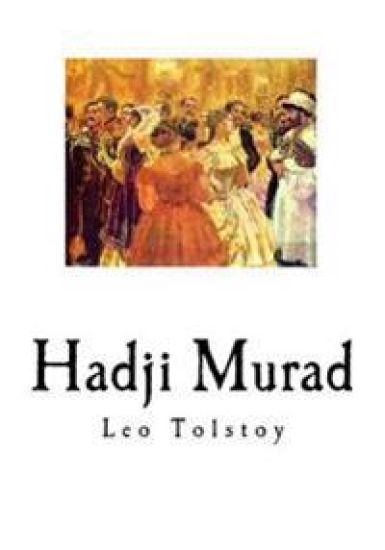
Hadji MuradLeo TolstoyTranslated by Louise and Aylmer MaudeHadji Murat is a short novel written by Leo Tolstoy from 1896 to 1904 and published posthumously in 1912 (though not in full until 1917). It is Tolstoy's final work. The protagonist is Hadji Murat, an Avar rebel commander who, for reasons of personal revenge, forges an uneasy alliance with the Russians he had been fighting. The narrator prefaces the story with his comments on a crushed, but still living thistle he finds in a field (a symbol for the main character), after which he begins to tell the story of Hadji Murat, a successful and famed separatist guerrilla who falls out with his own commander and eventually sides with the Russians in hope of saving his family. Hadji Murat's family is being contained and controlled by the Chechen leader who abducted his mother, two wives, and five children. Aside from the fact that Murat wants to save his family, he additionally wants to avenge the deaths of other family members. The story opens with Murat and two of his followers fleeing from Shamil, the commander of the Caucasian separatists, who is at war with the Russians. They find refuge at the house of Sado, a loyal supporter of Murat. The local people learn of his presence and chase him out of the village. His lieutenant succeeds in making contact with the Russians, who promise to meet Murat. He eventually arrives at the fortress of Vozdvizhenskaya to join the Russian forces, in hopes of drawing their support in order to overthrow Shamil and save his family. Before his arrival, a small skirmish occurs with some Chechens outside the fortress, and Petrukha Avdeyev, a young Russian soldier bleeds out in a local military hospital after being shot. Tolstoy makes a chapter-length aside about Petrukha: childless, he volunteered as a conscript in place of his brother who had a family of his own. Petrukha's father regrets this because he was a dutiful worker compared to his complacent brother.

Father Sergius by Leo Tolstoy - The story begins with the childhood and exceptional and accomplished youth of Prince Stepan Kasatsky. The young man is destined for great things. He discovers on the eve of his wedding that his fianc
The justification of all persons who have freed themselves from toil is now founded on experimental, positive science. The scientific theory is as follows: - "For the study of the laws of life of human societies, there exists but one indubitable method, -the positive, experimental, critical method "Only sociology, founded on biology, founded on all the positive sciences, can give us the laws of humanity. Humanity, or human communities, are the organisms already prepared, or still in process of formation, and which are subservient to all the laws of the evolution of organisms. "One of the chief of these laws is the variation of destination among the portions of the organs. Some people command, others obey. If some have in superabundance, and others in want, this arises not from the will of God, not because the empire is a form of manifestation of personality, but because in societies, as in organisms, division of labor becomes indispensable for life as a whole. Some people perform the muscular labor in societies; others, the mental labor."
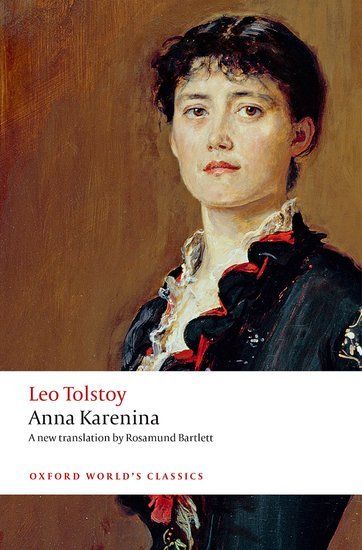
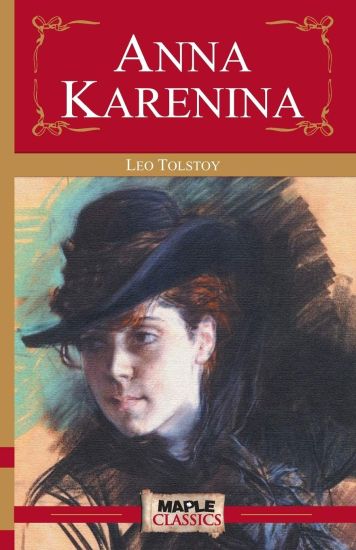
Love... it means too much to me, far more than you can understand. At its simplest, Anna Karenina is a love story. It is a portrait of a beautiful and intelligent woman whose passionate love for a handsome officer sweeps aside all other ties - to her marriage and to the network of relationships and moral values that bind the society around her. The love affair of Anna and Vronsky is played out alongside the developing romance of Kitty and Levin, and in the character of Levin, closely based on Tolstoy himself, the search for happiness takes on a deeper philosophical significance. One of the greatest novels ever written, Anna Karenina combines penetrating psychological insight with an encyclopedic depiction of Russian life in the 1870s. The novel takes us from high society St Petersburg to the threshing fields on Levin's estate, with unforgettable scenes at a Moscow ballroom, the skating rink, a race course, a railway station. It creates an intricate labyrinth of connections that is profoundly satisfying, and deeply moving. Rosamund Bartlett's translation conveys Tolstoy's precision of meaning and emotional accuracy in an English version that is highly readable and stylistically faithful. Like her acclaimed biography of Tolstoy, it is vivid, nuanced, and compelling.
Anna Karenina tells of the doomed love affair between the sensuous and rebellious Anna and the dashing officer, Count Vronsky. Tragedy unfolds as Anna rejects her passionless marriage and must endure the hypocrisies of society. Set against a vast and richly textured canvas of nineteenth-century Russia, the novel's seven major characters create a dynamic imbalance, playing out the contrasts of city and country life and all the variations on love and family happiness.
"What I Believe" (Russian: V chem moia viera?) is a work by Leo Tolstoy in which he expounds his general views on life. This edition of the book was banned following its publication in Russia. In February 1901, the Russian Orthodox Church excommunicated Leo Tolstoy. The author describes the changes which happened to his mind. He also tells about the long way he had covered before coming to his ideas. The basis for the latter is also described in this book, proving them to be well-grounded and thought-out. Deputy of the First State Duma Victor Obninsky wrote the following in the newspaper Utro Rossii (Russian Morning) on November 4, 1910, "... What do we have to justify our new crime?.. We ruined Pushkin and Lermontov, drove Gogol insane, sent Dostoyevsky to rot in prison, exiled Turgenev to foreign land, and finally threw Tolstoy, eighty-two years of age, onto a wooden bench at an out-of-the-way station .. Our life seems to be a ceaseless descent into a bottomless dull pit, where nothingness, a spiritual death, awaits us."