Kirjailija
Leo Tolstoy
Kirjat ja teokset yhdessä paikassa: 1 277 kirjaa, julkaisuja vuosilta 1859–2026, suosituimpiin kuuluu Classic Short Story Collection: Charles Dickens, Leo Tolstoy, Fyodor Dostoyevsky, Franz Kafka, Jack London, and Oscar Wilde. Vertaile teosten hintoja ja tarkista saatavuus suomalaisista kirjakaupoista.
1 277 kirjaa
Kirjojen julkaisuvuodet: 1859–2026.
The Kingdom of God Is Within You: Christianity Not as a Mystic Religion But as a New Theory of Life
Leo Tolstoy
Createspace Independent Publishing Platform
2015
nidottu

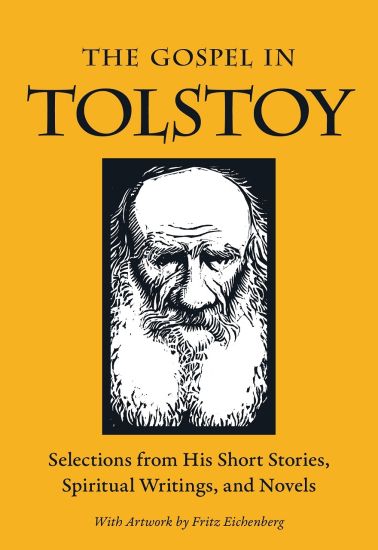
We know of no better introduction to the spiritual vision of one of the greatest writers of all time, Leo Tolstoy. This anthology vividly reveals – as none of his novels, novellas, short stories, plays, or essays could on its own – the great Russian novelist’s fascination with the life and teachings of Jesus and the gospel themes of betrayal and forgiveness, sacrifice and redemption, death and resurrection. Drawn from War and Peace, Anna Karenina, Resurrection, The Death of Ivan Ilyich, The Kingdom of God Is Within You, Master and Man, Walk in the Light, and Twenty-Three Tales, the selections are each prefaced by a contextual note. Newcomers will find in these pages a rich, accessible sampling. Tolstoy enthusiasts will be pleased to find some of the writer’s deepest, most compelling passages in one volume.
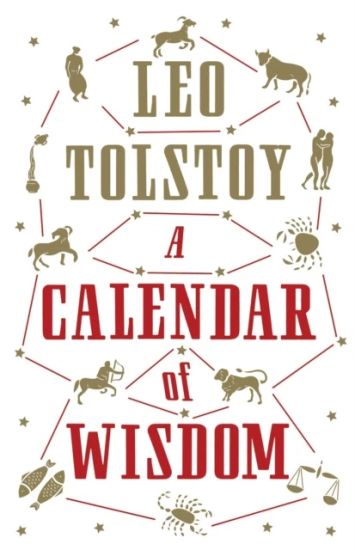
Over the last fifteen years of his life, Tolstoy collected and published the maxims of some of the world’s greatest masters of philosophy, religion and literature, adding his own contributions to various questions that preoccupied him in old age, such as faith and existence, as well as matters of everyday life. Banned in Russia under Communism, A Calendar of Wisdom was Tolstoy’s last major work, and one of his most popular both during and after his lifetime. This new translation by Roger Cockrell will offer today’s generation of readers the chance to discover, day by day, these edifying and carefully selected pearls of wisdom.

Childhood is the first published novel by Leo Tolstoy, released under the initials L. N. in the November 1852 issue of the popular Russian literary journal The Contemporary. It is the first in a series of three novels and is followed by Boyhood and Youth. Published when Tolstoy was just twenty-three years old, the book was an immediate success, earning notice from other Russian novelists including Ivan Turgenev, who heralded the young Tolstoy as a major up-and-coming figure in Russian literature. Childhood is an exploration of the inner life of a young boy, Nikolenka, and one of the books in Russian writing to explore an expressionistic style, mixing fact, fiction and emotions to render the moods and reactions of the narrator. It is the first in a series of three novels and is followed by Boyhood and Youth. Published when Tolstoy was just twenty-three years old, the book was an immediate success, earning notice from other Russian novelists including Ivan Turgenev, who heralded the young Tolstoy as a major up-and-coming figure in Russian literature.
A Confession is a short work on the subject of melancholia, philosophy and religion by the acclaimed Russian novelist Leo Tolstoy. It was written in 1879 to 1880, when Tolstoy was of late-middle age. The book is a brief autobiographical story of the author's struggle with a mid-life existential crisis. It describes his search for the answer to the ultimate philosophical question: "If God does not exist, since death is inevitable, what is the meaning of life?." Without the answer to this, for him, life had become "impossible". The story begins with the Eastern fable of the dragon in the well. A man is chased by a beast into a well, at the bottom of which is a dragon. The man clings to a branch that is being gnawed on by two mice (one black, one white, representing night and day and the relentless march of time). The man is able to lick two drops of honey (representing Tolstoy's love of his family and his writing), but because death is inevitable, he no longer finds the honey sweet. Tolstoy goes on to describe four possible attitudes towards this dilemma. The first is ignorance. If one is oblivious to the fact that death is approaching, life becomes bearable. The problem with this for him personally is that he is not ignorant. Having become conscious of the reality of death, there is no going back. The second possibility is what Tolstoy describes as Epicureanism. Being fully aware that life is ephemeral, one can enjoy the time one has. Tolstoy's problem with this is essentially moral. He states that Epicureanism may work fine and well for the minority who can afford to live "the good life," but one would have to be morally empty to be able to ignore the fact that the vast majority of people do not have access to the wealth necessary to live this kind of life. Tolstoy next states that the most intellectually honest response to the situation would be suicide. In the face of the inevitability of death and assuming that God does not exist, why wait? Why pretend that this vale of tears means anything when one can just cut to the chase? For himself, however, Tolstoy admits he is too cowardly to follow through on the most logically consistent response. Finally, Tolstoy says that the fourth that he is taking is the one of just holding on, living despite the absurdity of it, because he is not willing or able to do anything else. So it seems utterly hopeless - at least without God. So Tolstoy turns to the question of God's existence. After despairing of his attempts to find answers in classic philosophical arguments for the existence of God (e.g. the Cosmological Argument, which reasons that God must exist based on the need to ascribe an original cause to the universe), Tolstoy turns to a more mystical, intuitive affirmation of God's presence. He states that as soon as he said "God is Life," life was once again suffused with meaning. This faith could be interpreted as a Kierkegaardian leap, or a disingenuous compromise, but Tolstoy actually seems to be describing a more Eastern approach to what God is. The identification of God with life suggests a more monistic (or panentheistic) metaphysics characteristic of Eastern religions, and this is why rational arguments ultimately fall short of establishing God's existence: by misidentifying God, philosophical arguments miss the point. Tolstoy's original title for this work indicates as much, and his own personal "conversion" is suggested by an epilogue that describes a dream he had some time after completing the body of the text, confirming that he had undergone a radical personal and spiritual transformation.
The Death of Ivan Ilych (annotated)
Leo Tolstoy
Createspace Independent Publishing Platform
2015
nidottu
Halvin toimitettuna 12,40 €
The Death of Ivan Ilyich, first published in 1886, is a novella by Leo Tolstoy, one of the masterpieces of his late fiction, written shortly after his religious conversion of the late 1870s. The novella tells the story of the death of a high-court judge in 19th-century Russia. Ivan Ilyich lives a carefree life that is "most simple and most ordinary and therefore most terrible". Like everyone he knows, he spends his life climbing the social ladder. Enduring marriage to a woman whom he often finds too demanding, he works his way up to be a magistrate, thanks to the influence he has over a friend who has just been promoted, focusing more on his work as his family life becomes less tolerable. While hanging curtains for his new home one day, he falls awkwardly and hurts his side. Though he does not think much of it at first, he begins to suffer from a pain in his side. As his discomfort grows, his behavior towards his family becomes more irritable. His wife finally insists that he visit a physician. The physician cannot pinpoint the source of his malady, but soon it becomes clear that his condition is terminal. Confronted with his diagnosis, Ivan attempts every remedy he can to obtain a cure for his worsening situation until the pain grows so intense he is forced to cease working and spend the remainder of his days in bed. Here, he is brought face to face with his mortality, and realizes that although he knows of it, he does not truly grasp it. During the long and painful process of death, Ivan Ilych dwells on the idea that he does not deserve his suffering because he has lived rightly. If he had not lived a good life, there could be a reason for his pain; but he has, so pain and death must be arbitrary and senseless. As he begins to hate his family for avoiding the subject of his death, for pretending he is only sick and not dying, he finds his only comfort in his peasant boy servant Gerasim, the only person in Ivan's life who does not fear death, and also the only one who, apart from his own son, shows compassion for him. Ivan begins to question whether he has, in fact, lived a good life. In 1984, philosopher Merold Westphal said that the story depicts "death as an enemy which leads us to deceive ourselves, robs us of the meaning of life, and puts us in solitary confinement." In 1997, psychologist Mark Freeman wrote: Tolstoy's book is about many things: the tyranny of bourgeois niceties, the terrible weak spots of the human heart, the primacy and elision of death. But more than anything, I would offer, it is about the consequences of living without meaning, that is, without a true and abiding connection to one's life ...
Father Sergius" is a short story written by Leo Tolstoy between 1890 and 1898 and first published (posthumously) in 1911. The story begins with the childhood and exceptional and accomplished youth of Prince Stepan Kasatsky. The young man is destined for great things. He discovers on the eve of his wedding that his fianc e Countess Mary Korotkova has had an affair with his beloved Tsar Nicholas I. The blow to his pride is massive, and he retreats to the arms of Russian Orthodoxy and becomes a monk. Many years of humility and doubt follow. He is ordered to become a hermit. Despite his being removed from the world, he is still remembered for having so remarkably transformed his life. One winter night, a group of merry-makers decide to visit him, and one of them, a divorced woman named Makovkina, spends the night in his cell, with the intention to seduce him. Father Sergius discovers he is still weak and in order to protect himself, cuts off his own finger. Makovkina is stunned by this act, and leaves the next morning, having vowed to change her life. A year later she has joined a convent. Father Sergius' reputation for holiness grows. He becomes known as a healer, and pilgrims come from far and wide. Yet Father Sergius is profoundly aware of his inability to attain a true faith. He is still tortured by boredom, pride, and lust. He fails a new test, when the young daughter of a merchant successfully beds him. The morning after, he leaves the monastery and seeks out his cousin Pashenka (Praskovya Mikhaylovna), whom he, with a group of other boys, had tormented many years ago. He finds her, now in all the conventional senses a failure in life, yet imbued with a sense of service towards her family. His path is now clearer. He begins to wander, until eight months later he is arrested in the company of a blind beggar who makes him feel closer to God. He is sent to Siberia, where he now works as the hired man of a well-to-do peasant, teaching the gentleman's young children and working in the gardens. In Petersburg in the eighteen-forties a surprising event occurred. An officer of the Cuirassier Life Guards, a handsome prince who everyone predicted would become aide-de-camp to the Emperor Nicholas I and have a brilliant career, left the service, broke off his engagement to a beautiful maid of honour, a favourite of the Empress s, gave his small estate to his sister, and retired to a monastery to become a monk.
Master and Man is a classic Russian short story by the great Russian bard, Leo Tolstoy, which is a cautionary tale about the pitfalls of ambition and greed. In this short story, a land owner named Vasili Andreevich Brekhunov takes along one of his peasants, Nikita, for a short journey to the house of the owner of a forest. He is impatient and wishes to get to the town more quickly 'for business' (purchasing the forest before other contenders can get there).
Thoughts Evoked By The Census Of Moscow (annotated)
Leo Tolstoy
Createspace Independent Publishing Platform
2015
nidottu
"Bethink Yourselves" (annotated)
Leo Tolstoy
Createspace Independent Publishing Platform
2015
nidottu
"Bethink Yourselves" by Leo Tolstoy is a Tolstoy on war classic work that laments... Again war. Again sufferings, necessary to nobody, utterly uncalled for; again fraud; again the universal stupefaction and brutalization of men.