
Kirjailija
Leo Tolstoy
Kirjat ja teokset yhdessä paikassa: 1 277 kirjaa, julkaisuja vuosilta 1859–2026, suosituimpiin kuuluu Classic Short Story Collection: Charles Dickens, Leo Tolstoy, Fyodor Dostoyevsky, Franz Kafka, Jack London, and Oscar Wilde. Vertaile teosten hintoja ja tarkista saatavuus suomalaisista kirjakaupoista.
1 277 kirjaa
Kirjojen julkaisuvuodet: 1859–2026.
The story begins with the childhood and exceptional and accomplished youth of Prince Stepan Kasatsky. The young man is destined for great things. He discovers on the eve of his wedding that his fianc e Countess Mary Korotkova has had an affair with his beloved Tsar Nicholas I.




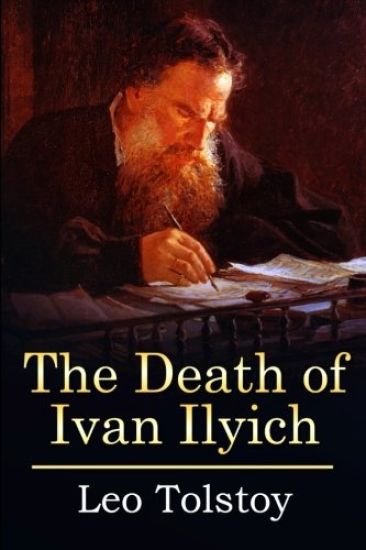
The Death of Ivan Ilyich: (Mockingbird Classics Deluxe Edition)
Leo Tolstoy
Createspace Independent Publishing Platform
2016
nidottu
The Death of Ivan Ilyich Leo Tolstoy (1828 - 1910) The Death of Ivan Ilyich, first published in 1886, is a novella by Leo Tolstoy, one of the masterpieces of his late fiction, written shortly after his religious conversion of the late 1870s. The novella tells the story of the death of a high-court judge in 19th-century Russia. Interpretation In his article of 1997, psychologist Mark Freeman writes: Tolstoy's book is about many things: the tyranny of bourgeois niceties, the terrible weak spots of the human heart, the primacy and elision of death. But more than anything, I would offer, it is about the consequences of living without meaning, that is, without a true and abiding connection to one's life ... Indeed, the mundane portrayal of Ivan's life coupled with the dramatization of his long and grueling battle with death seems to directly reflect Tolstoy's theories about moral living, which he largely derived during his sabbatical from personal and professional duties in 1877. In his lectures on Russian literature, Russian-born novelist and critic Vladimir Nabokov argues that, for Tolstoy, a sinful life (such as Ivan's) is moral death. Therefore death, the return of the soul to God, is, for Tolstoy, moral life. To quote Nabokov: "The Tolstoyan formula is: Ivan lived a bad life and since the bad life is nothing but the death of the soul, then Ivan lived a living death; and since beyond death is God's living light, then Ivan died into a new life - Life with a capital L." The Death of Ivan Ilyich, therefore, is more than a story about death. Death permeates the narrative in a realistic and absorbing fashion but, interestingly enough, the actual physicality of death is only passively mentioned in the early chapters during Ivan's wake. Instead, the story leads the reader through a pensive, metaphysical exploration of the reason for death and what it means to truly live. Tolstoy was a man who struggled greatly with self-doubt and spiritual reflection, especially as he grew close to his own death in 1910. In his book, A Confession, Tolstoy writes: No matter how often I may be told, "You cannot understand the meaning of life so do not think about it, but live," I can no longer do it: I have already done it too long. I cannot now help seeing day and night going round and bringing me to death. That is all I see, for that alone is true. All else is false. This personal epiphany caused significant spiritual upheaval in Tolstoy's life, prompting him to question the Russian Orthodox Church, sexuality, education, serfdom, etc. The literature Tolstoy composed during this period can be considered some of his most controversial and philosophical, among which falls The Death of Ivan Ilyich and other famous short stories such as The Kreutzer Sonata and The Devil. From a biographical standpoint, therefore, it is possible to interpret The Death of Ivan Ilyich as a manifestation of Tolstoy's embroilment with death and the meaning of his own life during his final years. In other words, by dramatizing a particular sort of lifestyle and its unbearable decline, Tolstoy is able to impart his philosophy that success, such as Ivan Ilyich's, comes at a great moral cost and if one decides to pay this cost, life will become hollow and insincere and therefore worse than death. German philosopher Martin Heidegger refers to the novella in his book Being and Time (1927) as an illustration of Being towards death.

The complete Russian text of The Kingdom of God is Within You, or, Christianity not as a Mystical Religion, but as a New Ideology of Life, by Leo Tolstoy.
The Forged Coupon and Other Stories
Leo Tolstoy
Createspace Independent Publishing Platform
2016
nidottu
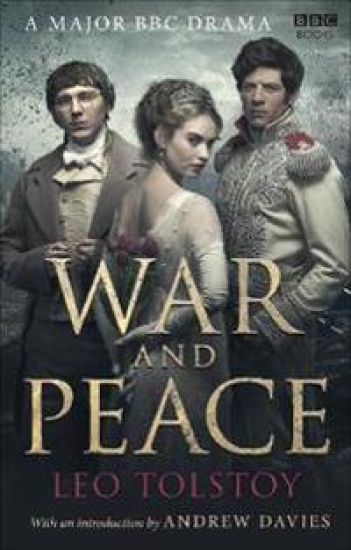
This is the official tie-in edition to the BBC adaptation of War and Peace with an exclusive introduction written by Andrew Davies. Tolstoy’s beguiling masterpiece entwines love, death and determinism with Russia’s war with Napoleon and its effects on those swept up by the terror it brings. The lives of Pierre, Prince Andrei and Natasha are changed forever as conflict rages throughout the early nineteenth century. Following the rise and fall of some of society’s most influential families, this truthful and poignant epic is as relevant today as ever. This six part adaptation has been written by Bafta-winning author Andrew Davies and will be directed by Tom Harper (Peaky Blinders, The Scouting Book for Boys, Woman in Black: Angel of Death). Accompanied by a stellar cast including Paul Dano (12 Years a Slave, Prisoners, There Will Be Blood) as the idealistic Pierre, James Norton (Happy Valley, Belle, Grantchester) as the ambitious Prince Andrei and Lily James (Cinderella, Downton Abbey) as the impulsive beauty Natasha. It also features the legendary Jim Broadbent (Moulin Rouge, Harry Potter, Longford), Gillian Anderson (The Fall, The X-Files), Greta Scacchi (White Mischief, Presumed Innocent) and many more.
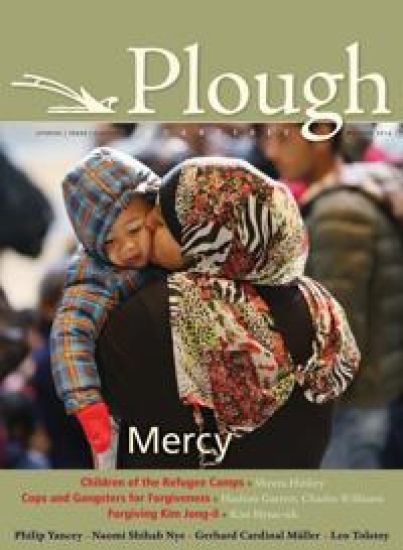
Plough Quarterly No. 7
Philip Yancey; Naomi Shihab Nye; Hanna-Barbara Gerl-Falkovitz; Charles E. Moore; Eva Mozes Kor; Gerhard Mller; Leo Tolstoy; Michael Manning; Kim Hyun-sik
Plough Publishing House
2015
pokkari
In welcoming refugees from Syria, European countries are showing the world what mercy looks like. But mercy, surely, doesn’t stop there. What if the United States followed Germany’s lead and offered mercy to the throngs of Central Americans who seek to cross its southern border? What does mercy look like in relation to the 2.2 million people being held in US prisons and jails? Or the working poor unable to adequately care for their families? Or the millions of children paying the bitter price of the sexual revolution and its erosion of lifelong marriage? The diverse contributors to this issue of Plough Quarterly focus on how people of faith, by extending forgiveness and mercy, are transforming lives – and perhaps even the course of world events. Perspectives from Philip Yancey, Gerhard Müller, Hanna-Barbara Gerl-Falkovitz, Charles E. Moore, Eva Mozes Kor, Leo Tolstoy, Charles Williams, Hashim Garrett, Michael Manning, Kim Hyun-sik, Graham Greene, Julian of Norwich, and Eberhard Arnold are sure to stimulate reflection and discussion. And as always, the magazine is illustrated with world-class art by the likes of Ferdinand Hodler, Camille Pissarro, Rembrandt, Fra Angelico, Henry Ossawa Tanner, Fritz von Uhde, Jon Redmond, Balázs Boda, Allan Rohan Crite, and Jason Landsel. Plough Quarterly features stories, ideas, and culture for people eager to put their faith into action. Each issue brings you in-depth articles, interviews, poetry, book reviews, and art to help you put Jesus’ message into practice and find common cause with others.
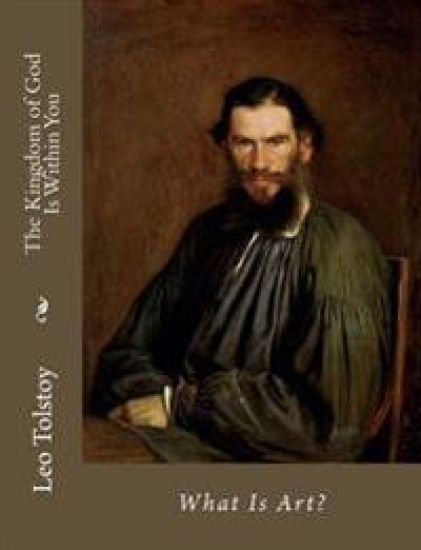
The Kingdom of God Is Within You: What Is Art?
Leo Tolstoy
Createspace Independent Publishing Platform
2015
nidottu
Halvin toimitettuna 22,30 €