Kirjailija
Leo Tolstoy
Kirjat ja teokset yhdessä paikassa: 1 277 kirjaa, julkaisuja vuosilta 1859–2026, suosituimpiin kuuluu Classic Short Story Collection: Charles Dickens, Leo Tolstoy, Fyodor Dostoyevsky, Franz Kafka, Jack London, and Oscar Wilde. Vertaile teosten hintoja ja tarkista saatavuus suomalaisista kirjakaupoista.
1 277 kirjaa
Kirjojen julkaisuvuodet: 1859–2026.
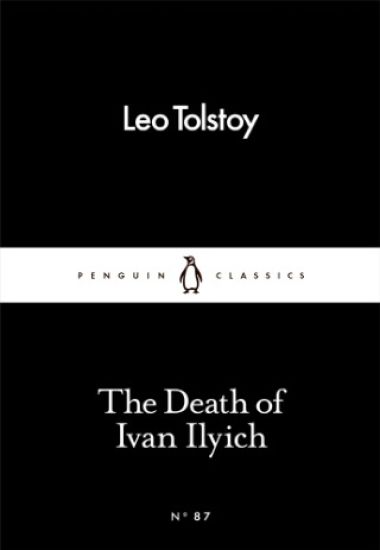
'It is only a bruise'A carefree Russian official has what seems to be a trivial accident... One of 46 new books in the bestselling Little Black Classics series, to celebrate the first ever Penguin Classic in 1946. Each book gives readers a taste of the Classics' huge range and diversity, with works from around the world and across the centuries - including fables, decadence, heartbreak, tall tales, satire, ghosts, battles and elephants.
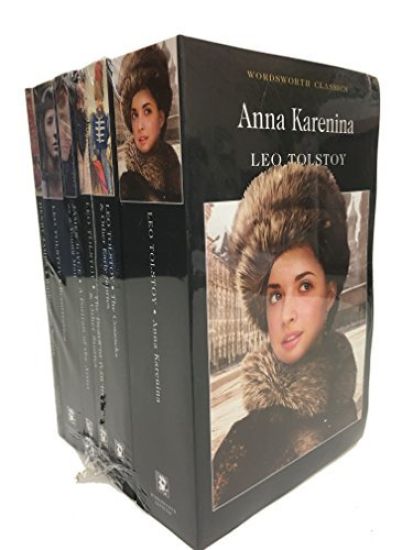
Wordsworth Classics' new 'Best of' series enables you to buy a collection of the key works of the finest authors at an unbeatable price. Jules Verne was a French author best known for his adventure novels which have had a great impact on the wider genre of science fiction. Interestingly, Verne is the second most-translated author in the world since 1979; his best known novels are: Journey to the Centre of the Earth; Twenty Thousand Leagues Under the Sea; The Mysterious Island and Around the World in Eighty Days. This collection contains: - Anna Karenina; Cossacks and Other Stories; Death of Ivan Ilyach & Other Stories; Resurrection; War & Peace
Historical Aspects of Vegetarianism
Lafayette B. Mendel; Walburga Paget; Leo Tolstoy
Createspace Independent Publishing Platform
2016
nidottu
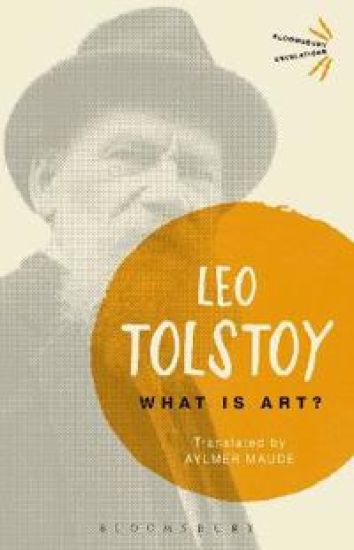
Leo Tolstoy is one of the most celebrated novelists of all time. As well as writing literary classics such as Anna Karenina and War and Peace he was also the author of some hugely influential critical and philosophical works. First published in 1898 his book length essay What is Art? has lost none of its power to challenge our perception of art and its function in society today. In this provocative work Tolstoy famously dismisses works by Shakespeare, Dante, Wagner and even many of his own works as 'bad art' based on various criteria including sincerity, ethics, morality and accessibility. Tolstoy took art seriously at a time when western civilization toyed with it as a mere pastime during the height of the Aestheticism movement. For him, art was natural and necessary to the advancement of humankind. In his introduction to this translation, W. Gareth Jones shows how vitally Tolstoy's personality and experiences in life were engaged in creating What is Art?. Jones shows how integral the essay was to his art and teaching, and why it continues to demand a response from us.

War and Peace: Vol. 1 {Books 1-8)
Leo Tolstoy
Createspace Independent Publishing Platform
2016
nidottu
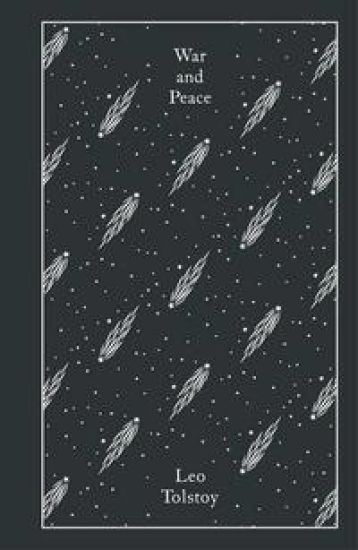
A beautiful Penguin Classics clothbound edition of Tolstoy's magnificent epic novel of love, conflict, fate and human life in all its imperfection and grandeur At a glittering society party in St Petersburg in 1805, conversations are dominated by the prospect of war. Terror swiftly engulfs the country as Napoleon's army marches on Russia, and the lives of three young people are changed forever. The stories of quixotic Pierre, cynical Andrey and impetuous Natasha interweave with a huge cast, from aristocrats and peasants to soldiers and Napoleon himself. In War and Peace, Tolstoy entwines grand themes - conflict and love, birth and death, free will and faith - with unforgettable scenes of nineteenth-century Russia, to create a magnificent epic of human life in all its imperfection and grandeur. Translated with an introduction and notes by Anthony Briggs, and with an afterword by Orlando Figes Anthony Briggs's superb translation combines stirring, accessible prose with fidelity to Tolstoy's original, while Orlando Figes's afterword discusses the novel's vast scope and depiction of Russian identity. This edition also contains appendices, notes, a list of prominent characters and maps.'A masterpiece ... This new translation is excellent' - Anthony Beevor

The Falsified Coupon: The Forged Coupon
Kentauron Publisher; Leo Tolstoy
Createspace Independent Publishing Platform
2016
nidottu
"Since you judge, it means obviously that you don't know" The Falsified Coupon is a novella in two parts by Leo Tolstoy. Though he first conceived of the story in the late 1890s, he did not begin writing it until 1902. After struggling for several years, he finally completed the story in 1904; however, it was not published until some of Tolstoy's shorter works were collected and anthologized after his death in 1910. The story is divided into two parts. In Part I, schoolboy Mitya is in desperate need of money to repay a debt, but his father angrily denies him assistance. Dejected, under the instigation of a friend Makhin, Mitya simply changes a 2.50 rouble bond coupon to read 12.50 roubles, but this one evil deed sets off a chain of events that affects the lives of dozens of others, when his one falsehood indirectly causes a man to murder a woman at the end of Part I, and then seek redemption through religion in Part II. Having written the novella in his dying years, after his excommunication, Tolstoy relishes the chance to unveil the "pseudo-piety and hypocrisy of organized religion." Yet, he maintains an unwavering belief in man's capacity to find truth, so the story remains hopeful, especially in Part II, which shows that good works can affect another as in a domino effect, just as evil does in Part I. The novella has also been translated with the title "The Forged Coupon", "The Counterfeit Note" and "The Forged Banknote".
"My Confession" is a book by Leo Tolstoy. It belongs to his works dedicated to the subject of religion. This book includes original illustrations of the story. Here are some passages from this book: "And I ceased to doubt, and became fully convinced that not all was true in the religion I had joined. Formerly I should have said that it was all false, but I could not say so now. The whole of the people possessed a knowledge of the truth, for otherwise they could not have lived. Moreover, that knowledge was accessible to me, for I had felt it and had lived by it. But I no longer doubted that there was also falsehood in it. And all that had previously repelled me now presented itself vividly before me. And though I saw that among the peasants there was a smaller admixture of the lies that repelled me than among the representatives of the Church, I still saw that in the people's belief also falsehood was mingled with the truth. But where did the truth and where did the falsehood come from? Both the falsehood and the truth were contained in the so-called holy tradition and in the Scriptures. Both the falsehood and the truth had been handed down by what is called the Church. And whether I liked or not, I was brought to the study and investigation of these writings and traditions - which till now I had been so afraid to investigate. And I turned to the examination of that same theology which I had once rejected with such contempt as unnecessary. Formerly it seemed to me a series of unnecessary absurdities, when on all sides I was surrounded by manifestations of life which seemed to me clear and full of sense; now I should have been glad to throw away what would not enter a health head, but I had nowhere to turn to. On this teaching religious doctrine rests, or at least with it the only knowledge of the meaning of life that I have found is inseparably connected. However wild it may seem too my firm old mind, it was the only hope of salvation. It had to be carefully, attentively examined in order to understand it, and not even to understand it as I understand the propositions of science: I do not seek that, nor can I seek it, knowing the special character of religious knowledge. I shall not seek the explanation of everything. I know that the explanation of everything, like the commencement of everything, must be concealed in infinity. But I wish to understand in a way which will bring me to what is inevitably inexplicable. I wish to recognize anything that is inexplicable as being so not because the demands of my reason are wrong (they are right, and apart from them I can understand nothing), but because I recognize the limits of my intellect. I wish to understand in such a way that everything that is inexplicable shall present itself to me as being necessarily inexplicable, and not as being something I am under an arbitrary obligation to believe. That there is truth in the teaching is to me indubitable, but it is also certain that there is falsehood in it, and I must find what is true and what is false, and must disentangle the one from the other. I am setting to work upon this task. What of falsehood I have found in the teaching and what I have found of truth, and to what conclusions I came, will form the following parts of this work, which if it be worth it and if anyone wants it, will probably some day be printed somewhere".

"Family Happiness" from Leo Tolstoy. Leo Tolstoy is widely recognized as one of the greatest of all novelists, particularly noted for his masterpieces War and Peace and Anna Karenina (1828-1910).