Kirjojen hintavertailu – 12 859 818 kirjaa ja 27 kauppaa

Kirjailija

Leo Tolstoy

Kirjat ja teokset yhdessä paikassa: 1 277 kirjaa, julkaisuja vuosilta 1859–2026, suosituimpiin kuuluu Classic Short Story Collection: Charles Dickens, Leo Tolstoy, Fyodor Dostoyevsky, Franz Kafka, Jack London, and Oscar Wilde. Vertaile teosten hintoja ja tarkista saatavuus suomalaisista kirjakaupoista.

1 277 kirjaa

Kirjojen julkaisuvuodet: 1859–2026.

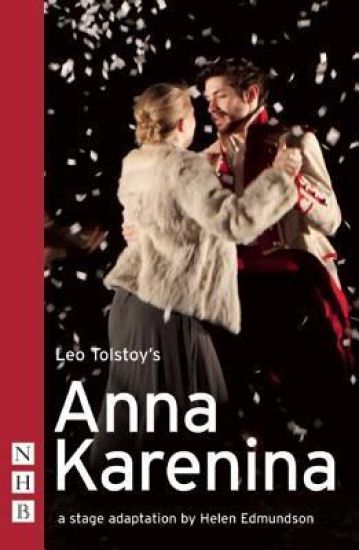
Anna Karenina

Anna Karenina

Leo Tolstoy

Nick Hern Books
2011
nidottu
Helen Edmundson's celebrated and 'exemplary' (The Times) adaptation of Leo Tolstoy's enduring classic is a vibrant and deeply moving meditation on the nature of love. Anna is beautiful and admired but empty – until a chance meeting throws her into emotional turmoil and a scandalous affair. Contrasting with this tale of destructive love is the story of Levin, an idealistic man striving to find meaning in life – and a self-portrait of Tolstoy himself. Helen Edmundson's stage adaptation of Anna Karenina was first performed by Shared Experience at the Theatre Royal, Winchester, in January 1992 at the start of a nationwide tour. The production went on to win the Time Out Award for Outstanding Theatrical Event of 1992. This edition of the play was published alongside a revival at the Arcola Theatre, London, in 2011.
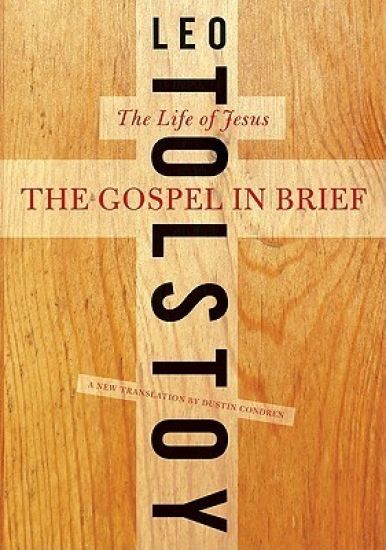
The Gospel in Brief

The Gospel in Brief

Leo Tolstoy; Dustin Condren

HarperPerennial
2011
nidottu

Halvin toimitettuna 21,90 €

The four Gospels that begin the Bible's New Testament tell the life of Jesus. But each Gospel relates a slightly different version of events. Some stories appear only in one Gospel, while certain other stories are different in each. What Leo Tolstoy sought to do in "The Gospel In Brief" was to apply his tremendous skills as a writer to tell the life of Jesus in one seamless narrative, thus integrating the four Gospels. The result is a work that reads like a novel, complete with twelve chapters. The project was very important to Tolstoy. With "The Gospel In Brief", he sought to democratize access to the Gospel, making the life of Jesus accessible to everyone. (He particularly had in mind the Russian peasantry.) Tolstoy based his translation on his study of the original Greek versions of the Bible. Unfortunately the Russian Orthodox Church viewed the book as sacrilegious. How dare he re-write the sacred texts? The Church worked to suppress "The Gospel In Brief", and in 1901, it permanently excommunicated Tolstoy, Russia's greatest novelist.
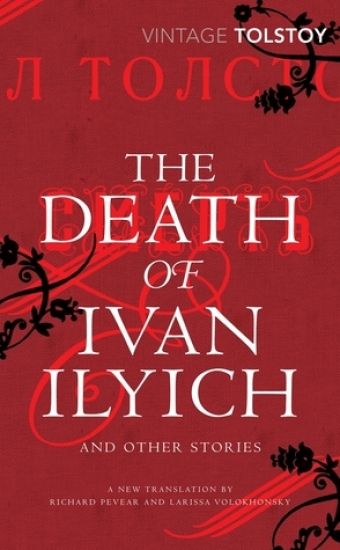
Death of Ivan Ilyich and Other Stories

Death of Ivan Ilyich and Other Stories

Leo Tolstoy

Ccv
2010
pokkari

Halvin toimitettuna 23,90 €

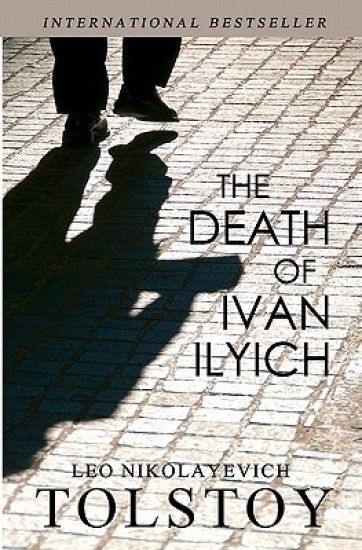
This intensely moving story of Ivan Ilyich's lonely end is one of the masterpieces of Tolstoy's late fiction. The ten other stories in this collection include 'The Kreutzer Sonata', 'The Devil', and 'Hadji Murat' which has been described by Harold Bloom as 'the best story in the world'.
Resurrection

Resurrection

Leo Tolstoy

White Crow Books Ltd
2010
sidottu
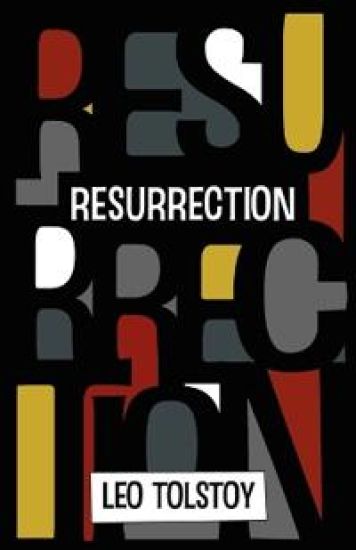
Published in 1900, 'Resurrection' is Tolstoy's final large-scale novel. It's a morally-driven tale of personal redemption, featuring fewer characters than either War and Peace or Anna Karenina. Here we focus on one man and a single story line that spirals around a long-forgotten incident in his youth, which turns out to have had tragic consequences for another. The hero is the young St Petersburg aristocrat, Prince Dmitri. Having seduced a woman - Katyusha - and made her pregnant, he'd left her on her on her own and had thought no more about her until ten years later, he finds himself on a jury trying her for murder. It becomes apparent that her life fell apart after their brief liaison; the baby died, and she drifted into alcoholism and prostitution. As he hears the story, Dmitri feels personally responsible for all that has happened, and after Katyusha is unjustly sent to Siberia, he begins a spiritual journey to save both her and himself. Can he ever make up for what he did to her all those years ago? It's a quest which takes him to the highest offices in the land and to the bleakest prisons, as the absurdities and inequalities of pre-revolution Russia are savagely exposed. Dmitri uncovers a moral wasteland of vested interest and uncaring attitudes, with Tolstoy particularly hostile towards the Orthodox Church, which excommunicated him a year later, and the Russian penal system. Just as Dickens did in England, Tolstoy exposes the misery of the Russian under-class, but he's less sentimental than Dickens and angrier. And there are echoes here of another voice as well. As Boyd Tonkin said, 'Nowhere does Tolstoy sound closer in spirit to his old foe, Dostoyevsky.' There is an interesting back-story to the book itself. Though finished in 1899 and published in 1900, it was started ten years previously in 1889, and might never have been completed but for Tolstoy's desire to help raise funds for the persecuted Doukhobor sect. The royalties from the book were given to the Doukhabors to fund their emigration to Canada. In the Doukhabors, (which literally means, 'spiritual wrestlers') Tolstoy found an antidote to the religion and society he denounces in 'Resurrection'; and a living embodiment of his own religious and social ideas. Here were a people committed to honest toil, living off the land, communal sharing, pacifist principles and the teachings of Christ in deed. As Tolstoy wrote in one of his many letters to them, 'You are taking the lead and many are grateful to you for that. There is so much I'd like to tell you, and so much to learn from you.' The book continues to divide literary opinion. As a conduit for both beautiful writing and naked sermonising, 'Resurrection' is not a novel that invites the reader to make up their own mind. Instead, here is the raw energy of rage which finally erupted in the volcano that was the Russian Revolution of 1917.

Resurrection

Resurrection

Leo Tolstoy

White Crow Books Ltd
2010
pokkari
Published in 1900, 'Resurrection' is Tolstoy's final large-scale novel. It's a morally-driven tale of personal redemption, featuring fewer characters than either War and Peace or Anna Karenina. Here we focus on one man and a single story line that spirals around a long-forgotten incident in his youth, which turns out to have had tragic consequences for another. The hero is the young St Petersburg aristocrat, Prince Dmitri. Having seduced a woman - Katyusha - and made her pregnant, he'd left her on her on her own and had thought no more about her until ten years later, he finds himself on a jury trying her for murder. It becomes apparent that her life fell apart after their brief liaison; the baby died, and she drifted into alcoholism and prostitution. As he hears the story, Dmitri feels personally responsible for all that has happened, and after Katyusha is unjustly sent to Siberia, he begins a spiritual journey to save both her and himself. Can he ever make up for what he did to her all those years ago? It's a quest which takes him to the highest offices in the land and to the bleakest prisons, as the absurdities and inequalities of pre-revolution Russia are savagely exposed. Dmitri uncovers a moral wasteland of vested interest and uncaring attitudes, with Tolstoy particularly hostile towards the Orthodox Church, which excommunicated him a year later, and the Russian penal system. Just as Dickens did in England, Tolstoy exposes the misery of the Russian under-class, but he's less sentimental than Dickens and angrier. And there are echoes here of another voice as well. As Boyd Tonkin said, 'Nowhere does Tolstoy sound closer in spirit to his old foe, Dostoyevsky.' There is an interesting back-story to the book itself. Though finished in 1899 and published in 1900, it was started ten years previously in 1889, and might never have been completed but for Tolstoy's desire to help raise funds for the persecuted Doukhobor sect. The royalties from the book were given to the Doukhabors to fund their emigration to Canada. In the Doukhabors, (which literally means, 'spiritual wrestlers') Tolstoy found an antidote to the religion and society he denounces in 'Resurrection'; and a living embodiment of his own religious and social ideas. Here were a people committed to honest toil, living off the land, communal sharing, pacifist principles and the teachings of Christ in deed. As Tolstoy wrote in one of his many letters to them, 'You are taking the lead and many are grateful to you for that. There is so much I'd like to tell you, and so much to learn from you.' The book continues to divide literary opinion. As a conduit for both beautiful writing and naked sermonising, 'Resurrection' is not a novel that invites the reader to make up their own mind. Instead, here is the raw energy of rage which finally erupted in the volcano that was the Russian Revolution of 1917.
War and Peace

War and Peace

Leo Tolstoy

Oxford University Press
2010
nidottu

Halvin toimitettuna 21,80 €

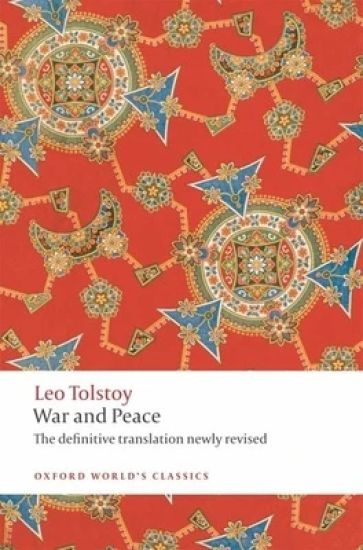
'If life could write, it would write like Tolstoy.' Isaac Babel Tolstoy's epic masterpiece intertwines the lives of private and public individuals during the time of the Napoleonic wars and the French invasion of Russia. The fortunes of the Rostovs and the Bolkonskys, of Pierre, Natasha, and Andrei, are intimately connected with the national history that is played out in parallel with their lives. Balls and soirées alternate with councils of war and the machinations of statesmen and generals, scenes of violent battles with everyday human passions in a work whose extraordinary imaginative power has never been surpassed. The prodigious cast of characters, both great and small, seem to act and move as if connected by threads of destiny as the novel relentlessly questions ideas of free will, fate, and providence. Yet Tolstoy's portrayal of marital relations and scenes of domesticity is as truthful and poignant as the grand themes that underlie them. In this revised and updated version of the definitive and highly acclaimed Maude translation, Tolstoy's genius and the power of his prose are made newly available to the contemporary reader. ABOUT THE SERIES: For over 100 years Oxford World's Classics has made available the widest range of literature from around the globe. Each affordable volume reflects Oxford's commitment to scholarship, providing the most accurate text plus a wealth of other valuable features, including expert introductions by leading authorities, helpful notes to clarify the text, up-to-date bibliographies for further study, and much more.
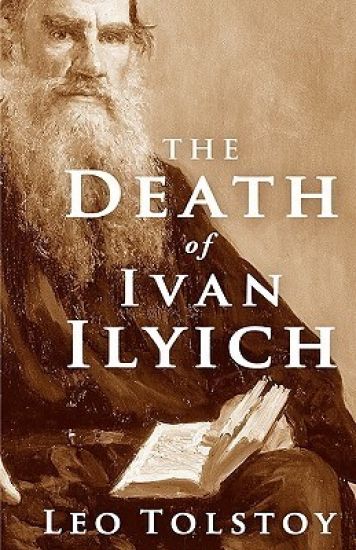
The Death of Ivan Ilyich and Other Stories

The Death of Ivan Ilyich and Other Stories

Leo Tolstoy

Knopf Doubleday Publishing Group
2010
nidottu
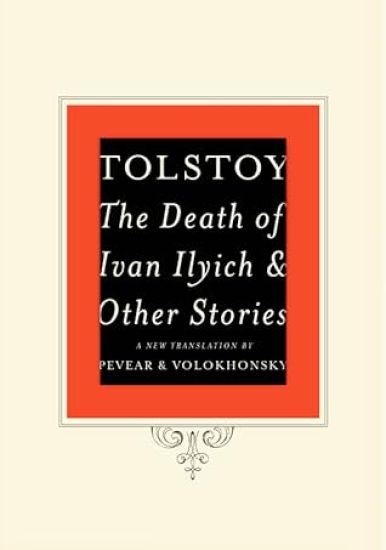
A vibrant translation of Tolstoy's most important short fiction by the award-winning translators of War and Peace. Here are eleven masterful stories from the mature author, some autobiographical, others moral parables, and all told with the evocative power that was Tolstoy's alone. They include "The Prisoner of the Caucasus," inspired by Tolstoy's own experiences as a soldier in the Chechen War, "Hadji Murat," the novella Harold Bloom called "the best story in the world," "The Devil," a fascinating tale of sexual obsession, and the celebrated "The Death of Ivan Ilyich," an intense and moving examination of death and the possibilities of redemption. Pevear and Volokhonsky's translation captures the richness, immediacy, and multiplicity of Tolstoy's language, and reveals the author as a passionate moral guide, an unflinching seeker of truth, and ultimately, a creator of enduring and universal art.