Kirjailija
Leo Tolstoy
Kirjat ja teokset yhdessä paikassa: 1 277 kirjaa, julkaisuja vuosilta 1859–2026, suosituimpiin kuuluu Classic Short Story Collection: Charles Dickens, Leo Tolstoy, Fyodor Dostoyevsky, Franz Kafka, Jack London, and Oscar Wilde. Vertaile teosten hintoja ja tarkista saatavuus suomalaisista kirjakaupoista.
1 277 kirjaa
Kirjojen julkaisuvuodet: 1859–2026.
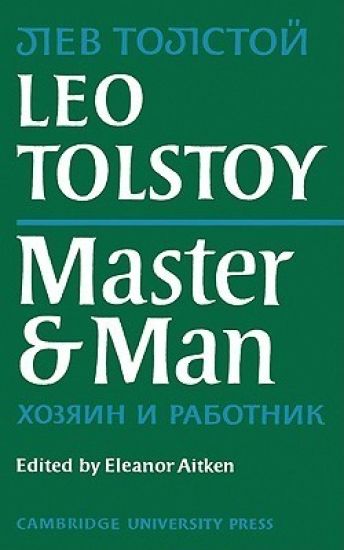
Tolstoy (1828–1910) wrote Master and Man in 1894, from an idea which originated two years earlier while he was organising food centres in the famine-stricken areas of central Russia. The story is of two individuals caught in a snowstorm. By showing how they react when faced with danger and lonely death, Tolstoy expressed implicitly what he felt to be essential to man for his understanding of the meaning of life and his acceptance of death. Mrs. Aitken has stressed the Russian text first published in 1895. She includes a brief introductory essay on Tolstoy and Master and Man and provides notes on the text and a full vocabulary.
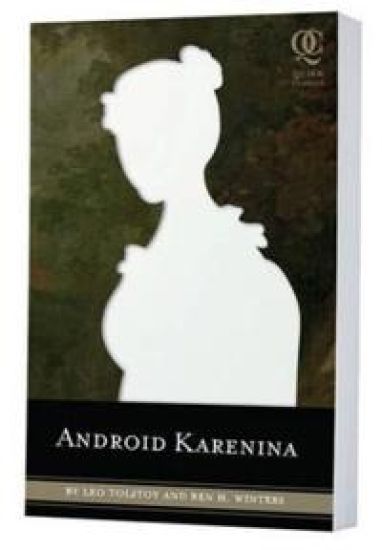
Sense and Sensibility and Sea Monsters coauthor Ben H. Winters is back with an all-new collaborator, legendary Russian novelist Leo Tolstoy, and the result is Android Karenina: an enhanced edition of the classic love story set in a strange new world of robots, cyborgs, and interplanetary travel. As in the original novel, our story follows two relationships: the tragic adulterous romance of Anna Karenina and Count Alexei Vronsky, and the much more hopeful marriage of Konstantin Levin and Kitty Shcherbatskaya. These four, yearning for true love, live in a steampunk-inspired 19th century of mechanical butlers, extraterrestrial-worshiping cults, and airborne debutante balls. Their passions alone would be enough to consume them—but when a secret cabal of radical scientific revolutionaries launches an attack on Russian high society’s high-tech lifestyle, our heroes must fight back with all their courage, all their gadgets, and all the power of a sleek new cyborg model like nothing the world has ever seen. Filled with the same blend of romance, drama, and fantasy that made the first two Quirk Classics New York Times best sellers, Android Karenina brings this celebrated series into the exciting world of science fiction. LEO TOLSTOY wrote two of the greatest novels in world literature: War and Peace and Anna Karenina. BEN H. WINTERS is coauthor of the New York Times Best Seller Sense and Sensibility and Sea Monsters, which was hailed by The Onion A. V. Club as a “sheer delight” and by Library Journal as “strangely entertaining, like a Weird Al version of an opera aria.” Mr. Winters lives in Brooklyn. The Critics Love Ben H. Winters’s Sense and Sensibility and Sea Monsters! “The effect is strangely entertaining, like a Weird Al version of an opera aria, and Eugene Smith’s amusing illustrations add an extra touch of bizarre hilarity.”—Library Journal “Quirk commissioned Ben H. Winters to punch up Jane Austen’s Sense and Sensibility with man-eating beasts from the briny deep. And once again, to the consternation of purists everywhere, the result is sheer delight.”—The Onion A. V. Club “It’s a monsterpiece.”—Real Simple “While preserving the clever dialogue and nuanced love story that drive Sense and Sensibility, Winters skillfully overlays the horror elements, producing another bizarre hybrid that will appeal to the same cult Austen audience as Zombies.”—Booklist
The Kingdom of God is Within You
Leo Tolstoy
Createspace Independent Publishing Platform
2010
nidottu
Cited by Mahatma Gandhi as one of the most important influences in his life, Tolstoy's magnum opus The Kingdom of God... is a culmination of his thirty years of Christian thinking and reflection. He challenges the modernization of the church and lays the groundwork for a new organization of society based on a literal interpretation of Christianity. Readers are reminded of the messages of Jesus Christ to "turn the other cheek" and to take the path of nonresistance when confronted by threats or violence. A landmark book for Christianity.
The story begins when at the age of 50, Tolstoy is in crisis. Having found no peace in art, science or philosophy, he is attacked by the black dog of despair, and considers suicide. His past life is reappraised and found wanting; as slowly light dawns within. 'As gradually, imperceptibly as life had decayed in me, until I reached the impossibility of living, so gradually I felt the glow and strength of life return to me - I returned to a belief in God.' Here is a quest for meaning at the close of the 19th century - a time of social, scientific and intellectual turbulence, in which old forms were under threat. Tolstoy looks around at both old and new alike, and like the author of Ecclesiastes, discovers that 'All is vanity'. His spiritual discoveries first take him into the arms of the Orthodox Church; and then force his angry departure from it. 'My Religion' carries on from where 'A Confession' left off. Describing himself as a former nihilist, Tolstoy develops his attack on the church he has left. He accuses them of hiding the true meaning of Jesus, which is to be found in the Sermon on the Mount; and most clearly, in the call not to resist evil. For Tolstoy, it is this command which has been most damaged by ecclesiastical interpretation. 'Not everyone,' he writes, 'is able to understand the mysteries of dogmatics, homilectics, liturgics, hermeneutics, apologetics; but everyone is able and ought to understand what Christ said to the millions of simple and ignorant people who have lived and are living today.' Here is Tolstoy's religion; and non-violence is at its heart.
'On Life' was published by the Fee Age Press in England; a publishing house set up to side-step the censorship of Tolstoy in Russia, and to give him an international voice. So what is life? 'Life is the sum of functions which resist death,' says the scientist. But is it more than that, asks Tolstoy in 'On Life' - a philosophical and religious search for an understanding of life beyond scientific formulae. For Tolstoy, the basic contradiction for humanity is this: people aim solely for their own well being, but discover along the way that their own well being depends also on the well being of others. A further discovery by such people is that decay, old age and death attend their every step. Such basic human truths are the context for Tolstoy's search for happiness, in which Buddhist, Jewish, Stoic and Christian views are considered, as well as those of science. Tolstoy believes that fear of death is merely the consciousness of the unsolved contradiction of life; a sign of a carnal or animal mentality, which mistakenly takes part of life to be the whole. Tolstoy believes that individual well-being must be renounced and replaced by our 'reasonable consciousness', which points the way to true happiness, and brings human re-birth.
In his book, 'Twenty Three tales,' we see Tolstoy's love of the short story, whether for children or adults; and witness the secret of simplicity and transparency of style, so evident in the great Russian writers. The children's stories remind us of Tolstoy's life-long passion for the schooling and education of peasant children. Of the adult stories, some draw on traditional Russian folk tales, breathe the air old peasant wisdom, and take us deep into the land of snow, bears, heartache and vodka. Other stories reflect Tolstoy's political and moral concerns, such as war, alcohol and greed. 'The artist of the future,' wrote Tolstoy, 'will understand that to compose a fairy tale; a little song which will touch; a lullaby or a riddle which will entertain; a jest which will amuse or draw a sketch such as will delight dozens of generations or millions of children and adults, is incomparably more important and more fruitful than to compose a novel, or a symphony, or paint a picture of the kind which diverts some members of the wealthy classes for a short time and is then for ever forgotten. The region of this art of the simplest feelings accessible to all is enormous, and it is as yet almost untouched.'
Written in 1883, 'The Gospel in brief' is Tolstoy's harmonization of the four Christian gospels into one. So now we have Matthew, Mark, Luke, John - and Tolstoy. It is, he says, 'an examination of Christian teaching not according to the church's interpretations, but solely according to what has come down to us of Christ's teaching, as ascribed to him in the gospels.' That which Tolstoy retains from the originals, and that which he leaves out, tells us much about what he regards as essential Christianity. So here we find Tolstoy not concerned with events, but with the teaching; for it is the teaching that gives meaning to life. In his version, there is no place for the famous birth story; the healing miracles or Christ's resurrection. In Tolstoy's view, these were put there to persuade people of Christ's divinity, and are therefore superfluous. We should not be focusing on Christ the Son of God, but on Christ the teacher; and to this end, Tolstoy always refers to Jesus' disciples as 'pupils'. He also never misses a chance to place the Orthodox Church firmly with Christ's opponents. He calls the Scribes 'Orthodox professors' and refers to the teachers of the law, simply as 'Orthodox.' We also find expressed clearly here the 5 commands that Tolstoy regarded as the essence of the gospel: 1 Do not be angry, but live at peace with all men. 2 Do not indulge yourself in sexual gratification. 3 Do not promise anything on oath to anyone. 4 Do not resist evil, do not judge and do not go to law. 5 Make no distinction of nationality, but love foreigners as your own people. Will the church like this version? Tolstoy doubts it, and expects a response: 'If they will not disavow their lies, only one thing remains for them: to persecute me - for which I, completing what I have written, prepare myself with joy and with fear of my own weakness.' But Tolstoy was both too aristocratic and too famous to be seriously harmed.
Published in 1884, 'The kingdom of God is within you' is perhaps Tolstoy's most significant work of non-fiction. Due to the Russian censors, it was first published in Germany, but its dominant idea of non-violence echoed across the international stage throughout the 20th century. In essence, the book is a defence by Tolstoy of the position on non-violence he adopted in 'My Religion'; and therefore also an assault on the Orthodox Church. 'Nowhere,' says Tolstoy, 'is there evidence that God or Christ founded anything like what churchmen understand by the Church.' And in what it now proclaimed, Tolstoy believed the church was wasting its time: 'The activity of the church consists in forcing, by every means in its power, upon millions Russian people, those antiquated, time-worn beliefs which have lost all significance.' Freshly informed by Quaker ideals of non-violence; and full of both story telling and rhetoric, here is Tolstoy calling for a change in consciousness in society. He does not accept that 'this social order, with its pauperism, famines, prisons, gallows, armies and wars, is necessary to society.' That which is, is not that which must be. Rooted in the Sermon on the Mount, Tolstoy's Christianity is not primarily concerned with worship or salvation, but with a new way of behaving in society - behaviour informed by the pointlessness and sin of violence. Tolstoy tellingly reflects on the army at work - whether in internal repression or in national wars - and asks: 'How can you kill people when it is written in God's commandment 'Thou shall not murder?' Gandhi was 'overwhelmed' by the book, said 'it left an abiding impression', and in time, a correspondence started between the two men. The book convinced Gandhi that Hinduism and Christianity were one and the same at their core, and informed his passive resistance first in South Africa and then India; and later, of course, that of Martin Luther King in the USA.

'The greatest love story I've ever read' Andrew Davies Anna Karenina is a novel of unparalleled richness and complexity, set against the backdrop of Russian high society. Tolstoy charts the course of the doomed love affair between Anna, a beautiful married woman, and Count Vronsky, a wealthy army officer who pursues Anna after becoming infatuated with her at a ball. Although she initially resists his charms Anna eventually succumbs, falling passionately in love and setting in motion a chain of events that lead to her downfall. In this extraordinary novel Tolstoy seamlessly weaves together the lives of dozens of characters, while evoking a love so strong that those who experience it are prepared to die for it.