Kirjailija
Leo Tolstoy
Kirjat ja teokset yhdessä paikassa: 1 277 kirjaa, julkaisuja vuosilta 1859–2026, suosituimpiin kuuluu Classic Short Story Collection: Charles Dickens, Leo Tolstoy, Fyodor Dostoyevsky, Franz Kafka, Jack London, and Oscar Wilde. Vertaile teosten hintoja ja tarkista saatavuus suomalaisista kirjakaupoista.
1 277 kirjaa
Kirjojen julkaisuvuodet: 1859–2026.
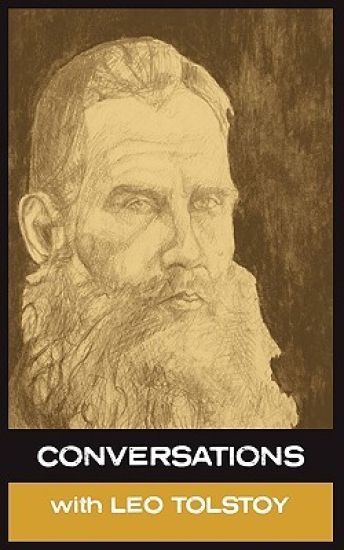
When most think of Tolstoy, they think of the great author. 'War and Peace' and 'Anna Karenina' brought him worldwide fame, and a good deal of money. Had he done nothing else in life, these two novels would have ensured him status and respect. Few others had written both a national epic and a great love story; and some might have been content with that. For his last thirty years, however, Tolstoy walked a different track. After his spiritual crisis, when he was 50, he exchanged his author's clothes for those of a prophet - a prophet who was to have a great influence on Gandhi amongst others. Through his prolific writing, he now became the scourge of the rich, the Church and the Government. Neither did he miss an opportunity to denounce both science and art. Darwin? Dostoyevsky? Shakespeare? No one was to be left standing. In 'Conversations with Leo Tolstoy', Simon Parke grants us the honour of sitting with the great man, towards the end of his life; and gives us the chance to chat with him. The conversation is imagined, but not Tolstoy's answers. This is Tolstoy is his own words, drawn from his extensive books, essays and letters; and the military, vegetarianism, marriage, non-violence, death, God and sex are all on the agenda. 'I want people to come away feeling they know Tolstoy,' says Simon Parke, who was keen to use only Tolstoy's authentic words. 'They will be become aware of his opinions certainly, for he was forthright in those. He had an opinion on everything! But I hope also that people leave with a sense of the man beneath the opinions. I don't always agree with him; but it is hard not to admire him. He was far from perfect, but as he says: just because he walks the road like a drunk, doesn't mean it's the wrong road.'
In his book, 'Twenty Three tales,' we see Tolstoy's love of the short story, whether for children or adults; and witness the secret of simplicity and transparency of style, so evident in the great Russian writers. The children's stories remind us of Tolstoy's life-long passion for the schooling and education of peasant children. Of the adult stories, some draw on traditional Russian folk tales, breathe the air old peasant wisdom, and take us deep into the land of snow, bears, heartache and vodka. Other stories reflect Tolstoy's political and moral concerns, such as war, alcohol and greed. 'The artist of the future,' wrote Tolstoy, 'will understand that to compose a fairy tale; a little song which will touch; a lullaby or a riddle which will entertain; a jest which will amuse or draw a sketch such as will delight dozens of generations or millions of children and adults, is incomparably more important and more fruitful than to compose a novel, or a symphony, or paint a picture of the kind which diverts some members of the wealthy classes for a short time and is then for ever forgotten. The region of this art of the simplest feelings accessible to all is enormous, and it is as yet almost untouched.' 'Work while ye have the light,' is Tolstoy in teaching mode. The opening scene is an aristocratic dinner party, at which all the guests declare themselves dissatisfied with their dissolute and useless lives; but find a thousand different reasons why nothing should change. There follows a moral tale, set in the 1st Century AD, when the new Christian sect was just getting noticed by the prevailing Roman Empire. It tells the story of two school friends, Pamphylius and Julius, who take different paths in life; but whose paths keep crossing. Pamphylius joins the Christians, living poor in community, while Julius acquires status and power. Here Tolstoy gives us his picture of authentic Christianity; and gives Julius a choice. Simon Parke, author of The One Minute Mystic
My Religion - What I Believe
Leo Tolstoy
White Crow Books Ltd
2010
pokkari
Halvin toimitettuna 21,70 €
'My Confession' is Tolstoy's chronicle of his journey to faith; his account of how he moved from despair to the possibility of living; from unhappy existence to 'the glow and strength of life'. It describes his spiritual and philosophical struggles up until he leaves the Orthodox Church, convinced that humans discover truth not by faith, but by reason. The story begins when at the age of 50, Tolstoy is in crisis. Having found no peace in art, science or philosophy, he is attacked by the black dog of despair, and considers suicide. His past life is reappraised and found wanting; as slowly light dawns within. 'As gradually, imperceptibly as life had decayed in me, until I reached the impossibility of living, so gradually I felt the glow and strength of life return to me... I returned to a belief in God.' Here is a quest for meaning at the close of the 19th century - a time of social, scientific and intellectual turbulence, in which old forms were under threat. Tolstoy looks around at both old and new alike, and like the author of Ecclesiastes, discovers that 'All is vanity'. His spiritual discoveries first take him into the arms of the Orthodox Church; and then force his angry departure from it. 'My Religion' carries on from where 'My Confession' left off. Describing himself as a former nihilist, Tolstoy develops his attack on the church he has left. He accuses them of hiding the true meaning of Jesus, which is to be found in the Sermon on the Mount; and most clearly, in the call not to resist evil. For Tolstoy, it is this command which has been most damaged by ecclesiastical interpretation. 'Not everyone,' he writes, 'is able to understand the mysteries of dogmatics, homilectics, liturgics, hermeneutics, apologetics; but everyone is able and ought to understand what Christ said to the millions of simple and ignorant people who have lived and are living today.' Here is Tolstoy's religion; and non-violence is at its heart. Simon Parke, author of The Beautiful Life
The Kingdom of God is Within You
Leo Tolstoy
White Crow Books Ltd
2010
pokkari
Halvin toimitettuna 24,40 €
Published in 1884, 'The kingdom of God is within you' is perhaps Tolstoy's most significant work of non-fiction. Due to the Russian censors, it was first published in Germany, but its dominant idea of non-violence echoed across the international stage throughout the 20th century. In essence, the book is a defence by Tolstoy of the position on non-violence he adopted in 'My Religion'; and therefore also an assault on the Orthodox Church. 'Nowhere,' says Tolstoy, 'is there evidence that God or Christ founded anything like what churchmen understand by the Church.' And in what it now proclaimed, Tolstoy believed the church was wasting its time: 'The activity of the church consists in forcing, by every means in its power, upon millions Russian people, those antiquated, time-worn beliefs which have lost all significance.' Freshly informed by Quaker ideals of non-violence; and full of both story telling and rhetoric, here is Tolstoy calling for a change in consciousness in society. He does not accept that 'this social order, with its pauperism, famines, prisons, gallows, armies and wars, is necessary to society.' That which is, is not that which must be. Rooted in the Sermon on the Mount, Tolstoy's Christianity is not primarily concerned with worship or salvation, but with a new way of behaving in society - behaviour informed by the pointlessness and sin of violence. Tolstoy tellingly reflects on the army at work - whether in internal repression or in national wars - and asks: 'How can you kill people when it is written in God's commandment 'Thou shall not murder?' Gandhi was 'overwhelmed' by the book, said 'it left an abiding impression', and in time, a correspondence started between the two men. The book convinced Gandhi that Hinduism and Christianity were one and the same at their core, and informed his passive resistance first in South Africa and then India; and later, of course, that of Martin Luther King in the USA. Simon Parke, author of The One Minute Mystic
'On Life' and 'What is religion?' were published by the Fee Age Press in England; a publishing house set up to side-step the censorship of Tolstoy in Russia, and to give him an international voice. So what is life? 'Life is the sum of functions which resist death,' says the scientist. But is it more than that, asks Tolstoy in 'On Life' - a philosophical and religious search for an understanding of life beyond scientific formulae. For Tolstoy, the basic contradiction for humanity is this: people aim solely for their own well being, but discover along the way that their own well being depends also on the well being of others. A further discovery by such people is that decay, old age and death attend their every step. Such basic human truths are the context for Tolstoy's search for happiness, in which Buddhist, Jewish, Stoic and Christian views are considered, as well as those of science. Tolstoy believes that fear of death is merely the consciousness of the unsolved contradiction of life; a sign of a carnal or animal mentality, which mistakenly takes part of life to be the whole. Tolstoy believes that individual well-being must be renounced and replaced by our 'reasonable consciousness', which points the way to true happiness, and brings human re-birth. 'What is religion?' is a collection of articles and letters written by the mature Tolstoy of 1901 and 1902. Here is a variety of subject matter, including a book review of a German novel; Tolstoy's response to his excommunication by the church; an attack on army recruitment and training and reflections on a recent political assassination. The title piece - 'What is religion?' is the most substantial, in which Tolstoy provides the following definition: 'True religion is the establishment by man of a relation to the infinite life around him; as long as connecting his life with this infinitude and directing his conduct, is also in agreement with his reason and human knowledge.' Simon Parke, author of The One Minute Mystic
Written in 1883, 'The Gospel in brief' is Tolstoy's harmonization of the four Christian gospels into one. So now we have Matthew, Mark, Luke, John - and Tolstoy. It is, he says, 'an examination of Christian teaching not according to the church's interpretations, but solely according to what has come down to us of Christ's teaching, as ascribed to him in the gospels.' That which Tolstoy retains from the originals, and that which he leaves out, tells us much about what he regards as essential Christianity. So here we find Tolstoy not concerned with events, but with the teaching; for it is the teaching that gives meaning to life. In his version, there is no place for the famous birth story; the healing miracles or Christ's resurrection. In Tolstoy's view, these were put there to persuade people of Christ's divinity, and are therefore superfluous. We should not be focusing on Christ the Son of God, but on Christ the teacher; and to this end, Tolstoy always refers to Jesus' disciples as 'pupils'. He also never misses a chance to place the Orthodox Church firmly with Christ's opponents. He calls the Scribes 'Orthodox professors' and refers to the teachers of the law, simply as 'Orthodox.'We also find expressed clearly here the 5 commands that Tolstoy regarded as the essence of the gospel: 1 Do not be angry, but live at peace with all men. 2 Do not indulge yourself in sexual gratification. 3 Do not promise anything on oath to anyone. 4 Do not resist evil, do not judge and do not go to law. 5 Make no distinction of nationality, but love foreigners as your own people. Will the church like this version? Tolstoy doubts it, and expects a response: 'If they will not disavow their lies, only one thing remains for them: to persecute me - for which I, completing what I have written, prepare myself with joy and with fear of my own weakness.' But Tolstoy was both too aristocratic and too famous to be seriously harmed. Simon Parke, author of The One Minute Mystic
Anna Karenina is a novel by the Russian writer Leo Tolstoy, published in serial installments from 1873 to 1877 in the periodical The Russian Messenger. Tolstoy clashed with its editor Mikhail Katkov over issues that arose in the final installment; therefore, the novel's first complete appearance was in book form. Widely regarded as a pinnacle in realist fiction, Tolstoy considered Anna Karenina his first true novel, when he came to consider War and Peace to be more than a novel. The character of Anna was likely inspired, in part, by Maria Hartung, the elder daughter of the Russian poet Alexander Pushkin. Soon after meeting her at dinner, Tolstoy began reading Pushkin's prose and once had a fleeting daydream of "a bare exquisite aristocratic elbow", which proved to be the first intimation of Anna's character.
The End Of The Age, On The Approaching Revolution
Leo Tolstoy
KESSINGER PUBLISHING, LLC
2009
pokkari

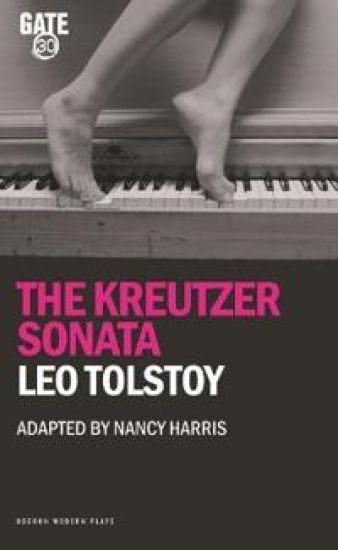
"A man boards a train: the confined space of the carriage triggers potent memories. Soon he is confessing to a terrible crime, one for which he holds Beethoven's Kreutzer Sonata responsible. Written in 1889, Leo Tolstoy's novella became instantly notorious, and was banned in both Russia and America. Tolstoy hoped one day to see it performed to the accompaniment of live music. In this adaptation by Nancy Harris, musicians and actors come together to bring the story to life for the stage."