

Kirjailija
Ludwig Von Mises
Kirjat ja teokset yhdessä paikassa: 64 kirjaa, julkaisuja vuosilta 1956–2025, suosituimpiin kuuluu Liberalism. Vertaile teosten hintoja ja tarkista saatavuus suomalaisista kirjakaupoista.
64 kirjaa
Kirjojen julkaisuvuodet: 1956–2025.

Der historische Rahmen der österreichischen Schule der Nationalökonomie
Ludwig Von Mises
tredition GmbH
2024
sidottu
In dem Werk "Der historische Rahmen der sterreichischen Schule der National konomie" erz hlt Ludwig von Mises ber die Entstehungsgeschichte der sterreichischen Schule unter Carl Menger, Eugen von B hm-Bawerk und Friedrich Wieser als Antagonismus zur deutschen historischen Schule unter Gustav von Schmoller.
Etsitkö jännitystä, uusia näkökulmia tai rentouttavaa lukuelämystä? Tutustu kirjakategorioihimme ja löydä seuraava suosikkikirjasi.

Allm chtiger Staat setzt sich mit dem Missbrauch von staatlicher Macht auseinander. Ludwig von Mises geht in diesem Buch den Quellen des Nationalsozialismus nach. Er liefert eine konomische Erkl rung f r die internationalen Konflikte, die beide Weltkriege ausl sten. Es ist das Buch eines Zeitzeugen. Obwohl Ludwig von Mises das Buch 1944 verfasste, ist die Kernaussage des Buches von unmittelbarer Aktualit t: Staatseingriffe in die Wirtschaft f hren zu Konflikten und Kriegen. Ludwig von Mises zufolge ist die letzte und beste Hoffnung f r den Frieden der Liberalismus - die Philosophie der Freiheit, der freien M rkte, der begrenzten Regierung und der Demokratie.

Allmächtiger Staat: Der Aufstieg des totalen Staates und der totale Krieg
Ludwig Von Mises
tredition GmbH
2022
nidottu
Allm chtiger Staat setzt sich mit dem Missbrauch von staatlicher Macht auseinander. Ludwig von Mises geht in diesem Buch den Quellen des Nationalsozialismus nach. Er liefert eine konomische Erkl rung f r die internationalen Konflikte, die beide Weltkriege ausl sten. Es ist das Buch eines Zeitzeugen. Obwohl Ludwig von Mises das Buch 1944 verfasste, ist die Kernaussage des Buches von unmittelbarer Aktualit t: Staatseingriffe in die Wirtschaft f hren zu Konflikten und Kriegen. Ludwig von Mises zufolge ist die letzte und beste Hoffnung f r den Frieden der Liberalismus - die Philosophie der Freiheit, der freien M rkte, der begrenzten Regierung und der Demokratie.
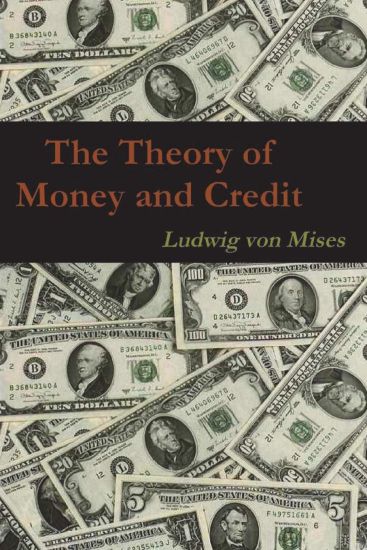
The Theory of Money and Credit
Ludwig Von Mises
Must Have Books
2021
nidottu
Halvin toimitettuna 16,00 €
This must-read classic on currency and credit covers the three areas of key interest -- the nature of money, the value of money, and money and banking. Economist and philosopher Ludwig von Mises presents his "Theory of Money and Credit" by first looking at the nature and value of money, why there is a demand for money, and how it is used as currency. He goes on to explain the purchasing power of money and how it determines economic and monetary policy, often in a way that results in financial melt-downs. Never in modern history has there been a greater need for this book and others like it. All of its ideas and principles are coming true right before our eyes in today's economy and its problems.


Om en människa lämnas i fred kommer hon att använda sitt förnuft för att uppnå sina mål. Om många människor lämnas i fred kommer de att skapa ett samhälle med största möjliga välstånd. Därför är en fri marknad den överlägset bästa vägen till vardaglig frihet, ekonomisk utveckling och fredlig samvaro. Ludwig von Mises var en av 1900-talets mest inflytelserika tänkare och Mänskligt handlande är hans definierande verk. Med ett förord av Benjamin Juhlin.
En 1954, despu s de una vida de intenso trabajo te rico en la ciencia econ mica, Mises dirigi su atenci n a uno de los mayores acertijos de todos los tiempos: descubrir el porqu del odio de los intelectuales hacia el capitalismo. El resultado es este an lisis socio-psico-cultural basado en la teor a econ mica basado en la ciencia econ mica. Mises explora respuestas desde una amplia variedad de ngulos y expone c mo la naturaleza de las instituciones acad micas, la cultura popular y vicios tales como celos y envidia influyen la teor a. Todos desempe an un rol en prevenir que la gente vea los beneficios autoevidentes de la libertad econ mica en oposici n a los controles. Sus comentarios sobre el resentimiento de los intelectuales cortan profundamente. Mises expone astutamente el sesgo anticapitalista de la ficci n contempor nea y la cultura popular en general. En el transcurso de su narrativa, explica aspectos del mercado que en general han eludido incluso a sus defensores. Por ejemplo, es cierto que los mercados idiotizan la cultura, exaltando novelas y pel culas basura por encima de espect culos m s refinados? Mises se ala que los gustos de las masas siempre y en todas partes ser n m s bajos que los de los educados y cultivados para amar la cultura superior. Pero, dice, la gloria del capitalismo es aportar a cada sector lo que quiere y necesita en mayor cantidad que cualquier otro sistema. Entonces, s , habr m s basura, pero tambi n m s trabajos refinados. Es una cuesti n de disponibilidad: bajo el socialismo, nada est disponible. Bajo el capitalismo, la elecci n de alternativas parece casi infinita. Es bastante preciso su an lisis aqu y en todas partes. Es notable c mo su narrativa aplica tambi n en nuestro tiempo, incluso m s que cuando fue escrita. El estilo de escritura de este volumen es m s informal de lo que encontrar en otros lugares. En cierto sentido, es m s emocionante por esto. El lector sentir que Mises ha desatado toda una vida de frustraci n aqu y ha arrojado una luz muy brillante sobre algunos rincones oscuros de la opini n

Socialism: An Economic and Sociological Analysis is one of the most powerful critiques of socialism and socialist thinking that was ever written. A most convincing refutation of all the social and economical ideas of this failed system." This book must rank as the most devastating analysis of socialism yet penned. . . . An economic classic in our time." --Henry Hazlitt

Die Entwicklung des gutsherrlich-bäuerlichen Verhältnisses in Galizien
Ludwig Von Mises
Hansebooks
2019
pokkari

This is Mises's classic statement in defense of a free society, one of the last statements of the old liberal school and a text from which we can continue to learn. It has been the conscience of a global movement for liberty for 80 years. It first appeared in 1927, as a followup to both his devastating 1922 book showing that socialism would fail, and his 1926 book on interventionism. It was written to address the burning question: if not socialism, and if not fascism or interventionism, what form of social arrangements are most conducive to human flourishing? Mises's answer is summed up in the title, by which he meant classical liberalism. Mises did more than restate classical doctrine. He gave a thoroughly modern defense of freedom, one that corrected the errors of the old liberal school by rooting the idea of liberty in the institution of private property (a subject on which the classical school was sometimes unclear). Here is the grand contribution of this volume." The program of liberalism, therefore, if condensed into a single word, would have to read: property, that is, private ownership of the means of production... All the other demands of liberalism result from this fundamental demand." But there are other insights too. He shows that political decentralization and secession are the best means to peace and political liberty. As for religion, he recommends the complete separation of church and state. On immigration, he favors the freedom of movement. On culture, he praised the political virtue of tolerance. On education: state involvement must end, and completely. He deals frankly with the nationalities problem, and provides a stirring defense of rationalism as the essential foundation of liberal political order. He discusses political strategy, and the relationship of liberalism to special-interest politics. In some ways, this is the most political of Mises's treatises, and also one of the most inspiring books ever written on the idea of liberty. It remains the book that can set the world on fire for freedom, which is probably why it has been translated into more than a dozen languages. How marvelous to have it available in this low-priced, modern edition.
The Causes of the Economic Crisis: And Other Essays Before and After the Great Depression
Ludwig Von Mises
Ludwig Von Mises Institute
2018
nidottu
Stimulus or laissez-faire? That's the essential debate about what to about financial crisis in our time. It was the same in the 1930s. In this world before and after the Great Depression, there was a lone voice for sanity and freedom: Ludwig von Mises. He speaks in The Causes of the Economic Crisis, a collection of newly in print essays by Mises that have been very hard to come by, and are published for the first time in this format. Here we have the evidence that the master economist foresaw and warned against the breakdown of the German mark, as well as the market crash of 1929 and the depression that followed. He presents his business cycle theory in its most elaborate form, applies it to the prevailing conditions, and discusses the policies that governments undertake that make recessions worse. He recommends a path for monetary reform that would eliminate business cycles and provide the basis for a sustainable prosperity. In foreseeing the interwar economic breakdown, Mises was nearly alone among his contemporaries. In 1923, he warned that central banks will not "stabilize" money; they will distort credit markets and generate booms and busts. In 1928, he departed dramatically from the judgment of his contemporaries and sounded an alarm: "every boom must one day come to an end." Then after the Great Depression hit, he wrote again in 1931. His essay was called: "The Causes of the Economic Crisis." And the essays kept coming, in 1933 and 1946, each explaining that the business cycle results from central-bank generated loose money and cheap credit, and that the cycle can only be made worse by intervention. Credit expansion cannot increase the supply of real goods. It merely brings about a rearrangement. It diverts capital investment away from the course prescribed by the state of economic wealth and market conditions. It causes production to pursue paths which it would not follow unless the economy were to acquire an increase in material goods. As a result, the upswing lacks a solid base. It is not real prosperity. It is illusory prosperity. It did not develop from an increase in economic wealth. Rather, it arose because the credit expansion created the illusion of such an increase. Sooner or later it must become apparent that this economic situation is built on sand. Did the world listen? The German-speaking world knew his essays well, and he was considered a prophet, until the Nazis came to power and wiped out his legacy. In England, his student F. A. Hayek made the Austrian theory a presence in academic life. In the popular mind, the media, and politics, however, it was Keynes who held sway, with his claim that the depression was the fault of the market, and that it can only be solved through government planning. Just at the time he wanted to be fighting, Mises had to leave Austria, forced out by political events and the rising of the Nazis. He wrote from Geneva, his writings accessible to too few people. They were never translated into English until after his death. Even then, they were not circulated widely. The sad result is that Mises is not given the credit he deserves for having warned about the coming depression, and having seen the solution. His writings were prolific and profound, but they were swallowed up in the rise of the total state and total war. But today, we hear him speak again in this book. Bettina B. Greaves did the translations. It is her view that in that in the essays, Mises provides the clearest explanation of the Great Depression ever written. Indeed, he is crystal clear: precise, patient, and thorough. It makes for a gripping read, especially given that we face many of the same problems today. This book refutes the socialists and Keynesian, as well as anyone who believes that the printing press can provide a way out of trouble. Mises shows who was responsible for driving the world into economic calamity. It was the inevitable effects of the government's monopoly over money and banking.

Theory of Money and Fiduciary Media: Essays in Celebration of the Centennial
Ludwig Von Mises
Ludwig Von Mises Institute
2018
nidottu
As the Federal Reserve and other central banks run wild, it's time to reconsider a great work by Ludwig von Mises that is as fresh and relevant today as when it appeared a century ago. The first of Mises's major works, Theory of Money and Credit was published in 1912 when Mises was barely 30 years old. To commemorate the centennial of this important work, the Mises Institute presents Theory of Money and Fiduciary Media: Essays in Celebration of the Centennial, edited by J rg Guido H lsmann. The title of this collection of new essays reflects a more accurate translation of Mises's original title, Theorie des Geldes und der Umlaufsmittel. This new collection of thirteen original essays comes from a 2012 symposium at the Austrian Scholars Conference in Auburn, Alabama, and provides wide-ranging views and analysis. It features the latest from established Misesian scholars such as H lsmann and Joseph Salerno along with fresh perspectives from young Misesians such as Philipp Bagus, Malavika Nair, and Matthew McCaffrey. Attacked and ignored in the years after its initial publication, Mises's work on money has only gained influence in recent decades. His theories are still attacked by inflationists today. But Mises's contribution cannot be ignored, and as noted by H lsmann in the introduction, Mises's work"opened up new areas for the future development of economic theory, most notably in the fields of economic calculation, business accounting, expectations, business cycles, currency competition, monetary interventionism, and monetary reform." Within Theory of Money and Fiduciary Media: Essays in Celebration of the Centennial, the reader will find new insights on these many topics plus intellectual history and philosophy, while providing the reader with many insights that will no doubt be invaluable in understanding the economic crises of our own time. Contributors: J rg Guido H lsmannAmadeus GabrielMalavika NairMateusz MachajJoseph T. SalernoMatthew McCaffreyGary NorthDavid HowdenEduard BraunNikolay GertchevPhilipp BagusRenaud FillieuleThorsten Polleit
The Anti-Capitalistic Mentality
Ludwig Von Mises
www.bnpublishing.com
2017
pokkari
Halvin toimitettuna 18,70 €
The Anti-Capitalistic Mentality: with Biography
Ludwig Von Mises
Createspace Independent Publishing Platform
2015
nidottu
Money, Method, and the Market Process: Essays by Ludwig Von Mises
Ludwig Von Mises
Ludwig Von Mises Institute
2015
nidottu
Edited by Richard M. EbelingThis volume might be called the Mises Reader, for it contains a wide sampling of his academic essays on money, trade, and economic systems. Some of them, like "Observations on the Cooperative Movement," have not been published previously. Others, like "The Idea of Liberty Is Western," have already made their mark on intellectual history. Brought together by Mrs. Mises after her husband's death, and edited with an introduction by Richard Ebeling, this volume fills an important gap in providing an overview of Ludwig von Mises's best academic work. For that reason, this book is already widely used in graduate courses and seminars on the resurgence of the Austrian School.