Kirjojen hintavertailu – 12 859 819 kirjaa ja 27 kauppaa

Kirjailija

Ludwig Von Mises

Kirjat ja teokset yhdessä paikassa: 64 kirjaa, julkaisuja vuosilta 1956–2025, suosituimpiin kuuluu Liberalism. Vertaile teosten hintoja ja tarkista saatavuus suomalaisista kirjakaupoista.

64 kirjaa

Kirjojen julkaisuvuodet: 1956–2025.

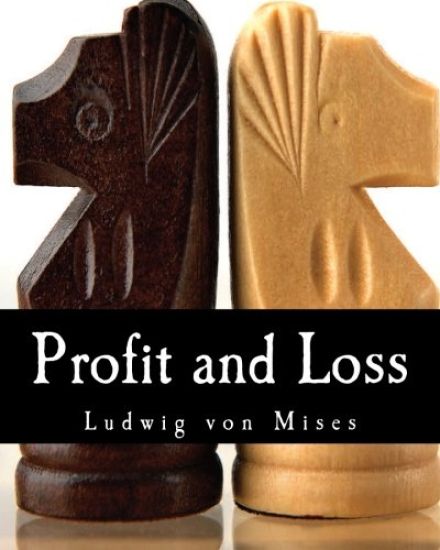
Profit and Loss (Large Print Edition)

Profit and Loss (Large Print Edition)

Ludwig Von Mises

Createspace Independent Publishing Platform
2008
nidottu

Halvin toimitettuna 12,40 €

LARGE PRINT EDITION More at LargePrintLiberty.com In 1951, Mises gave an outstanding paper that made the summary case for the price system under capitalistic economic systems. In "Profit and Loss," he explains how cost accounting is the critical institution that ferrets out social waste, ensures that resources are directed to their most highly valued ends, and how entrepreneurs respond to price signals. His presentation is systematic, relentless, logical, and ultimately devastating to the opponents of profit and loss. He explains what it is that entrepreneurs confront in a market economy and how no bureaucratic institution can replicate the trial-and-error process that is at the heart of the market system. He weaves into his analysis the role of the consumer as the final arbiter of what is produced and distributed.
Abrege de l'Action Humaine, Traite d'Economie

Abrege de l'Action Humaine, Traite d'Economie

Ludwig Von Mises

Les Belles Lettres
2004
nidottu
English summary: Ludwig von Mises was one of the most important representatives of the Vienna School of economics. This abridged version of his magnum opus, Human Action, offers readers a manageable yet enlightening alternative to mainstream neoclassical economic thought. Focusing in the processes of change and the causal relations between events, this study constitutes a particularly eloquent defense of liberty, even beyond its economic aspects. French description: Le present ouvrage est un abrege de L'Action Humaine, traite d'economie, le magnum opus de Ludwig von Mises, un auteur central de l'ecole " autrichienne " et l'un des plus grands penseurs de l'economie. Publiee en 1949, l'oeuvre originale compte pres de mille pages. Bien qu'actuellement occultee par le mainstream neoclassique, la tradition autrichienne est fidele aux idees qui ont prevalu depuis les origines de la reflexion economique jusqu'au debut du vingtieme siecle. Elle incarne une conception realiste de la discipline economique qui refuse le modele reducteur de l'homo oeconomicus et l'etude des equilibres pour s'interesser aux processus de changement et aux relations causales entre les evenements. Ces idees forment pour l'etude du marche, de la monnaie, des crises economiques, de l'entreprise et des structures industrielles modernes une base autrement plus solide que le paradigme neoclassique. Elles sont progressivement redecouvertes par les economistes et de plus en plus validees par l'evolution de la realite. L'Action humaine les expose de facon systematique dans un langage accessible a tous, et constitue de plus une defense particulierement eloquente de la liberte au-dela meme de son aspect economique. A ce titre, cet ouvrage devrait faire partie de la bibliotheque de tout " honnete homme ".
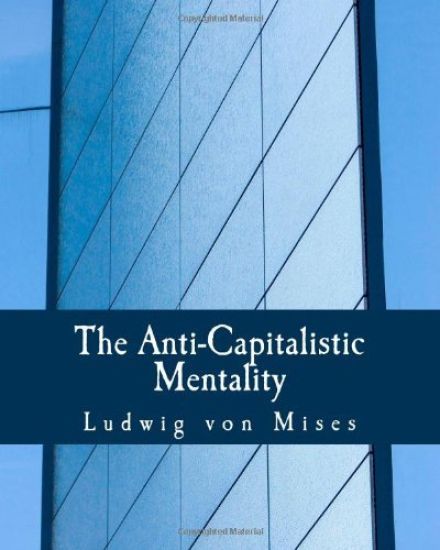
The Anti-Capitalistic Mentality (Large Print Edition)

The Anti-Capitalistic Mentality (Large Print Edition)

Ludwig Von Mises

Createspace Independent Publishing Platform
1956
nidottu
LARGE PRINT EDITION More at LargePrintLiberty.com In 1954, after a lifetime of serious theoretical work in economic science, Mises turned his attention to one of the great puzzles of all time: discovering why the intellectuals hate capitalism. The result is this socio-psycho-cultural analysis informed by economic theory. Mises explores answers from a wide variety of angles, and discusses the nature of academic institutions, popular culture, and how vices like jealousy and envy affect theory. All play a role in preventing people from seeing the self-evident benefits of economic freedom relative to controls. His comments on the resentment of the intellectuals cut very deeply. Mises shrewdly teases the anti-capitalist bias out of contemporary fiction and popular culture generally. In the course of his narrative, he explains aspects of the market that have generally eluded even its defenders. For example, is it true that markets dumb down the culture, exalting trashy novels and movies over higher-brow fare? Mises points out that the tastes of the masses will always and everywhere be lower than those educated and cultivated to love higher culture. But, he says, the glory of capitalism is that it brings to every sector what it wants and needs, and more of it than any other system. So, yes, there will be more trash, but also more great work as well. It is a matter of availability: Under socialism, nothing is available. Under capitalism, choice seems nearly infinite. His is quite subtle in his analysis here and throughout. It's remarkable how his narrative applies in our time, even more than when it was written. The style of this volume is more casual than you will find elsewhere. In some sense, it is more thrilling for it. The reader senses that Mises has unleashed a lifetime of frustration here, and shined a very bright light on some dark corners of opinion.