Kirjojen hintavertailu – 12 903 725 kirjaa ja 27 kauppaa

Kirjailija

Ludwig Wittgenstein

Kirjat ja teokset yhdessä paikassa: 143 kirjaa, julkaisuja vuosilta 1921–2026, suosituimpiin kuuluu Tractatus Logico-Philosophicus. Vertaile teosten hintoja ja tarkista saatavuus suomalaisista kirjakaupoista.

143 kirjaa

Kirjojen julkaisuvuodet: 1921–2026.

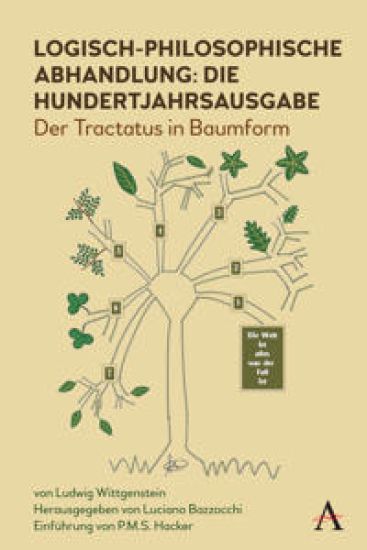
Logisch-philosophische Abhandlung: die Hundertjahrsausgabe
This new edition of Wittgenstein’s book, strictly following the author’s recommendations, allows a more immediate comprehension of the text and dissolves several false problems that had deceived readers and scholars for a century. The faithful interpretation of decimal numbers (which alone, according to Wittgenstein, “give perspicuity and clarity to the book”) shows that the Tractatus stems from a home-page containing seven cardinal propositions and develops level by level, by perfectly coherent reading units. Indeed, “the Tractatus must be read in accordance with the numbering system, and that demands that the reader follow the text after the manner of a logical tree, which is the way in which the book was composed and in which Wittgenstein arranged his philosophical remarks” (Peter Hacker, The Philosophical Quarterly). Thence, the Tractatus is no longer an obstacle course, where critics and students were strenuously committed to decipher anacolutes, semantic jumps and bizarre combinations. On the contrary, it reveals to be, at long last, a book that every reader, from her own point of view, can enjoy. The actual form of Wittgenstein’s work discloses the harmony and the aesthetic value of a philosophical text that is contemporary and is one of the most amazing masterpieces of world literature.
Logisch-philosophische Abhandlung: die Hundertjahrsausgabe
This new edition of Wittgenstein’s book, strictly following the author’s recommendations, allows a more immediate comprehension of the text and dissolves several false problems that had deceived readers and scholars for a century. The faithful interpretation of decimal numbers (which alone, according to Wittgenstein, “give perspicuity and clarity to the book”) shows that the Tractatus stems from a home-page containing seven cardinal propositions and develops level by level, by perfectly coherent reading units. Indeed, “the Tractatus must be read in accordance with the numbering system, and that demands that the reader follow the text after the manner of a logical tree, which is the way in which the book was composed and in which Wittgenstein arranged his philosophical remarks” (Peter Hacker, The Philosophical Quarterly). Thence, the Tractatus is no longer an obstacle course, where critics and students were strenuously committed to decipher anacolutes, semantic jumps and bizarre combinations. On the contrary, it reveals to be, at long last, a book that every reader, from her own point of view, can enjoy. The actual form of Wittgenstein’s work discloses the harmony and the aesthetic value of a philosophical text that is contemporary and is one of the most amazing masterpieces of world literature.
Tractatus Logico-Philosophicus

Tractatus Logico-Philosophicus

Ludwig Wittgenstein

Anthem Press
2021
sidottu
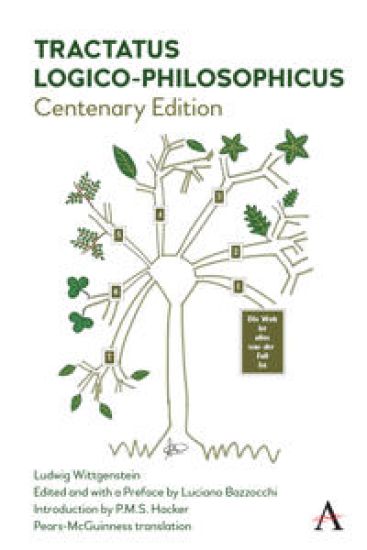
This new edition of Wittgenstein’s book, strictly following the author’s recommendations, allows a more immediate comprehension of the text and dissolves several false problems that had deceived readers and scholars for a century. The faithful interpretation of decimal numbers (which alone, according to Wittgenstein, “give perspicuity and clarity to the book”) shows that the Tractatus stems from a home-page containing seven cardinal propositions and develops level by level, by perfectly coherent reading units. Indeed, “the Tractatus must be read in accordance with the numbering system, and that demands that the reader follow the text after the manner of a logical tree, which is the way in which the book was composed and in which Wittgenstein arranged his philosophical remarks” (Peter Hacker, The Philosophical Quarterly). Thence, the Tractatus is no longer an obstacle course, where critics and students were strenuously committed to decipher anacolutes, semantic jumps and bizarre combinations. On the contrary, it reveals to be, at long last, a book that every reader, from her own point of view, can enjoy. The actual form of Wittgenstein’s work discloses the harmony and the aesthetic value of a philosophical text that is contemporary and is one of the most amazing masterpieces of world literature.
Tractatus Logico-Philosophicus

Tractatus Logico-Philosophicus

Ludwig Wittgenstein

Anthem Press
2021
nidottu
This new edition of Wittgenstein’s book, strictly following the author’s recommendations, allows a more immediate comprehension of the text and dissolves several false problems that had deceived readers and scholars for a century. The faithful interpretation of decimal numbers (which alone, according to Wittgenstein, “give perspicuity and clarity to the book”) shows that the Tractatus stems from a home-page containing seven cardinal propositions and develops level by level, by perfectly coherent reading units. Indeed, “the Tractatus must be read in accordance with the numbering system, and that demands that the reader follow the text after the manner of a logical tree, which is the way in which the book was composed and in which Wittgenstein arranged his philosophical remarks” (Peter Hacker, The Philosophical Quarterly). Thence, the Tractatus is no longer an obstacle course, where critics and students were strenuously committed to decipher anacolutes, semantic jumps and bizarre combinations. On the contrary, it reveals to be, at long last, a book that every reader, from her own point of view, can enjoy. The actual form of Wittgenstein’s work discloses the harmony and the aesthetic value of a philosophical text that is contemporary and is one of the most amazing masterpieces of world literature.
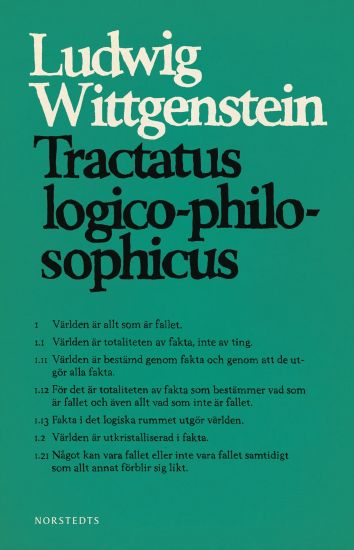
Tractatus logico-philosophicus

Tractatus logico-philosophicus

Ludwig Wittgenstein

Norstedts
2021
nidottu
Ludwig Wittgensteins Tractatus hör till de mest gåtfulla verk som skrivits. Den har lockat människor både utanför och innanför filosofin att försöka tolka de ibland ganska dunkla raderna i denna klassiker. Trots att boken skrevs för snart hundra år sedan är den lika levande i dag. Men det är inte bara själva texten som lockar. Wittgenstein skrev den under mycket dramatiska förhållanden, i första världskrigets skyttegravar. Medan bomberna briserar sitter han och plitar ner lösningen på filosofins gåta. Även om Tractatus är ett filosofiskt verk, där Wittgenstein lägger fram en helt ny filosofi om hur världen är uppbyggd, har boken mycket att ge alla läsare. Med nyskrivet förord av Sten Andersson.
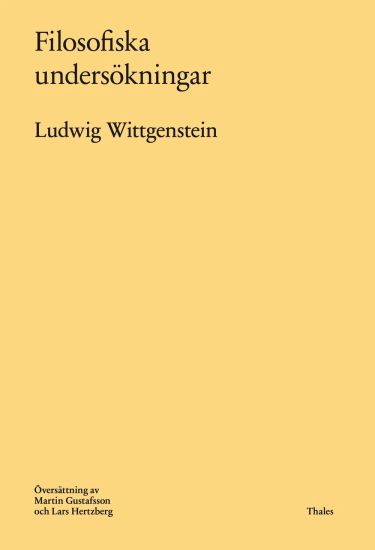
Filosofiska undersökningar

Filosofiska undersökningar

Ludwig Wittgenstein

Bokförlaget Thales
2021
sidottu
Detta är en nyöversättning (2021) av ett av de mest inflytelserika verken i modern filosofi. Filosofiska undersökningar utkom postumt 1953, och är den viktigaste framställningen av Ludwig Wittgensteins sena filosofi, där han bland annat introducerar begrepp som språkspel och familjelikhet . På ett prövande och eftertänksamt sätt rör sig verket utan tydliga avbrott mellan filosofins kärnfrågor: språk och mening, tänkande, förståelse, avsikt, varseblivning och förnimmelse. Många reflektioner handlar om hur ord används, ibland i form av påminnelser om hur vi faktiskt talar, ibland i form av påhittade exempel. Andra innehåller små dialoger kring ett filosofiskt problem eller reaktioner på en vilseledande filosofisk bild. Några innehåller obesvarade frågor eller behandlar filosofins egenart. För översättningen svarar professor emeritus Lars Hertzberg och professor Martin Gustafsson, både verksamma vid Åbo Akademi.
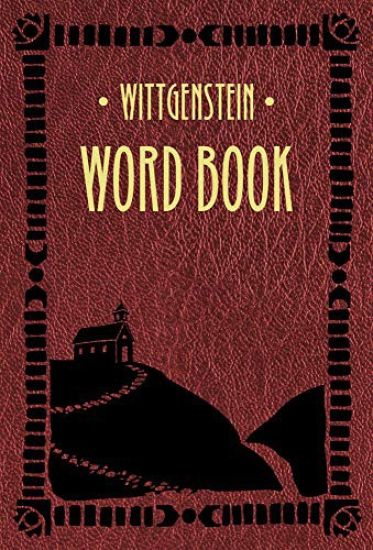
Word Book

Word Book

Ludwig Wittgenstein

Badlands Unlimited
2020
sidottu
Wittgenstein's dictionary for children: a rare and intriguing addition to the philosopher's corpus, in English for the first time"I had never thought the dictionaries would be so frightfully expensive. I think, if I live long enough, I will produce a small dictionary for elementary schools. It appears to me to be an urgent need." -Ludwig Wittgenstein In 1925, Ludwig Wittgenstein, arguably one of the most influential philosophers of the 20th century, wrote a dictionary for elementary school children. His W rterbuch f r Volksschulen (Dictionary for Elementary Schools) was designed to meet what he considered an urgent need: to help his students learn to spell. Wittgenstein began teaching kids in rural Austria in 1920 after abandoning his life and work at Cambridge University. During this time there were only two dictionaries available. But one was too expensive for his students, and the other was too small and badly put together. So Wittgenstein decided to write one. Word Book is the first-ever English translation of W rterbuch. This publication aims to encourage and reinvigorate interest in one of the greatest modern philosophers by introducing this gem of a work to a wider audience. Word Book also explores how W rterbuch portends Wittgenstein's radical reinvention of his own philosophy and the enduring influence his thinking holds over how art, culture and language are understood. Word Book is translated by writer and art historian Bettina Funcke, with a critical introduction by scholar D sir e Weber, and accompanied with art by Paul Chan. Ludwig Wittgenstein (1889-1951) was an Austrian-born British philosopher, regarded by many as the greatest philosopher of the 20th century. He played a decisive if controversial role in 20th-century analytic philosophy, and his work continues to influence fields as diverse as logic and language, perception and intention, ethics and religion, aesthetics and culture.
Wiener Ausgabe: Band 7: Synopse Der Manuskriptbande I-IV

Wiener Ausgabe: Band 7: Synopse Der Manuskriptbande I-IV

Ludwig Wittgenstein

Verlag Vittorio Klostermann
2020
sidottu
Volume 7 of the Vienna Edition, together with Volume 8 (Synopsis of Volumes V to X), now makes available for the first time Wittgenstein's first of two revisions of his manuscripts for their intended publication. Volume 7 contains two typoscripts, the first of which also represents the textual basis of the posthumously published "Philosophical Remarks" ("Philosophische Bemerkungen") and only exists as a fragment; it was reconstructed from the sources for this volume. The volume will be of particular interest for Wittgenstein research, as it is instrumental in order to correct some of the misguided speculations on "Philosophical Remarks" arising from the extensive secondary literature on "Philosophical Remarks".
Filosofskie issledovanija

Filosofskie issledovanija

Ludwig Wittgenstein

Ast
2019
nidottu
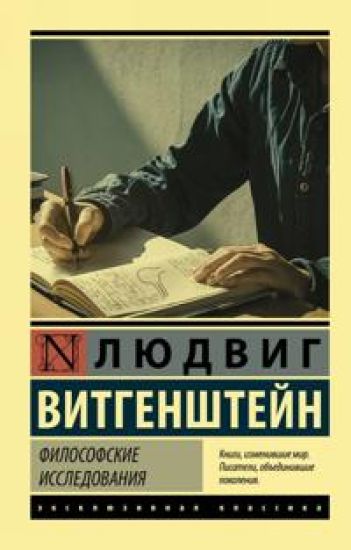
"Svoim sochineniem ja ne stremilsja izbavit drugikh ot usilij mysli. Mne khotelos inogo: pobudit kogo-nibud, esli eto vozmozhno, k samostojatelnomu myshleniju", - tak tochno, emko i prosto sformuliroval svoe kredo uchenogo Ljudvig Vitgenshtejn v predislovii k "Filosofskim issledovanijam" - rabote, okazavshej ogromnoe vlijanie kak na analiticheskuju filosofiju, tak i na filosofiju postmodernizma. V nej on popytalsja razvit idei, izlozhennye im v "Logiko-filosofskom traktate", i vnov izbral obektom svoego izuchenija jazyk - obydennyj jazyk povsednevnogo obschenija. Opisyvaja razlichnye strategii "jazykovoj igry", kotorye vse my, soznatelno ili net, ispolzuem, pytajas v chem-to ubedit sobesednika, ili vozdejstvovat na nego, dobitsja kakoj-libo tseli ili prosto vyrazit svoi mysli i chuvstva, on analiziruet etu igru i pytaetsja ponjat ee logiku. No, paradoksalnyj vo mnogikh svoikh utverzhdenijakh, Vitgenshtejn i zdes ostaetsja veren sebe. Ved esli, po Vitgenshtejnu, kriterij smysla - vsegda i tolko logika, to kakov smysl jazyka, uchityvaja, chto bolshaja chast proiznosimogo chelovekom v toj ili inoj stepeni protivorechit zakonam logiki?
Tractatus Logico-Philosophicus

Tractatus Logico-Philosophicus

Ludwig Wittgenstein

Benediction Classics
2019
pokkari

Halvin toimitettuna 16,20 €

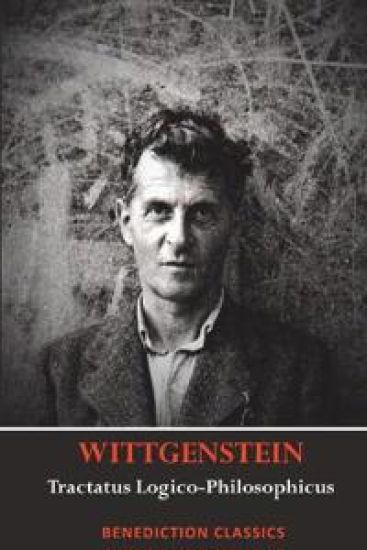
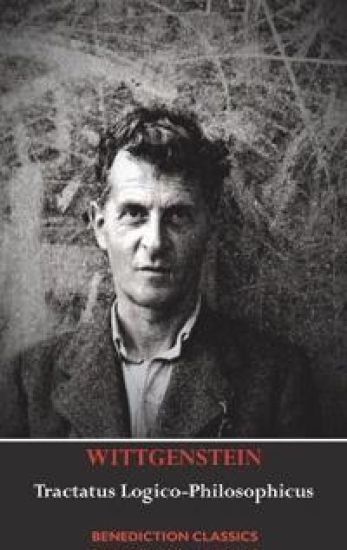
Ludwig Wittgenstein's influential Tractatus Logico-Philosophicus explores the assumption that it is philosophy's task to 'sanitize' language. Therefore, it is necessary for philosophy to develop an artificial language that avoids the pitfalls of ordinary language. This is the only philosophical work Wittgenstein published in his lifetime. Laid out in succinct well-numbered paragraph, it is an essential read for those interested in the philosophy of language or understanding the influential figure of Wittgenstein.
Tractatus Logico-Philosophicus

Tractatus Logico-Philosophicus

Ludwig Wittgenstein

Benediction Classics
2019
sidottu

Halvin toimitettuna 27,30 €

Ludwig Wittgenstein's influential Tractatus Logico-Philosophicus explores the assumption that it is philosophy's task to 'sanitize' language. Therefore, it is necessary for philosophy to develop an artificial language that avoids the pitfalls of ordinary language. This is the only philosophical work Wittgenstein published in his lifetime. Laid out in succinct well-numbered paragraph, it is an essential read for those interested in the philosophy of language or understanding the influential figure of Wittgenstein. From the introduction: "... to have constructed a theory of logic which is not at any point obviously wrong is to have achieved a work of extraordinary difficulty and importance. This merit, in my opinion, belongs to Mr Wittgenstein's book, and makes it one which no serious philosopher can afford to neglect." -- Bertrand Russell.
Tractatus Logico-Philosophicus

Tractatus Logico-Philosophicus

Ludwig Wittgenstein

Digireads.com
2019
nidottu
First published originally in German in 1921, "Tractatus Logico-Philosophicus" is the only book-length philosophical work by Austrian philosopher Ludwig Wittgenstein published during his lifetime. Based upon notes made during his time serving in World War I, the treatise is composed of 526 numbered declarative statements that are presented without argument and were seen by Wittgenstein as being self-evident. Wittgenstein's style is succinct and sparse and his ideas are presented in a highly logical, organized, and scientific manner. Wittgenstein proposes that the solution to all major philosophical problems can be solved only with logic and a scientific analysis of language and its meaning. His idea that philosophy is not about metaphysics and mysticism, but about critical and rational thought led to a massive shift in philosophical theories after its publication. The treatise was influential with many of the "logical positivists" of the Vienna Circle, such as Rudolf Carnap and Friedrich Waismann, and to philosophers such as Bertrand Russell. Considered one of the most significant and influential philosophical works of the twentieth century, this treatise is an important read for any student of the history of language and ideas. This edition is printed on premium acid-free paper.
Wiener Ausgabe: Band 8.2: Synopse Der Manuskriptbande V-X

Wiener Ausgabe: Band 8.2: Synopse Der Manuskriptbande V-X

Ludwig Wittgenstein

Verlag Vittorio Klostermann
2019
sidottu
Occasionally classified as his "middle period", this stage of the development of Wittgenstein's philosophical thinking, from which the "Philosophical Remarks" and the "Philosophical Grammar" were posthumously edited and published by his executors, cannot be taken as an independent and self-contained part of the complete work, though. A careful study of the manuscripts shows that such classifications are misleading and likely to obstruct access to the work. The complex of the so-called "Big Typescript" marks the beginning of Wittgenstein's renewed preoccupation with philosophy in 1927 in Vienna after a nine-year hiatus. However, the links connecting this body of work to the later manuscripts as well as the connections within the later manuscripts are extremely complex. To this day, fifteen volumes of the Vienna edition have appeared on the basis of the posthumous manuscript corpus of the "Big Typescript", dating from the years 1929-1938. Karl Popper called it "the most important book edition of the century". In order to complete the edition of the Wittgenstein MSS corpus "Big Typescript" dating from 1929-1934, seventeen further volumes are to be published by 2021 by Vittorio Klostermann. Eighteen years after the appearance of Volume 8,1 of the Viennese edition of Wittgenstein's writings, the second part of the volume (WA8,2) is scheduled for publication: The Synopsis of Manuscript Volumes V to X, which together with the Synopsis of Volumes I to IV ( WA7) represents Wittgenstein's first revision of his manuscript volumes towards his second book in the making - the famously so-called "Big Typescript". Wittgenstein's second revision, a collection of notes from these synopses, parts 1, 2 and 3 of vol. WA10, and vol. WA7 will be published towards the end of the year 2019, eventually making available the corpus of the "Big Typescript" in its entirety in the Vienna edition.
Logiko-filosofskij traktat

Logiko-filosofskij traktat

Ludwig Wittgenstein

Ast
2018
nidottu
Tekst "Logiko-filosofskogo traktata" edva li mozhno nazvat obemnym, odnako trudno pereotsenit ego znachimost dlja vsej posledujuschej evropejskoj filosofii, i kratkost v dannom sluchae govorit lish o tom, naskolko szhato, chetko i tochno Vitgenshtejn formuliroval svoju mysl. Sem korotkikh tezisov i chut bolshe sotni stranits kommentariev k nim... no v etot minimalnyj obem Vitgenshtejn sumel vmestit perevod na filosofskij jazyk vsekh glavnykh idej logicheskogo analiza." V nachale bylo Slovo", - glasit Biblija, i esli eto tak, to Vitgenshtejn byl odnim iz samykh predannykh uchenikov Logosa.
The Mythology in Our Language – Remarks on Frazer`s Golden Bough

The Mythology in Our Language – Remarks on Frazer`s Golden Bough

Ludwig Wittgenstein; Stephan Palmié; Giovanni Da Col

HAU
2018
nidottu

Halvin toimitettuna 40,80 €

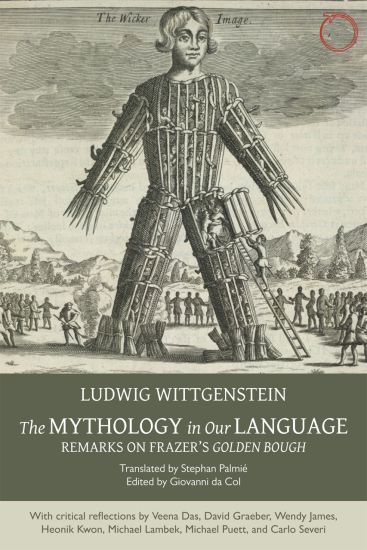
In 1931 Ludwig Wittgenstein wrote his famous Remarks on Frazer's "Golden Bough," published posthumously in 1967. At that time, anthropology and philosophy were in close contact - continental thinkers drew heavily on anthropology's theoretical terms, like mana, taboo, and potlatch, in order to help them explore the limits of human belief and imagination. Now the book receives its first translation by an anthropologist, in the hope that it can kickstart a new era of interdisciplinary fertilization. Wittgenstein's remarks on ritual, magic, religion, belief, ceremony, and Frazer's own logical presuppositions are as lucid and thought - provoking now as they were in Wittgenstein's day. Anthropologists find themselves asking many of the same questions as Wittgenstein - and in a reflection of that, this volume is fleshed out with a series of engagements with Wittgenstein's ideas by some of the world's leading anthropologists, including Veena Das, David Graeber, Wendy James, Heonik Kwon, Michael Lambek, Michael Puett, and Carlo Severi.