
Kirjailija
Ludwig Wittgenstein
Kirjat ja teokset yhdessä paikassa: 143 kirjaa, julkaisuja vuosilta 1921–2026, suosituimpiin kuuluu Tractatus Logico-Philosophicus. Vertaile teosten hintoja ja tarkista saatavuus suomalaisista kirjakaupoista.
143 kirjaa
Kirjojen julkaisuvuodet: 1921–2026.
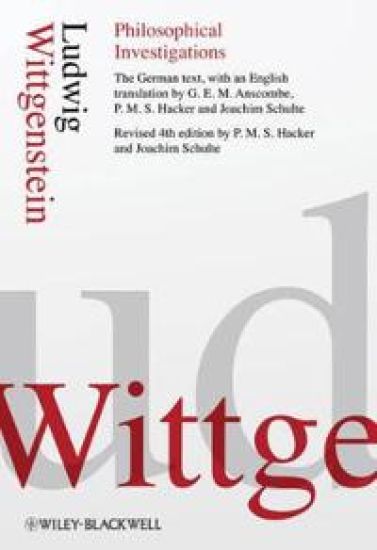
Philosophical Investigations
Ludwig Wittgenstein
Wiley-Blackwell (an imprint of John Wiley Sons Ltd)
2009
sidottu
Halvin toimitettuna 37,20 €
Philosophical Investigations New editions of the Commentary on Wittgenstein’s Philosophical Investigations from Wiley-Blackwell Wittgenstein: Understanding and Meaning, Volume 1 of An Analytical Commentary on the Philosophical Investigations Part I: Essays G. P. Baker and P. M. S. Hacker Second, extensively revised edition by P. M. S. Hacker Wittgenstein: Understanding and Meaning, Volume 1 of An Analytical Commentary on the Philosophical Investigations Part II: Exegesis §§1–184 G. P. Baker and P. M. S. Hacker Second, extensively revised edition by P. M. S. Hacker Wittgenstein: Rules, Grammar and Necessity, Volume 2 of An Analytical Commentary on the Philosophical Investigations Essays and Exegesis of §§185–242 G. P. Baker and P. M. S. Hacker Second, extensively revised edition by P. M. S. Hacker Immediately upon its posthumous publication in 1953, Ludwig Wittgenstein’s Philosophical Investigations was hailed as a masterpiece, and the ensuing years have confirmed this initial assessment. Today it is widely acknowledged to be the single most important philosophical work of the twentieth century. In this definitive new en face German-English edition, Wittgenstein experts Peter Hacker and Joachim Schulte have incorporated significant editorial changes to earlier editions of Philosophical Investigations in order to reflect more closely Wittgenstein’s original intentions. Notable revisions include the placement of Wittgenstein’s notes – Randbemerkungen – into their designated positions in the text, some corrections to the originally published German text, and the numbering of all the remarks in what was called Part 2 and is now named Philosophy of Psychology – A Fragment. Extensive modifications and corrections have also been made to G. E. M. Anscombe’s original English translation. Detailed editorial endnotes have been added to illuminate difficult translation decisions and to identify references and allusions in Wittgenstein’s original text.
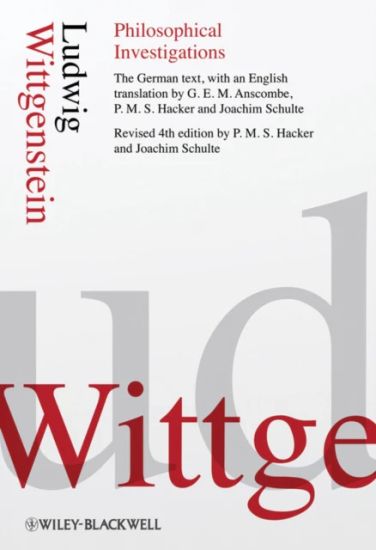
Philosophical Investigations
Ludwig Wittgenstein
Wiley-Blackwell (an imprint of John Wiley Sons Ltd)
2009
nidottu
Halvin toimitettuna 40,30 €
Philosophical Investigations New editions of the Commentary on Wittgenstein’s Philosophical Investigations from Wiley-Blackwell Wittgenstein: Understanding and Meaning, Volume 1 of An Analytical Commentary on the Philosophical Investigations Part I: Essays G. P. Baker and P. M. S. Hacker Second, extensively revised edition by P. M. S. Hacker Wittgenstein: Understanding and Meaning, Volume 1 of An Analytical Commentary on the Philosophical Investigations Part II: Exegesis §§1–184 G. P. Baker and P. M. S. Hacker Second, extensively revised edition by P. M. S. Hacker Wittgenstein: Rules, Grammar and Necessity, Volume 2 of An Analytical Commentary on the Philosophical Investigations Essays and Exegesis of §§185–242 G. P. Baker and P. M. S. Hacker Second, extensively revised edition by P. M. S. Hacker Immediately upon its posthumous publication in 1953, Ludwig Wittgenstein’s Philosophical Investigations was hailed as a masterpiece, and the ensuing years have confirmed this initial assessment. Today it is widely acknowledged to be the single most important philosophical work of the twentieth century. In this definitive new en face German-English edition, Wittgenstein experts Peter Hacker and Joachim Schulte have incorporated significant editorial changes to earlier editions of Philosophical Investigations in order to reflect more closely Wittgenstein’s original intentions. Notable revisions include the placement of Wittgenstein’s notes – Randbemerkungen – into their designated positions in the text, some corrections to the originally published German text, and the numbering of all the remarks in what was called Part 2 and is now named Philosophy of Psychology – A Fragment. Extensive modifications and corrections have also been made to G. E. M. Anscombe’s original English translation. Detailed editorial endnotes have been added to illuminate difficult translation decisions and to identify references and allusions in Wittgenstein’s original text.
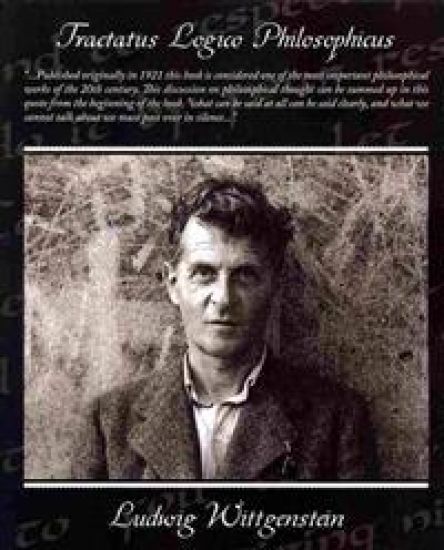
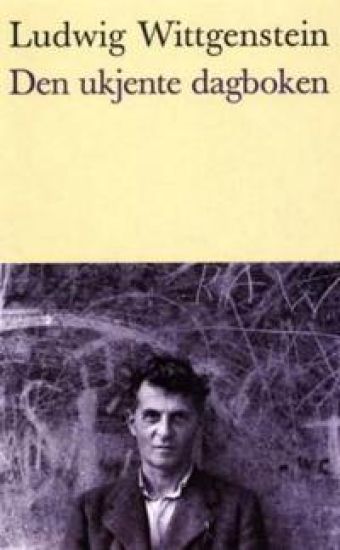
I denne dagboken reflekterer Wittgenstein (1889-1951) omkring sin egen filosofi og karakteriserer samtidens kulturelle og intellektuelle strømninger, religion, musikk og litteratur.
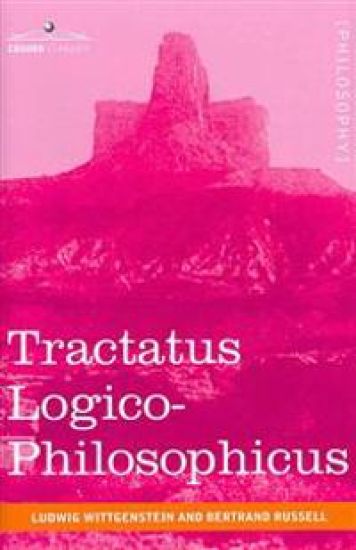
"Austrian philosopher LUDWIG WITTGENSTEIN (1889 1951) was hugely influential on 20th-century philosophy, and here, he constructs a series of carefully and precisely numbered propositions on the relationship between language, logic, and reality, using a numbering system to show nested relationships between the propositions. Considered one of the major recent works of philosophy a reputation enhanced, undoubtedly, by Bertrand Russell s glowing introduction this edition is a reproduction of the translation by C. K. Ogden, first published in 1922, for which Wittgenstein himself assisted in the preparation of the English-language manuscript. Students of philosophy and those fascinated by the history of ideas will want a copy of this essential volume. "
"Zettel", an en face bilingual edition, collects fragments from Wittgenstein's work between 1929 and 1948 on issues of the mind, mathematics, and language.
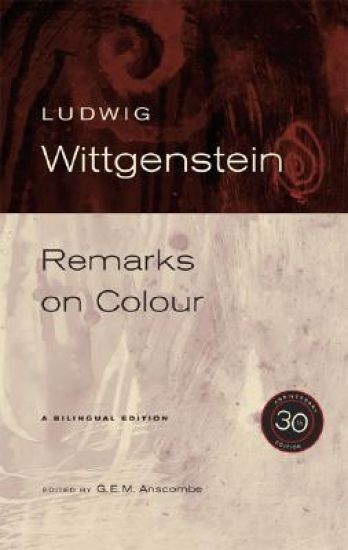
Remarks on Colour / Bermerkungen Uber Die Farben
Ludwig Wittgenstein; G. E. M. (EDT) Anscombe; Linda L. (TRN) McAlister
University of California Press
2007
pokkari
This book comprises material on colour which was written by Wittgenstein in the last eighteen months of his life. It is one of the few documents which shows him concentratedly at work on a single philosophical issue. The principal theme is the features of different colours, of different kinds of colour (metallic colour, the colours of flames, etc.) and of luminosity--a theme which Wittgenstein treats in such a way as to destroy the traditional idea that colour is a simple and logically uniform kind of thing. This edition consists of Wittgenstein's basic German text, together with an English translation.
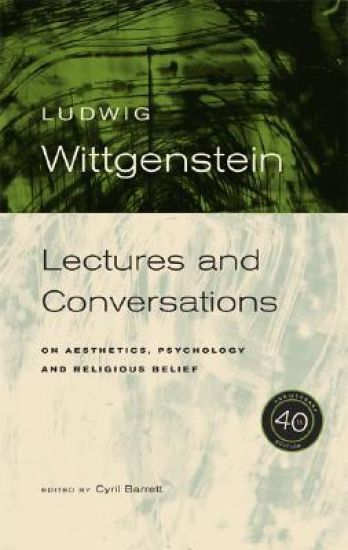
L. Wittgenstein
Ludwig Wittgenstein; Cyril (EDT) Barrett
University of California Press
2007
pokkari
In 1938 Wittgenstein delivered a short course of lectures on aesthetics to a small group of students at Cambridge. The present volume has been compiled from notes taken down at the time by three of the students: Rush Rhees, Yorick Smythies, and James Taylor. They have been supplemented by notes of conversations on Freud (to whom reference was made in the course on aesthetics) between Wittgenstein and Rush Rhees, and by notes of some lectures on religious belief. As very little is known of Wittgenstein's views on these subjects from his published works, these notes should be of considerable interest to students of contemporary philosophy. Further, their fresh and informal style should recommend Wittgenstein to those who find his Tractatus and Philosophical Investigations a little formidable.
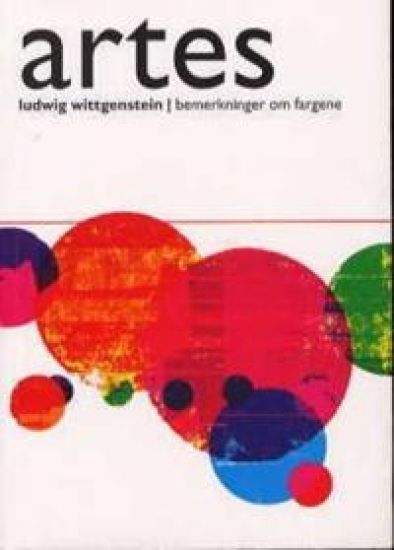
Hvilken erfaring forteller meg at jeg skjelner mellom rødt og grønt? Hva taler for at grønn er en primærfarge, og ingen blanding av blått og gult? Hva er vesentlig med det uklare? For gjennomsiktig rødt og gult er ikke uklart, mens gjennomsiktig hvitt er det. Hvor viktig er begrepet om den mettede farge? Jeg behandler fargebegrepene på lignende måte som begrepene om sansefornemmelser. Tenk deg at noen peker på et punkt på iris i et øye malt av Rembrandt, og sier: -Veggene i værelset mitt skal males i denne fargen! Den som snakker om en farges karakter, tenker alltid på en bestemt måte den er brukt på. Også en mørk rød kan lyse. Men en farge lyser gjennom sine omgivelser, i sine omgivelser. Det rene fargebegrep finnes ikke.
Filosofi er først og fremst en aktivitet, hevdet Ludwig Wittgenstein (1889-1951), en stadig undersøkelse av argumenter og påstander slik vi finner disse både i dagligspråket og i vitenskapen. Slik avslører og løser vi knuter i vår tenkning og det vi oppfatter som filosofiske problemer. Språket er et svært elastisk redskap som kan brukes til å bygge luftslott og rekker med teorier uten stødig grunn, men med det samme språket kan vi også rive ned slike luftslott, hevdet han. Med den senere' Wittgensteins filosofi er man ikke stilt overfor en filosofisk teori, men derimot først og fremst en filosofisk metode. I Om visshet angriper Wittgenstein både G. E. Moores Common Sense filosofi og den skeptiske tradisjonen. Han kritiserer dem for å ha en hensiktsløs tilnærming til de filosofiske problemstillingene de tar opp. Før man er klar over den rollen språket spiller i disse undersøkelsene, er undersøkelsene meningsløse, sier Wittgenstein. I Om visshet, som er skrevet rett før Wittgensteins død, sier han at Jeg tror det kunne interessere en filosof, en som kan tenke selv, å lese notatene mine. For selv om jeg bare sjelden har truffet midt i blinken, så ville han kjenne igjen hvilke mål jeg uavlatelig har siktet på. Og disse målene er de vi den dag i dag streber med å nærme oss. Filosofiens natur er slik at man ikke noensinne kan nå alle disse målene, men heller ikke se helt bort ifra dem. Filosofen Ludwig Wittgenstein er en av dem som har vært med og vise oss dette. Nr. 53 i Cappelens upopulære skrifter.
The Big Typescript
Ludwig Wittgenstein
Wiley-Blackwell (an imprint of John Wiley Sons Ltd)
2005
sidottu
Long awaited by the scholarly community, Wittgenstein's so-called Big Typescript (von Wright Catalog # TS 213) is presented here in an en face English–German scholar's edition. Presents scholar's edition of important material from 1933, Wittgenstein's first efforts to set out his new thoughts after the publication of the Tractatus Logico PhilosophicusIncludes indications to help the reader identify Wittgenstein's numerous corrections, additions, deletions, alternative words and phrasings, suggestions for moves within the text, and marginal comments
”Denna bok kommer kanske bara bli förstådd av den som redan själv en gång tänkt de tankar den uttrycker – eller åtminstone likartade tankar. Dess syfte vore uppnått om den skänkte någon förstående läsare ett nöje.” Ludwig WittgensteinsTractatus logico-philosophicus är ett av 1900-talets mest egenartade och omdebatterade filosofiska verk. I korta, suggestiva aforismer behandlar boken de flesta av filosofins klassiska problem. Enligt författaren får problemen också här sin slutgiltiga lösning – om detta har naturligtvis inte alla hållit med och Wittgenstein bygger själv sin senare filosofi på en omsorgsfull kritik av tankarna i ungdomsverket. Men Tractatus lever ännu och inspirerar ständigt nya uttolkare.
Philosophical Grammar
Ludwig Wittgenstein; Rush (EDT) Rhees; Anthony (TRN) Kenny
University of California Press
2005
pokkari
In 1933 Ludwig Wittgenstein revised a manuscript he had compiled from his 1930-1932 notebooks, but the work as a whole was not published until 1969, as Philosophische Grammatik. This first English translation clearly reveals the central place Philosophical Grammar occupies in Wittgenstein's thought and provides a link from his earlier philosophy to his later views.
Philosophische Untersuchungen
Ludwig Wittgenstein
SUHRKAMP VERLAG
2003
sidottu
Halvin toimitettuna 27,40 €
Perhaps the most important work of philosophy written in the twentieth century, Tractatus Logico-Philosophicus was the only philosophical work that Ludwig Wittgenstein published during his lifetime. Written in short, carefully numbered paragraphs of extreme brilliance, it captured the imagination of a generation of philosophers. For Wittgenstein, logic was something we use to conquer a reality which is in itself both elusive and unobtainable. He famously summarized the book in the following words: 'What can be said at all can be said clearly; and what we cannot talk about we must pass over in silence.' David Pears and Brian McGuinness received the highest praise for their meticulous translation. The work is prefaced by Bertrand Russell's original introduction to the first English edition.