Kirjojen hintavertailu – 12 859 819 kirjaa ja 27 kauppaa

Kirjailija

Marcus Tullius Cicero

Kirjat ja teokset yhdessä paikassa: 1 147 kirjaa, julkaisuja vuosilta 1804–2026, suosituimpiin kuuluu Keskusteluja Tusculumissa. Vertaile teosten hintoja ja tarkista saatavuus suomalaisista kirjakaupoista.

1 147 kirjaa

Kirjojen julkaisuvuodet: 1804–2026.

M. T. Cicero's Cato Major, or Discourse on old age. Addressed to Titus Pomponius Atticus. With Explanatory Notes. By Benj. Franklin, LL.D
The 18th century was a wealth of knowledge, exploration and rapidly growing technology and expanding record-keeping made possible by advances in the printing press. In its determination to preserve the century of revolution, Gale initiated a revolution of its own: digitization of epic proportions to preserve these invaluable works in the largest archive of its kind. Now for the first time these high-quality digital copies of original 18th century manuscripts are available in print, making them highly accessible to libraries, undergraduate students, and independent scholars. Western literary study flows out of eighteenth-century works by Alexander Pope, Daniel Defoe, Henry Fielding, Frances Burney, Denis Diderot, Johann Gottfried Herder, Johann Wolfgang von Goethe, and others. Experience the birth of the modern novel, or compare the development of language using dictionaries and grammar discourses. ++++The below data was compiled from various identification fields in the bibliographic record of this title. This data is provided as an additional tool in helping to insure edition identification: ++++Harvard University Houghton LibraryN012261Translated and annotated by James Logan. The prefatory notice by Benjamin Franklin has been so altered from the 1744 original as to make him appear to be the translator. London]: Philadelphia: printed by B. Franklin. London: re-printed for Fielding and Walker, 1778. 4],163, 1]p., plate: port.; 8
Cato and Lælius

Cato and Lælius

Marcus Tullius Cicero

Gale Ecco, Print Editions
2018
sidottu
The 18th century was a wealth of knowledge, exploration and rapidly growing technology and expanding record-keeping made possible by advances in the printing press. In its determination to preserve the century of revolution, Gale initiated a revolution of its own: digitization of epic proportions to preserve these invaluable works in the largest archive of its kind. Now for the first time these high-quality digital copies of original 18th century manuscripts are available in print, making them highly accessible to libraries, undergraduate students, and independent scholars. The Age of Enlightenment profoundly enriched religious and philosophical understanding and continues to influence present-day thinking. Works collected here include masterpieces by David Hume, Immanuel Kant, and Jean-Jacques Rousseau, as well as religious sermons and moral debates on the issues of the day, such as the slave trade. The Age of Reason saw conflict between Protestantism and Catholicism transformed into one between faith and logic -- a debate that continues in the twenty-first century.++++The below data was compiled from various identification fields in the bibliographic record of this title. This data is provided as an additional tool in helping to insure edition identification: ++++John Rylands University Library of ManchesterT153351London: printed for J. Dodsley, 1785. 2v.; 8
Cato and Lælius

Cato and Lælius

Marcus Tullius Cicero

Gale Ecco, Print Editions
2018
sidottu
The 18th century was a wealth of knowledge, exploration and rapidly growing technology and expanding record-keeping made possible by advances in the printing press. In its determination to preserve the century of revolution, Gale initiated a revolution of its own: digitization of epic proportions to preserve these invaluable works in the largest archive of its kind. Now for the first time these high-quality digital copies of original 18th century manuscripts are available in print, making them highly accessible to libraries, undergraduate students, and independent scholars. The Age of Enlightenment profoundly enriched religious and philosophical understanding and continues to influence present-day thinking. Works collected here include masterpieces by David Hume, Immanuel Kant, and Jean-Jacques Rousseau, as well as religious sermons and moral debates on the issues of the day, such as the slave trade. The Age of Reason saw conflict between Protestantism and Catholicism transformed into one between faith and logic -- a debate that continues in the twenty-first century.++++The below data was compiled from various identification fields in the bibliographic record of this title. This data is provided as an additional tool in helping to insure edition identification: ++++John Rylands University Library of ManchesterT153351London: printed for J. Dodsley, 1785. 2v.; 8
Cicero on old age, a Dialogue

Cicero on old age, a Dialogue

Marcus Tullius Cicero

Gale Ecco, Print Editions
2018
sidottu
The 18th century was a wealth of knowledge, exploration and rapidly growing technology and expanding record-keeping made possible by advances in the printing press. In its determination to preserve the century of revolution, Gale initiated a revolution of its own: digitization of epic proportions to preserve these invaluable works in the largest archive of its kind. Now for the first time these high-quality digital copies of original 18th century manuscripts are available in print, making them highly accessible to libraries, undergraduate students, and independent scholars. The Age of Enlightenment profoundly enriched religious and philosophical understanding and continues to influence present-day thinking. Works collected here include masterpieces by David Hume, Immanuel Kant, and Jean-Jacques Rousseau, as well as religious sermons and moral debates on the issues of the day, such as the slave trade. The Age of Reason saw conflict between Protestantism and Catholicism transformed into one between faith and logic -- a debate that continues in the twenty-first century.++++The below data was compiled from various identification fields in the bibliographic record of this title. This data is provided as an additional tool in helping to insure edition identification: ++++William Andrews Clark Memorial Library (UCLA)N026808Translator's dedication signed: Samuel Hemming. With a half-title. Oxford: printed at the Theatre, anno Dom., 1716. 8],37, 1]p.; 8
The Tusculan Disputations of Marcus Tullius Cicero. In Five Books. A new Translation. By a Gentleman
The 18th century was a wealth of knowledge, exploration and rapidly growing technology and expanding record-keeping made possible by advances in the printing press. In its determination to preserve the century of revolution, Gale initiated a revolution of its own: digitization of epic proportions to preserve these invaluable works in the largest archive of its kind. Now for the first time these high-quality digital copies of original 18th century manuscripts are available in print, making them highly accessible to libraries, undergraduate students, and independent scholars. Western literary study flows out of eighteenth-century works by Alexander Pope, Daniel Defoe, Henry Fielding, Frances Burney, Denis Diderot, Johann Gottfried Herder, Johann Wolfgang von Goethe, and others. Experience the birth of the modern novel, or compare the development of language using dictionaries and grammar discourses. ++++The below data was compiled from various identification fields in the bibliographic record of this title. This data is provided as an additional tool in helping to insure edition identification: ++++British LibraryT122800London: printed for John Whiston, and Benj. White. Sold also by T. and J. Merrill at Cambridge, and J. Fletcher at Oxford, 1758. 2],330p.; 8
Tully's two Essays of old age, and of Friendship. With his Stoical Paradoxes, and Scipio's Dream. Done Into English by Mr. Parker. The Third Edition, Carefully Revis'd and Corrected by the Translator
The 18th century was a wealth of knowledge, exploration and rapidly growing technology and expanding record-keeping made possible by advances in the printing press. In its determination to preserve the century of revolution, Gale initiated a revolution of its own: digitization of epic proportions to preserve these invaluable works in the largest archive of its kind. Now for the first time these high-quality digital copies of original 18th century manuscripts are available in print, making them highly accessible to libraries, undergraduate students, and independent scholars. Western literary study flows out of eighteenth-century works by Alexander Pope, Daniel Defoe, Henry Fielding, Frances Burney, Denis Diderot, Johann Gottfried Herder, Johann Wolfgang von Goethe, and others. Experience the birth of the modern novel, or compare the development of language using dictionaries and grammar discourses. ++++The below data was compiled from various identification fields in the bibliographic record of this title. This data is provided as an additional tool in helping to insure edition identification: ++++British LibraryT111300Titlepage in red and black. Variant: "essays" reads "essay." London: printed by H. P. for J. Wilford, 1727. 8],244p., plate; 12
Laelius

Laelius

Marcus Tullius Cicero

Gale Ecco, Print Editions
2018
sidottu
The 18th century was a wealth of knowledge, exploration and rapidly growing technology and expanding record-keeping made possible by advances in the printing press. In its determination to preserve the century of revolution, Gale initiated a revolution of its own: digitization of epic proportions to preserve these invaluable works in the largest archive of its kind. Now for the first time these high-quality digital copies of original 18th century manuscripts are available in print, making them highly accessible to libraries, undergraduate students, and independent scholars. The Age of Enlightenment profoundly enriched religious and philosophical understanding and continues to influence present-day thinking. Works collected here include masterpieces by David Hume, Immanuel Kant, and Jean-Jacques Rousseau, as well as religious sermons and moral debates on the issues of the day, such as the slave trade. The Age of Reason saw conflict between Protestantism and Catholicism transformed into one between faith and logic -- a debate that continues in the twenty-first century.++++The below data was compiled from various identification fields in the bibliographic record of this title. This data is provided as an additional tool in helping to insure edition identification: ++++British LibraryT138226Half-title: 'Tully Of Friendship'. Glasgow: printed in the year, 1759. 4],64p.; 8
Cicero's Select Orations, Translated Into English; With the Original Latin from the Best Editions, in the Opposite Page; And Notes Historical, Critical and Explanatory. ... by William Duncan, ... a New Edition, Corrected
The 18th century was a wealth of knowledge, exploration and rapidly growing technology and expanding record-keeping made possible by advances in the printing press. In its determination to preserve the century of revolution, Gale initiated a revolution of its own: digitization of epic proportions to preserve these invaluable works in the largest archive of its kind. Now for the first time these high-quality digital copies of original 18th century manuscripts are available in print, making them highly accessible to libraries, undergraduate students, and independent scholars. Western literary study flows out of eighteenth-century works by Alexander Pope, Daniel Defoe, Henry Fielding, Frances Burney, Denis Diderot, Johann Gottfried Herder, Johann Wolfgang von Goethe, and others. Experience the birth of the modern novel, or compare the development of language using dictionaries and grammar discourses. ++++The below data was compiled from various identification fields in the bibliographic record of this title. This data is provided as an additional tool in helping to insure edition identification: ++++British LibraryT137808Parallel English and Latin texts. With a half-title. The imprint is false (see N026809). London: printed for C. C. T. and T. Robison, and G. Evans, 1796. vi, 2],671, 1]p.; 8
M. T. Cicero's Cato Major, or Discourse on old age. Addressed to Titus Pomponius Atticus. With Explanatory Notes. By Benj. Franklin, LL.D
The 18th century was a wealth of knowledge, exploration and rapidly growing technology and expanding record-keeping made possible by advances in the printing press. In its determination to preserve the century of revolution, Gale initiated a revolution of its own: digitization of epic proportions to preserve these invaluable works in the largest archive of its kind. Now for the first time these high-quality digital copies of original 18th century manuscripts are available in print, making them highly accessible to libraries, undergraduate students, and independent scholars. Western literary study flows out of eighteenth-century works by Alexander Pope, Daniel Defoe, Henry Fielding, Frances Burney, Denis Diderot, Johann Gottfried Herder, Johann Wolfgang von Goethe, and others. Experience the birth of the modern novel, or compare the development of language using dictionaries and grammar discourses. ++++The below data was compiled from various identification fields in the bibliographic record of this title. This data is provided as an additional tool in helping to insure edition identification: ++++British LibraryT138225Translated by James Logan. With an introduction signed: B. Franklin, altered from that prefixed to the Philadelphia edition of 1744. With a portrait of Franklin. London: printed for Fielding and Walker, 1778. 4],163, 1]p., plate: port.; 8
M.T. Cicero's Cato Major, or his Discourse of Old-age

M.T. Cicero's Cato Major, or his Discourse of Old-age

Marcus Tullius Cicero

Gale Ecco, Print Editions
2018
sidottu
The 18th century was a wealth of knowledge, exploration and rapidly growing technology and expanding record-keeping made possible by advances in the printing press. In its determination to preserve the century of revolution, Gale initiated a revolution of its own: digitization of epic proportions to preserve these invaluable works in the largest archive of its kind. Now for the first time these high-quality digital copies of original 18th century manuscripts are available in print, making them highly accessible to libraries, undergraduate students, and independent scholars. Western literary study flows out of eighteenth-century works by Alexander Pope, Daniel Defoe, Henry Fielding, Frances Burney, Denis Diderot, Johann Gottfried Herder, Johann Wolfgang von Goethe, and others. Experience the birth of the modern novel, or compare the development of language using dictionaries and grammar discourses. ++++The below data was compiled from various identification fields in the bibliographic record of this title. This data is provided as an additional tool in helping to insure edition identification: ++++British LibraryW020709"This version of Cicero's tract De Senectute, was made ten years since, by the honourable and learned Mr. Logan, of this city .."--p. iii. Translated by James Logan. With a prefatory notice by Benjamin Franklin. Miller notes some copies imposed in 8vo Philadelphia: Printed and sold by B. Franklin, MDCCXLIV. 1744]. viii,159, 1]p.; 4
Cato

Cato

Marcus Tullius Cicero

Gale Ecco, Print Editions
2018
sidottu
The 18th century was a wealth of knowledge, exploration and rapidly growing technology and expanding record-keeping made possible by advances in the printing press. In its determination to preserve the century of revolution, Gale initiated a revolution of its own: digitization of epic proportions to preserve these invaluable works in the largest archive of its kind. Now for the first time these high-quality digital copies of original 18th century manuscripts are available in print, making them highly accessible to libraries, undergraduate students, and independent scholars. Western literary study flows out of eighteenth-century works by Alexander Pope, Daniel Defoe, Henry Fielding, Frances Burney, Denis Diderot, Johann Gottfried Herder, Johann Wolfgang von Goethe, and others. Experience the birth of the modern novel, or compare the development of language using dictionaries and grammar discourses. ++++The below data was compiled from various identification fields in the bibliographic record of this title. This data is provided as an additional tool in helping to insure edition identification: ++++British LibraryT138911Translated by William Melmoth. Dublin: printed by R. Marchbank, for R. Moncrieffe, 1774. 4],307, 1]p.; 12
Clavis eloquentiæ Ciceronianæ

Clavis eloquentiæ Ciceronianæ

Marcus Tullius Cicero

Gale Ecco, Print Editions
2018
sidottu
The 18th century was a wealth of knowledge, exploration and rapidly growing technology and expanding record-keeping made possible by advances in the printing press. In its determination to preserve the century of revolution, Gale initiated a revolution of its own: digitization of epic proportions to preserve these invaluable works in the largest archive of its kind. Now for the first time these high-quality digital copies of original 18th century manuscripts are available in print, making them highly accessible to libraries, undergraduate students, and independent scholars. The Age of Enlightenment profoundly enriched religious and philosophical understanding and continues to influence present-day thinking. Works collected here include masterpieces by David Hume, Immanuel Kant, and Jean-Jacques Rousseau, as well as religious sermons and moral debates on the issues of the day, such as the slave trade. The Age of Reason saw conflict between Protestantism and Catholicism transformed into one between faith and logic -- a debate that continues in the twenty-first century.++++The below data was compiled from various identification fields in the bibliographic record of this title. This data is provided as an additional tool in helping to insure edition identification: ++++British LibraryT138913Dedication signed: Thomas Turner. Londini: prostant venales apud Radulphum Minors, 1735. 8],199, 1]p.; 8
M. T. Ciceronis De finibus bonorum et malorum, ad Marcum Brutum, libri quinque. Ex editione J. Oliveti.
The 18th century was a wealth of knowledge, exploration and rapidly growing technology and expanding record-keeping made possible by advances in the printing press. In its determination to preserve the century of revolution, Gale initiated a revolution of its own: digitization of epic proportions to preserve these invaluable works in the largest archive of its kind. Now for the first time these high-quality digital copies of original 18th century manuscripts are available in print, making them highly accessible to libraries, undergraduate students, and independent scholars. Western literary study flows out of eighteenth-century works by Alexander Pope, Daniel Defoe, Henry Fielding, Frances Burney, Denis Diderot, Johann Gottfried Herder, Johann Wolfgang von Goethe, and others. Experience the birth of the modern novel, or compare the development of language using dictionaries and grammar discourses. ++++The below data was compiled from various identification fields in the bibliographic record of this title. This data is provided as an additional tool in helping to insure edition identification: ++++British LibraryT138116Vol. 12 of: 'M. Tullii Ciceronis opera quae supersunt omnia.', Glasgow, 1748-49. Half-title: 'M. Tullii Ciceronis operum omnium vol. XII. Philosophicorum vol. II'. With an additional half-title: 'Vol. XII. De finibus libri V.'. Glasguae: in aedibus academicis excudebant Rob. et And. Foulis, 1748. 4],323, 1]p.; 12
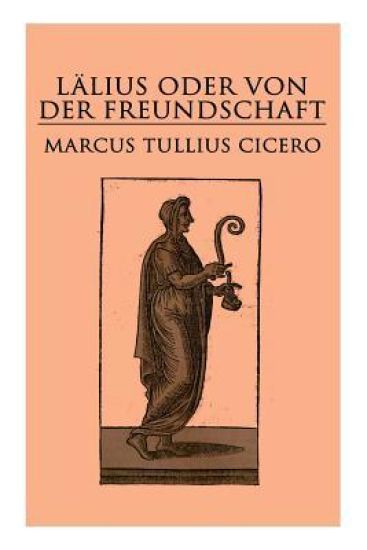
Lälius oder von der Freundschaft

Lälius oder von der Freundschaft

Marcus Tullius Cicero

E-Artnow
2018
pokkari
Der Laelius de amicitia ist ein Werk des r mischen Rechtsanwalts, Politikers, Schriftstellers und Philosophen Marcus Tullius Cicero, das wahrscheinlich im Herbst 44 v. Chr. geschrieben wurde und Ciceros Freund Titus Pomponius Atticus gewidmet ist. Das Werk ist in Dialogform geschrieben und er rtert die Freundschaft. Als Quellen k nnen Cicero unter anderem Werke von Panaitios von Rhodos und Aristoteles (Nikomachische Ethik) gedient haben. Der Dialog spielt im Jahr 129 v. Chr. kurz nach dem Tod von Scipio Aemilianus. Hauptfiguren sind Quintus Mucius Scaevola und Gaius Fannius sowie Gaius Laelius, von dem der Dialog seinen Namen erhielt. Der Hauptteil des Dialogs wird durch eine Redeaufforderung des Fannius in die drei Themenbereiche Meinung ber die Freundschaft, das Wesen der Freundschaft und Vorschriften in der Freundschaft geteilt. Wichtige Themen sind in dem Werk der "Wert der Freundschaft," das "Wesen der Freundschaft" und die Unterscheidung zwischen einer "Freundschaft von Weisen" und "gew hnlicher Freundschaft." Marcus Tullius Cicero (106 v. Chr. - + 43 v. Chr.) war ein r mischer Politiker, Anwalt, Schriftsteller und Philosoph, der ber hmteste Redner Roms und Konsul im Jahr 63 v. Chr.
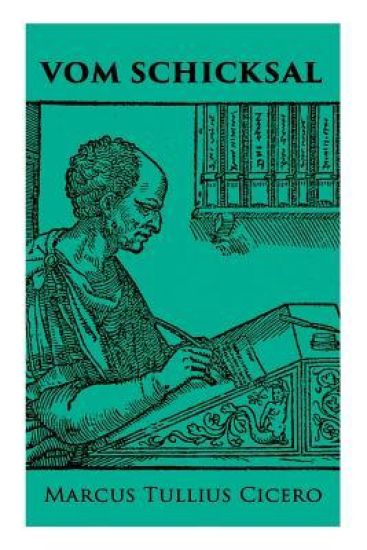
Vom Schicksal

Vom Schicksal

Marcus Tullius Cicero

E-Artnow
2018
pokkari
De fato ist eine Er rterung des Marcus Tullius Cicero. Sie ist nach De natura deorum und De divinatione der dritte und letzte Teil seines theologischen Werkes. Unter fatum versteht Cicero wohl, wie er seinem Bruder Quintus in De divinatione I, 125/126 in den Mund legt: 'Mit "Schicksal" aber meine ich das, was die Griechen mit dem Begriff heimarm ne erfassen, d.h. die Reihung und Verkettung der Ursachen, da eine Ursache, mit der anderen verkn pft, je eine Wirkung aus sich hervorgehen l sst. ... das ewige urs chliche Gesetz aller Dinge. Marcus Tullius Cicero (106 v. Chr. - + 43 v. Chr.) war ein r mischer Politiker, Anwalt, Schriftsteller und Philosoph, der ber hmteste Redner Roms und Konsul im Jahr 63 v. Chr.
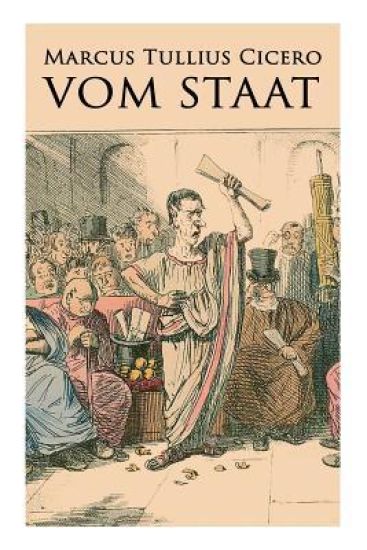
Vom Staat

Vom Staat

Marcus Tullius Cicero

E-Artnow
2018
pokkari
Vom Staat ist ein staatstheoretisches Werk des r mischen Politikers und Philosophen Marcus Tullius Cicero, das aus sechs B chern besteht, deren Inhalt jedoch nur teilweise berliefert ist. Es wurde in den Jahren 54 bis 51 v. Chr. verfasst. Das Werk behandelt die Frage nach der besten Staatsform und dem optimalen Staatslenker und ist in Form eines platonischen Dialogs mit Scipio Aemilianus in der Hauptrolle geschrieben. Marcus Tullius Cicero (106 v. Chr. - + 43 v. Chr.) war ein r mischer Politiker, Anwalt, Schriftsteller und Philosoph, der ber hmteste Redner Roms und Konsul im Jahr 63 v. Chr.
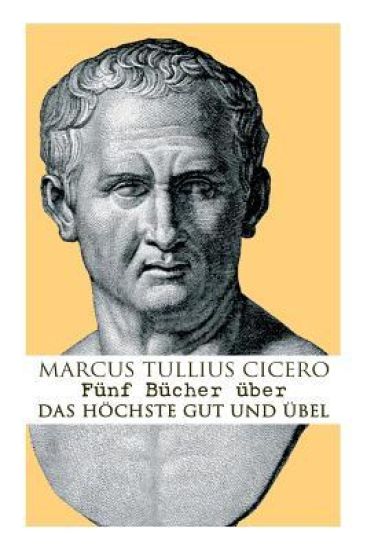
Fünf Bücher über das höchste Gut und Übel
Vom h chsten Gut und vom gr ten bel ist ein philosophisches Werk des r mischen Redners, Politikers und Philosophen Marcus Tullius Cicero. Es besteht aus f nf B chern, in denen sich Cicero mit den Philosophierichtungen des epikureischen Hedonismus, der Stoa und des Peripatos auseinandersetzt und diese dem r mischen Leser vorstellt. Das Leitthema des Werkes ist die Frage nach dem anzustrebenden h chsten Gut. Es entstand im Sommer des Jahres 45 v. Chr. innerhalb von etwa anderthalb Monaten. Zusammen mit den kurz danach geschriebenen Tusculanae disputationes ("Gespr che in Tusculum") ist De finibus das umfangreichste philosophische Werk Ciceros. Gewidmet ist das Werk Marcus Iunius Brutus. Marcus Tullius Cicero (106 v. Chr. - + 43 v. Chr.) war ein r mischer Politiker, Anwalt, Schriftsteller und Philosoph, der ber hmteste Redner Roms und Konsul im Jahr 63 v. Chr.
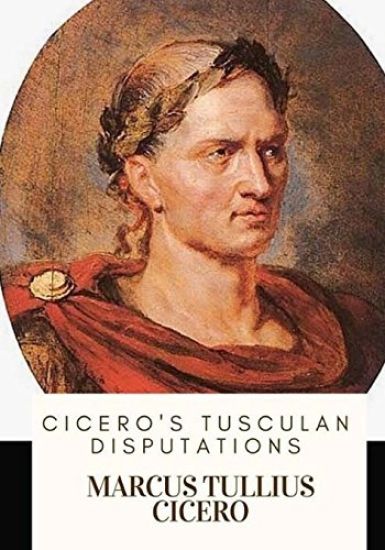
Cicero's Tusculan Disputations

Cicero's Tusculan Disputations

Marcus Tullius Cicero

Createspace Independent Publishing Platform
2018
nidottu
How many men and women who have lived more than 2,000 years ago have impressed us with their humanity? We tend to see the statuary, but rarely the person behind it. When you read this outstanding title, you see that Marcus Tullius Cicero has a human face -- and it shows in his work. The Roman Republic that Cicero loved was falling apart. Marius and Sulla, the Gracchi, the conflicts over the powers of the tribunes had dealt a severe blow to a form of government that had proved itself adequate for governing a city-state, but less so for managing a multi-cultural empire. Cicero fought valiantly against corrupt governors like Verres ("Against Verres") and would-be dictators like Marc Antony ("2nd Phillipic Against Antony"). When he finally threw in his lot with Pompey, he picked the wrong horse and put himself in harm's way.
The Letters of Marcus Tullius Cicero to Several of his Friends. With Remarks by William Melmoth
This work has been selected by scholars as being culturally important, and is part of the knowledge base of civilization as we know it. This work was reproduced from the original artifact, and remains as true to the original work as possible. Therefore, you will see the original copyright references, library stamps (as most of these works have been housed in our most important libraries around the world), and other notations in the work. This work is in the public domain in the United States of America, and possibly other nations. Within the United States, you may freely copy and distribute this work, as no entity (individual or corporate) has a copyright on the body of the work. As a reproduction of a historical artifact, this work may contain missing or blurred pages, poor pictures, errant marks, etc. Scholars believe, and we concur, that this work is important enough to be preserved, reproduced, and made generally available to the public. We appreciate your support of the preservation process, and thank you for being an important part of keeping this knowledge alive and relevant.
Letters; the Whole Extant Correspondence in Chronological Order. Translated Into English by Evelyn S. Shuckburgh
This work has been selected by scholars as being culturally important, and is part of the knowledge base of civilization as we know it. This work was reproduced from the original artifact, and remains as true to the original work as possible. Therefore, you will see the original copyright references, library stamps (as most of these works have been housed in our most important libraries around the world), and other notations in the work. This work is in the public domain in the United States of America, and possibly other nations. Within the United States, you may freely copy and distribute this work, as no entity (individual or corporate) has a copyright on the body of the work. As a reproduction of a historical artifact, this work may contain missing or blurred pages, poor pictures, errant marks, etc. Scholars believe, and we concur, that this work is important enough to be preserved, reproduced, and made generally available to the public. We appreciate your support of the preservation process, and thank you for being an important part of keeping this knowledge alive and relevant.