Kirjojen hintavertailu – 12 859 819 kirjaa ja 27 kauppaa

Kirjailija

Mark Stille

Kirjat ja teokset yhdessä paikassa: 70 kirjaa, julkaisuja vuosilta 2005–2027, suosituimpiin kuuluu US Navy Pacific Fleet 1942-43. Vertaile teosten hintoja ja tarkista saatavuus suomalaisista kirjakaupoista.

70 kirjaa

Kirjojen julkaisuvuodet: 2005–2027.
New Guinea 1943–44

New Guinea 1943–44

Mark Stille; John Rogers

BLOOMSBURY PUBLISHING PLC
2026
nidottu
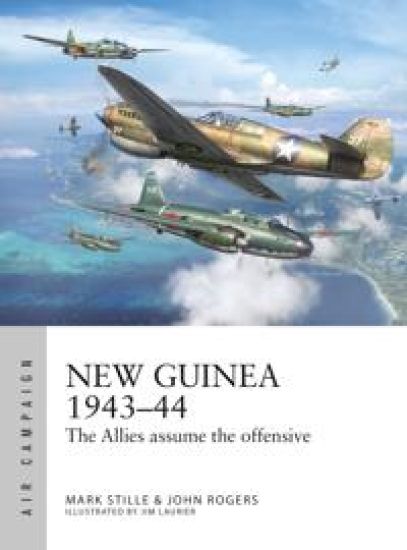
Fully illustrated, this is a history of airpower in the decisive stage of the New Guinea campaign, when the Allies could finally go on the offensive to shatter Japanese forces. In mid-1943, the Imperial Japanese Army Air Force (IJAAF) took over responsibility for New Guinea air operations from the Imperial Japanese Navy. In its first large-scale contest against the USAAF, the IJAAF was challenged to defend its bases, defend the sea lanes supporting numerous Japanese outposts along the coast, and influence ground operations. In this book, the second of two on the New Guinea campaign, Pacific War scholars Mark Stille and John Rogers draw upon years of research and Japanese, American and Australian sources to explain how the New Guinea air war turned against the Japanese between June 1943 and 1944. The over-extended IJAAF gradually lost combat strength in the face of vastly improved Allied airpower, leaving the Japanese unable to contend. One prongs of the Allies’ air offensive targeted Japanese shipping to isolate its forces, while the other supported the ground offensives and landings that smashed Japanese forces and left most of them isolated for the rest of the war. Packed with artwork, maps, and archive photos, this book explains how the lessons learned and the forces built up during the harsh struggle for Papua in 1942-43 transformed the Allies’ airpower into a decisive element in MacArthur’s 1943–44 campaign.
Battle of the Atlantic (2)

Battle of the Atlantic (2)

Mark Stille

BLOOMSBURY PUBLISHING PLC
2026
nidottu
A detailed account of the dramatic success and failures of Hitler's U-boats in the mid-war years during the best-known naval campaign of World War II. At the start of 1942, the Germans benefited from the lack of American preparations to defend shipping along the US East Coast, and this 'Second Happy Time' saw serious Allied losses between January and July 1942. After this Allied disaster, Admiral Dönitz planned to shift his focus to the North Atlantic. This was interrupted by the Allied invasion of North Africa, which diverted the U-boat force until the end of 1942. When Dönitz was finally able to move his U-boats into the North Atlantic, they inflicted very heavy losses on Allied shipping and, by March 1943, looked poised for victory. Respected naval historian Mark Stille analyses this critical period in the Battle of the Atlantic, describing how Allied advances in technology and intelligence saw the balance shift, with a stunning 34 boats lost in May 1943 alone and the Germans forced to withdraw. He also examines whether the Germans could have ever actually threatened the Allied sea lanes of communication effectively. Using maps, diagrams, photographs and stunning battlescene artworks, the weapons, personalities, and tactics of the opposing sides are brought vividly to life in a unique and engaging way.
Midway

Midway

Mark Stille

BLOOMSBURY PUBLISHING PLC
2026
nidottu

Halvin toimitettuna 23,70 €

A detailed re-examination of Midway, one of the most significant battles in the Pacific Theater of World War II. In April 1942, the Combined Fleet of the Imperial Japanese Navy was at the zenith of its power. It had struck a severe blow against the US Navy at Pearl Harbor in December 1941, before spearheading the Japanese advance through Southeast Asia and rampaging across the South Pacific. Only a few months later, in June 1942, the US Navy managed to inflict a decisive defeat on this mighty force off Midway Atoll and the strategic initiative in the Pacific Theater passed to the US Navy. Midway is one of the most mythologized battles of World War II. The traditional view of the battle, popularized in its immediate aftermath and surviving through to the present day, is of a heavily outnumbered American force snatching victory in the face of overwhelming odds. This view is simplistic and, in many respects, wrong. Pacific War expert Mark E. Stille provides a detailed analysis of this pivotal battle, and argues that Midway was neither a miraculous American victory, nor a product of good fortune, but that the plans, personalities, doctrines, ships and weapons of the two sides meant that a Japanese defeat was the more likely outcome. This up to date study provides an unparalleled level of insight and thorough analysis into one of the decisive moments of the Pacific War.
Pearl Harbor

Pearl Harbor

Mark Stille

BLOOMSBURY PUBLISHING PLC
2025
sidottu

Halvin toimitettuna 28,40 €

A detailed re-examination of the Japanese attack on Pearl Harbor, the Day of Infamy that saw the USA enter World War II. In this the first comprehensive treatment of Pearl Harbor since the early 1990s. respected Pacific War naval historian Mark Stille traces the road to war and the Japanese attack itself. He examines the role of the man behind the operation, Japanese Admiral Yamamoto, as well as the strengths and weaknesses of the plan. The American preparations for an attack are also carefully reviewed. The heart of the book is a comprehensive narrative of Pearl Harbor along with an appreciation of its results placed in proper perspective. In common with many of the major campaigns of the Pacific War, many myths surround the Battle of Pearl Harbor, and, amongst others, Mark explores and dismantle the myth of Yamamoto as a military genius, as well as the myth that the attack was brilliantly planned. Long regarded as brilliant strike, Mark argues in Pearl Harbor that the attack was instead a tactical disappointment, an operational failure and a strategic disaster.
New Guinea 1942–43

New Guinea 1942–43

Mark Stille; John Rogers

BLOOMSBURY PUBLISHING PLC
2025
nidottu

Halvin toimitettuna 22,00 €

Lavishly illustrated, this book studies the role of airpower in the New Guinea battles of 1942–43, as the Allies checked and halted Japan's last significant offensives. Mark Stille and John Rogers offer a new history of a previously neglected part of the South Pacific air war - the battles over New Guinea and the waters around it. The first of two books on the subject, drawing on Japanese, American and Australian sources, it details operations from February 1942 until April 1943, which saw the Allies stop the last Japanese efforts to expand their faltering empire. Allied air operations focused on denying the Japanese the use of the sea to send reinforcements to New Guinea, during the battles for Buna and Gona, the unsuccessful and little-known Japanese invasion at Milne Bay, and the Battle of the Bismarck Sea in which a major Japanese effort to move troops to New Guinea was crushed by air power. While the Japanese had over-extended and lost operational focus, the Allies were successful in interdicting sea movement of Japanese forces to New Guinea. However, immature tactics meant air power was largely ineffective supporting their ground campaign. Packed with photos, superb original battlescenes, 3D diagrams and maps, this book explains the roles of Japanese and Allied air power in the crucial battle of New Guinea.
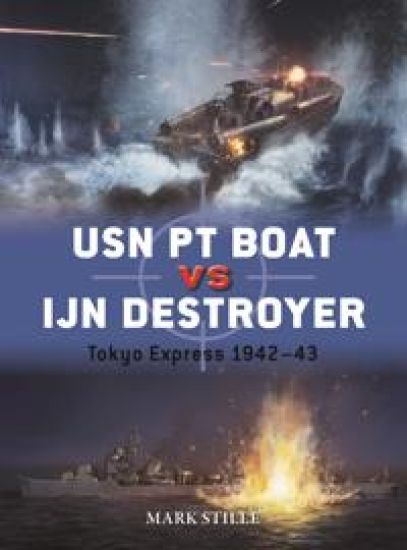
USN PT Boat vs IJN Destroyer

USN PT Boat vs IJN Destroyer

Mark Stille

BLOOMSBURY PUBLISHING PLC
2025
nidottu
This fully illustrated book assesses the trial of strength between US Navy PT boats and Japanese destroyers operating in the Solomon Islands during 1942–43. During the Solomons fighting, the IJN was forced to rely on destroyers to move men and materiel to its forward garrisons. Conducted at night to avoid American air power, these missions, first seen during the struggle for Guadalcanal, were dubbed the Tokyo Express. Unable to derail the Tokyo Express by using its destroyers, the USN deployed PT boats off Guadalcanal from October 1942; sinking one destroyer and damaging another. As the fighting moved into the Central Solomons, the USN attempted to disrupt the build-up of Japanese forces on New Georgia Island and other Japanese strongholds by using cruisers and destroyers, but this approach resulted in heavy losses. PT boat operations were increasingly important after the Japanese turned to barges to move troops and supplies. Full-colour artwork and mapping and carefully chosen archive photographs complement vivid battle narratives and shrewd analysis in this lively account of the ships and men fighting on both sides in the crucial Solomon Islands campaign at the height of World War II. Renowned authority Mark Stille explores the background to this epic clash of arms, charts its course during 1942–43, and offers insights into the performance of both sides in this pivotal campaign of World War II in the Pacific.
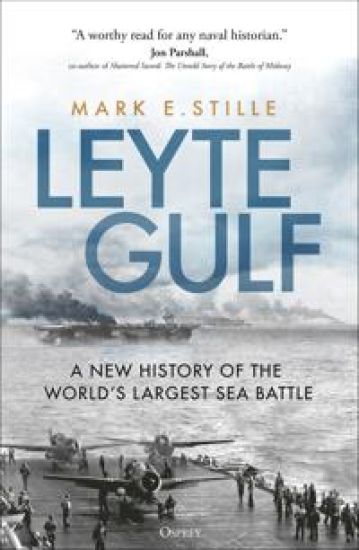
Leyte Gulf

Leyte Gulf

Mark Stille

BLOOMSBURY PUBLISHING PLC
2025
nidottu

Halvin toimitettuna 28,90 €

'A worthy addition to any bookshelf.', The Naval Review A fascinating re-examination of the battle of Leyte Gulf, the largest naval encounter in history and probably the most decisive naval battle of the entire Pacific War. Leyte was a huge and complex action, actually consisting of four major battles, each of which are broken down in detail in this book, using original sources. The plans of both sides, and how they dictated the events that followed, are also examined critically. So much of the accepted wisdom of the battle has developed from the many myths that surround it, myths that have become more firmly established over time. In this new study, Pacific War expert Mark Stille examines the key aspects of this complex battle with new and insightful analysis and dismantles the myths surrounding the respective actions and overall performances of the two most important commanders in the battle, and the “lost victory” of the Japanese advance into Leyte Gulf that never happened.
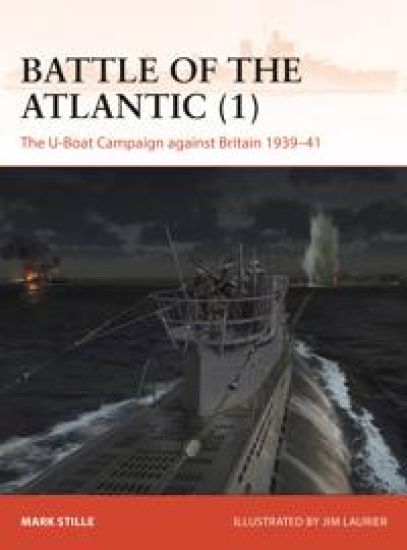
Battle of the Atlantic (1)

Battle of the Atlantic (1)

Mark Stille

BLOOMSBURY PUBLISHING PLC
2024
nidottu

Halvin toimitettuna 22,00 €

The first in a series of illustrated books exploring the longest and best-known naval campaign of World War II, focusing on the struggle between Allied naval and air forces and Hitler's U-boats. When fighting broke out in September 1939, neither the British Royal Navy nor the German Kriegsmarine were prepared for another war in the North Atlantic. Having defeated the U-boats in World War I, the Royal Navy was confident it would succeed again. This was quickly shown to be a delusion, as neither the scale of forces available nor their tactics were sufficient. The Germans were even less prepared, having only a small number of U-boats and fewer still that were large enough for operations in the Atlantic. The Germans attempted to win a tonnage war against Allied shipping, with well-trained and bold U-boat commanders enjoying some brilliant successes. However, torpedo problems and the shortage of U-boats prevented the Germans from inflicting crippling losses, even though the British found it impossible to protect all shipping, primarily because of a lack of convoy escorts and inadequate air cover. Respected naval historian Mark Stille examines the struggle between Allied naval and air forces and German U-boats in the first 15 months of World War II. Featuring maps, diagrams, photographs and stunning battlescene artworks, this book vividly brings to life the weapons, personalities and tactics of the opposing sides.
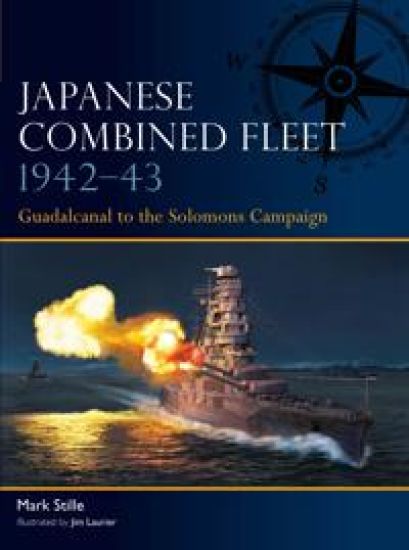
Japanese Combined Fleet 1942–43

Japanese Combined Fleet 1942–43

Mark Stille

BLOOMSBURY PUBLISHING PLC
2024
nidottu

Halvin toimitettuna 21,20 €

A superbly illustrated account of the Japanese Navy during the fierce battles of Guadalcanal and the Solomons, explaining how and why it fought as it did. Contrary to myth, the Imperial Japanese Navy was not a shattered force after its defeat at Midway. In this book, Pacific War expert Mark Stille examines the IJN’s Combined Fleet during the Guadalcanal and Solomons campaigns, when it was reorganized and was forced to fight a grinding battle of attrition against the US Navy. The early surface battles in the Guadalcanal campaign played into the strength of the Combined Fleet, which had long trained for night combat. The IJN’s rebuilt carrier force also performed well and managed to score its most clearcut victory against the USN’s carriers of the entire war, at the battle of Santa Cruz, but the overall Guadalcanal campaign ended in disaster. The result was that the IJN was unwilling to engage in a major struggle for the Central and Northern Solomons, instead using only its destroyer force and land-based air power to fight a delaying action. However, this was costly and weakened the Combined Fleet for the rest of the war. Using the most recent sources and illustrated with superb artwork, 3D diagrams and maps, the book is the first attempt to focus on how the Combined Fleet fought these campaigns, and, most importantly, how their results affected the rest of the war.
Midway

Midway

Mark Stille

BLOOMSBURY PUBLISHING PLC
2024
sidottu
A detailed re-examination of Midway, one of the most significant battles in the Pacific Theater of World War II. In April 1942, the Combined Fleet of the Imperial Japanese Navy was at the zenith of its power. It had struck a severe blow against the US Navy at Pearl Harbor in December 1941, before spearheading the Japanese advance through Southeast Asia and rampaging across the South Pacific. Only a few months later, in June 1942, the US Navy managed to inflict a decisive defeat on this mighty force off Midway Atoll and the strategic initiative in the Pacific Theater passed to the US Navy. Midway is one of the most mythologized battles of World War II. The traditional view of the battle, popularized in its immediate aftermath and surviving through to the present day, is of a heavily outnumbered American force snatching victory in the face of overwhelming odds. This view is simplistic and, in many respects, wrong. Pacific War expert Mark E. Stille provides a detailed analysis of this pivotal battle, and argues that Midway was neither a miraculous American victory, nor a product of good fortune, but that the plans, personalities, doctrines, ships and weapons of the two sides meant that a Japanese defeat was the more likely outcome. This up to date study provides an unparalleled level of insight and thorough analysis into one of the decisive moments of the Pacific War.
Midway-Class Aircraft Carriers 1945–92

Midway-Class Aircraft Carriers 1945–92

Mark Stille

BLOOMSBURY PUBLISHING PLC
2024
nidottu

Halvin toimitettuna 18,70 €

The Midway-class were the US Navy's biggest carriers built during World War II. Superbly illustrated, this explains how they became the backbone of the Cold War fleet. Entering service in September 1945, the Midway-class aircraft carrier was the US Navy’s ultimate World War II-era design, and these would be its frontline carriers as the Cold War dawned. A fine design and one big enough to accept significant modernizations over the decades, the class saw combat in the Vietnam War, and Midway even launched the first carrier airstrikes of the Gulf War in 1990. In this book, naval expert Mark Stille explains how the Midway class was the US Navy’s attempt to build a much larger and more survivable version of the wartime Essex class; its extensive new protection system included the first armoured flight deck in the US Navy. He highlights how new weapons systems transformed the Midways during the jet age, from angled flight decks and catapults to CIWS, until Midway found her last home as a museum ship in San Diego, the only non-Essex-class American carrier to be preserved. Illustrated with archive photos and superb original art, including profiles detailing how the ships were rebuilt throughout their careers, this book explores the heart of the US Navy’s carrier fleet during the early Cold War.
Philippines Naval Campaign 1944–45

Philippines Naval Campaign 1944–45

Mark Stille

BLOOMSBURY PUBLISHING PLC
2024
nidottu

Halvin toimitettuna 22,00 €

The forgotten story of the major naval operations conducted in the Philippines by the US and Japanese navies after Leyte Gulf up to the US invasion of Luzon in January 1945. The events that took place in the aftermath of the Battle of Leyte Gulf in October 1944 are often overlooked by military historians. An impressive array of naval operations continued in the Philippines up to January 1945, which included (on the Japanese side) the largest convoys to a contested island during the war, the first kamikaze campaign, and the second largest Imperial Japanese Navy surface operation during the last nine months of the conflict. On the American side, US forces were involved in efforts to cut off Leyte from enemy reinforcement, a massive amphibious invasion off Luzon, and large-scale operations by the Fast Carrier Task Force (TF 38). Expert naval historian Mark Stille throws new light on this often forgotten phase of the Pacific naval war. Among the actions covered are the battles for Ormoc Bay, the invasion of Mindoro, Japanese kamikaze attacks, and US Third Fleet's rampage through the South China Sea between January 10 and 20, 1945. Superb battlescene artworks bring the war at sea and in the air vividly to life, and maps and diagrams guide readers through a range of actions in clear, step-by-step detail.
Japan’s Indian Ocean Raid 1942

Japan’s Indian Ocean Raid 1942

Mark Stille

BLOOMSBURY PUBLISHING PLC
2023
nidottu

Halvin toimitettuna 22,00 €

An detailed illustrated exploration of the Japanese raid into the Indian Ocean in April 1942 – one of the largest operations conducted by the Imperial Navy during the war. In the wake of Japan’s conquest of Burma in early 1942, plans were formed by the Imperial high command to capture Ceylon (modern Sri Lanka) to consolidate Japan’s defensive perimeter and disrupt British shipping lanes to India, Australia, and the Middle East. The Imperial Japanese Army, however, could not release sufficient troops for an invasion, and so in response the Japanese Navy developed Operation C, an aggressive raid by the Combined Fleet into the Indian Ocean. The key objective was to destroy the British Eastern Fleet in port. Expert naval historian Mark Stille documents the high point of Japanese naval air power as its carriers struck Ceylon – the heart of British naval power in the East – sinking several Allied ships. He describes the Allied air attempts to destroy Admiral Chuichi Nagumo’s force, and the Japanese attacks against British shipping and the cities along the Indian coast. Specially commissioned battlescenes bring to life the sinking of British carrier Hermes, the Bristol Blenheim attacks on the Japanese carrier force, and a Zero vs Hurricane dogfight over Colombo on 5 April. Easy to follow maps and diagrams reveal the strategic situation at the start and end of the campaign, and track the movements of the Japanese carrier task force and the British Eastern Fleet throughout. Details of weaponry, equipment, personnel and the events of the fascinating battles that took place are revealed in over 60 photographs, many of which are from Japanese sources.
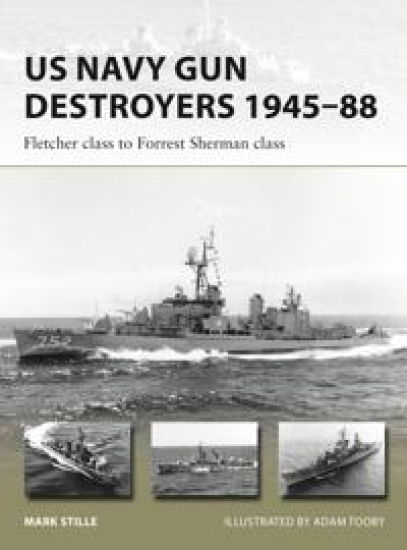
US Navy Gun Destroyers 1945–88

US Navy Gun Destroyers 1945–88

Mark Stille

BLOOMSBURY PUBLISHING PLC
2023
nidottu
An illustrated history of the long Cold War careers of the US Navy's last gun destroyers, from the modernized World War II-era Fletcher-class to the Forrest Sherman-class. The finest American destroyers of World War II had surprisingly long careers into the Cold War and the missile age. The 175-strong Fletcher-class was the largest class of US Navy destroyers ever built, and most received some modernization after World War II. A handful were converted into ASW (Anti-Submarine Warfare) escorts and one was even converted into the US Navy’s first guided missile destroyer. Many Sumner-class destroyers were also kept in service, with the last decommissioned in 1973. The Gearing class was the classic US Navy wartime destroyer to have a second Cold War career, some being modified into picket ships and others into ASW escorts. Ninety-five were extensively modernized under the Fleet Modernization and Rehabilitation (FRAM) program which allowed them to serve until 1980. The majority of these ships then saw service with foreign navies. However the story of Cold War gun destroyers is not just one of World War II relics. Commissioned in the 1950s, the 18 ships of the Forrest Sherman class were the US Navy’s last all-gun destroyers, and were considered to be the pinnacle of US Navy gun-destroyer design. Later in their careers, most were modernized for ASW and antiair warfare. The virtually unknown Norfolk class was originally built as a destroyer leader and maximized for ASW but only two were modernized and the other three retired early. Many of these ships, such as USS Edson, Cassin Young, and Turner Joy, still survive as museum ships today. Using battlescene artwork, detailed illustrations and photos, this book explores the careers, modernizations, and roles of all these unsung Cold War stalwarts, the last gun destroyers of the US Navy.
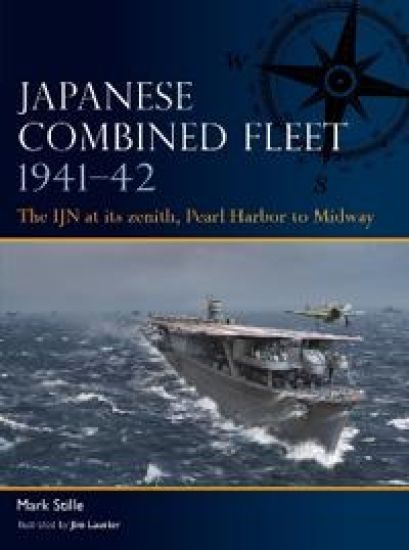
Japanese Combined Fleet 1941–42

Japanese Combined Fleet 1941–42

Mark Stille

BLOOMSBURY PUBLISHING PLC
2023
nidottu

Halvin toimitettuna 21,20 €

Launching Osprey's new Fleet series, this is a spectacularly illustrated, concise and comprehensive account of the Imperial Japanese Navy's striking force at the height of its power. The Imperial Japanese Navy (IJN) entered the Pacific War as one of the most formidable navies in the world, and its combat power was concentrated into one force, the Combined Fleet. In the months that followed Pearl Harbor it enjoyed an unrivaled string of victories, shattering American, British, Australian, and Dutch naval forces. This period of expansion and constant victories ended at the Battle of Midway, after which the Combined Fleet was forced onto the defensive. In this book, Mark Stille draws on his decades of IJN research to explain what made the Combined Fleet the fighting force that it was. Packed with superb original artwork, explanatory 3D diagrams and maps, it examines the fleet's doctrine, innovative tactics and powerful warships. It also details the qualities and importance of IJN leadership, logistics, naval infrastructure, and Japan’s shipbuilding capability, and gives an account and analysis of the IJN's combat performance during these crucial months – not just in the famous carrier battles, but also exploring lesser-known elements such as IJN amphibious forces and land-based aviation.
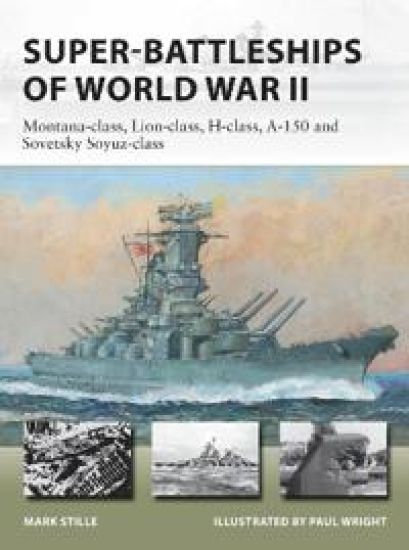
Super-Battleships of World War II

Super-Battleships of World War II

Mark Stille

BLOOMSBURY PUBLISHING PLC
2022
nidottu

Halvin toimitettuna 18,70 €

An illustrated study of the design, development and eventual fates of the uncompleted super-battleships intended to be built before and during World War II. Before the start of World War II, the battleship was still king, and all the major powers were designing even mightier battleships to surpass their most modern and powerful classes. But when war broke out, aircraft carriers would dominate naval warfare, and none of these monster warships would ever be completed. In this book, naval expert Mark Stille uncovers these lost battleships as they are reconstructed with the help of superb new full-colour artwork and photos. The US Navy planned five Montana-class ships, based on the Iowas but with a heavier main battery and improved protection, while the Royal Navy began work on three 16in-gun Lion-class fast battleships. The German Navy began to develop its H-class designs, initially an improved Bismarck-class which became more fantastical, culminating in the 141,500-ton, 20in-gun H-44. The Japanese A-150 was based on the Yamato-class but with 20.1in guns, while the 15 ships planned for the USSR’s Sovetsky Soyuz-class would have rivalled the Montanas in size. Explaining the design, intended roles and fate of these ships, this is the story of the last super-battleship designs in history.
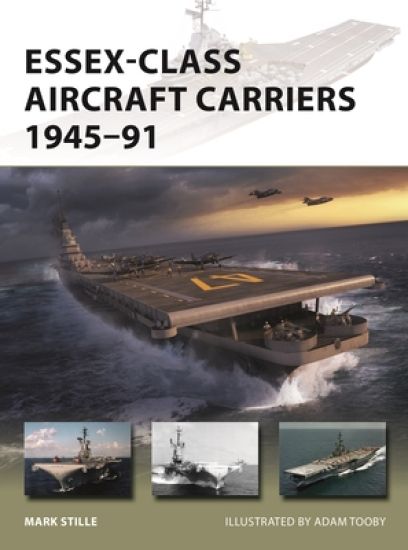
Essex-Class Aircraft Carriers 1945–91

Essex-Class Aircraft Carriers 1945–91

Mark Stille

BLOOMSBURY PUBLISHING PLC
2022
nidottu
A history of the enduring Essex-class ships, the US Navy's finest and most numerous fleet carrier during World War II, which were modernized repeatedly and served with distinction. The Essex class was the USN’s war-winning ship class of the Pacific War. Of the 24 ships completed, 14 saw action, making the Essex class the largest class of fleet aircraft carriers ever built. These ships had a fine balance of striking power, protection, and speed and were modernized during and after the war. There were five distinct programs carried out, adding not only angled flight decks for jet operations, but repeated upgrades to sensors, weapons, and equipment. Essex-class carriers were used in a number of roles and provided the vast majority of US Navy air power in the Korean War, and a sizeable proportion of air power in the Vietnam conflict. However, as the “super carriers” began to enter service in the early 1960s, the Essex class was relegated to secondary roles– a single Essex carrier served until 1991 as the US Navy’s training carrier. Using detailed artwork and photos, this book provides an in-depth portrait of this important and enduring class of ship, and looks at its development and modifications while considering the many and varied actions it took part in.
Leyte Gulf 1944 (2)

Leyte Gulf 1944 (2)

Mark Stille

BLOOMSBURY PUBLISHING PLC
2022
nidottu

Halvin toimitettuna 21,20 €

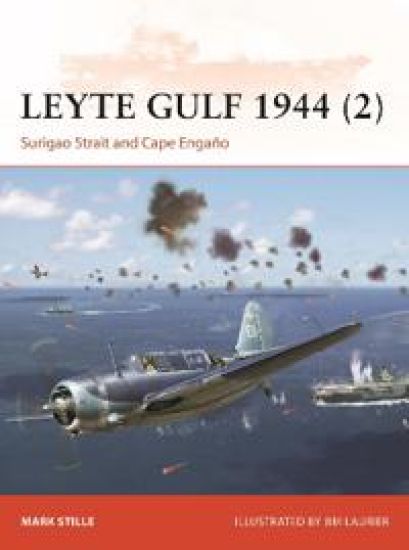
The second volume in a two-part illustrated study of the October 23-26 Battle of Leyte Gulf, which resulted in a decisive defeat for the Japanese. The Battle of Leyte Gulf—the largest naval battle in history—comprised four major actions conducted over the course of two days, plus several associated minor clashes. The size and complexity of this epic battle remains unmatched, with two United States Navy (USN) fleets (Third and Seventh) facing a much-reduced Imperial Japanese Navy (IJN), severely outnumbered and fatally lacking in airpower. Complementing the first volume’s coverage of the IJN’s First Diversion Attack Force at the battles of the Sibuyan Sea and off Samar, this superbly illustrated second volume focuses on the forces supporting the main Japanese thrust. Naval expert Mark Stille reveals how the Japanese Main Body succeeded in its mission of luring the US Third Fleet to the north, but at a tremendous cost in the ensuing Battle off Cape Engaño. Also explored in full visual detail is the fate of the small detachment of seven IJN ships ordered to attack into Leyte Gulf through Surigao Strait in the south. The resulting Battle of Surigao Strait on October 25, 1944 would prove to be the last battleship duel in history.
USN Submarine vs IJN Antisubmarine Escort

USN Submarine vs IJN Antisubmarine Escort

Mark Stille

Osprey Publishing
2022
nidottu
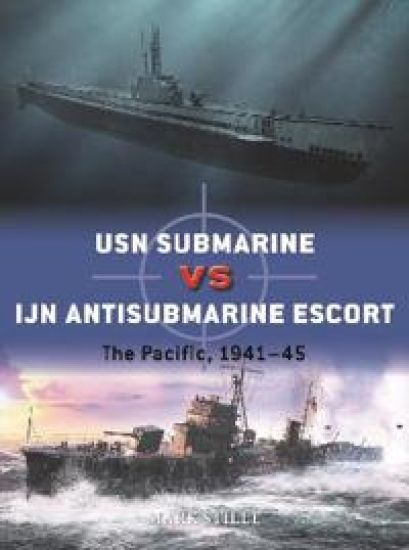
This fully illustrated study examines and compares the roles of the US Navy submarines and the Imperial Japanese Navy’s anti-submarine warfare capabilities during World War II. In 1941 and 1942, US Navy submarine operations in the Pacific were largely ineffective, hampered by faulty torpedo design, conservative tactics, and insufficiently aggressive submarine captains. Eventually, though, a new generation of wartime submarine commanders, combined with reliable torpedoes, new generation boats, improved intelligence, and advanced radar, inflicted devastating losses on Japanese shipping. Antisubmarine warfare was initially accorded a low priority by the Imperial Japanese Navy; the lack of ASW escorts and modern weaponry, and an inability to develop tactics, resulted in devastation to vital convoys, and hampered its ability to deter and destroy enemy submarines. This book explores all these factors, and the role that US submarines played in supporting the major fleet operations in the Pacific Theater, notching up almost 500 patrols by war’s end for the loss of 52 submarines to the Japanese. The technical and tactical developments implemented by the opposing sides are documented in detail, including US improvements to submarine design and weaponry and more aggressive tactics, and the Japanese development of destroyer escorts, changes to depth charge design, and improved submarine detection capacity.