Kirjojen hintavertailu – 12 859 828 kirjaa ja 27 kauppaa
Kirjailija
Mary Wollstonecraft
Kirjat ja teokset yhdessä paikassa: 360 kirjaa, julkaisuja vuosilta 1755–2026, suosituimpiin kuuluu Maria. Vertaile teosten hintoja ja tarkista saatavuus suomalaisista kirjakaupoista.
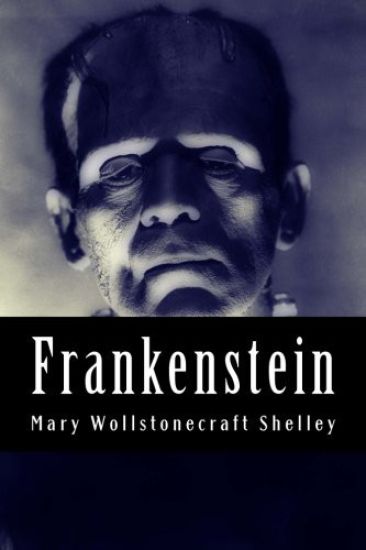
Frankenstein; or, The Modern Prometheus is a novel written by English author Mary Shelley that tells the story of Victor Frankenstein, a young scientist who creates a grotesque but sapient creature in an unorthodox scientific experiment. Shelley started writing the story when she was 18, and the first edition of the novel was published anonymously in London in 1818, when she was 20. Her name first appeared on the second edition, published in France in 1823. Shelley traveled through Europe in 1814, journeying along the River Rhine in Germany with a stop in Gernsheim which is just 17 km (10 mi) away from Frankenstein Castle, where, two centuries before, an alchemist was engaged in experiments. Later, she traveled in the region of Geneva (Switzerland)-where much of the story takes place-and the topic of galvanism and other similar occult ideas were themes of conversation among her companions, particularly her lover and future husband, Percy Shelley. Mary, Percy, Lord Byron and John Polidori decided to have a competition to see who could write the best horror story. After thinking for days, Shelley dreamt about a scientist who created life and was horrified by what he had made; her dream later evolved into the novel's story. Frankenstein is infused with elements of the Gothic novel and the Romantic movement. At the same time, it is an early example of science fiction. Brian Aldiss has argued that it should be considered the first true science fiction story because, in contrast to previous stories with fantastical elements resembling those of later science fiction, the central character "makes a deliberate decision" and "turns to modern experiments in the laboratory" to achieve fantastic results. It has had a considerable influence in literature and popular culture and spawned a complete genre of horror stories, films and plays. Since the novel's publication, the name "Frankenstein" has often been used to refer to the monster itself, as it is in the stage adaptation by Peggy Webling. This usage is sometimes considered erroneous, but usage commentators regard it as well-established and acceptable. In the novel, the monster is identified by words such as "wretch", "creature", "monster", "demon", and "it". Speaking to Victor Frankenstein, the wretch refers to himself as "the Adam of your labours", and elsewhere as someone who "would have" been "your Adam", but is instead "your fallen angel."
Frankenstein is a novel written by the English author Mary Wollstonecraft Shelley about the young science student Victor Frankenstein, who creates a grotesque but sentient creature in an unorthodox scientific experiment. Shelley started writing the story when she was eighteen, and the novel was published when she was twenty. The first edition was published anonymously in London in 1818. Shelley's name appears on the second edition, published in France in 1823. Victor Frankenstein reanimates a dead body, and then his guilt for creating such a thing. When the "Frankenstein monster" realizes how he came to be and is rejected by mankind, he seeks revenge on his creator's family to avenge his own sorrow. Frankenstein is written in the form of a frame story that starts with Captain Robert Walton writing letters to his sister. It takes place at an unspecified time in the 18th Century, as the letters' dates are given as "17
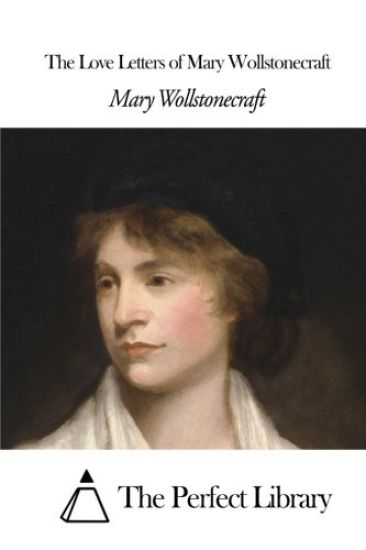
The Love Letters of Mary Wollstonecraft to Gilbert Imlay is a classic collection of romantic letters exchanged between Mary Wollstonecraft and Gilbert Imlay. Of Mary Wollstonecraft's ancestors little is known, except that they were of Irish descent. Her father, Edward John Wollstonecraft, was the son of a prosperous Spitalfields manufacturer of Irish birth, from whom he inherited the sum of ten thousand pounds. He married towards the middle of the eighteenth century Elizabeth Dixon, the daughter of a gentleman in good position, of Ballyshannon, by whom he had six children: Edward, Mary, Everina, Eliza, James, and Charles. Mary, the eldest daughter and second child, was born on April 27, 1759, the birth year of Burns and Schiller, and the last year of George II.'s reign. Mary Wollstonecraft (27 April 1759 - 10 September 1797) was an English writer, philosopher, and advocate of women's rights. During her brief career, she wrote novels, treatises, a travel narrative, a history of the French Revolution, a conduct book, and a children's book. Wollstonecraft is best known for A Vindication of the Rights of Woman (1792), in which she argues that women are not naturally inferior to men, but appear to be only because they lack education. She suggests that both men and women should be treated as rational beings and imagines a social order founded on reason. Until the late 20th century, Mary Wollstonecraft's life, which encompassed several unconventional personal relationships, received more attention than her writing. After two ill-fated affairs, with Henry Fuseli and Gilbert Imlay (by whom she had a daughter, Fanny Imlay), Mary Wollstonecraft married the philosopher William Godwin, one of the forefathers of the anarchist movement. Wollstonecraft died at the age of 38, eleven days after giving birth to her second daughter, leaving behind several unfinished manuscripts. This daughter, Mary Wollstonecraft Godwin, became an accomplished writer herself, as Mary Shelley, the author of Frankenstein. After Mary Wollstonecraft's death, her widower published a Memoir (1798) of her life, revealing her unorthodox lifestyle, which inadvertently destroyed her reputation for almost a century. However, with the emergence of the feminist movement at the turn of the twentieth century, Wollstonecraft's advocacy of women's equality and critiques of conventional femininity became increasingly important. Today Wollstonecraft is regarded as one of the founding feminist philosophers, and feminists often cite both her life and work as important influences.
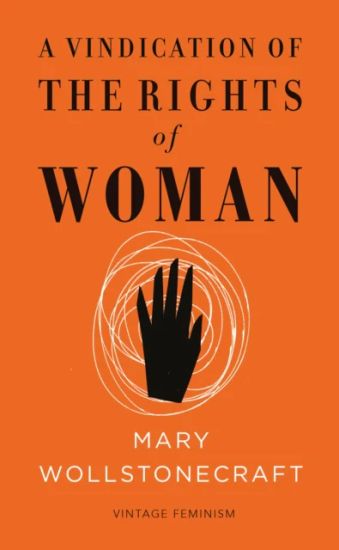
Discover Wollstonecraft’s classic feminist text in an abridged, digestible form. WITH AN INTRODUCTION BY ZOE WILLIAMS The term feminism did not yet exist when Mary Wollstonecraft wrote this book, but it was the first great piece of feminist writing. In these pages you will find the essence of her argument – for the education of women and for an increased female contribution to society. Her work made the first ripples of what would later become the tidal wave of the women’s rights movement. Rationalist but revolutionary, Wollstonecraft changed the world for women. Vintage Feminism: classic feminist texts in short form
A key work of proto-feminism, Mary Wollstonecraft's readable and impassioned argument is as relevant today as it was two hundred years ago. Before the concept of equality between the sexes was even conceived, Wollstonecraft wrote this book, a treatise of proto-feminism that was as powerful and original then as it is now. In it she argues with clarity and originality for the rational education of women and for an increased female contribution to society. It was a cry for justice from a woman with no power other than her pen and it put in motion a drive towards greater equality between men and women, a movement which continues to this day. ‘The first great piece of feminist writing’ Independent