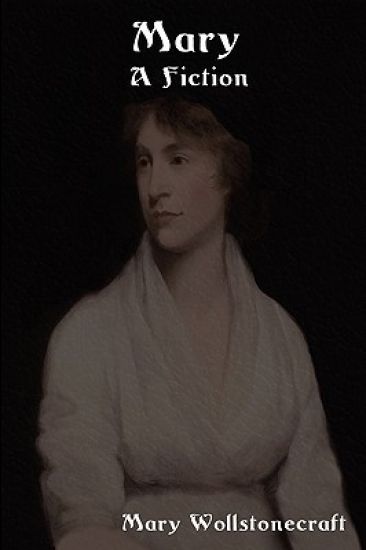
Kirjailija
Mary Wollstonecraft
Kirjat ja teokset yhdessä paikassa: 360 kirjaa, julkaisuja vuosilta 1755–2026, suosituimpiin kuuluu Maria. Vertaile teosten hintoja ja tarkista saatavuus suomalaisista kirjakaupoista.
360 kirjaa
Kirjojen julkaisuvuodet: 1755–2026.

Letters Written During a Short Residence in Sweden, Norway, and Denmark (1796)
Mary Wollstonecraft
Broadview Press Ltd
2013
nidottu
"The art of travelling is only a branch of the art of thinking," Mary Wollstonecraft wrote in 1790 in a review of a travel narrative set in Ireland. A Short Residence was her own travel memoir, and became the work that Wollstonecraft most admired in her own lifetime. The text narrates Wollstonecraft's journey through Scandinavia, accompanied by her young daughter; the letters are addressed to an unnamed lover. Passionate and personal, the letters also explore the comparative political and social systems of Europe. The result is a travel book that is both as much a work of political thought as Wollstonecraft's more well-known treatises, and an innovative and influential work in the genre. This Broadview Edition provides a helpful introduction and extensive appendices that contextualise this remarkable text in relation to a number of key political and aesthetic debates.

Posthumous Works of the Author of A Vindication of the Rights of Woman
Mary Wollstonecraft
Tredition Classics
2012
sidottu
Posthumous Works of the Author of A Vindication of the Rights of Woman
Mary Wollstonecraft
Tredition Gmbh
2012
pokkari

Mary, a Fiction and the Wrongs of Woman, or Maria
Mary Wollstonecraft
Broadview Press Ltd
2012
nidottu
Mary Wollstonecraft wrote these two novellas at the beginning and end of her years of writing and political activism. Though written at different times, they explore some of the same issues: ideals of femininity as celebrated by the cult of sensibility, the unequal education of women, and domestic subjugation. Mary counters the contemporary trend of weak, emotional heroines with the story of an intelligent and creative young woman who educates herself through her close friendships with men and women. Darker and more overtly feminist, The Wrongs of Woman is set in an insane asylum, where a young woman has been wrongly imprisoned by her husband. By presenting the novellas in light of such texts as Wollstonecraft's letters, her polemical and educational prose, similar works by other feminists and political reformists, the literature of sentiment, and contemporary medical texts, this edition encourages an appreciation of the complexity and sophistication of Wollstonecraft's writing goals as a radical feminist in the 1790s.
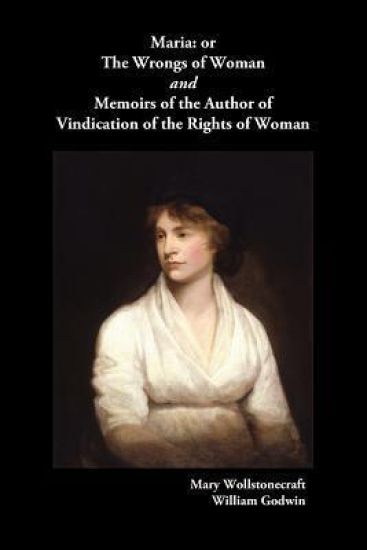
Maria, or The Wrongs of Woman AND Memoirs of the Author of Vindication of the Rights of Woman
Mary Wollstonecraft; Willliam Godwin
Benediction Classics
2011
pokkari
A Vindication of the Rights of Woman
Mary Wollstonecraft
Createspace Independent Publishing Platform
2011
nidottu
In one of the earliest works of feminist philosophy, Wollstonecraft responds to the educational and political theorists who did not believe women should have an education. Here she argued that women are essential to society because they educate its children and because they could be "companions" to their husbands, rather than mere wives. Wollstonecraft maintains that women are human beings who deserve the same rights as men.

Kirjeitä Ruotsissa, Norjassa ja Tanskassa vietetyltä ajalta
Mary Wollstonecraft
Savukeidas
2011
Pehmeäkantinen
Mary Wollstonecraft matkusti 1700-luvun lopulla Skandinaviaan. Entisen rakastajansa liikeasioiden hoitelun ohella eriskummallinen yksinäinen naismatkailija laati kirjeteoksen näiden takapajuisten mutta onnellisen tietämättömien maiden elämästä. Kirjeitä Ruotsissa, Norjassa ja Tanskassa vietetyltä ajalta on syväluotaava yhteiskunta-analyysi ja samanaikainen kurkistus ihmissydämeen ja -järkeen.

Mary Wollstonecraft (1759–1797) published A Vindication of the Rights of Woman in 1792. It was written in reaction to Rousseau's Emile (1762), which argued that the purpose of a girl's education was to make her useful to a man. Wollstonecraft offered a defence of woman's ability to reason, given appropriate education. She argued that the limited education given to women made them docile and empty-headed playthings whose supposed fragility and coquetry were constructions that damaged not only the individual but society as a whole. Her radical prescription was for girls to be educated alongside boys and to the same standard, so that they were not left dependent on marriage for financial security. The independence of mind displayed in this polemic has ensured its place as a foundational work in the canon of feminist thought. For more information on this author, see http://orlando.cambridge.org/public/svPeople?person_id=wollma
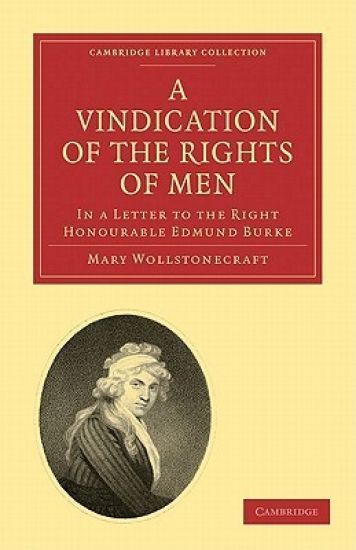
A Vindication of the Rights of Men, in a Letter to the Right Honourable Edmund Burke
Mary Wollstonecraft
Cambridge University Press
2010
pokkari
Mary Wollstonecraft (1759–1797) published A Vindication of the Rights of Men anonymously in 1790. The pamphlet sold out within three weeks to great acclaim, though later editions published under her own name met with notable opprobrium. It was the first of many printed responses to Edmund Burke's conservative attacks on the French Revolution, and it marked Wollstonecraft's entry into the intellectual arena of the late eighteenth century. She attacked hereditary privilege and political conservatism, arguing for codified civil rights and political liberty. She also highlighted Burke's gendered language and criticised his silence on the plight of women. Wollstonecraft has inspired reverence and revulsion alike, for both her work and her lifestyle. Her prescience and nonconformity, however, have secured her position in the canon of distinguished eighteenth-century political thinkers. For more information on this author, see http://orlando.cambridge.org/public/svPeople?person_id=wollma

Letters Written during a Short Residence in Sweden, Norway, and Denmark
Mary Wollstonecraft
Cambridge University Press
2010
pokkari
Mary Wollstonecraft (1759–1797) published this book, the last before her death in childbirth, in 1796. The twenty-five letters are an account of a daring wartime trip to Scandinavia to attempt to retrieve a stolen ship for her lover, the American adventurer Gilbert Imlay. Her letters describe the people and culture she encountered, as well as the beautiful natural surroundings she observed. But in addition to a travelogue these letters include political reflections on controversial topics such as prison reform, as well as revealing a very personal story of inner turmoil and dislocation. Wollstonecraft's letters were written at a difficult period in her life - she had recently attempted suicide - and their themes and emotional content influenced the Romantic poets of the following generation, even though the book's initial popularity waned after her death. For more information on this author, see http://orlando.cambridge.org/public/svPeople?person_id=wollma