Kirjojen hintavertailu – 12 859 828 kirjaa ja 27 kauppaa
Kirjailija
Matthew Lewis
Kirjat ja teokset yhdessä paikassa: 90 kirjaa, julkaisuja vuosilta 1994–2025, suosituimpiin kuuluu The Monk. Vertaile teosten hintoja ja tarkista saatavuus suomalaisista kirjakaupoista.
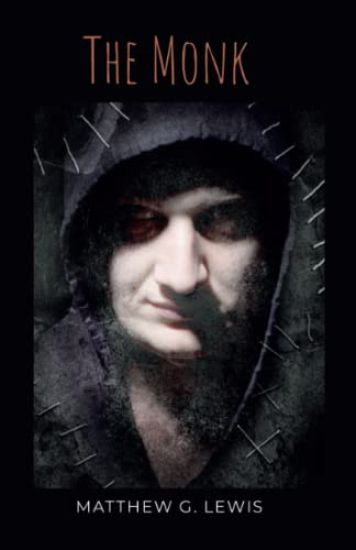
The Monk is the story of the once revered and pious monk Ambrosio, whose temptations are tested with the arrival of a new novice. His internal battle leads to sexual obsession, rape and murder in a Capuchin monastery that holds many dark secrets. Written by Matthew Lewis when he was only nineteen, The Monk was a ground-breaking novel in the Gothic horror genre; that to this day, shocks readers with its mixture of bloodshed, sex, and scandal.
Shakespeare's Henry IV lamented Uneasy lies the head that wears the crown'. It was true of that king's reign and of many others before and after. From Hereward the Wake's guerilla war, resisting the Norman invasion of William the Conqueror, through the Anarchy, the murder of Thomas Becket, the rebellions of Henry II's sons, the deposition of Edward II, the Peasants' Revolt and the rise of the over-mighty noble subject that led to the Wars of the Roses, kings throughout the medieval period came under threat from rebellions and resistance that sprang from the nobility, the Church and even the general population. Serious rebellions arrived on a regular cycle throughout the period, fracturing and transforming England into a nation to be reckoned with. Matthew Lewis seeks to examine the causes behind the insurrections and how they influenced the development of England from the Norman Conquest until the Tudor period. Each rebellion's importance and impact is assessed both individually and as part of a larger movement to examine how rebellions helped to build England.
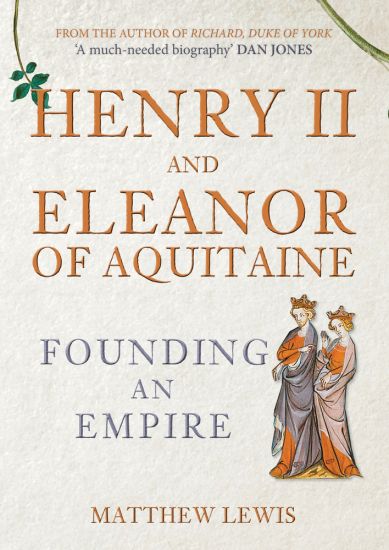
Henry II became King of England in 1154 after twenty years of civil war. He was the first Plantagenet king, the founder of England’s most successful and longest-ruling dynasty. But Henry did not come to the throne alone. He had married Eleanor of Aquitaine, a feisty, formidable and powerful woman ten years his senior. Eleanor had spent fifteen years married to Louis VII of France before he divorced her, only to be angered when she married his young rival. Together, they were a medieval power couple who soon added the ultimate rank of king and queen consort to their list of titles. With them, the Angevin Empire was born. Over the decades, a wedge was driven between the king, fiercely protective of his empire, and Eleanor, who felt restrained in her husband’s shadow. Henry imprisoned his wife, fought his elder sons and pinned his hopes on his youngest, whose betrayal was the last straw. This book charts the early lives of Henry and Eleanor before they became a European power couple and examines the impact of their union on contemporaries and European politics. It explores the birth of the Angevin Empire that spread from Northumberland to the Mediterranean, and the causes of the disintegration of that vast territory, as well as the troublesome relationships between Henry and his sons, who dragged their father to the battlefield to defend his lands from their ambitious intriguing.
Ambrosio is an extremely devout monk about 30 years old. He was found left at the Abbey doorstep when he was too young to tell his tale and monks took him and raised him in the monastery. When his constant companion, a novice named Rosario, admits that he is a woman named Matilda, who disguised herself so that she could be near him, begins a struggle in Ambrosio between his religious vows and his personal temptations and ambitions, which leads to abuse, violence, incest and murder.
A masterpiece of gothic fiction, The Monk is a cautionary tale of madness, horror, lust, and despair. Father Ambrosio, the most pious and venerated monk in all of Madrid, is held as a paragon of virtue. But after thirty years of study and prayer, evil thoughts begin to permeate his mind. As two plots cleverly converge, torture, murder, incest, rape, poison, and magic prevail, sustained by an elegance in the writing of the nineteen-year-old Matthew Lewis. The book was banned upon its initial publication in 1796, but later caught the attention of Lord Byron and Samuel Taylor Coleridge, with Coleridge naming it "the offspring of no common genius."
King Richard III remains one of the most controversial figures in British history. Matthew Lewis’s new biography aims to become a definitive account by exploring what is known of his childhood and the impacts it had on his personality and view of the world. He would be cast into insecurity and exile only to become a royal prince before his tenth birthday. As Richard spends his teenage years under the watchful gaze of his older brother, Edward IV, he is eventually placed in the household of their cousin, the Earl of Warwick, remembered as the Kingmaker; but as the relationship between a king and his most influential magnate breaks down, Richard is compelled to make a choice when the House of York fractures. After another period in exile, Richard returns to become the most powerful nobleman in England. The work he involves himself in during the years that follow demonstrates a drive and commitment but also a dangerous naïveté. When crisis hits in 1483, it is to Richard that his older brother turns on his death bed. The events of 1483 remain contentious and hotly debated, but by understanding the Richard who began that year, it will become clearer what drove some of his actions and decisions. Returning to primary sources and considering the evidence available, this new life undoes the myths and presents a real man living in tumultuous times.
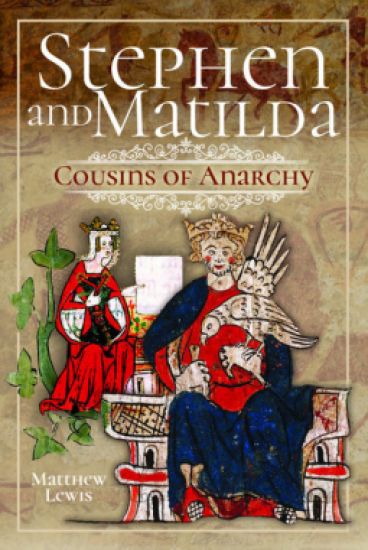
The Anarchy was the first civil war in post-Conquest England, enduring throughout the reign of King Stephen between 1135 and 1154. It ultimately brought about the end of the Norman dynasty and the birth of the mighty Plantagenet kings. When Henry I died having lost his only legitimate son in a shipwreck, he had caused all of his barons to swear to recognize his daughter Matilda, widow of the Holy Roman Emperor, as his heir and remarried her to Geoffrey, Count of Anjou. When she was slow to move to England on her father's death, Henry's favourite nephew Stephen of Blois rushed to have himself crowned, much as Henry himself had done on the death of his brother William Rufus. Supported by his brother Henry, Bishop of Winchester, Stephen made a promising start, but Matilda would not give up her birthright and tried to hold the English barons to their oaths. The result was more than a decade of civil war that saw England split apart. Empress Matilda is often remembered as aloof and high-handed, Stephen as ineffective and indecisive. By following both sides of the dispute and seeking to understand their actions and motivations, Matthew Lewis aims to reach a more rounded understanding of this crucial period of English history and asks to what extent there really was anarchy.
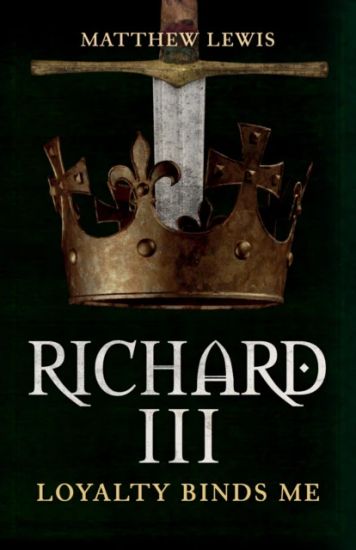
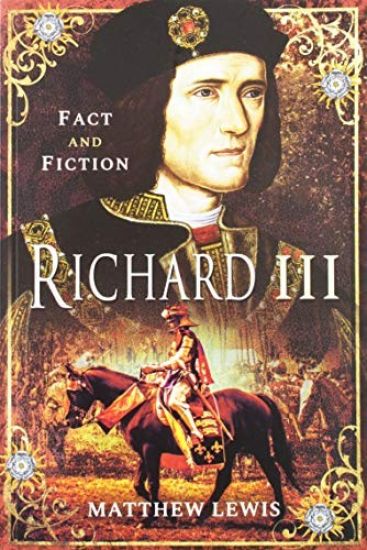
King Richard III remains one of the most infamous and recognisable monarchs in English or British history, despite only sitting on the throne for two years and fifty-eight days. His hold on the popular imagination is largely due to the fictional portrayal of him by William Shakespeare which, combined with the workings of five centuries of rumour and gossip, has created two opposing versions of Richard. In fiction he is the evil, scheming murderer who revels in his plots, but many of the facts point towards a very different man. Dissecting a real Richard III from the fictional versions that have taken hold is made difficult by the inability to discern motives in many instances, leaving a wide gap for interpretation that can be favourable or damning in varying degrees. It is the facts that will act as the scalpel to begin the operation of finding a truth obscured by fiction. Richard III may have been a monster, a saint, or just a man trying to survive, but any view of him should be based in the realities of his life, not the myths built on rumour and theatre. How much of what we think we know about England's most controversial monarch will remain when the facts are sifted from the fictions?
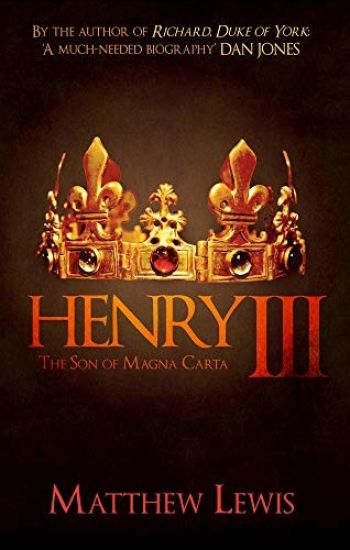
King of a lost realm. Wearer of a pawned crown. Heir to an empire beyond reach. From the ashes of Magna Carta, a new England was to be forged. Henry III became King of England within days of his ninth birthday. His father, King John, had overseen a disastrous period in English history and the boy king inherited a country embroiled in a bitter, entrenched war with itself. With barons inviting a French prince to take the crown, the young Henry was forced to rely on others to maintain his position. As he grew into adulthood, Henry had to manage the transition to a personal rule, wrenching power from men who had held it almost unchecked for years. With a settled position at home, attention could turn to the recovery of lost territory abroad and the salvaging of Henry’s family reputation. All would not go according to plan. Failures abroad led to trouble back in England as restless barons became disillusioned. They found a figurehead in Simon de Montfort, a man who would transform himself from Henry’s favourite to a de facto king. Imprisoned and stripped of his power, Henry would again have to fight for his kingdom, now relying not on older mentors but on his immensely capable son. Henry was handed a monarchy in peril, a crown that was cracked and tarnished. He was given fifty-six years to mend the damage his father had done. It would spell over half a century of highs and lows in a country crying out for stability; the final measure of Henry’s achievement displayed in the crown that he left to his son, Edward I.
King Richard III remains one of the most controversial figures in British history. Matthew Lewis’s new biography aims to become a definitive account by exploring what is known of his childhood and the impacts it had on his personality and view of the world. He would be cast into insecurity and exile only to become a royal prince before his tenth birthday. As Richard spends his teenage years under the watchful gaze of his older brother, Edward IV, he is eventually placed in the household of their cousin, the Earl of Warwick, remembered as the Kingmaker; but as the relationship between a king and his most influential magnate breaks down, Richard is compelled to make a choice when the House of York fractures. After another period in exile, Richard returns to become the most powerful nobleman in England. The work he involves himself in during the years that follow demonstrates a drive and commitment but also a dangerous naïveté. When crisis hits in 1483, it is to Richard that his older brother turns on his death bed. The events of 1483 remain contentious and hotly debated, but by understanding the Richard who began that year, it will become clearer what drove some of his actions and decisions. Returning to primary sources and considering the evidence available, this new life undoes the myths and presents a real man living in tumultuous times.
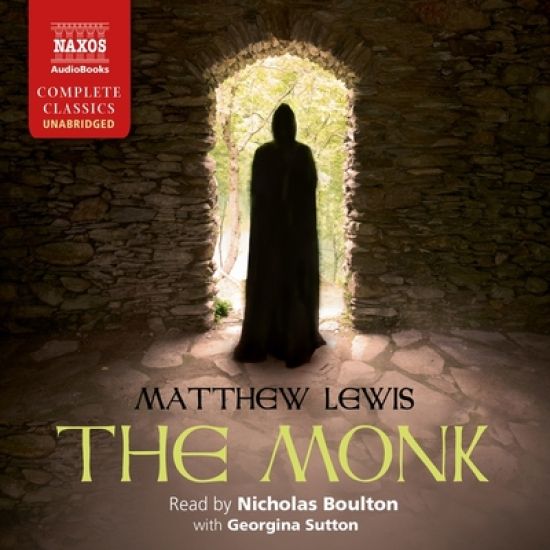
The Monk (1796) is a sensational story of temptation and depravity, a masterpiece of Gothic fiction and the first horror novel in English literature. The respected monk Ambrosio, the Abbot of a Capuchin monastery in Madrid, is overwhelmed with desire for a young girl; once having abandoned his monastic vows he begins a terrible descent into immorality and violence. His appalling fall from grace embraces blasphemy, black magic, torture, rape, and murder, and places his very soul in jeopardy. Lewis's extraordinary tale drew on folklore, legendary ghost stories, and contemporary dread inspired by the terrors of the French Revolution. Its excesses shocked the reading public and it was condemned as obscene. The novel continues to beguile and shock readers today with its gruesome catalogue of iniquities, while at the same time giving a profound insight into the deep anxieties experienced by British citizens during one of the most turbulent periods in the nation's history.
The Monk: A Romance, A Gothic Novel by Matthew Lewis. The Monk: A Romance is a Gothic novel by Matthew Gregory Lewis, published in 1796. A quickly written book from early in Lewis's career (in one letter he claimed to have written it in ten weeks, but other correspondence suggests that he had at least started it, or something similar, a couple of years earlier). Newly arrived in Madrid, Leonella and her niece Antonia visit a church to hear the sermon of a celebrated monk, Ambrosio, and while waiting, tell their story to two young men, Don Lorenzo and Don Christoval. Antonia's grandfather is the Marquis de las Cisternas, who was unhappy with his son's marriage, causing her parents to flee, leaving their young son behind only to be told a month later that he has died. Leonella has come to Madrid to convince the Marquis' son, Raymond de las Cisternas, to resume their pension, which has been cut off. As the story is told, Lorenzo falls in love with Antonia. The mysterious priest, who was left at the abbey as a child, delivers the sermon, and Antonia is fascinated with him. Lorenzo vows to win the hand of Antonia, but must first visit his sister Agnes, who is a nun at the nearby abbey. Having fallen asleep in the church, he awakens to find someone delivering a letter for his sister from Raymond de las Cisternas. On the way home, a gypsy warns Antonia that she is about to die, killed by someone who appears to be honourable.
The Monk is remembered for being one of the more lurid and "transgressive" of Gothic novels. It is also the first book to feature a priest as the villain. The story concerns Ambrosio - a pious, well-respected monk in Spain - and his violent downfall.
The Wars of the Roses were a series of brutal conflicts between rival branches of the Plantagenet family – the Lancastrians and the Yorkists. The wars were fought between the descendants of Edward III and are believed to stem from the deposition of the unpopular Richard II by his cousin, Henry Bolingbroke, who became Henry IV. The wars were thought to have been fought between 1455 and 1487, and they saw many kings rise and fall as their supporters fought for their right to rule. The Wars of the Roses in 100 Facts covers this dangerous and exciting period of political change, guiding us through the key events, such as the individual battles, and the key personalities, such as Richard, Duke of York, and the Earl of Warwick, known as 'the Kingmaker'. Matthew Lewis takes us on a tour through the Wars of the Roses, fact by fact, in easy-to-read, bite-size chunks. He examines some of the most important aspects of this period, from the outbreak of the conflict at the First Battle of St Albans, to Henry VI's insanity, and the character of Richard III and his final defeat at the hands of Henry Tudor.
Richard, 3rd Duke of York is frequently used to recall the colours of the rainbow with the mnemonic ‘Richard Of York Gave Battle In Vain’, wrongly believed to be the Grand Old Duke of York who had 10,000 men, or mistaken for his youngest son, Richard III. The son of a traitor, he inherited a dukedom aged four, became the wealthiest man in England at thirteen and later rebelled against his king, and if he is remembered, it is as a man who ignited the Wars of the Roses. Further eclipsed by two of his sons, who would become the mighty warrior Edward IV and the recently rediscovered Richard III, he is an ancestor of the Tudor monarchs and fifteenth great-grandfather to Queen Elizabeth II, yet the man himself is obscured from view. Matthew Lewis pushes aside the veils of myth and legend to challenge the image of Richard as a man whose insatiable ambition dragged a nation into civil war, revealing a complex family man with unparalleled power and responsibilities. The first person ever recorded to use the Plantagenet name, he pushed the political establishment to its limits, dared to fight back and was forced to do the unimaginable.