

Kirjailija
Matthew Lewis
Kirjat ja teokset yhdessä paikassa: 90 kirjaa, julkaisuja vuosilta 1994–2025, suosituimpiin kuuluu The Monk. Vertaile teosten hintoja ja tarkista saatavuus suomalaisista kirjakaupoista.
90 kirjaa
Kirjojen julkaisuvuodet: 1994–2025.

Richard, 3rd Duke of York is frequently used to recall the colours of the rainbow with the mnemonic ‘Richard Of York Gave Battle In Vain’, wrongly believed to be the Grand Old Duke of York who had 10,000 men, or mistaken for his youngest son, Richard III. The son of a traitor, he inherited a dukedom aged four, became the wealthiest man in England at thirteen and later rebelled against his king, and if he is remembered, it is as a man who ignited the Wars of the Roses. Further eclipsed by two of his sons, who would become the mighty warrior Edward IV and the recently rediscovered Richard III, he is an ancestor of the Tudor monarchs and fifteenth great-grandfather to Queen Elizabeth II, yet the man himself is obscured from view. Matthew Lewis pushes aside the veils of myth and legend to challenge the image of Richard as a man whose insatiable ambition dragged a nation into civil war, revealing a complex family man with unparalleled power and responsibilities. The first person ever recorded to use the Plantagenet name, he pushed the political establishment to its limits, dared to fight back and was forced to do the unimaginable.
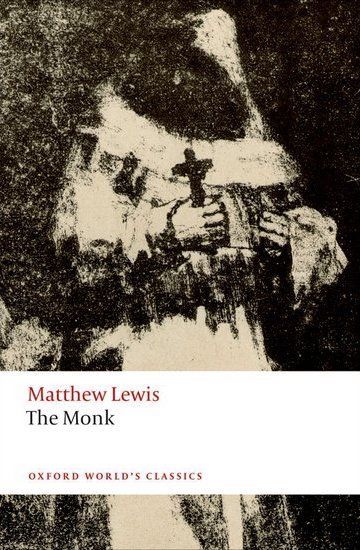
'He was deaf to the murmurs of conscience, and resolved to satisfy his desires at any price.' The Monk (1796) is a sensational story of temptation and depravity, a masterpiece of Gothic fiction and the first horror novel in English literature. The respected monk Ambrosio, the Abbot of a Capuchin monastery in Madrid, is overwhelmed with desire for a young girl; once having abandoned his monastic vows he begins a terrible descent into immorality and violence. His appalling fall from grace embraces blasphemy, black magic, torture, rape, and murder, and places his very soul in jeopardy. Lewis's extraordinary tale drew on folklore, legendary ghost stories, and contemporary dread inspired by the terrors of the French Revolution. Its excesses shocked the reading public and it was condemned as obscene. The novel continues to beguile and shock readers today with its gruesome catalogue of iniquities, while at the same time giving a profound insight into the deep anxieties experienced by British citizens during one of the most turbulent periods in the nation's history. ABOUT THE SERIES: For over 100 years Oxford World's Classics has made available the widest range of literature from around the globe. Each affordable volume reflects Oxford's commitment to scholarship, providing the most accurate text plus a wealth of other valuable features, including expert introductions by leading authorities, helpful notes to clarify the text, up-to-date bibliographies for further study, and much more.

'A Gothic Novel'The MonkA RomanceBy Matthew LewisThe Monk: A Romance is a Gothic novel by Matthew Gregory Lewis, published in 1796. A quickly written book from early in Lewis's career (it was written in ten weeks, before he turned 20), its convoluted and scandalous plot has made it one of the most important Gothic novels of its time, often imitated and adapted for the stage and the screen. Newly arrived in Madrid, Leonella and her niece Antonia visit a church to hear the sermon of a celebrated priest, Ambrosio, and while waiting tell their story to two young men, Don Lorenzo and Don Christoval. Antonia's Grandfather is the Marquis de las Cisternas, who was unhappy with his son's marriage, causing her parents to flee, leaving their young son behind only to be told a month later he has died. Leonella has come to Madrid to convince the Marquis' son, Raymond de las Cisternas, to resume their pension, which has been cut off. As the story is told, Lorenzo falls in love with Antonia. The mysterious priest, who was left at the abbey as a child, delivers the sermon, and Antonia is fascinated with him. Lorenzo vows to win the hand of Antonia, but must first visit his sister Agnes, who is a nun at the nearby abbey. Having fallen asleep in the church, he awakens to find someone delivering a letter for his sister from Raymond de las Cisternas. On the way home, a gypsy warns Antonia that she is about to die, killed by someone who appears to be honorable. Ambrosio is visited by nuns, including Agnes, for confession. She drops a letter which reveals her plans to run away with Raymond de las Cisternas. When Agnes confesses that she is pregnant with Raymond's child, Ambrosio turns her over to the prioress of her abbey for punishment. As she is led away, she curses Ambrosio. Returning to the abbey, Ambrosio's constant companion, a novice named Rosario admits that he is a woman named Matilda, who disguised herself so that she could be near Ambrosio. They both know he must throw her out of the monastery, but she begs him not to, and vows to kill herself if he does. He relents, but after talking the next day she decides to leave of her own accord, on the condition Ambrosio gives her a rose to remember him by. As he picks the rose, he is bitten by a serpent and is rushed to his room where it is predicted that he will die within three days. Rosario acts as his nurse, and the next day it is discovered that Ambrosio is cured which is proclaimed a miracle. When the other monks leave, Matilda reveals that she sucked the poison from Ambrosio's wound and is now dying herself. At the point of death, she begs him to make love to her, and he succumbs to the temptation at last, having discovered that she is the model who sat for his beloved portrait of the virgin Mary.
The medieval period is often thought of as the Dark Ages, a period of cultural stagnation and little economic and political advancement. However, Britain in this period survived invasion upon invasion, absorbing aspects of Anglo-Saxon, Viking and Norman culture. Britain developed from a small and fractured island into a more unified and powerful nation that could hold its own in European politics. Medieval Britain in 100 Facts covers this extensive period of change, guiding us through the key events, such as the many invasions and internal conflicts, and the key personalities. Matthew Lewis challenges our misconceptions about this period of British history, condensing this huge story into easy-to-read, bitesize chunks. He examines some of the most important aspects of the Middle Ages, from its formation after the Roman exodus, to the Norman invasion, to its eventual decline during the Wars of the Roses.

8 Things wrong with social media
Matthew Lewis
Createspace Independent Publishing Platform
2015
nidottu

Custody: You can't win it if you don't try
Matthew Lewis
Createspace Independent Publishing Platform
2015
nidottu




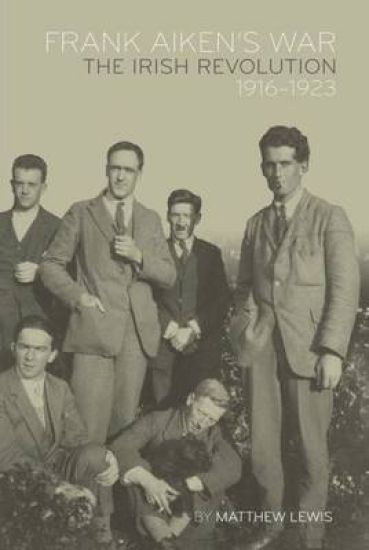
From an adolescent farmer to a local Sinn Fein activist and provincial guerrilla leader, and eventually to chief-of-staff of the IRA, Frank Aiken has an early, hidden history. As with so many of his political generation, Aiken's path to politics began amid the violent upheaval of the Irish revolution. In a career spanning 50 years he served in numerous high-profile ministerial roles and earned widespread recognition for his work as Ireland's representative to the United Nations. Yet these later successes masked a controversial past. This comprehensive study provides the first in-depth look at Aiken's role in Ireland's turbulent revolutionary period, 1916-23. Drawing on a wide variety of original archival sources, this book blends elements of biography and local study to offer both the first exhaustive account of Aiken's role in the conflict, and the first in-depth study of the broader context of republican politics and violence in Ulster in which he played such a pivotal role. This book creates a detailed map of Aiken's formative years, exploring the early movements of the man which would place him at the forefront of Irish and international Free State politics.


When Hans Holbein returns to London in search of royal patronage a secret from his past will define his future in a new, terrifying way. The story that he knows did not end at Bosworth. In the aftermath, Henry Tudor must try to secure his dynasty against unending, unseen threats. From the ashes of all that they knew, those who cannot accept King Henry's rule must find a place in the new world being forced upon them. Francis, Lord Lovell has survived the battle. Now he must survive the peace. He must protect King Richard III's greatest secret or doom England to more years of bitter conflict. Who does the truth belong to?
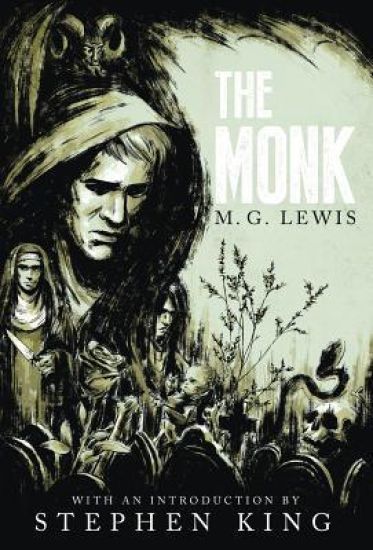

Noble and devout, Ambrosio is the abbot of a Spanish monastery who spends his days in prayer. However, his monastery is harboring a malevolent force in the form of a young monk called Rosario. Rosario attaches himself to the abbot and one fateful night reveals that he is in fact a beautiful woman in disguise. From this moment on Ambrosio finds himself seduced into a lurid maelstrom of sin and vice he finds impossible to resist.

A Glimpse Of The Wars Of The Roses
Matthew Lewis
Createspace Independent Publishing Platform
2013
nidottu
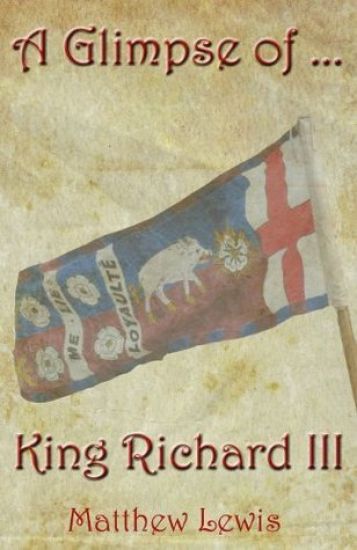
A Glimpse Of King Richard III
Matthew Lewis
Createspace Independent Publishing Platform
2013
nidottu
The Monk (1796) is a sensational story of temptation and depravity, a masterpiece of Gothic fiction and the first horror novel in English literature. The respected monk Ambrosio, the Abbot of a Capuchin monastery in Madrid, is overwhelmed with desire for a young girl; once having abandoned his monastic vows he begins a terrible descent into immorality and violence. His appalling fall from grace embraces blasphemy, black magic, torture, rape, and murder, and places his very soul in jeopardy. Lewis's extraordinary tale drew on folklore, legendary ghost stories, and contemporary dread inspired by the terrors of the French Revolution. Its excesses shocked the reading public and it was condemned as obscene. The novel continues to beguile and shock readers today with its gruesome catalogue of iniquities, while at the same time giving a profound insight into the deep anxieties experienced by British citizens during one of the most turbulent periods in the nation's history.