Kirjojen hintavertailu – 12 859 829 kirjaa ja 27 kauppaa

Kirjailija

Max Weber

Kirjat ja teokset yhdessä paikassa: 326 kirjaa, julkaisuja vuosilta 1905–2026, suosituimpiin kuuluu Tiede ja politiikka. Vertaile teosten hintoja ja tarkista saatavuus suomalaisista kirjakaupoista.

326 kirjaa

Kirjojen julkaisuvuodet: 1905–2026.

Den protestantiska etiken och kapitalismens anda

Den protestantiska etiken och kapitalismens anda

Max Weber

Argos/Palmkrons Förlag
1978
nidottu
Den protestantiska etiken och kapitalismens anda Som bakgrund till denna berömda studie kan ses Webers tes, att människornas handlingar i olika samhällen är meningsfulla endast i samband med deras allmänna uppfattning om tillvaron. Religiösa dogmer och tolkningen av dem är en integrerad del av den världsuppfattning, som gör människors och gruppers beteende, inklusive det ekonomiska, meningsfullt. Dessutom: religiösa uppfattningar är något som påverkar det ekonomiska handlandet, dvs. bestämmer vad som är människors ekonomiska "intressen" och utgör alltså en av orsakerna till ekonomisk förändring. Weber påvisar en förbluffande överensstämmelse mellan etiken i vissa protestantiska riktningar och den västerländska kapitalismens logik: den troende åläggs att akta sig för tingen i denna världen, köttet är syndigt, och det är väsentligt att leva asketiskt; för kapitalismens utveckling krävs rationellt arbete i profitsyfte och att profiten inte spenderas utan återinvesteras. Här framträder, enkelt uttryckt, det andliga släktskapet mellan den protestantiska och den kapitalistiska inställningen. Konsekvent och inträngande påvisar Weber denna släktskap och dess konsekvenser för den västerländska kapitalismens utveckling.
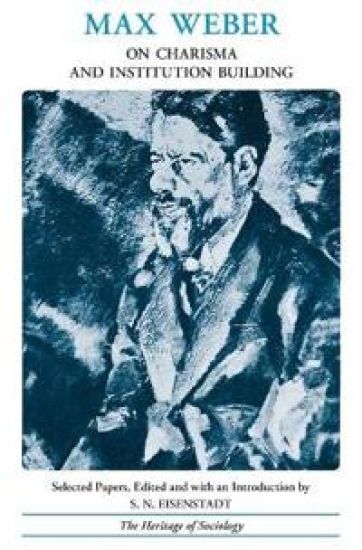
On Charisma and Institution Building

On Charisma and Institution Building

Max Weber

University of Chicago Press
1968
nidottu

Halvin toimitettuna 50,10 €

This selection from Max Weber's writings presents his variegated work from one central focus, the relationship between charisma on the one hand, and the process of institution building in the major fields of the social order such as politics, law, economy, and culture and religion on the other. That the concept of charisma is crucially important for understanding the processes of institution building is implicit in Weber's own writings, and the explication of this relationship is perhaps the most important challenge which Weber's work poses for modern sociology. Max Weber on Charisma and Institution Building is a volume in "The Heritage of Sociology," a series edited by Morris Janowitz. Other volumes deal with the writings of George Herbert Mead, William F. Ogburn, Louis Wirth, W. I. Thomas, Robert E. Park, and the Scottish Moralists—Adam Smith, David Hume, Adam Ferguson, and others.
Ancient Judaism

Ancient Judaism

Max Weber

The Free Press
1967
pokkari
Weber’s classic study which deals specifically with: Types of Asceticism and the Significance of Ancient Judaism, History and Social Organization of Ancient Palestine, Political Organization and Religious Ideas in the Time of the Confederacy and the Early Kings, Political Decline, Religious Conflict and Biblical Prophecy.
The Protestant Ethic and the Spirit of Capitalism: The Complete Text - Inclusive of Notes
Max Weber's celebrated thesis, which explores the relationship between Protestant work ethic and the emergence of capitalist enterprise, is presented here inclusive of his lengthy notes. In coining the phrase 'Protestant work ethic', Weber demonstrates a series of parallels between certain Protestant denominations and the modern business. The veneration of hard work, discipline, and carefulness with money birthed a culture that led over generations to the establishment of capitalism; with enough workers sharing in these beliefs, entrepreneurs were able to create large businesses that could consistently deliver a profit. Using examples such as Martin Luther and Calvinist doctrines, Weber demonstrates how ideas of the virtues of diligence were placed parallel with God and morality. By working hard, every man was contributing to a better world and society, in the name of the Lord. However, Weber asserts that over time the religious connotations behind capitalist enterprise largely disappeared; the famous writings of Benjamin Franklin are cited as example, whereby notions of diligence were expressed eloquently but no longer cited God and holy virtue. Though controversial, Weber's work remains much-consulted by sociologists. The notion that Protestantism contributed to or accelerated the development of capitalism is popular in the modern day.