Kirjojen hintavertailu – 12 903 725 kirjaa ja 27 kauppaa
Kirjailija
Michael Brenner
Kirjat ja teokset yhdessä paikassa: 33 kirjaa, julkaisuja vuosilta 1996–2026, suosituimpiin kuuluu Jagdrecht in Baden-Württemberg. Vertaile teosten hintoja ja tarkista saatavuus suomalaisista kirjakaupoista.
Der moderne Staat ist vielfach ein ffentlicher, ein sichtbarer, ein medialer Staat, er ist aber zugleich auch ein geheimer, das hei t bestimmte Informationen geheim haltender wie auch im Geheimen agierender Staat. Er muss dies auch sein, da er als wehrhafter Staat zur Gew hrleistung von Sicherheit nach innen und au en verpflichtet ist. Handelt der Staat im Geheimen, so geht es insoweit stets um Risikominimierung in Sachen Sicherheit auf Kosten grundrechtlicher Freiheit. Allzu freim tige, bundesverfassungsgerichtlich durchgesetzte Freiheitssicherung geht aber dann zu Lasten der Sicherheit des Staates, wenn diese mit beh rdlichem Unverm gen und bundesstaatlichem Kompetenzwirrwarr zusammentrifft. Auch wenn sich der geheime Staat gerade in j ngerer Zeit durch zahlreiche Pannen der Geheimdienste als wenig professionell erwiesen hat, so ist eine grundlegende Reform der deutschen Sicherheitsarchitektur doch wenig wahrscheinlich. Allenfalls verfahrensrechtliche Neujustierungen sind vorstellbar.
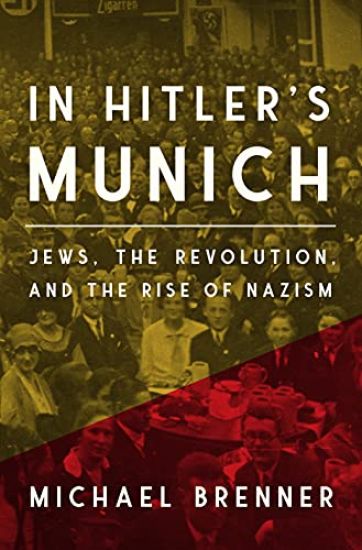
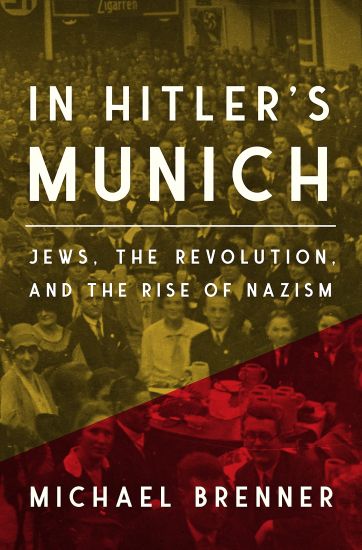
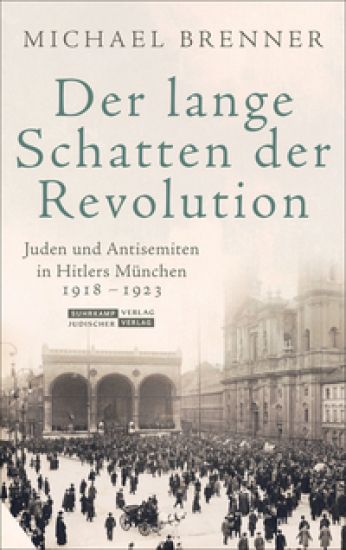
From acclaimed historian Michael Brenner, a mesmerizing portrait of Munich in the early years of Hitler's quest for powerIn the aftermath of Germany's defeat in World War I and the failed November Revolution of 1918–19, the conservative government of Bavaria identified Jews with left-wing radicalism. Munich became a hotbed of right-wing extremism, with synagogues under attack and Jews physically assaulted in the streets. It was here that Adolf Hitler established the Nazi movement and developed his antisemitic ideas. Michael Brenner provides a gripping account of how Bavaria's capital city became the testing ground for Nazism and the Final Solution. In an electrifying narrative that takes readers from Hitler's return to Munich following the armistice to his calamitous Beer Hall Putsch in 1923, Brenner demonstrates why the city's transformation is crucial for understanding the Nazi era and the tragedy of the Holocaust. Brenner describes how Hitler and his followers terrorized Munich's Jews and were aided by politicians, judges, police, and ordinary residents. He shows how the city's Jews responded to the antisemitic backlash in many different ways—by declaring their loyalty to the state, by avoiding public life, or by abandoning the city altogether. Drawing on a wealth of previously unknown documents, In Hitler's Munich reveals the untold story of how a once-cosmopolitan city became, in the words of Thomas Mann, "the city of Hitler."
Beautifully translated by Shelley Frisch, The Number on Your Forearm Is Blue Like Your Eyes is a poignant and riveting memoir that sets a family story in historical context and brings psychological insight to bear on accounts of emotional trauma. Having achieved prominence as a pediatrician, child therapist, and international speaker, Eva finally decided to tell her story. In 2016, at the age of seventy-four, with the assistance of journalist Stefanie Oswalt, Eva Umlauf published Die Nummer auf deinem Unterarm ist blau wie deine Augen: Erinnerungen (Hoffmann und Campe Verlag). As someone who has endured the effects of the Holocaust from infancy, she writes, I wish for all that has happened to be understood and processed from diverse perspectives so that personal suffering, societal ruptures, and brutal transgenerational traumas can be prevented from being passed on to future generations.” This book draws on years of interviews, copious correspondence, archival research in Europe and Israel, trips to labor and concentration camps, and the author’s personal recollections. On November 3, 1944, a toddler named Eva, one month shy of her second birthday, was branded prisoner A-26959 in Auschwitz. She fainted in her mother’s arms but survived the tattooing and countless other shocks. Eva Hecht was born on December 19, 1942, in Novaky, Slovakia, a labor camp for Jews. Eva and her parents, Imrich and Agnes, were imprisoned in this camp until their deportation to Auschwitz. A month prior to their arrival there, several thousand mothers and their children had been gassed. Now that the Red Army was rapidly advancing in Poland, the murders stopped. Agnes, then pregnant with her second daughter, and Eva were still alive when the camp was liberated on January 27, 1945. Her father was transferred to Melk, a subcamp of the Mauthausen concentration camp, and died there in March 1945. In late April, Nora, Eva’s sister, was born. Agnes Hecht remained in the camp infirmary until her two little girls were well enough to travel, then brought them back to her home in Trencín in western Slovakia. Eva grew up with a mother who had to “survive her survival”—the little family lived with the loss in the Holocaust of the husband/father, the mother’s three siblings, and the grandparents and great-grandparents. Having also lost her family’s fortune, Agnes worked hard to create a normal home life for her daughters. Like many survivors in the post-Holocaust era, Eva’s mother never talked about her experiences. Eva suffered frequent flare-ups of the illnesses she had suffered in Auschwitz. She did well at school and went on to study medicine in Bratislava. In 1966 she married Jakob Sultanik, a fellow Holocaust survivor who had resettled in Munich, Germany. Eva left the communist regime in Czechoslovakia in 1967 to join him in West Germany. There she began her practice as a pediatrician and later as a psychotherapist—and for the first time she had the opportunity to live out her Jewish identity. Unfortunately, Eva's husband, Jakob, died in a tragic accident when their son, Erik, was a small boy. Eva later married a fellow physician, Bernd Umlauf, and they had two sons, Oliver and Julian. Every so often, the horrors of Eva's early years would resurface in nightmares involving dead babies and Auschwitz gas chambers.
"Povaram vo vsem mire izvestna istina: kulinarija - eto nauka, a nauka - eto kulinarija. Na protjazhenii istorii mnozhestvo udivitelnykh otkrytij bylo sdelano uchenymi, rabotavshimi s produktami, i povarami, ispolzovavshimi nauchnyj podkhod. Nikolja Apper, frantsuzskij konditer i khimik, v nachale XIX veka stal izobretatelem protsessa konservatsii, novogo sposoba bezopasnogo khranenija produktov. Tekhnologija pasterizatsii, predlozhennaja mikrobiologom Lui Pasterom, proizvela revoljutsiju v pischevoj promyshlennosti - i, verojatno, spasla za vremja svoego suschestvovanija milliony zhiznej. V etoj knige my rassmatrivaem edu kak nauku, no eda - eto takzhe istorija, kultura, diplomatija, natsionalnaja bezopasnost i esche ochen i ochen mnogoe. Obschestvo stanet silnee, esli my budem luchshe ponimat, otkuda beretsja eda i naskolko silno eto vlijaet na okruzhajuschij mir. Vot pochemu eta kniga - i garvardskij kurs, na kotorom ona osnovana, - javljaetsja stol znachimym resursom. Interesnaja dlja vsekh, a ne tolko dlja izuchajuschikh tochnye nauki, ona pomozhet chitateljam ustanovit svjazi i sozdat sistemnuju kartinu uvlekatelnogo mira edy". Khose Andres, amerikanskij shef-povar. Obladatel nagrad "Shef 2009 goda", "Vydajuschijsja shef" po versii James Beard Foundation i premii "Chelovek goda 2009" po versii zhurnala GQ. Perevodchik: Cherezova Ekaterina
From acclaimed historian Michael Brenner, a mesmerizing portrait of Munich in the early years of Hitler's quest for powerIn the aftermath of Germany's defeat in World War I and the failed November Revolution of 1918–19, the conservative government of Bavaria identified Jews with left-wing radicalism. Munich became a hotbed of right-wing extremism, with synagogues under attack and Jews physically assaulted in the streets. It was here that Adolf Hitler established the Nazi movement and developed his antisemitic ideas. Michael Brenner provides a gripping account of how Bavaria's capital city became the testing ground for Nazism and the Final Solution. In an electrifying narrative that takes readers from Hitler's return to Munich following the armistice to his calamitous Beer Hall Putsch in 1923, Brenner demonstrates why the city's transformation is crucial for understanding the Nazi era and the tragedy of the Holocaust. Brenner describes how Hitler and his followers terrorized Munich's Jews and were aided by politicians, judges, police, and ordinary residents. He shows how the city's Jews responded to the antisemitic backlash in many different ways—by declaring their loyalty to the state, by avoiding public life, or by abandoning the city altogether. Drawing on a wealth of previously unknown documents, In Hitler's Munich reveals the untold story of how a once-cosmopolitan city became, in the words of Thomas Mann, "the city of Hitler."
The spectacular culinary creations of modern cuisine are the stuff of countless articles and Instagram feeds. But to a scientist they are also perfect pedagogical explorations into the basic scientific principles of cooking. In Science and Cooking, Harvard professors Michael Brenner, Pia Sörensen and David Weitz bring the classroom to your kitchen to teach the physics and chemistry underlying every recipe. Science and Cooking answers questions such as why we knead bread, what determines the temperature at which we cook a steak or the how much time our chocolate chip cookies should spend in the oven, through fascinating lessons ranging from the role of pressure and boiling points in pecan praline to that of microbes in your coffee. With beautiful full-colour illustrations and recipes, hands-on experiments, and engaging introductions from world-renowned chefs Ferran Adrià and Jose Andrés, Science and Cooking will change the way readers approach both subjects—in their kitchens and beyond.
A major new history of the century-long debate over what a Jewish state should beMany Zionists who advocated for the creation of a Jewish state envisioned a nation like any other. Yet for Israel's founders, the nation that emerged against all odds in 1948 was anything but ordinary. Born from the ashes of genocide and a long history of suffering, Israel was conceived to be unique, a model society and the heart of a prosperous new Middle East. It is this paradox, says historian Michael Brenner—the Jewish people's wish for a homeland both normal and exceptional—that shapes Israel's ongoing struggle to define itself and secure a place among nations. In Search of Israel is a major new history of this struggle from the late nineteenth century to our time.
Are you happy? Like your job? Most people report low engagement and enthusiasm in their careers. And point their finger at a negative work culture, a mean boss... co-worker... or customer. Mean people suck. Some leaders believe that they need to be mean in order to be effective. Their lack of compassion creates negative relationships that lowers performance and profits Michael Brenner's Mean People Suck uses real-life experience and proven research to show why instead of blaming others, we can look inside ourselves, and learn how to use empathy to defeat "mean" in every situation. This insightful guide shows leaders, and employees how more emotional communication increases profits and enhances lives. You'll learn: Why employees are unhappy and the power of empathy to turn things around. How organizational charts disengage employees by neglecting the human element. Why empathy seems counter-intuitive to success. The secrets to a happy, meaningful and impactful career. If you're ready to enjoy a more gratifying professional and personal life, this book's stories and proven tips will help get you there - even if Mean People Suck.
A major new history of the century-long debate over what a Jewish state should beMany Zionists who advocated the creation of a Jewish state envisioned a nation like any other. Yet for Israel's founders, the state that emerged against all odds in 1948 was anything but ordinary. Born from the ashes of genocide and a long history of suffering, Israel was conceived to be unique, a model society and the heart of a prosperous new Middle East. It is this paradox, says historian Michael Brenner--the Jewish people's wish for a homeland both normal and exceptional—that shapes Israel's ongoing struggle to define itself and secure a place among nations. In Search of Israel is a major new history of this struggle from the late nineteenth century to our time. When Theodor Herzl convened the First Zionist Congress in 1897, no single solution to the problem of "normalizing" the Jewish people emerged. Herzl proposed a secular-liberal "New Society" that would be home to Jews and non-Jews alike. East European Zionists advocated the renewal of the Hebrew language and the creation of a distinct Jewish culture. Socialists imagined a society of workers' collectives and farm settlements. The Orthodox dreamt of a society based on the laws of Jewish scripture. The stage was set for a clash of Zionist dreams and Israeli realities that continues today. Seventy years after its founding, Israel has achieved much, but for a state widely viewed as either a paragon or a pariah, Brenner argues, the goal of becoming a state like any other remains elusive. If the Jews were the archetypal "other" in history, ironically, Israel—which so much wanted to avoid the stamp of otherness—has become the Jew among the nations.