Kirjojen hintavertailu – 12 859 818 kirjaa ja 27 kauppaa

Kirjailija

Michel Foucault

Kirjat ja teokset yhdessä paikassa: 207 kirjaa, julkaisuja vuosilta 1968–2027, suosituimpiin kuuluu Fronesis 2. Utopier. Vertaile teosten hintoja ja tarkista saatavuus suomalaisista kirjakaupoista.

207 kirjaa

Kirjojen julkaisuvuodet: 1968–2027.

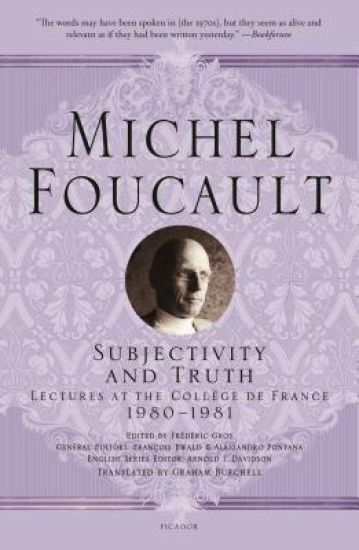
Subjectivity and Truth: Lectures at the Collège de France, 1980-1981

Subjectivity and Truth: Lectures at the Collège de France, 1980-1981

Michel Foucault

Picador USA
2019
nidottu

Halvin toimitettuna 26,90 €

"Foucault must be reckoned with." --The New York Times Book Review Praise for Foucault's Lectures at the Coll ge de France Series"Ideas spark off nearly every page... The words may have been spoken in the 1970s] but they seem as alive and relevant as if they had been written yesterday." --Bookforum" Foucault] has an alert and sensitive mind that can ignore the familiar surfaces of established intellectual codes and ask new questions... He] gives dramatic quality to the movement of culture." --The New York Review of Books In 1981, Michel Foucault delivered a course of lectures that marked a decisive reorientation in his thought and of the project The History of Sexuality outlined in 1976. It was in these lectures that arts of living became the focal point around which he developed a new way of thinking about subjectivity. It was also the moment when Foucault problematized a conception of ethics understood as the patient elaboration of a relationship of self to self. In these lectures, which clearly foreshadow The Use of Pleasure and The Care of the Self, Foucault examines the Greek subordination of gender differences to the primacy of an opposition between active and passive, as well as the development by Imperial stoicism of a model of the conjugal bond, which advocates unwavering fidelity and shared feelings and which leads to the disqualification of homosexuality. Once more, his lectures demonstrate that Foucault "is quite central to our sense of where we are" (The Nation).
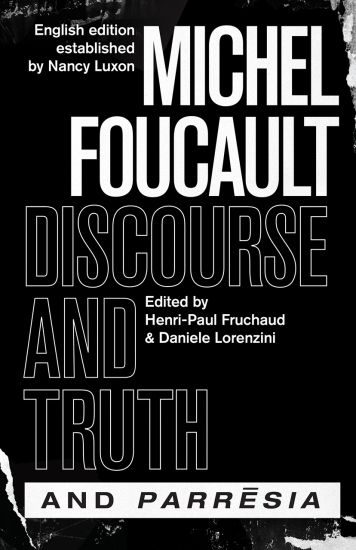
"discourse and Truth" and "parresia"

"discourse and Truth" and "parresia"

Michel Foucault

University of Chicago Press
2019
sidottu
The volume collects a series of lectures given by the renowned French thinker Michel Foucault late in his career. The book is composed of two parts: a talk, "Parresia," delivered at the University of Grenoble in 1982, and a series of lectures entitled "Discourse and Truth," given at the University of California, Berkeley in 1983, which appears here for the first time in its full and correct form. Together, they provide an unprecedented account of Foucault's reading of the Greek concept of parresia, often translated as "truth-telling" or "frank speech." In typically Foucauldian style, the lectures trace the transformation of this concept across Greek, Roman, and early Christian thought, from its origins in pre-Socratic Greece to its role as a central element of the relationship between teacher and student. In mapping the concept's history, Foucault's concern is not to advocate for free speech; rather, his aim is to explore the moral and political position one must occupy in order to take the risk to speak truthfully. In his analysis of parresia, Foucault both advances his project of a history of the present and paves the way for a genealogy of the critical attitude in modern and contemporary societies. These essays--carefully edited and including notes and introductory material to fully illuminate Foucault's insights--are a major addition to Foucault's English-language corpus that no scholar of ancient or modern philosophy will want to miss.
Klinikkens fødsel

Klinikkens fødsel

Michel Foucault

Gyldendal
2019
nidottu
Arrogant, brillant, provokerende, oprørende, men aldrig kedelig er nogle af de ord pressen igennem årene har taget i brug, når den har omtalt Klinikkens fødsel. Her foreligger bogen i en oversættelse og med introduktion af Henning Silberbrandt. Foucaults udgangspunkt er den kendsgerning, at medicinen undergår en afgørende forandring i det attende århundrede. For første gang i historien bliver det muligt at beskrive medicinsk viden med den samme præcision, som tidligere kun tilhørte matematikken. Kroppen bliver et objekt, der kan kortlægges. Sygdom bliver genstand for klassifikation. Og lægerne begynder at beskrive fænomener, som i århundreder har befundet sig på tærsklen til det synlige, og det der var muligt at udtrykke. I Klinikkens fødsel giver filosoffen og den intellektuelle historiker et billede af denne dramatiske forandring i den medicinske viden. Michel Foucault viser i hvor høj grad, det vi betragter som ren videnskab også er et produkt af sociale og kulturelle holdninger – i dette tilfælde af den stemning, der herskede under den franske revolution. Hans bog kaster et nyt lys over oprindelsen til vores nuværende opfattelse af sundhed og sygdom, liv og død. Bogen genudgives nu i Hans Reitzels Forlags serie Klassikere og udkom første gang på dansk i 2000.
Subjektivitet och sanning

Subjektivitet och sanning

Michel Foucault

Tankekraft Förlag
2019
nidottu
”Arbetshypotesen är den här: det är riktigt att sexualiteten som erfarenhet inte är oberoende av koderna och förbudssystemen, men man måste också komma ihåg att dessa koder är förvånansvärt stabila, kontinuerliga och trögrörliga. Dessutom måste man komma ihåg att vårt sätt att hörsamma eller överskrida dem också förefaller vara stabilt och repetitivt. På en punkt kan vi däremot se en historisk rörlighet, den punkt som troligen förändras oftast, som är skörast, och det är erfarenhetens modaliteter.” År 1981 håller Foucault föreläsningar vid Collège de France som ger en ny impuls åt hans projekt om en ”sexualitetens historia”. De olika levnadskonsterna framträder nu som ett meningsbärande centrum utifrån vilket en ny tanke om subjektiviteten skulle kunna utvecklas. Foucault inleder även en problematisering av etiken fattad som ett tålmodigt utarbetande av en självets relation till sig själv. Det är undersökandet av den sexuella erfarenheten under antiken som möjliggör den nya konceptualiseringen. Inom ramarna för denna studie analyserar Foucault medicinska skrifter, skrifter som avhandlar äktenskapet, kärlekens filosofi eller de erotiska drömmarnas prognostiska värde – för att där finna vittnesmål om ett förhållande till njutning (afrodisia) i vilket subjektet struktureras på ett sätt som föregår både den kristna besattheten av köttet och den moderna konstruktion som utgår från en vetenskap om sexualiteten. Utmaningen ligger i själva verket i att visa att den tålmodiga och ändlösa begärshermeneutiken är en kristen uppfinning. För att ge belägg för sin tes måste Foucault få grepp om vad som är specifikt utmärkande för de antika självteknikerna. Under dessa föreläsningar undersöker Foucault framför allt det primat som grekerna gav åt motsatsförhållandet aktiv-passiv, liksom den kejserliga stoicismens utarbetande av en äktenskaplig modell som understryker betydelsen av osviklig trohet och reciprokt känslomässigt utbyte, en modell som också leder till att homosexualiteten diskvalificeras.
Att styra de levande

Att styra de levande

Michel Foucault

Tankekraft Förlag
2019
nidottu
Att styra de levande (1979-1980) innebär en vändpunkt i Foucaults föreläsningar vid Collège de France. Den historia om ”sanningsregimerna” som varit ett genomgående tema förändras nu genom att han ger den en ny inriktning. Undersökningarna som påbörjades inom juridiken och rättsväsendet och fortsatte inom politikens fält – först genom temat makt-vetande och sedan genom frågan om regerandekomplexet – kommer nu att beröra ett etiskt område som Foucault hädanefter aldrig skulle lämna, nämligen frågan om självets tekniker och praktiker. Foucault tar avstamp i en grundläggande fråga: Hur kommer det sig att styrandet av människorna i den kristna västerländska kulturen förutsätter ”sanningsakter” som kräver att subjektet säger sanningen om sig själv, att han bekänner sina synder och begär, blottlägger sitt själstillstånd etc.? Denna problemställning leder fram till en analys av de ”sanningsakter” som utmärker den tidiga kristendomen i form av dopets, botgöringens och den andliga vägledningens praktiker. Foucault väljer att intressera sig för de handlingar som får den troende att manifestera sanningen om sig själv som en oändligt felbar varelse. Från det offentliga uttrycket för den troendes tillstånd som syndare och botgöringens ritualer till den minutiösa verbaliseringen av hans mest intima tankar i samvetsrannsakningen skisserar Foucault hur en pastoral ekonomi centrerad kring bekännelsen successivt framträder. Att styra de levande är den första i raden av undersökningar som Foucault företog inom etikens område, såväl i sina föreläsningar vid Collège de France som i de sista banden av Sexualitetens historia.
Diskursens orden

Diskursens orden

Michel Foucault

Scandinavian academic press
2018
nidottu
Foucaults tiltredelsestale ved College de France er en kort og fengslende redegjørelse for, og en problematisering av, Foucaults arbeid med diskurser og situasjoner der diskursen .tar makten". Michel Foucaults historieverker tar på ulike måter opp forholdet mellom normalitet og galskap, forbrytelse og straff, seksualitet og etikk. Han prøver å gripe det diskursive nivået -- sammenvevingen av makt og kunnskap i ulike språkhandlinger - i fortidens ulike uttrykk. Diskursens orden er en kort og fengslende redegjørelse for, og en problematisering av, Foucaults arbeid med diskurser og situasjoner der diskursen "tar makten".
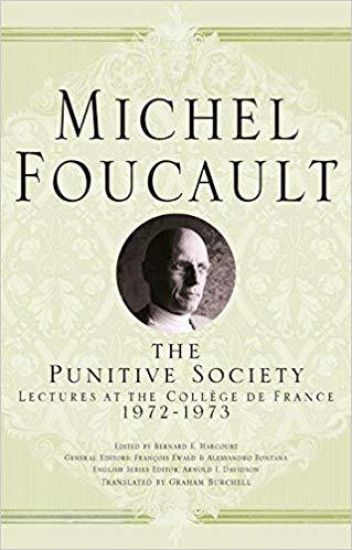
The Punitive Society

The Punitive Society

Michel Foucault

Picador Paper
2018
nidottu
These thirteen lectures on the 'punitive society, ' delivered at the Coll ge de France in the first three months of 1973, examine the way in which the relations between justice and truth that govern modern penal law were forged, and question what links them to the emergence of a new punitive regime that still dominates contemporary society. Praise for Foucault's Lectures at the Coll ge de France Series "Ideas spark off nearly every page... The words may have been spoken in the 1970s], but they seem as alive and relevant as if they had been written yesterday."--Bookforum "Foucault is quite central to our sense of where we are... He] is carrying out, in the noblest way, the promiscuous aim of true culture."--The Nation " Foucault] has an alert and sensitive mind that can ignore the familiar surfaces of established intellectual coded and ask new questions... He] gives dramatic quality to the movement of culture."--The New York Review of Books
Övervakning och straff : fängelsets födelse

Övervakning och straff : fängelsets födelse

Michel Foucault

Arkiv förlag/A-Z förlag
2017
nidottu
Denna femte översedda och ombrutna upplaga innehåller för första gången illustrationerna ur den franska originalutgåvan. Varför intar fängelset en så dominerande plats i dagens straffsystem? Den frågan står i centrum för Michel Foucaults Övervakning och straff (Surveiller et punir), den kanske mest inflytelserika i hans långa rad av civilisationskritiska undersökningar. Den övergång från brutala kroppsstraff till fängelsestraff, som upplysningsmännen såg som en seger för humanism och förnuft, vill Foucault tvärtom se som följden av en ny och effektivare disciplinering av människorna. Denna strävan går igen på en rad områden, från 1600-talet och framåt: skolväsendet, arméerna och inte minst fabrikerna. När kroppsstraffen ersätts med fängelsestraff och fångvård innebär det att en äldre form av maktutövning ersätts av en ny och än mer långtgående, som ytterst syftar till människornas fullständiga normalisering och anpassning till det nya produktionssystemets krav. I fängelseinstitutionen får alla dessa tendenser sitt mest fullödiga uttryck. I ett språk som vibrerar av patos och inlevelse med de förtryckta och plågade illustrerar Foucault sina teser med skakande inblickar i straffets och disciplineringens historia. I en inledning till boken ger Sune Sunesson en klargörande presentation av Foucaults tänkande.
The Birth of the Clinic

The Birth of the Clinic

Michel Foucault

Routledge
2017
sidottu
In this remarkable book Michel Foucault, one of the most influential thinkers of recent times, calls us to look critically at specific historical events in order to uncover new layers of significance. In doing so, he challenges our assumptions not only about history, but also about the nature of language and reason, even of truth. The scope of such an undertaking is vast, but by means of his uniquely engaging narrative style, Foucault‘s penetrating gaze is skilfully able to confront our own. After reading his words our perceptions are never quite the same again.
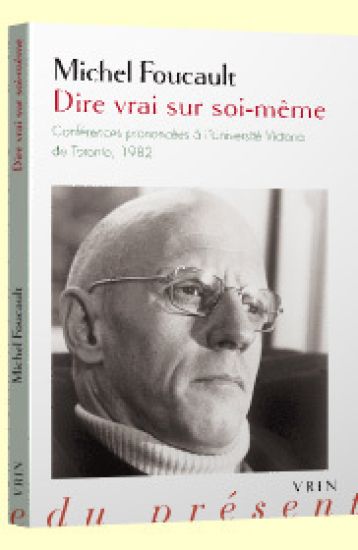
Dire Vrai Sur Soi-Meme: Conferences Prononcees a l'Universite Victoria de Toronto
A la fin du premier semestre 1982, Michel Foucault prononce a l'Universite Victoria de Toronto un cycle de conferences intitule Dire vrai sur soi-meme. Le theme de ces conferences, s'inscrivant dans le cadre du projet d'une genealogie du sujet occidental moderne, est la formation historique de l'hermeneutique de soi. Apres avoir analyse le type tres particulier de connaissance de soi et de rapport a soi qui caracterise l'askesis greco-romaine, ou il s'agit pour le sujet d'etablir avec lui-meme une relation de possession et de souverainete, Foucault etudie le renversement qui conduit, aux premiers siecles du christianisme, et tout particulierement dans les communautes monastiques, a la naissance d'une hermeneutique de soi concue comme l'exploration et le dechiffrement par le sujet de sa propre interiorite. Pour definir ce renversement, Foucault introduit ici une distinction inedite entre deux formes d'ascese, l'une tournee vers la verite, l'autre tournee vers la realite. Parallelement aux conferences, Foucault conduit a Toronto un seminaire consacre a l'etude detaillee de textes des auteurs anciens sur lesquels s'appuient ses analyses de la culture de soi antique. Il y presente egalement une esquisse des differentes significations de la notion de parresia dans l'Antiquite, qui allait devenir le theme principal de ses derniers travaux. Ces conferences et ce seminaire sont publies ici pour la premiere fois, dans une edition critique.
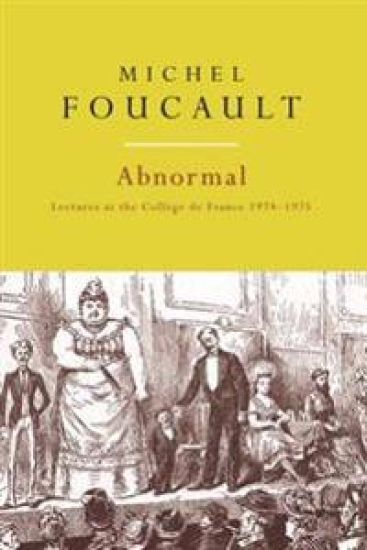
Abnormal

Abnormal

Michel Foucault

Verso Books
2016
nidottu
Three decades after his death, Michel Foucault remains one of the towering intellectual figures of the last half-century. His works on sexuality, madness, the prison, and medicine are enduring classics. From 1971 until his death in 1984, Foucault gave public lectures at the famous Collège de France. These seminal events, attended by thousands, created the benchmarks for contemporary social enquiry. The lectures comprising Abnormal begin by examining the role of psychiatry in modern criminal justice, and its method of categorising individuals who "resemble their crime before they commit it." Building on the themes of societal self-defence developed in earlier works, Foucault shows how defining "normality" became a prerogative of power in the nineteenth century, shaping the institutions-from the prisons to the family-meant to deal with "monstrosity," whether sexual, physical, or spiritual. The Collège de France lectures add immeasurably to our appreciation and understanding of Foucault's thought.
Speech Begins After Death

Speech Begins After Death

Michel Foucault

University of Minnesota Press
2016
nidottu
In 1968, Michel Foucault agreed to a series of interviews with critic Claude Bonnefoy, which were to be published in book form. Bonnefoy wanted a dialogue with Foucault about his relationship to writing rather than about the content of his books. The project was abandoned, but a transcript of the initial interview survived and is now being published for the first time in English. In this brief and lively exchange, Foucault reflects on how he approached the written word throughout his life, from his school days to his discovery of the pleasure of writing. Wide ranging, characteristically insightful, and unexpectedly autobiographical, the discussion is revelatory of Foucaults intellectual development, his aims as a writer, his clinical methodology (lets say Im a diagnostician), and his interest in other authors, including Raymond Roussel and Antonin Artaud. Foucault discloses, in ways he never had previously, details about his home life, his family history, and the profound sense of obligation he feels to the act of writing. In his Introduction, Philippe Artie8res investigates Foucaults engagement in various forms of oral discourse-lectures, speeches, debates, press conferences, and interviews-and their place in his work. Speech Begins after Death shows Foucault adopting a new language, an innovative autobiographical communication that is neither conversation nor monologue, and is one of his most personal statements about his life and writing.
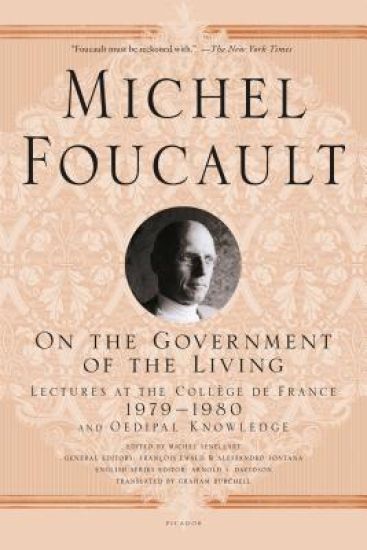
On the Government of the Living: Lectures at the Collège de France, 1979-1980

On the Government of the Living: Lectures at the Collège de France, 1979-1980

Michel Foucault

Picador USA
2016
nidottu

Halvin toimitettuna 28,20 €

In these lectures delivered in 1980, Michel Foucault gives an important new inflection to his history of regimes of truth. Following on from the themes of knowledge-power and governmentality, he turns his attention here to the ethical domain of practices of techniques of the self. Why and how, he asks, does the exercise of power as government demand not only acts of obedience and submission, but truth acts in which individuals subject to relations of power are also required to be subjects in procedures of truth-telling? How and why are subjects required not just to tell the truth, but to tell the truth about themselves? These questions lead to a re-reading of Sophocles "Oedipus the King" and, through an examination of the texts of Tertullian, Cassian, and others, to an analysis of the truth acts in early Christian practices of baptism, penance, and spiritual direction in which believers are called upon to manifest the truth of themselves as subjects always danger of falling into sin. In the public expression of the subject s condition as a sinner, in the rituals of repentance and penance, and in the detailed verbalization of thoughts in the examination of conscience, we see the organization of a pastoral system focused upon confession."
Discours Et Verite: Precede de la Parresia

Discours Et Verite: Precede de la Parresia

Michel Foucault

Librarie Philosophique J. Vrin
2016
nidottu
A l'automne 1983, Michel Foucault prononce, a l'Universite de Californie a Berkeley, un cycle de six conferences intitule Discours et verite, dont on trouvera ici, pour la premiere fois, l'edition complete et critique. Dans ces conferences, la richesse de la notion de parresia et son role strategique pour la reflexion ethique et politique de Foucault emergent de maniere evidente. Foucault retrace notamment les transformations de cette notion dans le monde antique: d'abord droit politique du citoyen athenien, la parresia devient, avec Socrate, l'un des traits essentiels du discours philosophique puis, avec les cyniques, de la vie philosophique elle-meme dans ce qu'elle peut avoir de provoquant et meme de scandaleux; enfin, aux premiers siecles de l'Empire, la parresia apparait au fondement des relations entre le maitre et le disciple dans la culture de soi. En faisant l'analyse de la notion de parresia, Foucault poursuit en meme temps son projet d'une histoire du present et pose des jalons pour une genealogie de l'attitude critique dans nos societes modernes et contemporaines. Ce volume contient egalement la transcription d'une conference prononcee par Foucault en mai 1982 a l'universite de Grenoble, devant un public de specialistes de la philosophie antique, qui presente un etat anterieur et different de sa reflexion sur la parresia.
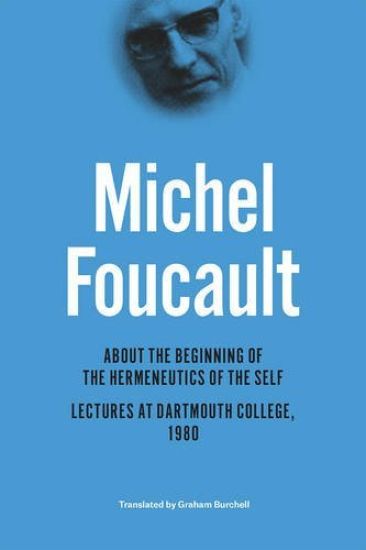
About the Beginning of the Hermeneutics of the Self

About the Beginning of the Hermeneutics of the Self

Michel Foucault

University of Chicago Press
2015
sidottu
In 1980, Michel Foucault began a vast project of research on the relationship between subjectivity and truth, an examination of conscience, confession, and truth-telling that would become a crucial feature of his life-long work on the relationship between knowledge, power, and the self. The lectures published here offer one of the clearest pathways into this project, contrasting Greco-Roman techniques of the self with those of early Christian monastic culture in order to uncover, in the latter, the historical origin of many of the features that still characterize the modern subject. They are accompanied by a public discussion and debate as well as by an interview with Michael Bess, all of which took place at the University of California, Berkeley, where Foucault delivered an earlier and slightly different version of these lectures. Foucault analyzes the practices of self-examination and confession in Greco-Roman antiquity and in the first centuries of Christianity in order to highlight a radical transformation from the ancient Delphic principle of "know thyself" to the monastic precept of "confess all of your thoughts to your spiritual guide." His aim in doing so is to retrace the genealogy of the modern subject, which is inextricably tied to the emergence of the "hermeneutics of the self"-the necessity to explore one's own thoughts and feelings and to confess them to a spiritual director-in early Christianity. According to Foucault, since some features of this Christian hermeneutics of the subject still determine our contemporary "gnoseologic" self, then the genealogy of the modern subject is both an ethical and a political enterprise, aiming to show that the "self" is nothing but the historical correlate of a series of technologies built into our history. Thus, from Foucault's perspective, our main problem today is not to discover what "the self" is, but to try to analyze and change these technologies in order to change its form.
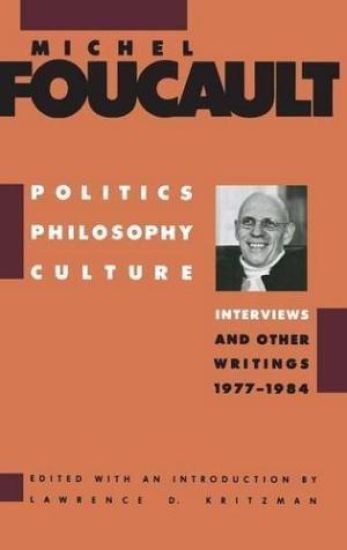
Politics, Philosophy, Culture

Politics, Philosophy, Culture

Michel Foucault

Routledge
2015
sidottu
Politics, Philosophy, Culture contains a rich selection of interviews and other writings by the late Michel Foucault. Drawing upon his revolutionary concept of power as well as his critique of the institutions that organize social life, Foucault discusses literature, music, and the power of art while also examining concrete issues such as the Left in contemporary France, the social security system, the penal system, homosexuality, madness, and the Iranian Revolution.