
Kirjailija
Michel Serres
Kirjat ja teokset yhdessä paikassa: 50 kirjaa, julkaisuja vuosilta 1987–2027, suosituimpiin kuuluu Was genau war früher besser?. Vertaile teosten hintoja ja tarkista saatavuus suomalaisista kirjakaupoista.
50 kirjaa
Kirjojen julkaisuvuodet: 1987–2027.

How order, meaning, and knowledge emerge from noise across science, literature, and philosophy Hermes IV: Distribution is the fourth and penultimate volume in Michel Serres's landmark series on knowledge and communication across disciplines. This collection of essays investigates how order emerges from noise, using thermodynamics and information theory as structural models applicable to science, literature, and culture alike. Moving beyond the themes of interference and translation developed in earlier volumes, Serres focuses on distribution: the processes by which systems take shape, endure, and eventually disperse. At the core of the book is a dynamic vision of knowledge as an unstable formation. Systems arise from chance encounters or deviations that, through repetition, harden into law. They resist entropy by remaining open to external inputs, forming temporary pockets of negentropy within a wider field of chaos. Space, time, energy, language, and meaning are all shown to emerge from such conditions of mixture and imbalance. Serres develops his argument through a striking range of materials, including fables, myths, literary texts, philosophy, and the history of science. The result is an uncommon synthesis of hard science and the humanities that reveals shared structures across domains while affirming the irreducible plurality of their laws and methods. Retail e-book files for this title are screen-reader friendly with images accompanied by short alt text and/or extended descriptions.
How order, meaning, and knowledge emerge from noise across science, literature, and philosophy Hermes IV: Distribution is the fourth and penultimate volume in Michel Serres's landmark series on knowledge and communication across disciplines. This collection of essays investigates how order emerges from noise, using thermodynamics and information theory as structural models applicable to science, literature, and culture alike. Moving beyond the themes of interference and translation developed in earlier volumes, Serres focuses on distribution: the processes by which systems take shape, endure, and eventually disperse. At the core of the book is a dynamic vision of knowledge as an unstable formation. Systems arise from chance encounters or deviations that, through repetition, harden into law. They resist entropy by remaining open to external inputs, forming temporary pockets of negentropy within a wider field of chaos. Space, time, energy, language, and meaning are all shown to emerge from such conditions of mixture and imbalance. Serres develops his argument through a striking range of materials, including fables, myths, literary texts, philosophy, and the history of science. The result is an uncommon synthesis of hard science and the humanities that reveals shared structures across domains while affirming the irreducible plurality of their laws and methods. Retail e-book files for this title are screen-reader friendly with images accompanied by short alt text and/or extended descriptions.
Parasiitti on kulttuurimme suurista kertomuksista - myyteistä, kirjallisuudesta, ihmis- ja luonnontieteistä - ammentava filosofinen tutkielma, joka jäljittää kaikkialla loisivaa parasiittia, subjektin ja objektin välisen suhteen kolmatta unohdettua osapuolta, jota ilman suhdetta ei oikeastaan edes olisi. Taiturimaisen saumattomasti tarinasta ja diskurssista toiseen siirtyen Serres hahmottelee omanlaistaan filosofiaa, jossa kolmannen poissuljetun laki, identiteettiperiaate ja vaihtokauppa eivät päde. Kirjallisuus ja historia kuhisevat parasiitteja, jotka Serres kutsuu todistamaan oman filsofiansa puolesta. Ääneen pääsevät muun muassa Jean de La Fontainen faabeleiden eläimet, Jean-Jacques Rousseau, tekopyhä Tartuffe sekä Sokrates ja muut Pitojen juhlijat. Alun perin vuonna 1981 ilmestynyttä Parasiittia voisi luonnehtia eräänlaiseksi kantateokseksi esimerkiksi posthumanistiselle teoriaperinteelle ja toimijaverkkoteorialle, jotka hylkäävät modernin subjektikeskeisen lähestymistavan filosofiaan. Parasiitin käsitteen lisäksi Serres kehittelee kirjassaan muun muassa teoriaansa kvasiobjektista ja jokerista.
Unlocking the hidden patterns of knowledge - where science, art, and philosophy speak a common language Hermes III: Translation is the third volume in Michel Serres's renowned Hermes series, an ambitious exploration of the deep interconnections among disparate fields of knowledge. While Hermes II: Interference traced the overlapping echoes of ideas across realms, Hermes III moves to translate the structural logics of one field - be it genetics, painting, or philosophy - into the language of another. Revealing how the humanities, science, and art share hidden combinatory architectures, Serres exposes the underlying unity of knowledge systems typically thought distinct. Through an array of examples - from Monod's Chance and Necessity to works by Descartes, Leibniz, Comte, Turner, and Roumain-Serres shows how translation uncovers informational and mathematical patterns that shape both ancient and modern thought. This illuminating methodology leads Serres to issue a stark warning: when knowledge is detached from its guiding purpose, it becomes vulnerable to appropriation by destructive political forces. Yet Serres's vision remains ultimately hopeful. By tracing knowledge systems back to their mythic and structural roots, Hermes III: Translation gestures toward more harmonious relationships between fields. A rare synthesis of philosophy, science, art, and literature, this work will engage readers interested in the interdependence of disciplines and the possibilities for a more unified, humane understanding of knowledge.
Unlocking the hidden patterns of knowledge - where science, art, and philosophy speak a common language Hermes III: Translation is the third volume in Michel Serres's renowned Hermes series, an ambitious exploration of the deep interconnections among disparate fields of knowledge. While Hermes II: Interference traced the overlapping echoes of ideas across realms, Hermes III moves to translate the structural logics of one field - be it genetics, painting, or philosophy - into the language of another. Revealing how the humanities, science, and art share hidden combinatory architectures, Serres exposes the underlying unity of knowledge systems typically thought distinct. Through an array of examples—from Monod's Chance and Necessity to works by Descartes, Leibniz, Comte, Turner, and Roumain—Serres shows how translation uncovers informational and mathematical patterns that shape both ancient and modern thought. This illuminating methodology leads Serres to issue a stark warning: when knowledge is detached from its guiding purpose, it becomes vulnerable to appropriation by destructive political forces. Yet Serres's vision remains ultimately hopeful. By tracing knowledge systems back to their mythic and structural roots, Hermes III: Translation gestures toward more harmonious relationships between fields. A rare synthesis of philosophy, science, art, and literature, this work will engage readers interested in the interdependence of disciplines and the possibilities for a more unified, humane understanding of knowledge.
Unveiling the hidden connections in the network of knowledgeHermes II: Interference is the second in a series of works by philosopher Michel Serres using Hermes, god of communication, as an archetypal symbolic figure for reflecting on philosophy and the arts and sciences. Serres delves into the concept of interreferentiality, proposing that every node-whether it be knowledge, objects, or people-exists within a network where it both receives and transmits information. He argues against the existence of a dominant center or pole within these networks, emphasizing that each node can temporarily serve as a focal point depending on context. Serres presents unique insights into topics such as the nature of knowledge, the world of objects, intersubjectivity, the origins of geometry, the interplay of music and background noise, and empiricism. By identifying parallel structures across these areas, Serres unifies them into a comprehensive theoretical framework, revealing hidden connections and potential future influences. Additionally, this work includes a critique of Gaston Bachelard’s The Formation of the Scientific Mind and concludes with an analysis of communication in HergÉ’s The Castafiore Emerald. Hermes II is a unique blend of ancient and modern perspectives, combining rigorous analysis with an optimistic outlook and highlighting the interconnectedness of knowledge and its implications for fostering peaceful relations within the network of life.
Unveiling the hidden connections in the network of knowledgeHermes II: Interference is the second in a series of works by philosopher Michel Serres using Hermes, god of communication, as an archetypal symbolic figure for reflecting on philosophy and the arts and sciences. Serres delves into the concept of interreferentiality, proposing that every node-whether it be knowledge, objects, or people-exists within a network where it both receives and transmits information. He argues against the existence of a dominant center or pole within these networks, emphasizing that each node can temporarily serve as a focal point depending on context. Serres presents unique insights into topics such as the nature of knowledge, the world of objects, intersubjectivity, the origins of geometry, the interplay of music and background noise, and empiricism. By identifying parallel structures across these areas, Serres unifies them into a comprehensive theoretical framework, revealing hidden connections and potential future influences. Additionally, this work includes a critique of Gaston Bachelard’s The Formation of the Scientific Mind and concludes with an analysis of communication in HergÉ’s The Castafiore Emerald. Hermes II is a unique blend of ancient and modern perspectives, combining rigorous analysis with an optimistic outlook and highlighting the interconnectedness of knowledge and its implications for fostering peaceful relations within the network of life.
Humanistic Narratives
Michel Serres
BLOOMSBURY PUBLISHING PLC
2025
nidottu
Halvin toimitettuna 29,50 €
Following the narratives explored in Hominescence, Incandescent and The Bough, Michel Serres continues and concludes his 'grand story' of humanity and humanism. This book weaves together and condenses the overriding philosophical narratives of the previous books and reflects upon Serres' own humanist theoretical system. With characteristic breadth and imagination, in telling the story of humanity, Serres also tells us why Orpheus lost his friend Euridyce; why Eve was really tempted in the garden of Eden, the history of Fetishism and how human being learned to think. The book offers a challenge to the reader: a challenge to live in the fullness of one's humanity.
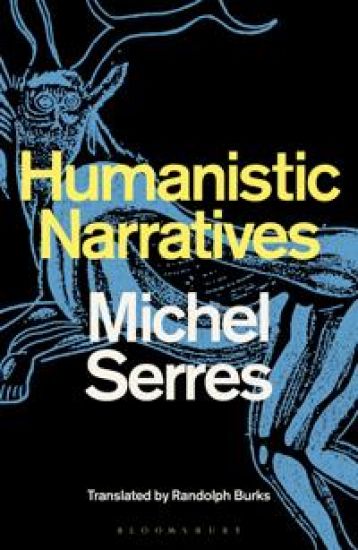
Following the narratives explored in Hominescence, Incandescent and The Bough, Michel Serres continues and concludes his 'grand story' of humanity and humanism. This book weaves together and condenses the overriding philosophical narratives of the previous books and reflects upon Serres' own humanist theoretical system. With characteristic breadth and imagination, in telling the story of humanity, Serres also tells us why Orpheus lost his friend Euridyce; why Eve was really tempted in the garden of Eden, the history of Fetishism and how human being learned to think. The book offers a challenge to the reader: a challenge to live in the fullness of one's humanity.
For the first time in English, the introductory volume in a major French philosopher’s groundbreaking series of poetic transdisciplinary works Michel Serres is recognized as one of the giants of postwar French philosophy of knowledge, along with Gilles Deleuze, Jacques Derrida, Michel Foucault, and Gilbert Simondon. His early five-volume series Hermes, which appeared in the 1960s and 1970s, was an intellectual supernova in its proposition that culture and science shared the same mythic and narrative structures. Hermes I: Communication marks the start of a major publishing endeavor to introduce this foundational series into English. Building on the figure of the Greek god Hermes, who presides over the realms of communication and interpretation, Hermes I embarks on a reflection concerning the history of mathematics via Descartes and Leibniz and culminates by way of a Bachelardian logoanalytic reading of Homer, Dumas, Molière, Verne, and the story of Cinderella. We observe a singular poetic philosopher seeking to bridge the gap between the liberal arts and the sciences through a profound mathematical and poetic fable regarding information theory, history, and art, establishing a new way to think about the production of knowledge during the late twentieth century. In these pages, students and scholars of philosophy will discover an extraordinary project of thought as vital to critical reflection today as it was fifty years ago.
For the first time in English, the introductory volume in a major French philosopher’s groundbreaking series of poetic transdisciplinary works Michel Serres is recognized as one of the giants of postwar French philosophy of knowledge, along with Gilles Deleuze, Jacques Derrida, Michel Foucault, and Gilbert Simondon. His early five-volume series Hermes, which appeared in the 1960s and 1970s, was an intellectual supernova in its proposition that culture and science shared the same mythic and narrative structures. Hermes I: Communication marks the start of a major publishing endeavor to introduce this foundational series into English. Building on the figure of the Greek god Hermes, who presides over the realms of communication and interpretation, Hermes I embarks on a reflection concerning the history of mathematics via Descartes and Leibniz and culminates by way of a Bachelardian logoanalytic reading of Homer, Dumas, Molière, Verne, and the story of Cinderella. We observe a singular poetic philosopher seeking to bridge the gap between the liberal arts and the sciences through a profound mathematical and poetic fable regarding information theory, history, and art, establishing a new way to think about the production of knowledge during the late twentieth century. In these pages, students and scholars of philosophy will discover an extraordinary project of thought as vital to critical reflection today as it was fifty years ago.

“Smeltende is, stigende vandstande, orkaner, smittefarlige pandemier.” Det er lyden af det 21. århundredes krisetider, som ringer ind, ifølge den franske filosof Michel Serres (1930-2019). Han har brugt det meste af sit intellektuelle liv på at sammentænke verden og videnskab, økologi og filosofi, blandt andet i den indflydelsesrige Naturpagten fra 1990. I sit kritiske manifest Krisetider viser Serres, at økokriserne skyldes, at vores kultur har gjort Jorden til et umælende objekt – nu råber den tilbage! Vi er nået frem til en skillevej: enten døden eller symbiosen. Symbiosen starter med lanceringen af en række nye institutioner. Demokratiet er færdigt, kosmokratiet må lanceres. FN er forældet, vi må etablere naturunionen WAFEL (Water, Air, Fire, Earth, Life). Krisetider er en del af bogserien AFTRYK, der samler korte og vedkommende filosofiske tekster med væsentlig virkningshistorie. Teksten er oversat af Sebastian Egholm Lund, der ligeledes har skrevet en fyldig introduktion, som optegner Serres’ filosofiske forfatterskab, hans liv og intellektuelle aftryk: Som mangeårig mentor for Bruno Latour og inspiration for økokritikeren Timothy Morton kan Serres’ tænkning ses som kimen til den moderne økofilosofi. @font-face {font-family:"Cambria Math"; panose-1:2 4 5 3 5 4 6 3 2 4; mso-font-charset:0; mso-generic-font-family:roman; mso-font-pitch:variable; mso-font-signature:-536870145 1107305727 0 0 415 0;}@font-face {font-family:"Arial Unicode MS"; panose-1:2 11 6 4 2 2 2 2 2 4; mso-font-charset:128; mso-generic-font-family:swiss; mso-font-pitch:variable; mso-font-signature:-134238209 -371195905 63 0 4129279 0;}@font-face {font-family:"Adobe Caslon Pro"; panose-1:2 5 5 2 5 5 10 2 4 3; mso-font-charset:77; mso-generic-font-family:roman; mso-font-format:other; mso-font-pitch:variable; mso-font-signature:7 1 0 0 147 0;}@font-face {font-family:"\@Arial Unicode MS"; panose-1:2 11 6 4 2 2 2 2 2 4; mso-font-charset:128; mso-generic-font-family:swiss; mso-font-pitch:variable; mso-font-signature:-134238209 -371195905 63 0 4129279 0;}p. MsoNormal, li. MsoNormal, div. MsoNormal {mso-style-unhide:no; mso-style-parent:""; margin:0cm; mso-pagination:widow-orphan; font-size:12.0pt; font-family:"Times New Roman",serif; mso-fareast-font-family:"Arial Unicode MS"; border:none; mso-ansi-language:EN-US; mso-fareast-language:EN-US;}. MsoChpDefault {mso-style-type:export-only; mso-default-props:yes; font-size:10.0pt; mso-ansi-font-size:10.0pt; mso-bidi-font-size:10.0pt; mso-fareast-font-family:"Arial Unicode MS"; border:none; mso-ansi-language:EN-US; mso-fareast-language:EN-US;}. MsoPapDefault {mso-style-type:export-only;}div. WordSection1 {page:WordSection1;}

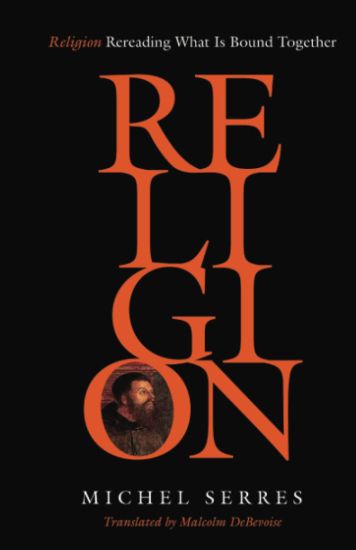
With this profound final work, completed in the days leading up to his death, Michel Serres presents a vivid picture of his thinking about religion—a constant preoccupation since childhood—thereby completing Le Grand Récit, the comprehensive explanation of the world and of humanity to which he devoted the last twenty years of his life. Themes from Serres's earlier writings—energy and information, the role of the media in modern society, the anthropological function of sacrifice, the role of scientific knowledge, the problem of evil—are reinterpreted here in the light of the Old Testament accounts of Isaac and Jonah and a variety of Gospel episodes, including the Three Wise Men of the Epiphany, the Transfiguration, Peter's denying Christ, the Crucifixion, Emmaus, and the Pentecost. Monotheistic religion, Serres argues, resembles mathematical abstraction in its dazzling power to bring together the real and the virtual, the natural and the transcendent; but only in its Christian embodiment is it capable of binding together human beings in such a way that partisan attachments are dissolved and a new era of history, free for once of the lethal repetition of collective violence, can be entered into.

With this profound final work, completed in the days leading up to his death, Michel Serres presents a vivid picture of his thinking about religion—a constant preoccupation since childhood—thereby completing Le Grand Récit, the comprehensive explanation of the world and of humanity to which he devoted the last twenty years of his life. Themes from Serres's earlier writings—energy and information, the role of the media in modern society, the anthropological function of sacrifice, the role of scientific knowledge, the problem of evil—are reinterpreted here in the light of the Old Testament accounts of Isaac and Jonah and a variety of Gospel episodes, including the Three Wise Men of the Epiphany, the Transfiguration, Peter's denying Christ, the Crucifixion, Emmaus, and the Pentecost. Monotheistic religion, Serres argues, resembles mathematical abstraction in its dazzling power to bring together the real and the virtual, the natural and the transcendent; but only in its Christian embodiment is it capable of binding together human beings in such a way that partisan attachments are dissolved and a new era of history, free for once of the lethal repetition of collective violence, can be entered into.
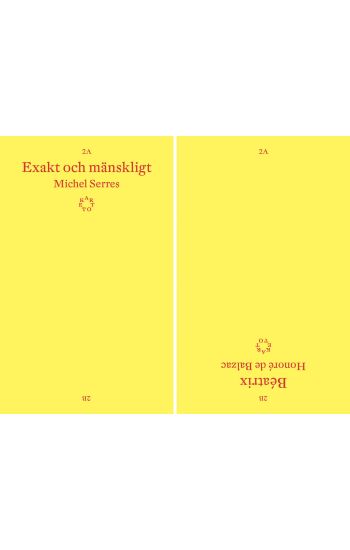
Kartotek 2: Michel Serres – Exakt och mänskligt / Honoré de Balzac – Utdrag från Béatrix. Förord: Jakob Lien. Tanken bakom skriftserien Kartotek är att lyfta fram viktiga teoretiska texter för en nordisk läsekrets i ett format som uppmuntrar till dialog mellan filosofi, teoretiskt tänkande, skönlitteratur och konst, samt inbjuder till vidare fördjupning. Varje del av skriftserien består var för sig av två texter, en teoretisk eller essäistisk text ackompanjerad av en skönlitterär text. Materiellt påminner varje del i skriftserien om små pamfletter, tryckta på enkelt papper, klammerhäftade, lätta att ta med på bussen tåget eller flyget, och menade att distribueras mellan vänner och kollegor.