Kirjojen hintavertailu – 12 859 818 kirjaa ja 27 kauppaa

Kirjailija

Michel Serres

Kirjat ja teokset yhdessä paikassa: 50 kirjaa, julkaisuja vuosilta 1987–2027, suosituimpiin kuuluu Was genau war früher besser?. Vertaile teosten hintoja ja tarkista saatavuus suomalaisista kirjakaupoista.

50 kirjaa

Kirjojen julkaisuvuodet: 1987–2027.

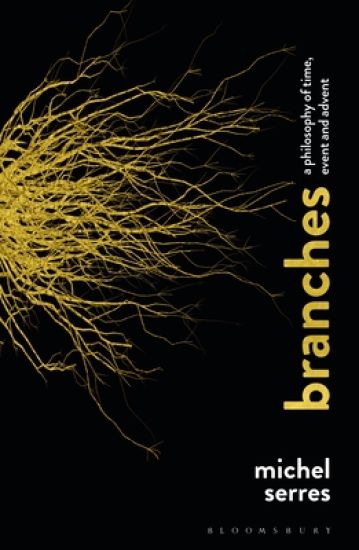
Branches

Branches

Michel Serres

Bloomsbury Academic
2020
nidottu

Halvin toimitettuna 41,00 €

Despite being one of France’s most enduring and popular philosophers, Branches is the first English translation of what has been identified as Michel Serres’ key text on humanism. In attempting to reconcile humanity and nature, Serres examines how human history ‘branches’ off from its origin story. Using the metaphor of a branch springing from the stem and arguing that the branch’s originality derives its format, Serres identifies dogmatic philosophy as the stem, while philosophy as the branch represents its inventive, shape-shifting, or interdisciplinary elements. In Branches, Serres provides a unique reading of the history of thought and removes the barriers between science, culture, art and religion. His fluency and this fluidity of subject matter combine here to make a book suitable for students of Continental philosophy, post-humanism, the medical humanities and philosophical science, while providing any reader with a wider understanding of the world in which they find themselves.
Branches

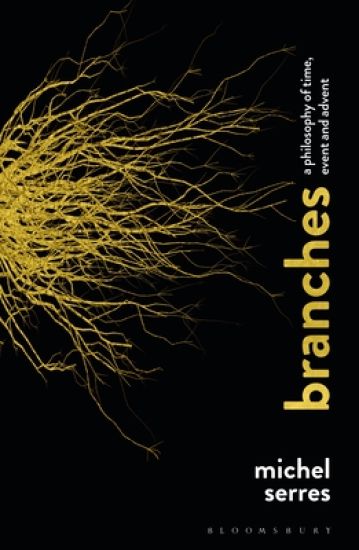
Branches

Michel Serres

Bloomsbury Academic
2020
sidottu
Despite being one of France’s most enduring and popular philosophers, Branches is the first English translation of what has been identified as Michel Serres’ key text on humanism. In attempting to reconcile humanity and nature, Serres examines how human history ‘branches’ off from its origin story. Using the metaphor of a branch springing from the stem and arguing that the branch’s originality derives its format, Serres identifies dogmatic philosophy as the stem, while philosophy as the branch represents its inventive, shape-shifting, or interdisciplinary elements. In Branches, Serres provides a unique reading of the history of thought and removes the barriers between science, culture, art and religion. His fluency and this fluidity of subject matter combine here to make a book suitable for students of Continental philosophy, post-humanism, the medical humanities and philosophical science, while providing any reader with a wider understanding of the world in which they find themselves.
Hominescence

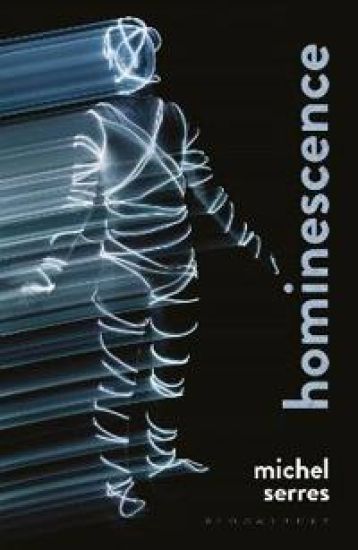
Hominescence

Michel Serres

Bloomsbury Academic
2019
sidottu
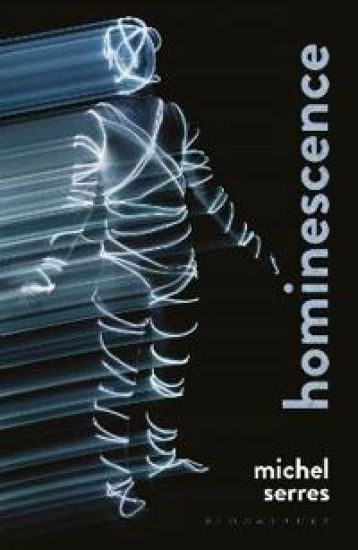
According to Michel Serres, a process of 'hominescence' has taken place throughout human history. Hominescence can be described as a type of adolescence; humanity in a state of growing, a state of constant change, on the threshold of something unpredictable. We are destined never to be the same again but what does the future hold? In this innovative and passionately original work of philosophy, Serres describes the future of man as an adolescence, transitioning from childhood to adulthood, or luminescence, when a dark body becomes light. After considering the radical changes that humanity has experienced over the last fifty years, Serres analyzes the new relationship that man has with diverse concepts, like the dead, his own body, agriculture, and new communication networks. He alerts us to the consequences of these changes, particularly on the danger of growing inequalities between rich and poor countries. Should we rejoice in the future, ignore it, or even dread it? Unlike other philosophies that preach doom and gloom, Hominescence calls for us to anticipate the uncertain light of the future.
Hominescence

Hominescence

Michel Serres

Bloomsbury Academic
2019
nidottu
According to Michel Serres, a process of 'hominescence' has taken place throughout human history. Hominescence can be described as a type of adolescence; humanity in a state of growing, a state of constant change, on the threshold of something unpredictable. We are destined never to be the same again but what does the future hold? In this innovative and passionately original work of philosophy, Serres describes the future of man as an adolescence, transitioning from childhood to adulthood, or luminescence, when a dark body becomes light. After considering the radical changes that humanity has experienced over the last fifty years, Serres analyzes the new relationship that man has with diverse concepts, like the dead, his own body, agriculture, and new communication networks. He alerts us to the consequences of these changes, particularly on the danger of growing inequalities between rich and poor countries. Should we rejoice in the future, ignore it, or even dread it? Unlike other philosophies that preach doom and gloom, Hominescence calls for us to anticipate the uncertain light of the future.
The Incandescent

The Incandescent

Michel Serres

Bloomsbury Academic
2018
sidottu
The first translation of the volumes in Michel Serres’ classic 'Humanism' tetralogy, this ambitious philosophical narrative explores what it means to be human. With his characteristic breadth of references including art, poetry, science, philosophy and literature, Serres paints a new picture of what it might mean to live meaningfully in contemporary society. He tells the story of humankind (from the beginning of time to the present moment) in an attempt to affirm his overriding thesis that humans and nature have always been part of the same ongoing and unfolding history. This crucial piece of posthumanist philosophical writing has never before been released in English. A masterful translation by Randolph Burks ensures the poetry and wisdom of Serres writing is preserved and his notion of what humanity is and might be is opened up to new audiences.
The Incandescent

The Incandescent

Michel Serres

Bloomsbury Academic
2018
nidottu
The first translation of the volumes in Michel Serres’ classic 'Humanism' tetralogy, this ambitious philosophical narrative explores what it means to be human. With his characteristic breadth of references including art, poetry, science, philosophy and literature, Serres paints a new picture of what it might mean to live meaningfully in contemporary society. He tells the story of humankind (from the beginning of time to the present moment) in an attempt to affirm his overriding thesis that humans and nature have always been part of the same ongoing and unfolding history. This crucial piece of posthumanist philosophical writing has never before been released in English. A masterful translation by Randolph Burks ensures the poetry and wisdom of Serres writing is preserved and his notion of what humanity is and might be is opened up to new audiences.
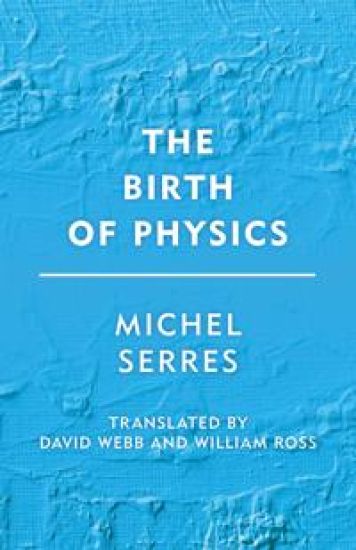
The Birth of Physics

The Birth of Physics

Michel Serres

Rowman Littlefield
2018
sidottu
The Birth of Physics represents a foundational work in the development of chaos theory from one of the world’s most influential living theorists, Michel Serres. Focussing on the largest text still intact to reach us from the Atomists - Lucretius' De Rerum Natura - Serres mobilises everything we know about the related scientific work of the time (Archemides, Epicurus et al) in order to demand a complete reappraisal of the legacy. Crucial to his reconception of the Atomists' thought is a recognition that their model of atomic matter is essentially a fluid one - they are describing the actions of turbulence, which impacts our understanding of the recent disciplines of chaos and complexity. It explains the continuing presence of Lucretius in the work of such scientific giants as Nobel Laureates Schroedinger and Prigogine. This book is truly a landmark in the study of ancient physics and has been enormously influential on work in the area, amongst other things stimulating a more general rebirth of philosophical interest in the ancients.
The Birth of Physics

The Birth of Physics

Michel Serres

Rowman Littlefield
2018
nidottu
The Birth of Physics represents a foundational work in the development of chaos theory from one of the world’s most influential living theorists, Michel Serres. Focussing on the largest text still intact to reach us from the Atomists - Lucretius' De Rerum Natura - Serres mobilises everything we know about the related scientific work of the time (Archemides, Epicurus et al) in order to demand a complete reappraisal of the legacy. Crucial to his reconception of the Atomists' thought is a recognition that their model of atomic matter is essentially a fluid one - they are describing the actions of turbulence, which impacts our understanding of the recent disciplines of chaos and complexity. It explains the continuing presence of Lucretius in the work of such scientific giants as Nobel Laureates Schroedinger and Prigogine. This book is truly a landmark in the study of ancient physics and has been enormously influential on work in the area, amongst other things stimulating a more general rebirth of philosophical interest in the ancients.
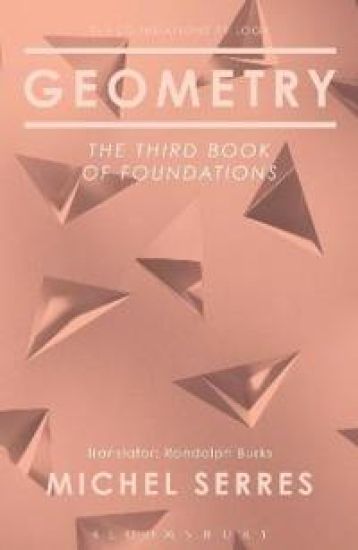
Geometry

Geometry

Michel Serres

Bloomsbury Academic
2017
sidottu
In this third installment of his classic 'Foundations' trilogy, Michel Serres takes on the history of geometry and mathematics. Even more broadly, Geometry is the beginnings of things and also how these beginnings have shaped how we continue to think philosophically and critically. Serres rejects a traditional history of mathematics which unfolds in a linear manner, and argues for the need to delve into the past of maths and identify a series of ruptures which can help shed light on how this discipline has developed and how, in turn, the way we think has been shaped and formed. This meticulous and lyrical translation marks the first ever English translation of this key text in the history of ideas.
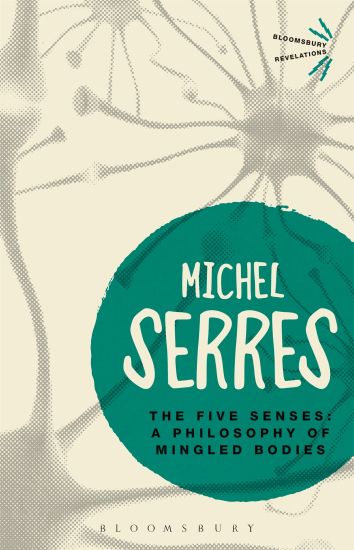
The Five Senses

The Five Senses

Michel Serres

Bloomsbury Academic
2016
nidottu
Marginalized by the scientific age the lessons of the senses have been overtaken by the dominance of language and the information revolution. With The Five Senses Serres traces a topology of human perception, writing against the Cartesian tradition and in praise of empiricism, he demonstrates repeatedly, and lyrically, the sterility of systems of knowledge divorced from bodily experience. The fragile empirical world, long resistant to our attempts to contain and catalog it, is disappearing beneath the relentless accumulations of late capitalist society and information technology. Data has replaced sensory pleasure, we are less interested in the taste of a fine wine than in the description on the bottle's label. What are we, and what do we really know, when we have forgotten that our senses can describe a taste more accurately than language ever could? The book won the inaugural Prix Médicis Essai in 1985. The Revelations edition includes an introduction by Steven Connor.
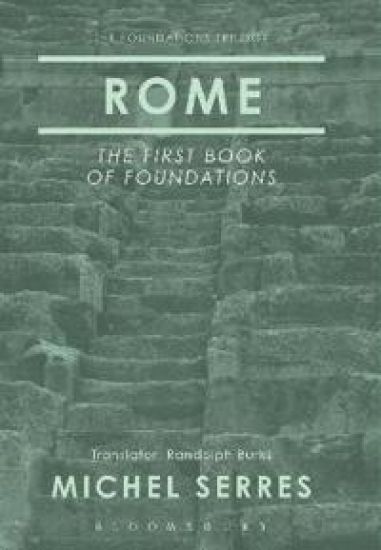
Rome

Rome

Michel Serres

Bloomsbury Academic
2015
sidottu
Michel Serres first book in his 'foundations trilogy' is all about beginnings. The beginning of Rome but also about the beginning of society, knowledge and culture. Rome is an examination of the very foundations upon which contemporary society has been built. With characteristic breadth and lyricism, Serres leads the reader on a journey from a meditation the roots of scientific knowledge to set theory and aesthetics. He explores the themes of violence, murder, sacrifice and hospitality in order to urge us to avoid the repetitive violence of founding. Rome also provides an alternative and creative reading of Livy's Ab urbe condita which sheds light on the problems of history, repetition and imitation. First published in English in 1991, re-translated and introduced in this new edition, Michel Serres' Rome is a contemporary classic which shows us how we came to live the way we do.
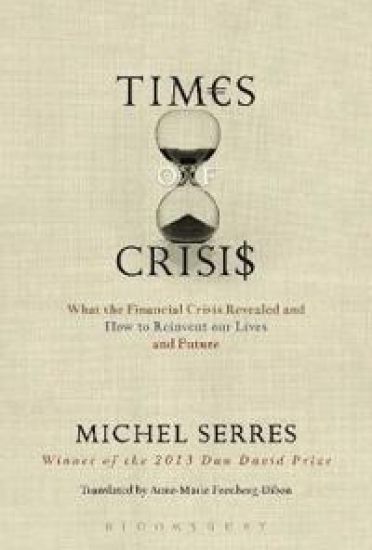
Times of Crisis

Times of Crisis

Michel Serres

Bloomsbury Academic USA
2015
nidottu
For Michel Serres, economic crises are earthquakes caused by societal tectonic plates. The current crisis erupted because of the widening discrepancy between major social changes and institutions that have remained the same since WWII. Serres, one of the first to bring nature into the political, writes, "To destroy, kill, exploit is worthless. In the long run, it means destroying ourselves." At a time when the world population has grown so much that it is exhausting natural resources and the environment, we need to rethink cultural, social, and political dynamics. Serres argues that geopolitics and economics will no longer be a two-player game, between West and East, for example, but a three-player one, in which is Earth will be the third partner. This book is one of hope as it calls for a new world and extols the importance of science for our future and political institutions. Here, Serres demonstrates an optimistic outlook in a clear and luminous language that offers new paths for reflection and, ultimately, a better life for Earth and its inhabitants.
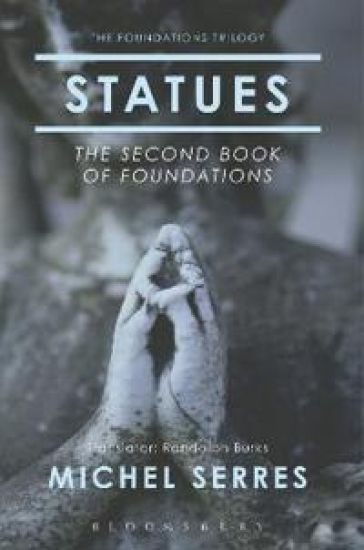
Statues

Statues

Michel Serres

Bloomsbury Academic
2014
sidottu
In this first English translation of one of his most important works, Michel Serres presents the statue as more than a static entity: for Serres it is the basis for knowledge, society, the subject and object, the world and experience. Serres demonstrates how sacrificial art founded and still persists in society and reflects on the centrality of death and the statufied dead body to the human condition. Each section covers a different time period and statuary topic, ranging from four thousand years ago to 1986; from Baal, the paintings of Carpaccio, and the Eiffel Tower, to Rodin's The Gates of Hell, the Challenger disaster and the literature of Maupassant, La Fontaine and Jules Verne. Expository, lyrical, fictionalized and hallucinatory, Statues plays with time and place, history and story in order to provoke us into thinking in entirely new ways. Through mythic and poetic meditations on various kinds of descent into the underworld and new insights into the relation of the subject and object and their foundation in death, Statues contains great treasures and provocations for philosophers, literary critics, art historians and sociologists.
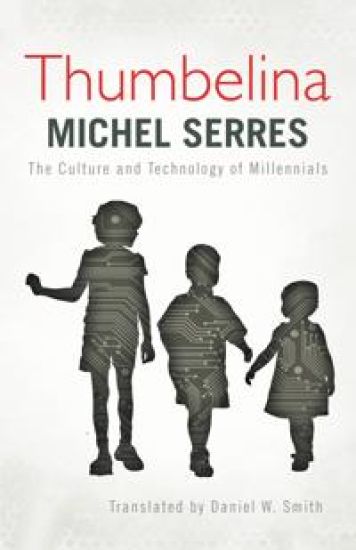
Thumbelina

Thumbelina

Michel Serres

Rowman Littlefield International
2014
sidottu
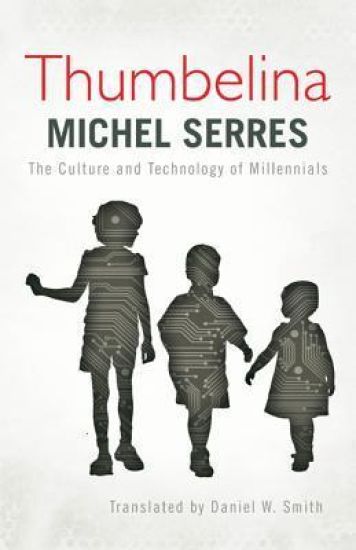
The title of this timely and thought-provoking book, a French bestseller, refers to schoolgirls sending text messages to their friends on their smart phones. Michel Serres, one of France's most important living intellectuals, uses this image to get at something far broader: that humans are formed and shaped by technologies, and that with the advent of computers, smart phones, and the Internet, a new human is being born. These new humans beings are our children—thumbelina (petite poucette) and tom thumb (petit poucet)—but technologies have been changing so fast that parents scarcely know their children. Serres documents this cultural revolution, arguing that there have been several similar revolutions in the past: from oral cultures to cultures focused on reading and writing; the advent of the printing press; and now the complex changes brought about by the new information technologies—changes that are taking place at an accelerated pace and that affect us all.
Thumbelina

Thumbelina

Michel Serres

Rowman Littlefield International
2014
nidottu
The title of this timely and thought-provoking book, a French bestseller, refers to schoolgirls sending text messages to their friends on their smart phones. Michel Serres, one of France's most important living intellectuals, uses this image to get at something far broader: that humans are formed and shaped by technologies, and that with the advent of computers, smart phones, and the Internet, a new human is being born. These new humans beings are our children—thumbelina (petite poucette) and tom thumb (petit poucet)—but technologies have been changing so fast that parents scarcely know their children. Serres documents this cultural revolution, arguing that there have been several similar revolutions in the past: from oral cultures to cultures focused on reading and writing; the advent of the printing press; and now the complex changes brought about by the new information technologies—changes that are taking place at an accelerated pace and that affect us all.
Biogea

Biogea

Michel Serres

Univocal Publishing LLC
2012
nidottu
Biogea is a mixture of poetry, philosophy, science, and biography exemplary of the style that has made Michel Serres one of the most extraordinary thinkers of his age. His philosophical and poetic inquiry sings in praise of earth and life, what he names singularly as Biogea. In these times when species are disappearing, when catastrophic events such as earthquakes and tsunamis impale the earth, Serres wonders if anyone “worries about the death pangs of the rivers.” And for Serres, one can ask the same question of philosophy as the humanities increasingly find themselves in need of defenders. Today, all living organisms discover themselves part of this Biogea. “Today we have other neighbors, constituents of the Biogea: the sea, my lover; our mother, the Earth, becomes our daughter; this beautiful breeze which inspires the spirit, a spiritual mistress; our light friends, the fresh and flowing waters.”
Variations on the Body

Variations on the Body

Michel Serres

Univocal Publishing LLC
2012
nidottu
World-renowned philosopher, Michel Serres writes a text in praise of the body and movement, in praise of teachers of physical education, coaches, mountain guides, athletes, dancers, mimes, clowns, artisans, and artists. This work describes the variations, the admirable metamorphoses that the body can accomplish. While animals lack such a variety of gestures, postures, and movements, the fluidity of the human body mimics the leisure of living beings and things; what’s more, it creates signs. Already here, within its movements and metamorphoses, the mind is born. The five senses are not the only source of knowledge: it emerges, in large part, from the imitations the plasticity of the body allows. In it, with it, by it knowledge begins.
Malfeasance

Malfeasance

Michel Serres

Stanford University Press
2010
pokkari
In this highly original and provocative book, Michel Serres reflects on the relation between nature and culture and analyzes the origins of the world's contemporary environmental problems. He does so through the surprising proposition that our cleanliness is our dirt. While all living beings pollute to lay claim to their habitat, humans have multiplied pollution's effects catastrophically since the Industrial Revolution through the economic system's mode of appropriation and its emphasis on mindless growth. He warns that while we can measure what he calls "hard pollution"—the poisoning of the Earth—we ignore at our peril the disastrous impact of the "soft pollution" created by sound and images on our psyches. Sounding the alarm that the planet is heading for disaster, Serres proposes that humanity should stop trying to "own" the world and become "renters." Building on his earlier work, especially that on hominization, he urges us to establish a "natural contract" with nature. Published with the assistance of the Edgar M. Kahn Memorial Fund.
The Five Senses

The Five Senses

Michel Serres

Continuum International Publishing Group Ltd.
2008
nidottu
Marginalized by the scientific age with its metaphysical and philosophical systems, the lessons of the senses have been overtaken by the dominance of language and the information revolution. Exploring the deleterious effects of the systematic downgrading of the senses in Western philosophy, Michel Serres member of the Acad mie franaise and one of France's leading philosophers traces a topology of human perception. Writing against the Cartesian tradition and in praise of empiricism, he demonstrates repeatedly, and lyrically, the sterility of systems of knowledge divorced from bodily experience. The fragile empirical world, long resistant to our attempts to contain and catalogue it, is disappearing beneath the relentless accumulations of late capitalist society and information technology. Data has replaced sensory pleasure, we are less interested in the taste of a fine wine than in the description on the bottle's label. What are we, and what do we really know, when we have forgotten that our senses can describe a taste more accurately than language ever could.