Kirjojen hintavertailu – 12 867 723 kirjaa ja 27 kauppaa

Kirjailija

Morusu Siva Sankar

Kirjat ja teokset yhdessä paikassa: 172 kirjaa, julkaisuja vuosilta 2012–2025, suosituimpiin kuuluu Founder of Navya Andhra Pradesh (Amaravathi) In India. Vertaile teosten hintoja ja tarkista saatavuus suomalaisista kirjakaupoista.

172 kirjaa

Kirjojen julkaisuvuodet: 2012–2025.

Entrepreneurship

Entrepreneurship

Morusu Siva Sankar

Globeedit
2021
pokkari
Entrepreneurship is the creation or extraction of value. With this definition, entrepreneurship is viewed as change, generally entailing risk beyond what is normally encountered in starting a business, which may include other values than simply economic ones. More narrow definitions have described entrepreneurship as the process of designing, launching and running a new business, which is often similar to a small business, or as the "capacity and willingness to develop, organize and manage a business venture along with any of its risks to make a profit." The people who create these businesses are often referred to as entrepreneurs. While definitions of entrepreneurship typically focus on the launching and running of businesses, due to the high risks involved in launching a start-up, a significant proportion of start-up businesses have to close due to "lack of funding, bad business decisions, government policies, an economic crisis, lack of market demand, or a combination of all of these." In the field of economics, the term entrepreneur is used for an entity, which has the ability to translate inventions or technologies into products and services.
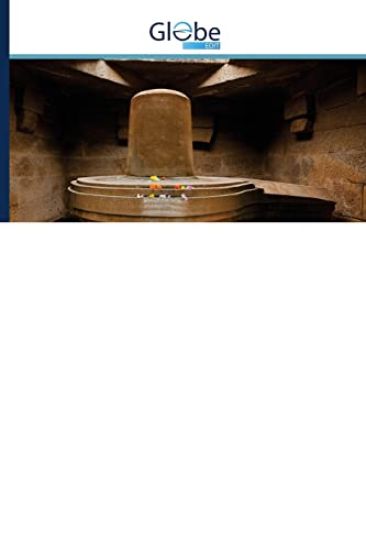
Traditional Jyotirlinga shrines in India

Traditional Jyotirlinga shrines in India

Morusu Siva Sankar

Globeedit
2021
pokkari
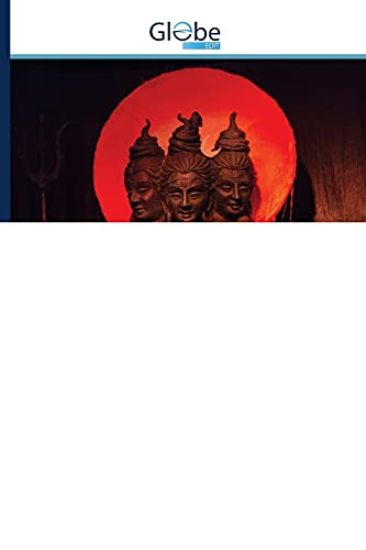
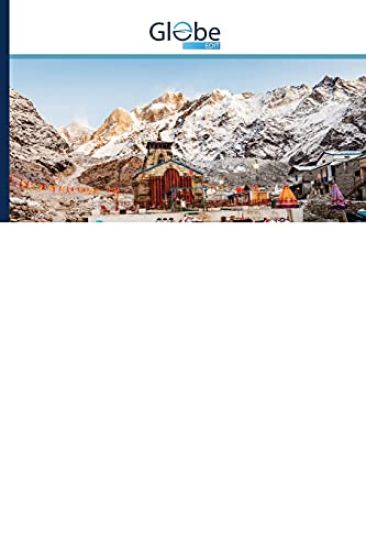
A Jyotirlinga or Jyotirlingam is a devotional representation of the Supreme God Shiva. Jyoti means 'radiance' and lingam the 'Image or Sign' of Shiva; Jyotir Lingam thus means the Radiant Sign of The Almighty Shiva. There are twelve traditional Jyotirlinga shrines in India. According to Śiva Mahāpurāṇa, once Brahma (the god of creation) and Vishnu (the form of God during Preservation) had an argument over supremacy of creation. To settle the debate, Supreme God Shiva pierced the three worlds appearing as a huge Infinite Pillar of Light, the Jyotirlinga, which later cooled into the Holy Mountain Annamalai (on which the Temple of Arunachaleshvara is located). Vishnu and Brahma split their ways to downwards and upwards respectively to find the end of the light in either direction. Brahma lied that he found out the end, while Vishnu conceded his defeat. This lie of Brahma angered Shiva making him curse Brahma that even though he is the creator of the universe he would not be worshipped. The jyotirlinga is the Supreme Siva, partless reality, out of which Shiva appeared in another Form, Lingodbhava.
World Record Y S Jagan Padayatra Isa journey covering 3,648 km in AP

World Record Y S Jagan Padayatra Isa journey covering 3,648 km in AP

Y V Subba Reddy; A Rama Mohan Reddy; Morusu Siva Sankar

Globeedit
2021
pokkari
Raavali Jagan, Kaavali Jagan (Jagan should come, we want Jagan). Ordinarily, the word, Sankalpa, means the resolve to do, that is, to perform to achieve an objective, as a vow or a solemn promise to oneself. Sankalpa also means a concept or idea; a concept is an idea. ... Such is the attitude of Sankalpa, without which no progress can be made. Sankalpa is a Sanskrit term in yogic philosophy that refers to a heartfelt desire, a solemn vow, an intention, or a resolve to do something. It is similar to the English concept of a resolution, except that it comes from even deeper within and tends to be an affirmation. This term comes from the Sanskrit roots san, meaning "a connection with the highest truth," and kalpa, meaning "vow." Thus, it translates to denote an affirming resolve to do something or achieve something spiritual. Oftentimes, yoga practice can help an individual uncover and cultivate their own Sankalpa in order to achieve enlightenment. Yogapedia explains Sankalpa unlike a goal, which is a personal need to accomplish something, the concept of Sankalpa turns inward to connect with the heart's highest intention. A goal can be thought of as an individual's will.
World Best Tirumala Hill is Full of Blessings

World Best Tirumala Hill is Full of Blessings

Yerram Venkata Subba Reddy; Chelle Chiranjeevi; Morusu Siva Sankar

Globeedit
2021
pokkari
Venkateswara temple is a Hindu temple situated in the hill town of Tirumala in Tirupati in Chittoor district of Andhra Pradesh, India. The temple is dedicated to Venkateswara, a form of Vishnu, who is believed to have appeared here to save mankind from trials and troubles of Kaliyuga. Hence, the place has also got the name Kaliyuga Vaikuntha and the lord here is referred to as Kaliyuga Prathyaksha Daivam. The temple is also known by other names like Tirumala temple, Tirupati temple, Tirupati Balaji temple. Venkateswara is known by many other names: Balaji, Govinda, and Srinivasa. The temple is run by body Tirumala Tirupati Devasthanams (TTD), which is under control of the Andhra Pradesh government. The head of TTD is appointed by Andhra Pradesh government. The revenue from this shrine is used by Andhra Pradesh government. Tirumala hills are part of the Seshachalam hill range. The hills are 853 meters (2,799 ft) above sea level. The hills comprise seven peaks, representing the seven heads of Adisesha. The temple lies on the seventh peak - Venkatadri, on the southern banks of Sri Swami Pushkarini, a holy water tank. Hence, the temple is also referred to as "temple of seven hills".
Sundara Kanda (Beautiful Episode)

Sundara Kanda (Beautiful Episode)

Yerram Venkata Subba Reddy; Chelle Chiranjeevi; Morusu Siva Sankar

Globeedit
2021
pokkari
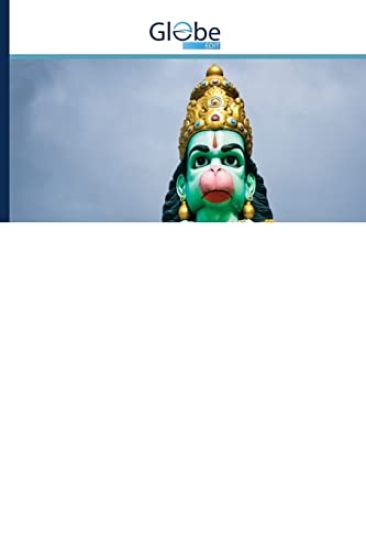
Sundara Kanda is the only chapter of the Ramayana, in which the hero is not Rama, but rather Hanuman. ... Hanuman was fondly called "Sundara" by his mother Anjani and Sage Valmiki chose this name over others as the Sundara Kanda is about Hanuman's journey to Lanka. Sundara Kanda literally means beautiful episode. It is beautiful because, it alleviates all the sorrow and despair in the hearts and minds of Lord Sri Rama, Mother Sita, Laxmana and others. It is in this Kanda that Lord Hanuman re-discovers his unlimited strength and potential. Devotees believe that reading the Sundar Kand on Tuesday or Saturday - both days considered to be auspicious by Hanuman devotees - fetches maximum blessings. Sundar Kand paath pathan (reading) rids one's house of negative energy and evil presences if any. To start Sundarakanda Paarayanam, take a thithi between Sukla Paksha Dvithiya, Thruthiya, Panchami, Sapathani, Dasami Ekadasi Thrayodasi and start. It is advised to read at least one chapter a day. Take a Hanuman or Sri Rama Pattabhishekam photo and use red or pink flowers for puja. Also, use Sindhhoram.
Concept and Nature of Merchant Banking

Concept and Nature of Merchant Banking

Morusu Siva Sankar

Globeedit
2021
pokkari
Merchant Banking is the financial institution committed to the credit union, merger and acquisition services, fundraising, portfolio services, publicity, and new issues, consulting services, promotion of ventures and project funding for large companies, high net worth individuals, and multinationals of corporations throughout the world. The central purpose of the commercial banking industry is to make money, grow and modernize the sector, which essentially represents the country's overall economic growth. Basically, Merchant Banking is the combination of both consultation services and Banking. Merchant Banks mainly work with small businesses or startups that find difficulty in raising funds. Merchant Banking Services in India started with a Reserve Banking License issued in 1967 to the Grindlays bank. In 1983 they were much more popular, when the main market thrived, where the companies began to discuss a new issue. Commercial banking activities are organized and carried out in various ways. Organized as public limited companies and registered as private limited firms, they are organized by commercial banks and foreign finance development.
World best book Sree Guru Charitra (story)
Lord Dattatreya, Dattā or Dattaguru, is a paradigmatic Sannyasi (monk) and one of the lords of Yoga, venerated as a Hindu god. In Maharashtra, Goa, Andhra Pradesh, Telangana, Karnataka, Gujarat, and Madhya Pradesh he is a syncretic deity, considered to be an avatar of the three Hindu gods Brahma, Vishnu and Shiva, collectively known as Trimurti. In other regions, and some versions of texts such as Garuda Purana, Brahma Purana and Sattvata Samhita, he is an avatar of Lord Vishnu. Several Upanishads are dedicated to him, as are the texts of the Vedanta-Yoga tradition in Hinduism. One of the most important texts of Hinduism, namely Avadhuta Gita (literally, "song of the free soul") is attributed to Dattatreya. Over time, Dattatreya has inspired many monastic movements in Shaivism, Vaishnavism and Shaktism, particularly in the Deccan region of India, South India, Gujarat, Madhya Pradesh, Rajasthan and Himalayan regions, where Shiva tradition has been strong. His pursuit of simple life, kindness to all, sharing of his knowledge and the meaning of life during his travels is reverentially mentioned in the poems by Tukaram, a saint-poet of the Bhakti movement.
God of Creation in Hinduism Brahma

God of Creation in Hinduism Brahma

Morusu Siva Sankar

Globeedit
2021
pokkari
Brahma in Sanskrit are growth, expansion, and creation. In this way, Brahma is recognized as the God of creation. He is attributed to the creation of Brahmanda (entire universe) and all forms of life within it. So, he is also known as the Creator and the Director of the entire universe. It is said that Goddess Saraswati is the wife of Brahma. She is the God of knowledge and wisdom. Brahma is believed to be born from the Kamal (lotus), springing from Vishnu's Navi (navel) as he was laying on the great serpent in the milky ocean. Hence, he is also known as Nabhija (navel born) and Kanja (water born), according to Hindu doctrine. Growing from the lotus of Narayana, Brahma is the name, which creates the realm of the universe. He is a symbol of celestials and divine beings of all kinds of nature. Purusha Suktam of the Rigveda (Hymn 10.90) states that three main bodies of the Universe (Brahma, Vishnu, and Shiva) are indestructible and they are the subjects to creation, preservation, and dissolution of the whole universe. Narayana is the Sanskrit name given in the Upanishad, which means supreme lord. Narayana is the Para Brahma, one who creates unlimited universes. Brahma in Sanskrit are growth, expansion, and creation. In this way, Brahma is recognized as the God of creation. He is attributed to the creation of Brahmanda (entire universe) and all forms of life within it. So, he is also known as the Creator and the Director of the entire universe. It is said that Goddess Saraswati is the wife of Brahma. She is the God of knowledge and wisdom. Brahma is believed to be born from the Kamal (lotus), springing from Vishnu's Navi (navel) as he was laying on the great serpent in the milky ocean. Hence, he is also known as Nabhija (navel born) and Kanja (water born), according to Hindu doctrine. Growing from the lotus of Narayana, Brahma is the name, which creates the realm of the universe. He is a symbol of celestials and divine beings of all kinds of nature. Purusha Suktam of the Rigveda (Hymn 10.90) states that three main bodies of the Universe (Brahma, Vishnu, and Shiva) are indestructible and they are the subjects to creation, preservation, and dissolution of the whole universe. Narayana is the Sanskrit name given in the Upanishad, which means supreme lord. Narayana is the Para Brahma, one who creates unlimited universes.

Financial Systems and Markets in India

Financial Systems and Markets in India

Morusu Siva Sankar

Globeedit
2021
pokkari
The financial system is a set of institutions, such as banks, insurance companies, and stock exchanges, that permit the exchange of funds. Financial systems exist on firm, regional, and global levels. Borrowers, lenders, and investors exchange current funds to finance projects, either for consumption or productive investments, and to pursue a return on their financial assets. The financial system also includes sets of rules and practices that borrowers and lenders use to decide which projects get financed, who finances projects, and terms of financial deals. Financial markets involve borrowers, lenders, and investors negotiating loans and other transactions. In these markets, the economic good traded on both sides is usually some form of money: current money (cash), claims on future money (credit), or claims on the future income potential or value of real assets (equity). These also include derivative instruments. Derivative instruments, such as commodity futures or stock options, are financial instruments that are dependent on an underlying real or financial asset's performance. In financial markets, these are all traded among borrowers, lenders, and investors.