Kirjailija
Murray Stein
Kirjat ja teokset yhdessä paikassa: 102 kirjaa, julkaisuja vuosilta 1996–2026, suosituimpiin kuuluu The Collected Writings of Murray Stein. Vertaile teosten hintoja ja tarkista saatavuus suomalaisista kirjakaupoista.
102 kirjaa
Kirjojen julkaisuvuodet: 1996–2026.
BTS l'a encore fait Map of the Soul: 7 est la pierre angulaire d'un projet de 2 albums destin r v ler le paysage int rieur de l' me humaine, riche en symbolisme et tiss avec le son et les mouvements caract ristiques de BTS. En commen ant par les paroles, ce livre se lance dans un examen approfondi et engageant de l'album la lumi re de la psychologie du psychiatre suisse Carl Jung. Les nombreuses couches de sens int gr es dans le chiffre 7 sont mises en lumi re, ainsi que plusieurs concepts fondamentaux de la psychologie jungienne. Les fans de BTS du monde entier s' merveilleront de la profondeur de la signification des chansons contenues dans Map of the Soul: 7. Ils emm nent l'auditeur dans une r flexion profonde sur le sens de l'effort et de l'ambition, les p rils du succ s mondain et la r silience de l'esprit humain. Ces chansons sont des rep res sur la carte de l' me qui offrent des conseils pour vivre et se relier aux autres et au monde en g n ral. l'instar de Carl Jung dont les r ves ont anticip la p riode sombre des guerres mondiales dont le 20e si cle a t t moin, le Dr Stein sugg re que la chanson Black Swan pourrait tre une pr diction collective de la p riode sombre et meurtri re de la pand mie qui a envahi le monde au d but de 2020. Pour le 21e si cle. Des gens du si cle pris dans les complexit s profondes de la vie moderne, Map of the Soul 7: Persona, Shadow & Ego in the World of BTS est comme une boussole qui aide le chercheur trouver son chemin. Le travail de BTS quipe ses fans d'une carte inestimable et ce livre est comme une l gende pour leur dernier album. Pour leur excellent service, nous devons tre profond ment reconnaissants.


Temporality, Shame, and the Problem of Evil in Jungian Psychology
Murray Stein; Elena Caramazza
Routledge
2020
nidottu
Halvin toimitettuna 42,80 €
In a unique epistolary style, authors Murray Stein and Elena Caramazza share their rich and reflective conversations surrounding the themes of temporality, shame, and evil through letters, essays, and email correspondence. Ignited by Wolfgang Pauli’s "The Piano Lesson," Stein and Caramazza study the function of temporality and consider the importance of shame and evil to this relationship. In this book Stein shows how Pauli, as a result of his contact with C. G. Jung and analytical psychology, embarked on a thought experiment to merge two currents of scientific thought: quantum physics and depth psychology. In his work of active imagination "The Piano Lesson," Pauli playfully brings together the former, which supplies a causal explanation of the mechanics of the material world, and the latter, which supplies an approach to meaning. The problem of how to merge the two currents in one language is presented in Pauli’s symbolic solution, piano music, which combines the black and white keys in a single harmony. This music symbolizes a unified theory that combines the explanations of causality and the meaning delivered by synchronicity. Presenting an original approach to synchronicity and dis-synchronicity, this interdisciplinary and innovative exchange concludes with a script written by Murray Stein, inspired by Pauli, as well as an afterword by influential Jungian scholars. This book will be a key reference for undergraduate and postgraduate courses and seminars in Jungian and post-Jungian studies, philosophy, psychoanalytic studies, psychology, and the social sciences.
Temporality, Shame, and the Problem of Evil in Jungian Psychology
Murray Stein; Elena Caramazza
Routledge
2020
sidottu
In a unique epistolary style, authors Murray Stein and Elena Caramazza share their rich and reflective conversations surrounding the themes of temporality, shame, and evil through letters, essays, and email correspondence. Ignited by Wolfgang Pauli’s "The Piano Lesson," Stein and Caramazza study the function of temporality and consider the importance of shame and evil to this relationship. In this book Stein shows how Pauli, as a result of his contact with C. G. Jung and analytical psychology, embarked on a thought experiment to merge two currents of scientific thought: quantum physics and depth psychology. In his work of active imagination "The Piano Lesson," Pauli playfully brings together the former, which supplies a causal explanation of the mechanics of the material world, and the latter, which supplies an approach to meaning. The problem of how to merge the two currents in one language is presented in Pauli’s symbolic solution, piano music, which combines the black and white keys in a single harmony. This music symbolizes a unified theory that combines the explanations of causality and the meaning delivered by synchronicity. Presenting an original approach to synchronicity and dis-synchronicity, this interdisciplinary and innovative exchange concludes with a script written by Murray Stein, inspired by Pauli, as well as an afterword by influential Jungian scholars. This book will be a key reference for undergraduate and postgraduate courses and seminars in Jungian and post-Jungian studies, philosophy, psychoanalytic studies, psychology, and the social sciences.
Heute sind Manner mehr denn je gefordert, Schritte zu mehr Bewusstsein und psychologischer Entwicklung zu unternehmen.
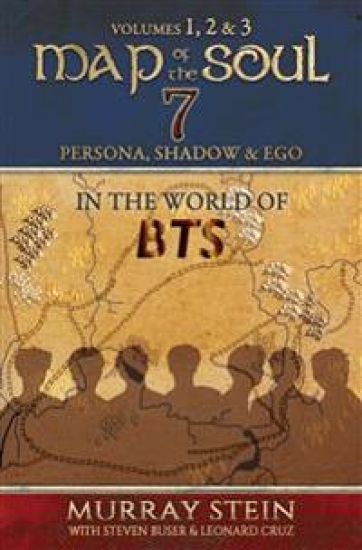
BTS did it again Map of the Soul: 7 is a capstone of a 2-album project intended to reveal the inner landscape of the human soul that is packed with rich symbolism and woven together with BTS's signature sound and moves. Starting with the lyrics, this book launches into a deep, engaging examination of the album in the light of the psychology of Swiss psychiatrist Carl Jung. The many layers of meaning embedded in the number 7 are brought to light, along with several fundamental concepts of Jungian psychology. Fans of BTS from around the world will marvel at the depth of meaning in the songs contained in Map of the Soul: 7. They take the listener into deep reflection upon the meaning of striving and ambition, the perils of worldly success, and the resiliency of the human spirit. These songs are landmarks on the soul's map that offer guidance for living and for relating to others and the world at large. Like Carl Jung whose dreams anticipated the dark period of world wars the 20th Century witnessed, Dr. Stein suggests that the song Black Swan may be a collective foretelling of the dark, deadly period of the pandemic that overtook the world in early 2020. For 21st Century people caught in the profound complexities of modern life, Map of the Soul 7: Persona, Shadow & Ego in the World of BTS is like a compass that helps the seeker to find their way. BTS's body of work is equipping its fans with an invaluable map and this book is like a legend for their latest album. For their great service we should be profoundly grateful. Table of ContentsPrefaceChapter 1: BTS and the Number 7Chapter 2: Reflections on the Lyrics of BTS' Map of the Soul: 7Chapter 3: A Review of the Map of the SoulPERSONAChapter 4: An Introduction to PersonaChapter 5: BTS, Jung and the True SelfChapter 6: Persona and Your IdentityChapter 7: Love Yourself, Know Your Name, Speak YourselfSHADOWChapter 8: An Introduction to ShadowChapter 9: The ShadowEGOChapter 10: An Introduction to EgoChapter 11: The EgoChapter 12: Music: The Universal Language***Please note: The cover on this title was updated on 5/21/2020. The interior is virtually identical.
The spiritual malaise regnant in today's disenchanted world presents a picture of "a polar night of icy darkness," as Max Weber wrote already a century ago. This collective dark night of the soul is driven by climate change-related disasters, rapid technological innovations, and opaque geostrategic realignments. In the wake of what policy analysts refer to as "Westlessness," the postmodern age is characterized by incessant distractions, urgent calls to responsibility, and in-humanly short deadlines, which result in a general state of exhaustion and burnout. The hovering sense of living in a time frame that is post-histoire induces states of confusion on a personal level as well as in the realm of politics. Totally missing is a grand narrative to guide humanity's vision. Thinkers, scholars, and Jungian analysts are increasingly looking to C. G. Jung's monumental oeuvre, The Red Book, as a source for guidance to re-enchant the world and to find a new and deeper understanding of the homo religiosus. The essays in this series on Jung's Red Book for Our Time: Searching for Soul under Postmodern Conditions circle around this objective and offer countless points of entry into this inspiring work. This is the fourth volume of a multi-volume series set up on a global and multicultural level and includes essays from the following distinguished Jungian analysts and scholars: Murray Stein and Thomas Arzt Introduction Robert M. Mercurio The Red Book and our Contemporary Crises: Active Imagination, Mass Migration and Climate Change Heike Weis Hyder The Burning Urgency of Psychodynamic Discoveries in The Red Book for Psychiatry and Psychotherapy: A Key for Healing-Resonance of Soul, Love and Life Maria Helena R. Mandacar Guerra Jung's Red Book as a Healing Symbol for Our Time Thomas Moore A Book of Magic: Jung's Red Book and the Tradition of Natural Magic Bruce MacLennan Liber Novus sed non Ultimus Neoplatonic Theurgy for Our Time Gary Clark Integrating the Archaic and the Modern: The Red Book, Visual Cognitive Modalities and the Neuroscience of Altered States of Consciousness John Merchant The Red Book as Jung's Asclepiadean John Ryan Haule Jung comes back to Himself Henning Weyerstrass C. G. Jung and the Creative Unconscious Becca Tarnas The Participatory Imagination Dale Kushner In Extremis Jung's Descent into the Language of the Self Karin Jironet On the Divine and Eternal Solitude of the Star: Jung's Seven Sermons Mirrored to Sufi Mysticism Katie Givens Kime "So Long As We Are Not Mystics" What the Personal Art of William James and C. G. Jung Give Us Now Christian Gaillard The Red Book in Venice Kiley Q. Laughlin The Red Book A Premodern Graphic Novelty Mark Winborn Liber Novus and the Metaphorical Psyche: Revisioning The Red Book
The spiritual malaise regnant in today's disenchanted world presents a picture of "a polar night of icy darkness," as Max Weber wrote already a century ago. This collective dark night of the soul is driven by climate change-related disasters, rapid technological innovations, and opaque geostrategic realignments. In the wake of what policy analysts refer to as "Westlessness," the postmodern age is characterized by incessant distractions, urgent calls to responsibility, and in-humanly short deadlines, which result in a general state of exhaustion and burnout. The hovering sense of living in a time frame that is post-histoire induces states of confusion on a personal level as well as in the realm of politics. Totally missing is a grand narrative to guide humanity's vision. Thinkers, scholars, and Jungian analysts are increasingly looking to C. G. Jung's monumental oeuvre, The Red Book, as a source for guidance to re-enchant the world and to find a new and deeper understanding of the homo religiosus. The essays in this series on Jung's Red Book for Our Time: Searching for Soul under Postmodern Conditions circle around this objective and offer countless points of entry into this inspiring work. This is the fourth volume of a multi-volume series set up on a global and multicultural level and includes essays from the following distinguished Jungian analysts and scholars: Murray Stein and Thomas Arzt Introduction Robert M. Mercurio The Red Book and our Contemporary Crises: Active Imagination, Mass Migration and Climate Change Heike Weis Hyder The Burning Urgency of Psychodynamic Discoveries in The Red Book for Psychiatry and Psychotherapy: A Key for Healing-Resonance of Soul, Love and Life Maria Helena R. Mandacar Guerra Jung's Red Book as a Healing Symbol for Our Time Thomas Moore A Book of Magic: Jung's Red Book and the Tradition of Natural Magic Bruce MacLennan Liber Novus sed non Ultimus Neoplatonic Theurgy for Our Time Gary Clark Integrating the Archaic and the Modern: The Red Book, Visual Cognitive Modalities and the Neuroscience of Altered States of Consciousness John Merchant The Red Book as Jung's Asclepiadean John Ryan Haule Jung comes back to Himself Henning Weyerstrass C. G. Jung and the Creative Unconscious Becca Tarnas The Participatory Imagination Dale Kushner In Extremis Jung's Descent into the Language of the Self Karin Jironet On the Divine and Eternal Solitude of the Star: Jung's Seven Sermons Mirrored to Sufi Mysticism Katie Givens Kime "So Long As We are Not Mystics" What the Personal Art of William James and C. G. Jung Give Us Now Christian Gaillard The Red Book in Venice Kiley Q. Laughlin The Red Book A Premodern Graphic Novelty Mark Winborn Liber Novus and the Metaphorical Psyche: Revisioning The Red Book
In Map of the Soul - Ego: I Am, Dr. Murray Stein explores the beginnings of consciousness and the concept of the "I," as well as the evocative lyrics from the Korean Pop band BTS's album, Map of the Soul: 7. BTS's album series titled Map of the Soul was largely inspired by Dr. Stein's presentation of C. G. Jung's groundbreaking psychological insights. Ego is the center of consciousness. Yet, "ego can separate itself from the body, and then become a virtual reality in its own right." This book is an overview of the ego from a Jungian perspective but also is a rich and nuanced examination of how the creative spark can ignite and sustain meaningful psychological growth. The author and collaborators are deeply indebted to BTS, whose world-wide popularity points to their remarkable ability to tap into universal themes. BTS's music inspired this work and this introductory series of books may inspire others to explore their inner life. Table of Contents1. Introduction 2. BTS and Outro: Ego 3. A Review of the Map of the Soul4. Ego, Consciousness and the "I"5. The Ego 6. Final Thoughts on Ego
心灵地图:人格面具
Murray Stein
Chiron Publications
2020
sidottu
在当今的文化中,有关角色角色的概念和一个人的内心世界的心理映射引起了人们极大的兴趣。实际上,人们的兴趣是如此强烈,以至于超级巨星韩国流行乐团BTS采纳了默里-斯坦因博士的构想,并将其融入了他们最新专辑Map of the Soul:Persona的标题和歌词中。 我们的角色是什么?它如何影响我们的人生旅程?当我们与周围的人打交道时,我们应该戴什么口罩?最终,我们的角色就是我们与世界的关系。结合我们的自我,阴影,生命和其他内部心理因素,它创造了灵魂的内部图。 T. S.艾略特(Eliot)是20世纪英国最著名的诗人之一,他写道,每只猫都有三个名字:每个人都知道的名字,只有猫的亲密朋友和家人知道的名字,以及只有猫知道的名字。作为人类,我们也有三个名字:每个人都知道的名字,即公众角色;只有您的亲密朋友和家人知道的名字,即您的私人角色;和只有你知道的名字,指的是你最深的自我。很多人知道名字,有些人知道名字。您知道您的秘密名称,您的个人,单数,唯一名称吗?这个名字是在您被家人和社会命名之前给您的。这个名字是您永远不会丢失或忘记的名字。你知道吗? Murray Stein博士是苏黎世国际分析心理学学院(ISAP-ZURICH)的培训和监督分析师。他是荣格分析师区域协会(1977)和芝加哥荣格分析师协会(1980)的创始成员。他曾于2001年至2004年担任国际分析心理学协会(IAAP)主席,并于2008年至2012年担任ISAP-ZURICH主席。 ,介意自我,内部和周围的一切,以及最近出版的《圣经》,《梦与荣格的红皮书》,第1、2和3卷(与托马斯-阿兹特合着)。他住在瑞士,在苏黎世有私人执业。 目录: 前言 防弹少年团Soul-Persona音乐专辑地图歌词的注释介绍1:开始思考2:角色3:影子4:自我5:自我,精神生活的一部分6:地图,感知和感知7:突破与中年8:标志和符号9:你的脸,你的名字,你的自我10:个人和集体无意识11:个性化:寻找道路12:复合体13:爱自己,知道你的名字,自己说 后记
心灵地图:人格面具
Murray Stein
Chiron Publications
2020
pokkari
在当今的文化中,有关角色角色的概念和一个人的内心世界的心理映射引起了人们极大的兴趣。实际上,人们的兴趣是如此强烈,以至于超级巨星韩国流行乐团BTS采纳了默里-斯坦因博士的构想,并将其融入了他们最新专辑Map of the Soul:Persona的标题和歌词中。 我们的角色是什么?它如何影响我们的人生旅程?当我们与周围的人打交道时,我们应该戴什么口罩?最终,我们的角色就是我们与世界的关系。结合我们的自我,阴影,生命和其他内部心理因素,它创造了灵魂的内部图。 T. S.艾略特(Eliot)是20世纪英国最著名的诗人之一,他写道,每只猫都有三个名字:每个人都知道的名字,只有猫的亲密朋友和家人知道的名字,以及只有猫知道的名字。作为人类,我们也有三个名字:每个人都知道的名字,即公众角色;只有您的亲密朋友和家人知道的名字,即您的私人角色;和只有你知道的名字,指的是你最深的自我。很多人知道名字,有些人知道名字。您知道您的秘密名称,您的个人,单数,唯一名称吗?这个名字是在您被家人和社会命名之前给您的。这个名字是您永远不会丢失或忘记的名字。你知道吗?Murray Stein博士是苏黎世国际分析心理学学院(ISAP-ZURICH)的培训和监督分析师。他是荣格分析师区域协会(1977)和芝加哥荣格分析师协会(1980)的创始成员。他曾于2001年至2004年担任国际分析心理学协会(IAAP)主席,并于2008年至2012年担任ISAP-ZURICH主席。 ,介意自我,内部和周围的一切,以及最近出版的《圣经》,《梦与荣格的红皮书》,第1、2和3卷(与托马斯-阿兹特合着)。他住在瑞士,在苏黎世有私人执业。 目录: 前言 防弹少年团Soul-Persona音乐专辑地图歌词的注释介绍1:开始思考2:角色3:影子4:自我5:自我,精神生活的一部分6:地图,感知和感知7:突破与中年8:标志和符号9:你的脸,你的名字,你的自我10:个人和集体无意识11:个性化:寻找道路12:复合体13:爱自己,知道你的名字,自己说 后记
In this second book in the series, Map of the Soul - Shadow: Our Hidden Self, Dr. Murray Stein explores the dark recesses of our psyche, as well as the shadow images in BTS' latest songs in their album Map of the Soul: 7. The Korean Pop band, BTS, has been taking the world by storm with a series of albums inspired from Dr. Stein's concepts titled Map of the Soul. Dr. Stein has joined them in expressing these same Jungian themes in a companion book series. The landscape of the soul has many contours and some hidden regions. This book speaks about obscure, typically unacknowledged aspects of the psyche. The shadow may appear initially like an unwanted intruder but those who become acquainted with their shadow discover it to be a vast storehouse of treasures and resources on the journey of self-discovery. Whereas the persona is the part of your personality that is revealed to others, the shadow is the part of your personality that is concealed from others and ourselves. The shadow often declares itself through sudden, often brutal reversals. At the collective level, the shadow proves capable of magnetizing people in the same direction, often with very destructive results. The person intent on living a more full, authentic life will be well served by becoming acquainted with the shadow. Dr. Stein and the collaborators, Sarah Stein, Steven Buser, and Leonard Cruz, are deeply indebted to BTS, whose world-wide popularity points to their remarkable ability to tap into universal themes that dwell in the collective domain. BTS' music inspired this work and we hope this work will inspire others to explore the deep recesses of their inner life. Table of Contents-Introduction -BTS' Interlude: Shadow: A Psychological Reflection -A Review of the Map of the Soul -Chapter 1: Murray Stein on Shadow -Chapter 2: The Shadow and the Problem of Violence -Chapter 3: "Criminals" The Shadow Bearers of Society -Chapter 4: Heal Yourself, Heal the World -References -About the Contributors
Today more than ever men are challenged to take steps toward greater consciousness and psychological development. In these lectures Murray Stein describes five "eras" or stages in a lifelong process of psychological and spiritual growth, as well as speaking about friendship between men and the archetypal gestures of fathering. The lectures are intended to help men of all ages to orient themselves in their lives as they search for meaning and seek personal development. This is a very personal book, made up of three series of lectures Murray Stein gave in the 1980's. Although the times have changed since then, the basic issues have not, and the Zeitgeist remains one of ambiguity about male identity and a man's responsibilities toward himself, his children and the world.