Kirjojen hintavertailu – 12 903 725 kirjaa ja 27 kauppaa

Kirjailija

Naval Postgraduate School

Kirjat ja teokset yhdessä paikassa: 495 kirjaa, julkaisuja vuosilta 2009–2017, suosituimpiin kuuluu Kurt Von Schleicher- The Soldier and Politics in the Run up to National Socialism: A Case Study of Civil- Military Relations. Vertaile teosten hintoja ja tarkista saatavuus suomalaisista kirjakaupoista.

495 kirjaa

Kirjojen julkaisuvuodet: 2009–2017.

Brazil for Sale

Brazil for Sale

Naval Postgraduate School

Createspace Independent Publishing Platform
2014
nidottu
This book examines whether Sino-Brazilian trade or investment significantly influences Brazil's voting in the United Nations General Assembly (UNGA). To examine this relationship, this thesis regresses a dataset of UNGA votes, which the literature commonly uses to represent political influence, with trade and investment data. Understanding whether the growing Sino-Brazilianeconomic relationship politically impacts Brazil is important both to Brazil and to the United States. Any increase in Chinese influence on Brazil may translate into a corresponding decrease in U. S. influence, which may have implications for the health of Brazil's democracy, regional stability and U. S. national security. This book crafts, for the first time in the literature on Sino-Brazilian relations, an estimable empirical model that examines whether trade or investment influences UNGA voting behavior between these two nations; this is an improved methodology for evaluating this relationship as previous studies relied on simple correlations. This book makes five hypotheses, and tests them with two types of voting affinity measurements using both regression analysis and simple correlations. This book finds that Brazil's exports to China have a statistically significant, positive relationship, and U. S. aid has a statistically significant, negative relationship, to Sino-Brazilian voting affinity.
The Illusion of Control - Great Powers Interacting with Tribal Societies and Weak Nation-States

The Illusion of Control - Great Powers Interacting with Tribal Societies and Weak Nation-States

Naval Postgraduate School

Createspace Independent Publishing Platform
2014
nidottu
Over the last 350 years, nation-states have interacted via international norms and institutions that were nurtured under the principles of Westphalian nation-statehood. In the aftermath of the Second World War (1939-1945), the U. S.-led West created an international system based upon the interactions of developed nation-states. New nation-states formed in colonial lands when their European overseers departed. These new nation-states tried to adhere to theWestphalian ideals, but many of them were nation-state in name only. The controlling entities were not the nationstate's governing bodies; the controlling entities were the tribal societies beneath the surface. Great powers havecontinued to work with these hollow governments and/or tribal societies with little to no success. In order to achieve positive policy results, great powers must adjust their interactions and expectations when dealing with tribal societies and/or weak nation-states.
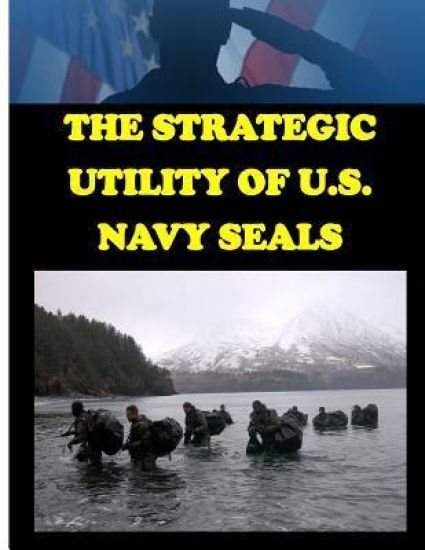
The Strategic Utility of U.S. Navy Seals

The Strategic Utility of U.S. Navy Seals

Naval Postgraduate School

Createspace Independent Publishing Platform
2014
nidottu
The current insurgency in Iraq has necessitated the overwhelming use of special operations forces (SOF) in operational and tactical roles. With an expected draw down in Iraq, it is time to refocus SOCOM on the strategic utility of SOF, specifically on the Maritime arm of SOCOM, the SEALs. SEALs bring unique capabilities based on their comparative advantage in direct action and their familiarity with the maritime domain. This comparative advantage contributes to their strategic utility as a short duration, direct action force working from land and sea. The SEAL culture, based on the history of the organization, their recruitment, selection and training, has historically focused on direct action operations. Insistence of indirect action will atrophy the skill sets of these maritime commandos. Historic research will illustrate successful strategic uses of SEALs in an effort to provide guidelines to decision makers. These decision makers must incorporate a balanced approach to the war, where an over-reaction andover commitment of forces to one mission set will likely imperil, not help, U. S. strategy. The Navy SEALs have an historic and proven comparative advantage in direct action based operations and best serve SOCOM's strategy fulfilling their strategic utility.
Clandestine Message Passing in Virtual Environments

Clandestine Message Passing in Virtual Environments

Naval Postgraduate School

Createspace Independent Publishing Platform
2014
nidottu
Virtual Environments (VEs) present a new challenge for governmentofficials attempting to monitor computer networks for terrorist communication. VEs bring new dimensions to online communication through visual appearance and state maintaining servers. In this thesis, various VEs will be explored tostudy what current abilities and usage patterns exist. Once characteristicsof the VEs are established, clandestine methods for passing information willbe developed along with proof of concepts. Visual cues, steganography andautonomous bots will be examined. Monitoring techniques are then discussed to attempt observation and analysis of this information at various levels. Theexpectation is that these results will improve awareness and solidify anunderstanding of the more surreptitious capabilities present in thesenetworked environments.
Brazilian Civil - Military Relations

Brazilian Civil - Military Relations

Naval Postgraduate School

Createspace Independent Publishing Platform
2014
nidottu
Brazil transitioned to democracy from an authoritarian military regime just over twenty six years ago, yet is still struggling to subject the military to effective civilian control. This retraces the evolution of civil-military relations through three significant events that have shaped the current state of civil-military relations and complicated defense reforms in Brazil. First, the transition to democracy, a tenuous and complicated task, was further complicated by the death of the president elect thus weakening theposition of the newly elected civilian government. Second, the military successfully contested attempts to establish a Ministry of Defense for the first decade of the democracy thus prolonging efforts at reform. Lastly, civilian's apathy and ignorance toward the military, perpetuated by a series of weak and ill prepared Ministers of Defense, further delayed progression beyond the status quo.
Ethiopian Imperial Expansion From The 13th To The 16th Century

Ethiopian Imperial Expansion From The 13th To The 16th Century

Naval Postgraduate School

Createspace Independent Publishing Platform
2014
nidottu
J. S. Trimingham has famously described Ethiopia as a "beleaguered fortress inthe midst of a sea of Islam," implying Christians in Ethiopia have consistently been besieged by Muslims, not vice versa. This thesis challenges this common conception by demonstrating that throughout Ethiopia's medieval period (1270-1555), the time of greatest conflict between the Ethiopian Empire and its Muslim neighbors, Muslim forces did not besiege the Ethiopian Empire. On the contrary, the Ethiopians militarily subjugated their neighboring Muslim sultanates, most prominently Ifat and Adal, and politically divided the sultanates' ruling families to keep them weak. These tactics, designed to wrest control of trade from the sultanates, were resoundingly successful untilMuslims unified around military/religious leaders, primary among them being Imam Gran, who in 1531 conquered the Ethiopian Empire. Though Imperial forces reversed the conquest by 1543, a historical focus on this event still feeds the misperception that Ethiopia's history is that of a Christian kingdom ensconced in a fortress to protect itself from a beleaguering "Muslim menace." This thesis concludes to the contrary that the Ethiopian Empire waded aggressively and purposefully into the sea of Islam to beleaguer its many Muslim neighbors.
Utilizing Android and the Cloud Computing Environment to Increase Situational Awareness for a Mobile

Utilizing Android and the Cloud Computing Environment to Increase Situational Awareness for a Mobile

Naval Postgraduate School

Createspace Independent Publishing Platform
2014
nidottu
Maintaining an accurate Common Operational Picture (COP) is a strategic requirement for efficient and successful missions in both disaster response and battlefield scenarios. Past practices include utilizing cellular, radio, and computer based communication methods and updating individual maps accordingly. A drawback of these practices has been interoperability of these devices as well as accurate reporting and documentation among different entities of the effort. Recent advances in technology have led to the utilization of collaborative maps for maintaining a COP amongst command centers. Despite the advantages this technique offers, it does not address the difficulties surrounding receiving reports from field entities as well as ensuring these entities also have good situational awareness. The goal of this research is to explore smartphone capabilities in conjunction with cloud computing to determine how they can extend the benefits of collaborative maps to mobile users while simultaneously ensuring command centers are receiving accurate, up-to-date reports from the field.
Decentralization, Counterinsurgency and Conflict Recurrence - A Study of the Tuareg Uprisings in Mali and Niger
A comparative study of Mali and Niger to determine possible differences that may have influenced the path of the 2012 Tuareg rebellion. Specifically, it seeks to determine if (1) the degree of governmental decentralization achieved after multiple peace agreements led to less government control in one country over the other, and (2) the counterinsurgency strategies applied by each country during previous rebellions could have led the rebels to believe Mali would be a softer target to attack than Niger. The evidence indicates that despite an earlier start and an intense public relations campaign, Mali did not achieve a significantly different level of decentralization than Niger by 2011, removing it as a possible influence on the 2012 rebellion. Both countries created new community level governments charged with administering all aspects of civil services but lacked the revenue to operate without international assistance. The difference in counterinsurgency strategies between the two countries, however, is stark. Mali's habitual willingness to compromise with past rebel groups contrasts greatly with Niger's insistence on seeking a military solution to conflicts, giving the 2012 rebels a logical indication of where success would be more likely.
Issues in Strategic Thought - From Clausewitz to Al-Qaida

Issues in Strategic Thought - From Clausewitz to Al-Qaida

Naval Postgraduate School

Createspace Independent Publishing Platform
2014
nidottu
Ever since the quickening of social and technological change that began during the Napoleonic era, there have been many strategic debates inspired by those developments. Six are discussed in this thesis: - Jomini vs. Clausewitz - How useful are principles of war?- Mahan vs. Mackinder - Is either land or sea power inherently more valuable for achieving national aims?- Bernhardi vs. Bloch - Did industrialization make war an impractical endeavor?- Douhet vs. Mitchell - What is the role of air power in national defense?- Brodie vs. Wohlstetter - Is nuclear deterrence robust, or is there a "delicate balance of terror?"- Giap vs. Galula - Can conventional forces defeat insurgencies, and, if so, how? Though these debates are listed in their rough chronological order of appearance, they do not reflect discrete blocks of time and often overlap. The purpose of this thesis is not to judge whether any particular "debater" was right or wrong. Rather, the intent is to consider the debate itself. While problem definition may seem a less-than-ambitious undertaking, it is nonetheless necessary for understanding the root causes and conduct of war over the last two centuries, as well as for the understanding of possible forms of future conflict. In some cases the differences between the debaters are apparent. In others, the differences are subtle. The conclusion summarizes the debates and addresses underlying themes or patterns that were identified during the course of this research. Last, some possible future strategic debates are identified, along with some topics that may require further research.
Border Cracks: Approaching Border Security From a Complexity Theory and System Perspective

Border Cracks: Approaching Border Security From a Complexity Theory and System Perspective

Naval Postgraduate School

Createspace Independent Publishing Platform
2014
nidottu
Presently, U. S. border security endeavors are compartmentalized, fragmented, and poorly coordinated. Moreover, international collaborations are extremely limited; success hinges on effective international cooperation. This book addresses U. S. border security management using complexity theory and a systems approach, incorporating both borders and all associated border security institutions simultaneously. Border security research has rarely viewed all stakeholders as a holistic unit up to this point, nor has border security been thoroughly examined using a systems approach. The research in this book scrutinizes the current U. S. border security paradigm in an attempt to determine the systemic reasons why the system is ineffective in securing U. S. borders. Additionally, the research investigates the current level of international cooperation between the United States, Canada, and Mexico. This book increases awareness and will possibly create dissent among established agencies, which is the first step in instituting needed changes that will ultimately increase North American security. The book contends that the establishment of a tri-national-United States, Canadian, and Mexican-border security agency, in addition to legalizing drugs and reestablishing a guest worker program, will be more effective and cost-efficient in securing North American borders.