Kirjojen hintavertailu – 12 859 818 kirjaa ja 27 kauppaa
Kirjailija
Nikolai Gogol
Kirjat ja teokset yhdessä paikassa: 300 kirjaa, julkaisuja vuosilta 1835–2026, suosituimpiin kuuluu Dead Souls (Translated by C. J. Hogarth with an Introduction by John Cournos). Vertaile teosten hintoja ja tarkista saatavuus suomalaisista kirjakaupoista.
Nimi esiintyy myös muodoissa: Nikolaï Gogol, Nikolai Gógol, Nikolái Gógol
With a new subject and scriptural index, as well as a short abstract on Nikolai Gogol as a religious personality, this reedited commentary on the Divine Liturgy the primary public worship service of the Orthodox Church is as practical as it is mystical. Gogol, one of the most prominent Russian writers of the 19th century, draws from the early Church Fathers and his own experience to explain the sublime mystery of the Orthodox divine services. In doing so, he also provides a fascinating look into his own religious character and profound liturgical spirituality.
He wants to get married; and he doesn't want to get married - he doesn't know what to do. But he has a friend who knows what's best for everyone. Marriage is Gogol's farce about desire, matchmakers, Imperial Russian speed dating and much else besides. "Howard Colyer's adaptation of Gogol's intriguing, funny and slightly unsettling play brings out the piece's absurdities. It's an entertaining version, with satisfyingly pared-down and peppy dialogue." Time Out.
Some call him a Russian Mark Twain. And with his special blend of comedy, social commentary, and fantasy, Nikolai Gogol paved the way for his countrymen Tolstoy and Dostoyevsky. This sampling of Gogol's works includes the increasingly fantastic entries of "The Diary of a Madman," followed by the wonderfully surrealistic "The Nose," in which the title character embarks on some unlikely activities when separated from its owner's face. In "The Carriage," a pompous landowner gets his comeuppance when he attempts to impress a general. Rounding out the collection are the woefully comic tale of a clerk's acquisition of "The Overcoat" and the celebrated novella "Taras Bulba" about the Ukrainian mythic hero said to have led a bloody Cossack revolt against the Poles. Translated by Priscilla Meyer and Andrew R. McAndrewWith a New Introductionand an Afterword by Priscilla Meyer
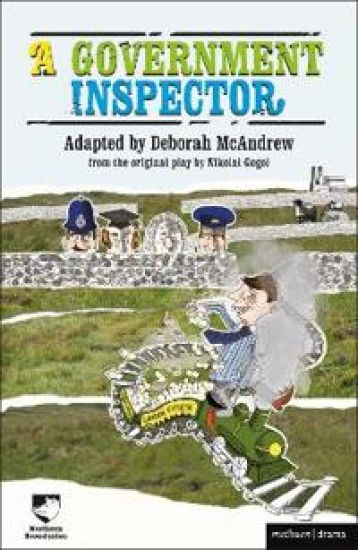
This version of A Government Inspector is a Yorkshire take on Gogol's 1836 fantastical Russian satire. The setting is here transposed to a small northern town in the twenty-first century, geographically and culturally remote from the centre of government. Into a small Pennine town a mysterious stranger is mistaken for a government inspector. Fearing discovery of their corrupt goings-on, the town's unscrupulous councillors attempt to ingratiate themselves. Bribes, backhanders and brown envelopes abound, and the young chap, who has an eye for a quick buck, takes full advantage with hilarious results. Deborah McAndrew's version of A Government Inspector goes beyond literal translation, but is absolutely faithful to Gogol's stated intention to peel away the surface layers of ordinary people and expose the corruption beneath. It's exuberant, brilliantly witty and original, and audiences will revel in the references to government officials' expenses claims and women's beach volley ball... Northern Broadsides, one of the country's finest and best-loved touring theatre companies, breathes life and vigour into this nearly 200-year-old story. Absurdly funny, clever and strangely familiar, this feels to be the next One Man Two Guvnors. The production premieres at Harrogate Theatre from 7 - 22 September before embarking on an English national tour until December 1st.
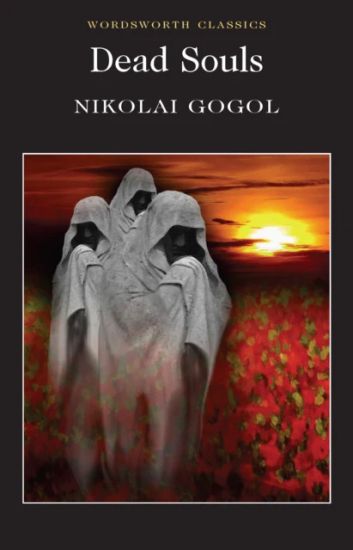
The first of the great Russian novels and one of the indisputable masterpieces of world literature, Dead Souls is the tale of Chichikov, an affably cunning con man who causes consternation in a small Russian town when he shows up out of nowhere proposing to buy title to serfs who, though dead as doornails, are still property on paper. What can he have up his sleeve, the local landowners wonder, even as some rush to unload what isn't of any use to them anyway, while others seek to negotiate the best deal possible, and others yet hold on to their dead for dear life, since if somebody wants what you have then no matter what don't give it away. Chichikov's scheme soon encounters obstacles, but he is never without resource, and as he stumbles forward as best he can, Gogol paints a wonderfully comic picture of Russian life that also serves as a biting satire of a society as corrupt as it is cynical and silly. At once a wild phantasmagoria and a work of exacting realism, Dead Souls is a supremely living work of art that spills over with humor and passion and absurdity. Donald Rayfield's vigorous new translation corrects the mistakes and omissions of earlier versions while capturing the vivid speech rhythms of the original. It also offers a fuller text of the unfinished second part of the book by combining material from Gogol's two surviving drafts into a single compelling narrative. This is a tour de force of art and scholarship-and the most authoritative, accurate, and readable edition of Dead Souls available in English.
An NYRB Classics Original The first of the great Russian novels and one of the indisputable masterpieces of world literature, "Dead Souls" is the tale of Chichikov, an affably cunning con man who causes consternation in a small Russian town when he shows up out of nowhere proposing to buy title to serfs who, though dead as doornails, are still property on paper. What can he have up his sleeve, the local landowners wonder, even as some rush to unload what isn't of any use to them anyway, while others seek to negotiate the best deal possible, and others yet hold on to their dead for dear life, since if somebody wants what you have then no matter what don't give it away. Chichikov's scheme soon encounters obstacles, but he is never without resource, and as he stumbles forward as best he can, Gogol paints a wonderfully comic picture of Russian life that also serves as a biting satire of a society as corrupt as it is cynical and silly. At once a wild phantasmagoria and a work of exacting realism, "Dead Souls" is a supremely living work of art that spills over with humor and passion and absurdity. Donald Rayfield's vigorous new translation corrects the mistakes and omissions of earlier versions while capturing the vivid speech rhythms of the original. It also offers a fuller text of the unfinished second part of the book by combining material from Gogol's two surviving drafts into a single compelling narrative. This is a tour de force of art and scholarship--and the most authoritative, accurate, and readable edition of "Dead Souls" available in English.
It is the night before Christmas and devilry is afoot. The devil steals the moon and hides it in his pocket. He is thus free to run amok and inflicts all sorts of wicked mischief upon the village of Dikanka by unleashing a snowstorm. But the one he’d really like to torment is the town blacksmith, Vakula, who creates paintings of the devil being vanquished. Vakula is in love with Oksana, but she will have nothing to do with him. Vakula, however, is determined to win her over, even if it means battling the devil. Taken from Nikolai Gogol’s first successful work, the story collection Evenings on a Farm Near Dikanka, The Night Before Christmas is available here for the first time as a stand-alone novella and is a perfect introduction to the great Russian satirist.
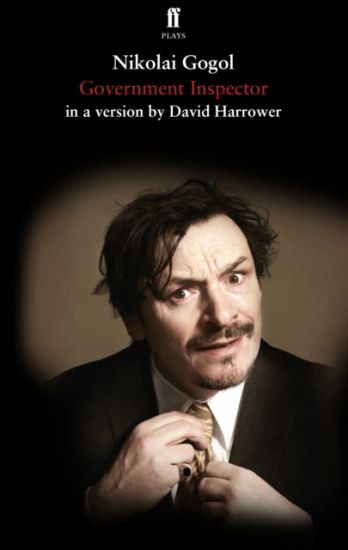
The news that a government inspector is due to arrive in a small Russian town sends its bureaucrats into a panicked frenzy. A simple case of mistaken identity exposes the hypocrisy and corruption at the heart of the town in this biting moral satire. David Harrower's version of Nikolai Gogol's Government Inspector premiered at the Warwick Arts Centre in May 2011 and transferred to Young Vic, London in June.
Includes the plays Master and Margarita (Satan’s Ball), Vanity, Gogol and Brothers KaramazovFrom original translations by Faynia Williams. Crane and Williams’ sensational Master and Margarita (Satan’s Ball) marked the beginning of a golden period when their company BrightonTheatre premiered a succession of ground-breaking new plays, which took festivals by storm and toured the world. Out of the spectacular Bulgakov, came the minimalist Gogol, a chilling evocation of Gogol’s whirling world, distilled into a nightmare for today. Then Vanity, a ‘glittering diamond of a play’, reclaimed Pushkin’s Eugene Onegin as a intimate reflection on a love mistimed and shattered by social convention. From these successes, Brighton Theatre moved onto the main Edinburgh programme with Brothers Karamazov: a leap into the dark world of epilepsy, orthodoxy and murder in the family, which won triumphant reviews and international acclaim. Published now for the first time, these four plays flourished out of a unique collaboration of author and director, which saw them progressing from fringe to mainstream, West End and Off-Broadway without changing their style, and becoming an acknowledged inspiration for many of today’s theatre artists.
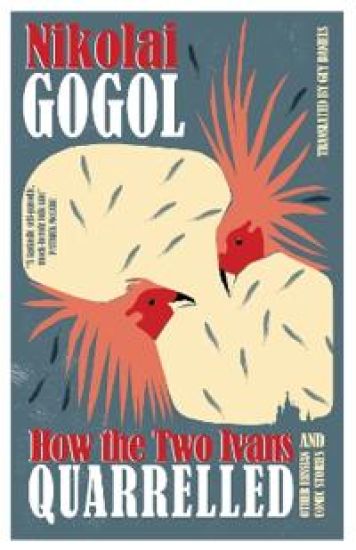
The first story in this volume, How the Two Ivans Quarrelled, is an amusing portrayal of two exceptionally close friends, the mortal insult that drives them apart, and the ensuing chaos that occurs. This is Gogol’s humour at its best, where the most irrelevant-seeming details and turns of phrase take on a bizarre life of their own. Ivan Krylov’s Panegyric in Memory of My Grandfather has an ingenuous narrator praise the nobility and modesty of a landowner whose actions prove him to be otherwise. The two tales by Mikhail Saltykov are satirical attacks on civil servants and Russia’s autocracy. The final piece, Tolstoy’s Ivan the Fool, is a playful and allegorical critique of contemporary Russian society. Together, they represent some of Russia’s finest comic writing before the twentieth century.
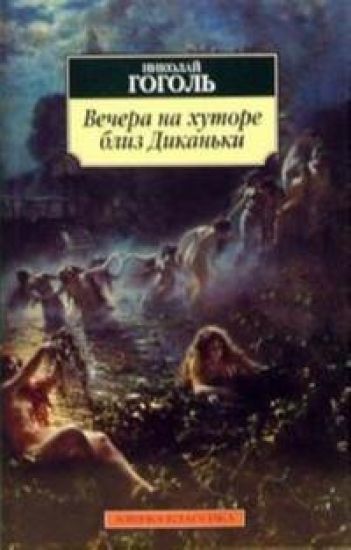
"Vechera na khutore bliz Dikanki" - pervyj sbornik povestej N. V. Gogolja, s vostorgom vstrechennyj ego sovremennikami i vyzvavshij otzyv A. S. Pushkina: "Vot nastojaschaja veselost, iskrennjaja, neprinuzhdennaja, bez zhemanstva, bez chopornosti. A mestami kakaja poezija! Kakaja chuvstvitelnost!" Etot sbornik okazalsja i samoj svetloj knigoj Gogolja, ljubimoj mnogimi pokolenijami chitatelej.
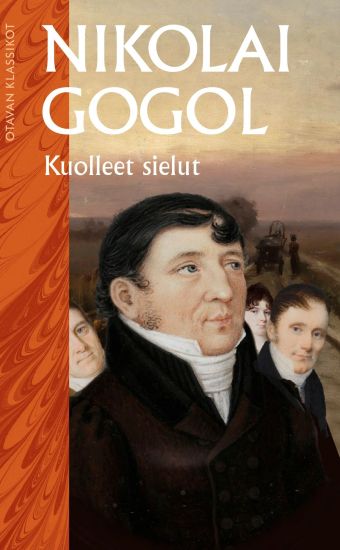
Vastustamattoman terävä satiiri Pavel Ivanovits Tsitsikovista, joka tekee ahneiden maanomistajien kanssa molempia osapuolia tyydyttäviä kauppoja kuolleista maaorjista Hyvin pukeutunut ja miellyttävästi käyttäytyvä Pavel Ivanovitsh Tshitshikov kiertää vaunuillaan maaseutua yllättävässä tarkoituksessa. Hän haluaa ostaa "kuolleita sieluja", maaorjia, joita ei heidän kuoltuaan ole poistettu valtion rekisteristä. Hän tapaa aatelisia maanomistajia, korkeita viranomaisia, majatalonpitäjiä, vähäisiä kirjureita, kuskeja, talonpoikia. Tshitshikov tekee ällistyneiden mutta ahneiden maanomistajien kanssa molempia osapuolia suuresti tyydyttäviä kauppoja, ja hänestä tulee pian seudun tavoitelluin vieras ja liehakoitu merkkihenkilö. Mutta yhtä nopeasti tilanne sitten muuttuu.
With an Introduction by Anthony Briggs. Translated by Isabel F. Hapgood. Russia in the 1840s. There is a stranger in town, and he is behaving oddly. The unctuous Pavel Chichikov goes around the local estates buying up 'dead souls'. These are the papers relating to serfs who have died since the last census, but who remain on the record and still attract a tax demand. Chichikov is willing to relieve their owners of the tax burden by buying the titles for a song. What he does not say is that he then proposes to take out a huge mortgage against these fictitious citizens and buy himself a nice estate in Eastern Russia. Will he get away with it? Who will rumble him? Does this narrative contain a deeper message about Russia itself or the spiritual health of humanity? There is much interest and some suspense in considering these issues, but the real pleasure of this story lies elsewhere. It is an enjoyable comic romp through a retarded part of a backward country, a picaresque series of grotesque portraits, situations and conversations described with Gogolian humour based mainly on hyperbole. This is, quite simply, the funniest book in the Russian language before the twentieth century.
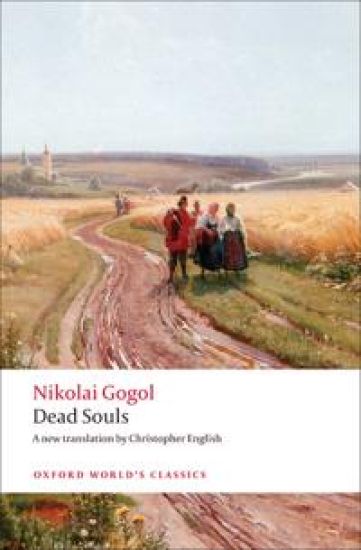
'Rus! Russ!... Everything within you is open, desolate, and flat; your squat towns barely protrude above the level of your wide plains, marking them like little dots, like specks; here is nothing to entice and fascinate the onlooker's gaze. Yet whence this unfathomable, uncanny force that draws me to you?' Although Dead Souls (1842) was largely composed by Gogol during self-imposed exile in Italy in the late 1830s, his last work remains to this day the most essentially Russian of all the great novels in Russian literature. As we follow its hero Chichikov, a dismissed civil servant turned unscrupulous confidence man, about the Russian countryside in pursuit of his shady enterprise, there unfolds before us a gallery of characters worthy in comic range of Chaucer, Rabelais, Fielding and Sterne. With its rich and ebullient language, ironic twists and startling juxtapositions, Dead Souls stands as one of the most dazzling and poetic masterpieces of the nineteenth century. This brilliant new translation by Christopher English is complemented by a superb introductory essay by the pre-eminent Gogol scholar, Robert Maguire. ABOUT THE SERIES: For over 100 years Oxford World's Classics has made available the widest range of literature from around the globe. Each affordable volume reflects Oxford's commitment to scholarship, providing the most accurate text plus a wealth of other valuable features, including expert introductions by leading authorities, helpful notes to clarify the text, up-to-date bibliographies for further study, and much more.
Collected here are Gogol's finest tales - stories which combine the wide-eyed, credulous imagination of the peasant with the sardonic social criticism of the city dweller - allowing readers to experience anew the unmistakable genius of a writer who paved the way of Dostoevsky and Kakfa. All of Gogol's most memorable creations are here: the minor official who misplaces his nose, the downtrodden clerk whose life is changed by the acquisition of a splendid new overcoat, the wily madman who becomes convinced that a dog can tell him everything he needs to know. The wholly unique blend of satire and realism that Gogol crafted established his reputation as one of the most daring and inventive writers of his time.
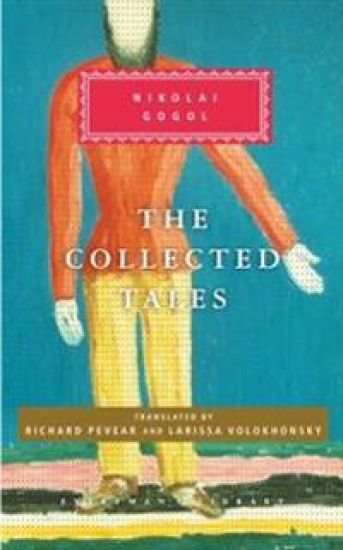
Collected here are Gogol's finest tales--stories that combine the wide-eyed, credulous imagination of the peasant with the sardonic social criticism of the city dweller--allowing readers to experience anew the unmistakable genius of a writer who paved the way for Dostoevsky and Kafka. All of Gogol's most memorable creations are here: the minor official who misplaces his nose, the downtrodden clerk whose life is changed by the acquisition of a splendid new overcoat, the wily madman who becomes convinced that a dog can tell him everything he needs to know. The wholly unique blend of the mundane and the supernatural that Gogol crafted established his reputation as one of the most daring and inventive writers of his time. From the acclaimed translators of War and Peace, Crime and Punishment, and The Brothers Karamazov, a brilliant translation of Nikolai Gogol's short fiction.